 * “I am only one, but still I am one. I cannot do everything, but still I can do something; And because I cannot do everything I will not refuse to do the something that I can do.”
—Helen Keller
Replies to this message are sent to an unmonitored mailbox.
To contact me, please click here: Sen.JeffGolden@oregonlegislature.gov
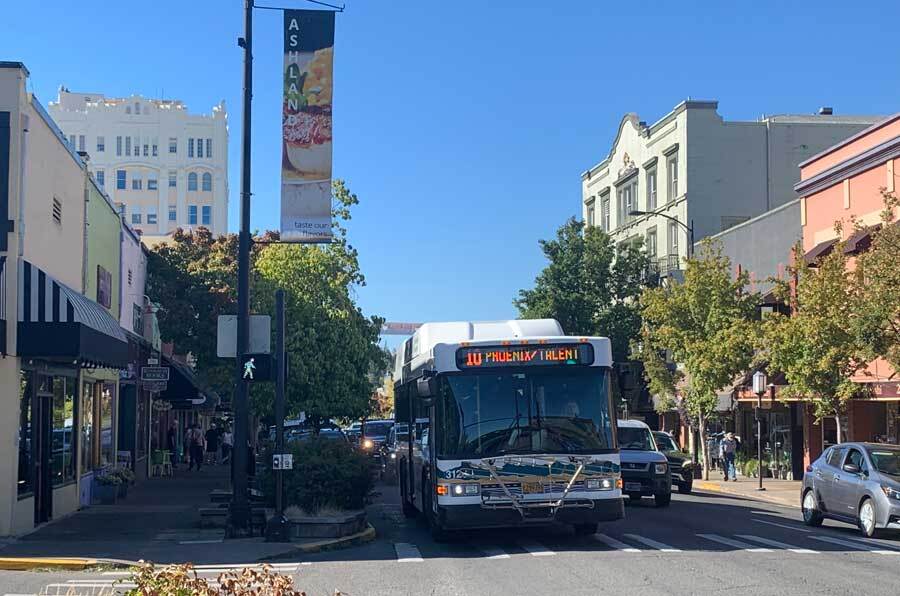
My original plan for a newsletter report on the special session on transportation, which is dispersing just as I write this Wednesday morning, was a blow-by-blow account of how the original bill was whittled down in order to overcome procedural obstacles laid out by the minority party, and secure the 60% super-majority vote (18 of 30 Senators, 36 of 60 Representatives) needed to increase any taxes. Political nerds like me might find that interesting, but instead I’ll describe some of the large-stroke dynamics moving through this special session. It’s a good case study of a much larger disagreement about government’s role these days, and what we need from taxpayers to fulfill it.
First, the spoiler. On Monday, after two packed public hearings and what seems like endless conversations in all kinds of settings, the House of Representatives passed HB 3991 with 36 aye votes, exactly the 60% threshold that tax bills require. It will raise in the neighborhood of $4.3 billion over the next ten years, roughly 1/3 as much as the bill first introduced months ago in the regular 2025 session. Here is a summary of its contents.
That sent the bill over to the Senate, where all 18 Democrats were expected to vote for it. That vote won’t happened for at least a couple of weeks, as one of our members is hospitalized with a serious health challenge. The special session is now recessed for a couple of weeks to give him a chance to recover. If the bill passes then, the new money would put Oregon towards the middle of the pack of western U.S states in per capita transportation fees and taxes (right now, before the change, we’re near the bottom).
Do we need it? Republican legislators, with the exception of the single House member who voted for the bill, say no. Everyday Oregonians, they said, clearly oppose it. They made the point with a graphic prop: a two-foot-tall stack of paper on the Minority Leader’s desk said to be emails urging the bill’s defeat. Their core message was that the package is simply more than Oregonians can afford.
I don’t know if every message in that tall pile of paper said exactly that, but my own inbox tells me that plenty of Oregonians oppose the bill. That’s not hard to understand when more than a few of our neighbors are struggling to make ends meet as things stand now. Do most Rogue Valley folks oppose this infusion of new money for transportation? Maybe. You soon learn in this job that the tally of incoming emails and phone calls may or may not reflect what your district thinks as a whole. But there’s no doubt that a whole lot of Oregonians are saying No. More. Taxes. Period.
This job is more enjoyable and less stressful when my vote lines up with what the majority of my constituents think. It may be that this one won’t.
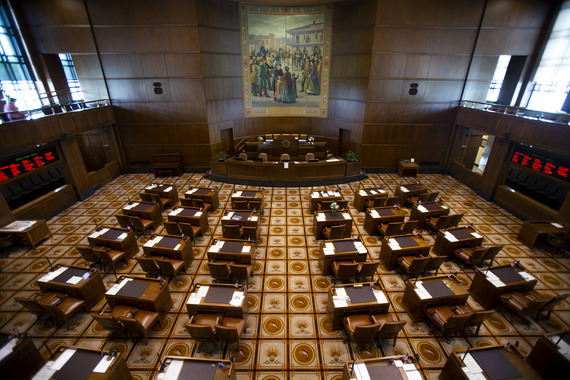
I’ve had to think a lot about this vote, because I have dual responsibilities that don’t entirely fit together. One is to people who live and pay taxes in Senate District 3 today. The second is to those whose future—and I’m not talking about the distant future—we impact with today’s decisions. Our current predicament, in transportation and elsewhere, was created by decades of kicking big problems—the ones that cost public money to solve—down the road. Policymakers do that because they want to be re-elected by voters who almost aways say No. More. Taxes. What’s different now is that we’ve just about run out of road to kick these cans down. Countless miles of highway are nearing that critical point where further neglect will make us rebuild them at far higher cost than normal repairs carry. We might be approaching a state of decay that’s beyond what we can repair.
Ignoring that reality is a form of stealing from our children. I believe we’ve done too much of that already; that’s actually a main reason I ran for office in my senior years. Whether it’s the impacts of climate change or a wealth gap that we’ve allowed to grow far wider than in any other country (and the addiction and mental dysfunction that results), I’m not proud of what we’re handing off to our kids, and theirs.
I recently came across something Voldymyr Zelensky said when he was sworn in as Ukraine’s President. “I really do not want my pictures in your offices,” he said, “for the President is not an icon, an idol or a portrait. Hang your kids’ photos instead, and look at them each time you are making a decision.”
Oregon—the whole world—would be different if we actually did that.
After that philosophical flyover I’ll return to ground for a few more comments about this proposal.
Some of the opposition makes a sweeping charge that the Oregon Department of Transportation (ODOT) has squandered a lot of money. That deserves closer examination than it gets. Nobody thinks that ODOT’s performance has been anything close to perfect. But after a decade of wildfire and pandemic disruption, no state transportation department has come close. The cost overruns on major projects—and they have been dramatic—are part and parcel of what the pandemic did to pretty much all major construction in our country.
Whatever’s true about the scale of ODOT’s shortcomings, there’s no doubt the agency has to spend public money more effectively and efficiently. This bill includes a credible blueprint for doing that, with accountability measures you don’t generally see in government; see Sections 1-10 in this summary. Opponents also say we should make ODOT show us first-rate fiscal management before it gets any more money. With fuel tax revenue nosediving and a long list of deferred maintenance, that kind of delay would punish everyone who depends on Oregon roads.
We’ve also heard about “getting back to the basics.” Senators gave floor speeches this week about focusing our General Fund exclusively on transportation, public safety and K-12 education, and addressing other needs only if there’s anything left over. That ignores a lot of tough realities. Returning for a moment to considering our kids as we make decisions: what kind of state do they inherit if we de-fund mental health/addiction programs that demonstrably offer our best chance for a healthy Oregon future; Medicaid payments just when the Feds are slashing them; forest and neighborhood programs that protect communities from wildfire; our community colleges, which offer the very best hope for people with the vision and drive to achieve productive, successful lives?
That’s a very partial list. I have trouble believing that we can hand over an Oregon our children want to live in if we abandon those services.

All of that said, it’s still true that the cost of driving will rise for some Oregonians who already struggle to pay all the bills. First let’s be clear on the size of that increase. For people who drive the general average of 1000 miles per month, the 6-cent fuel tax increase (which puts us near the average of western states) will pay $2 to $4 more per month, depending on the car. The registration fee you pay for a passenger car every two years will increase from $43 to $85, and the title fee when you switch vehicles goes up about $140.
And to fund public transit—a service that something like a third of Oregonians need to meet basic living needs—the state payroll tax will temporarily increase from one-tenth to two-tenths of one percent. That means Oregonians who are paid $50,000 annually will pay an additional $50; those earning $100,000 will annually pay $100 more, before taxes, than they do now. (In a future newsletter I’ll talk about why I think viable public transportation is vital for all of us, whether we personally ride the bus or not).
Nobody says that’s nothing. It’s clearly not nothing for lower-income Oregonians. But neither is the increased cost we’ll see in trashed tires, vehicle damage and time lost from long highway closures if we don’t make this basic investment. I’d prefer to live in a world where there’s no cost to preventing unforeseen mishaps, but I don’t.
It’s not easy to vote for taxes that fall on Oregonians living on the edge, even when you know they will reduce the chance of more expensive problems down the line. I’d like to see a tax code that leans more heavily on people and corporations that have prospered greatly in recent years, especially when many of the wealthy have found ways to pay far less than the tax tables say they should. That points to a conversation for another day, one that’s difficult and necessary if we’re to have any hope of paying the public bills that will increase in years to come without leaning more heavily on people who can’t pay more. Many affluent countries have shown that’s possible to do, while also sustaining the compensation incentives that a dynamic economy needs.
We have to figure out that shift, both nationally and in Oregon. Soon.
Thanks to all of you who have written to me about our transportation challenge. While I know some of you don't agree with my position, I hope for broad understanding that this decision, like most of the big ones we face these days, isn’t simple. Keep your ideas coming my way.
Best,
 Senator Jeff Golden, Oregon Senate District 3
| 
