|
Replies to this message are sent to an unmonitored mailbox.
To contact me, please click here: Rep.RickLewis@oregonlegislature.gov
Dear Friends and Neighbors,
It’s hard to believe how quickly summer seems to be flying by. We’ve had a few scorchers that really remind us that it’s August in Oregon. In true Oregon fashion, the warm evenings and cooler mornings have made for some beautiful days to be out and about. I have thoroughly enjoyed connecting with folks as I have attended events and activities throughout our various communities
This time of year, is always one of the busiest for our agriculture community, which is at the heart of the district. Across our farms and fields, growers have been tending to their crops, harvesting early yields, and preparing for the peak of the season. From berry farms to nurseries, from hazelnut orchards to seed crops, and Christmas tree farms, work is in full swing and - not just in agriculture. Our small businesses, trades, and service industries have been pushing through the summer rush, supporting our communities, keeping things moving, and our local economy strong.
Whether in the fields, the shop or the office, the people of House District 18 continue to show the dedication and work ethic that makes our communities thrive. I am grateful every day for the grit, pride, and neighborliness that makes House District 18 such a special place to live, work, and raise our families.
This month’s newsletter highlights what I’ve been up to this summer, gives a preview of what we anticipate for the Governor’s Special Session, highlights agency information, community events, and more.
Thank you for reading along and staying in touch.
Sincerely,

Rick Lewis
State Representative
House District 18
Oregon’s Christmas Tree District
In this Issue:
View previous newsletters here.

Next week on August 27th, the House and Senate Interim Revenue Committees will meet to receive the September 2025 quarterly Economic and Revenue Forecast.
The Oregon Revenue Forecast opens the revenue forecasting process to public review and is the basis for much of the budgeting in state government. Forecast reports are issued four times a year: March, June, September, and December. Click to watch the forecast on OLIS here.
Additional information can be found on the Office of Economic Analysis webpage here.

On Friday, August 29th, the legislature will convene the Governor’s special session aimed to address transportation funding and avoid ODOT layoffs. I’m hoping you all have all made better plans for the Labor Day holiday weekend. If you haven’t, I encourage you to tune-in to find out what’s happening in Salem. The Capitol is open to the public. Due to the ongoing construction, visitors will need to enter through the center entrance on State Street. All meetings are open to the public and will be livestreamed on OLIS for those unable to attend in person.
In advance of the Special Session, the Joint Interim Committee on Transportation Funding will hold a public hearing on Monday, August 25 at 3 p.m. in Hearing Room F at the Oregon State Capitol. This is an opportunity to hear from the public on LC2 the Governor’s Special Session Transportation Framework Summary.
Oregonians can sign up for in-person or remote testimony here. Written testimony may be submitted up to 48 hours after the committee meeting is scheduled to begin. Public testimony registration closes 30 minutes before the meeting is scheduled to begin.
The Governor’s Transportation Funding Proposal looks to raise approximately $990 million per biennium, or an estimated $5 billion over 10 years. Now that we have more specifics about the proposal, I want to break down what that would mean for Oregonians:

-
Gas tax increases by 6 cents per gallon (from 40¢ to 46¢) beginning in January. Expected to raise around $90 million per year.
-
Title Fee rises from $139 to $216
-
Vehicle Registration Fees nearly double for most vehicles; higher surcharges for high-MPG and electric vehicles (EV’s)
-
Payroll tax doubles from 0.1% to 0.2% to fund transit districts
-
Road Usage Charge phased in starting 2027 for EVs and hybrids
-
Diesel tax modernization & weight-mile simplification for trucking
-
Eliminates existing statutory language requiring tolling for some highway projects
-
Governance changes:
- Shifts ODOT Director appointment from the Transportation Commission to the
Governor
- Expands oversight committees’ membership
- Adds audit/reporting requirements
|
Latest News from OPB:
Gov. Tina Kotek tweaks Oregon transportation funding bill as session nears Dept. of Transportation (ODOT), OPB - Oregon Public Broadcasting, Oregon Legislature, Electric Vehicles (EV), Governor Tina Kotek, Special Sessions, Truck/Commercial Drivers
Overall, the Governor’s proposal creates massive tax hikes. It is very concerning that not all of the funding is aimed to supporting ODOT’s core functions to maintain Oregon’s transportation infrastructure and safe roads.
For months, I have heard a resounding “no new taxes” message from Oregonians from across the state. Now is the time to make your voice heard in the process by writing your legislator, testifying in person, remotely, or submitting your testimony in writing.
Find your legislator here.

The Homer C. Davenport International Cartoon Contest in Silverton honors the legacy of cartoonist Homer C. Davenport, whose work exemplified the power of humor to inspire conversation and reflection. This year’s entries carried forward that tradition with skill, insight, and often a good laugh.
|
Again, I had the privilege of serving on a panel of judges for this year’s contest. This annual event celebrates creativity, sharp wit, and the power of visual storytelling. Artists from across the country submitted their work, using humor and satire to reflect on today’s world in ways only cartoons can.
The range of talent was truly impressive, making the judging process fun and challenging. I am pleased to share and extend my congratulations to this year’s contest winners:
|
|
 |
|
Judged Winners:
|
People's Choice:
-
First: Daniel Boris - Leesburg, VA
-
Second: Mark Bielemeier - Pacific City, OR
-
Third: Richard Laurent - Chicago, IL
-
Fourth: Dan McConnell - Cashmere, WA
-
Fifth: Garth German - San Francisco, CA
|
| |
|
Click Here to View all the 2025 Entries
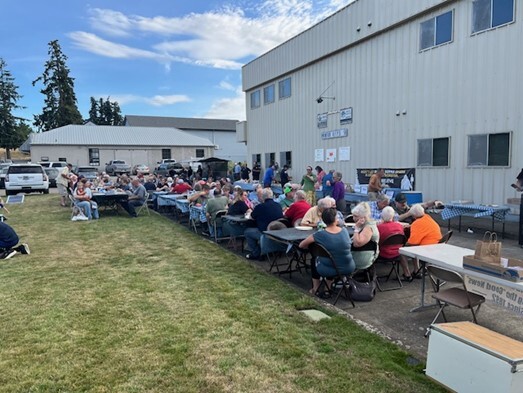
On August 5th, I had the privilege of joining the Monitor community for their National Night Out celebration. I am deeply grateful for the warm invitation and the opportunity to connect with neighbors, friends, and families in such a meaningful way.
National Night Out is more than just an evening of good food, laughter, and conversation. It’s a nationwide tradition that brings communities together to strengthen relationships, promote public safety, and build trust between neighbors and local law enforcement.
|
This year’s event, held at the Monitor Fire Station, was one for the record books. They had an incredible 155 attendees – the highest turnout ever! That number speaks volumes about the strength, resilience, and unity of this community. When neighbors take the time to show up for one another, it creates a foundation of trust and connection that benefits everyone. I couldn’t be prouder to represent this community, and I give a hardy thank you for their immense contribution to the district.
|
|
 |
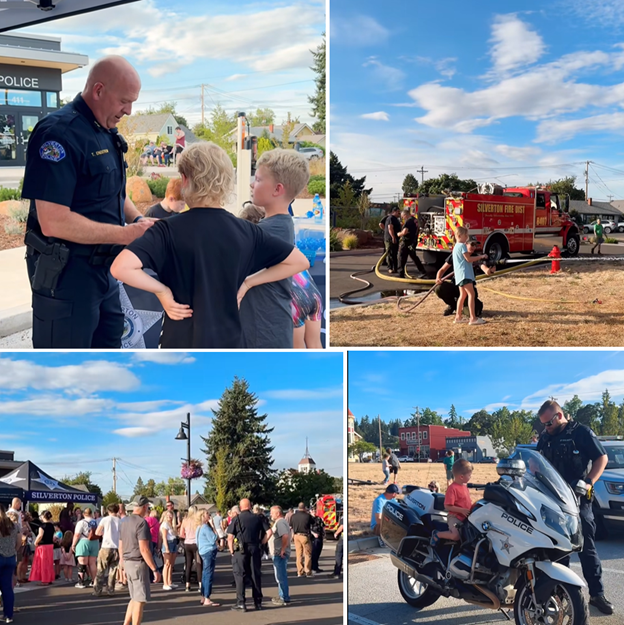
Later that evening I was honored to join the community of Silverton at their National Night out event at City Hall. It was a wonderful evening filled with neighbors coming together, visiting with local law enforcement and first responders, and enjoying the strong sense of community that makes Silverton such a special place. Events like this highlight the importance of connection and safety, and I deeply appreciate everyone who came out to make it a success.

Earlier this month, I visited the beautiful Oregon Garden to meet with board members and the Director of Operations to talk about possible grant funding assistance to support future projects.
The Oregon Garden, in Silverton, is a stunning botanical garden encompassing more than 80 acres, featuring specialty gardens which showcase the diverse botanical beauty of the Willamette Valley and the Pacific Northwest. The gardens are guaranteed to delight guests of all ages, from their Pet-Friendly Garden to the Children’s Garden.
The Garden is a treasured community asset and plays an important role in tourism, education, and local economic development. Supporting the garden means supporting jobs and community pride and I am committed to helping it thrive.
Thank you to the Director of Operations, Delen Kitchen, and board members for your warm welcome, hospitality, and for sharing the Garden’s vision for the future.
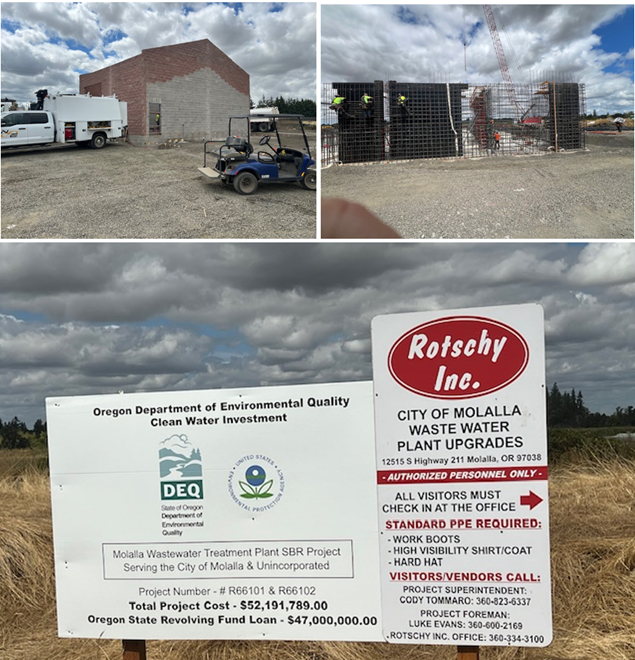
Thank you to Assistant City Manager, Mac Corthell and Waste Water Treatment Plant Manager, Seth Kelly for giving me a tour of the new waste water treatment plant project during an unscheduled stop in Molalla last week. It was a good opportunity to see the progress on a project I advocated and received state funding for. The project will be completed in ‘27. It was also an opportunity to receive a briefing on the City’s struggles in their dealings with the Oregon Department of Land Conservation and Development (DLCD) on affordable housing arbitrary requirements that are being forced on the city outside of existing rules. My office is closely monitoring the conditions being placed on the city.

In 2023, the Oregon State Legislature granted funding for Resilience Hubs through House Bill 3409 Section 86.
On Monday, I had the opportunity to visit the Silverton Lions Club Resilience Hub and came away both inspired and encouraged. This hub is more than just a location. It’s a gathering place where community members can come together and support one another and to share and access resources during an emergency.
The Silverton Lions Club was awarded a Resilience Hub Grant through the Oregon Department of Human Services (ODHS) Office of Resilience and Emergency Management (OREM). They recently received 3 large Conex boxes with supplies to provide community support during an emergency. In partnership with the school district these have been placed at Mark Twain Elementary School in Silverton. The total cost for the package in Silverton was approximately $215,000 to include site prep and transportation costs
During my visit, I spoke with dedicated staff and volunteers who are working every day to strengthen our community’s ability to respond to emergencies and support one another through recovery. The hub is a vital part of our region’s preparedness network.
Seeing firsthand the partnerships and planning that go into this work reminded me how strong we are when we invest in each other. I am grateful to the Silverton Resilience Hub team for their warm welcome and for their commitment to keeping Silverton and the surrounding communities safe and connected.
Learn more about the Resilience Hubs and Networks Grant at the ODHS/OREM webpage here.
|
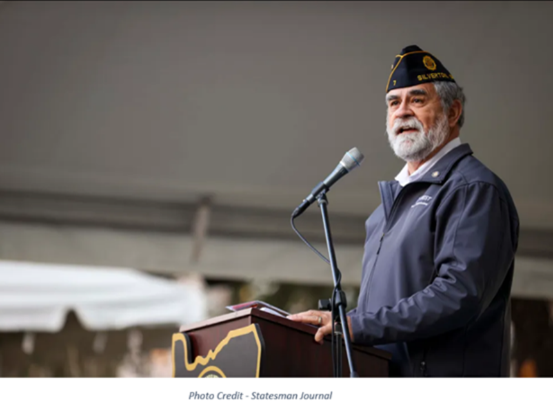
Yeserday, I was honored to join members of the Military Officers Association of America (MOAA) for their veteran’s luncheon. It’s always a privilege to spend time with those who have served our country and continue to give back to their communities.
During our time together, I provided a legislative update on the 2025 Session and the actions in Salem that directly impact our veterans and military families. I spoke about the upcoming Special Session, new funding measures, improvements to benefits, and the work the Legislative Veterans Caucus is doing to strengthen support and services for those who have worn the uniform.

As always, the meeting was well attended, and I am grateful to all who came and to the members of MOAA for their continued advocacy and for providing a place where veterans can come together to share experiences and stay informed on the issues that matter most. Their dedication to one another, our community, and to our country is inspiring. I look forward our continued work together.
|

I’m proud to share some exciting news for Oregon’s veterans and their families this month. In the 2025 session, the Legislature approved $35 million in funding for the construction of a new Veterans’ Home in Roseburg. This state investment, secured through HB 5006, represents the 35% state match required for the estimated $100 million project, first secured in 2024. Once complete, it will become Oregon’s third Veterans’ Home, providing long-term care, skilled nursing, rehabilitation, and memory care for those who have served our country.
|

I want to thank my legislative colleagues; Representatives Osborne, Boice, and Skarlatos, as well as Senator Brock Smith, ODVA, and our federal delegation, local veteran advocacy groups, and county commissioners who have worked tirelessly to achieve Tier 1 status on the federal registry. This crucial step puts us in line for the federal funding match that will make the Roseburg Veterans’ Home a reality.
Our veterans answered the call to serve. Now it’s our turn to deliver for them and I’ll keep working until this home opens its door.
|
As Vice Chair of the House Committee on Emergency Management, General Government, and Veterans, and a Vietnam Era veteran, I’ve been a strong advocate for expanding care and services for veterans, especially in Southern Oregon, where this facility will meet a long-standing need. This project isn’t just about bricks and mortar; it’s about honoring service, keeping care close to home, and building a supportive environment for veterans and their families.

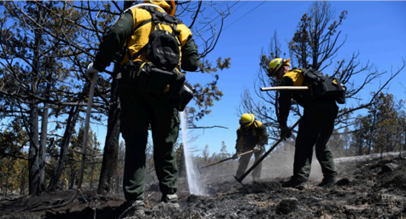
We are in the summer height of wildfire season. Oregon’s firefighters deserve our deepest gratitude and recognition for their tireless dedication to keeping our communities safe. Day and night, they put themselves in harm’s way battling wildfires, responding to emergencies, and protective lives and property. Their courage, resilience, and selflessness are a testament to their commitment to public safety, often under challenging and dangerous conditions. I thank them for their bravery in the face of fire and disaster but also for their unwavering service to our families, neighborhoods, and communities. Oregon is safer and stronger because of their extraordinary efforts.
For the latest updates on Oregon’s wildfire response and air-attack capabilities, check out the Oregon State Fire Marshal’s August 2025 issue of the Gated Wye. This edition provides in-depth coverage of recent advancements in wildfire management across the state.
Additionally, the Oregon Department of Forestry (ODF) provided an August Update and released a press statement announcing their new regional air-attach platform, which has already demonstrated immediate and effective response in recent wildfire incidents.
Both resources featured below offer valuable insights into Oregon’s ongoing commitment to protecting communities and natural resources.
Additional resources:
Live Oregon Fire Map and Tracker |
Frontline InciWeb – Oregon Wildfire Tracker
|
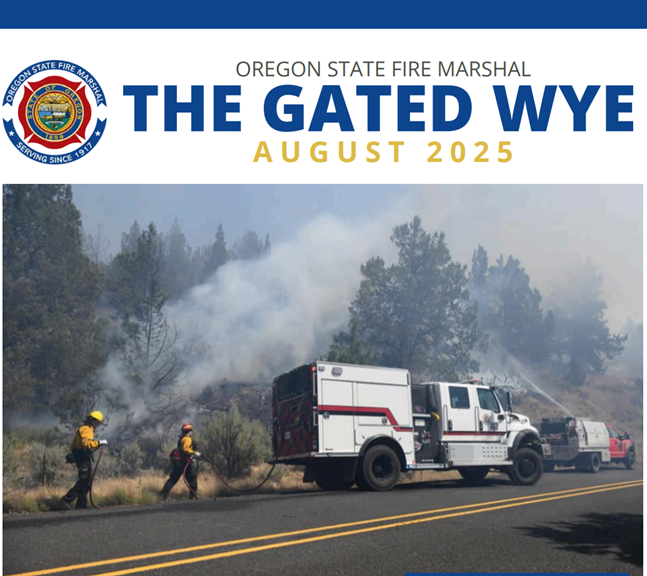
August 2025 - The Gated Wye - PDF

Across all jurisdictions, there have been 1,805 fires and 196,643 acres burned. There have been 730 fires on ODF protected land that have burned 13,283 acres, which is 40% of all the fires in Oregon this season, but less than 7% of the acres. For 2025 thus far, we’ve seen about 10% more fires than the 10-year average, but 78% fewer acres burned.
The current estimated gross costs for ODF this fire season are $90.1 million, and net costs are $41.6 million. Net costs are total (gross) costs minus reimbursements expected from federal and other state agencies and the amount paid by the General Fund for the state’s portion of fire costs. Eight large fires from June and July in central, southeast and southwest Oregon account for 89% of ODF’s gross costs and 79% of net costs.
So far this year, the Department of State Fire Marshal has responded to six conflagrations and six immediate responses, which are rapid mobilizations of ground and air resources to keep fires from becoming large conflagrations. To date, for both types of responses, OSFM costs are $9.7 million.
Near-term Outlook: The recent rain predicted for just about everywhere in Oregon was helpful in many areas of the state but came up short of anticipated totals in several critical locations. Statewide, we are already seeing a return to hotter, drier conditions with temperatures forecast to reach high 90s to low 100s through the weekend followed by lightning. This fire season is far from over.
Prevention: The rain we get during the summer typically isn’t the “soaking” type needed to really impact fire danger. After a summer rain, it only takes about an hour of exposure to sunlight for fine fuels like grass to be ready to ignite again. Please help combat complacency in the state’s peak fire activity months of August and September. Please check the fire danger level of the areas you live, work and play, and follow all local restrictions on burning, equipment use, campfires and other activities that can start wildfires. Fire danger levels and restrictions throughout the state are available here.

A recent press release issued by ODF shared the following:
Oregon’s wildfire response continues to evolve with the Oregon Department of Forestry’s (ODF) recent addition of regional air attack and ongoing investment in severity aircraft.
Deputy Director of Fire Operations, Kyle Williams, explained, “the severity aircraft and regional air attack gives us a huge advantage, both are excellent investments. These help us fight wildfires with surgical precision, quickly cutting off wildfires in critical locations.”
In terms of geographical scope, ODF is the state’s largest fire department. The department typically responds to more than one thousand fires each year. Most fires you never hear of because ODF’s fast, effective response keeps most wildfires under 10 acres.
Chief of Fire Protection, Michael Curran, explained, “this takes a coordinated effort using aircraft and on-the-ground firefighters to quickly stop these fires. ODF has hundreds of firefighters and multiple aircraft strategically located across the state to do this work.”
What is air attack?
Air attack is the airplane and crew that fly above a wildfire to coordinate aircraft and groundwork to stop a wildfire—a flying air traffic control center. Air attack has three primary responsibilities—keeping firefighters safe, ensuring accurate drops of water or retardant, and giving incident commanders a full, clear picture of the fire.
Safety takes priority. Keeping firefighters and air crews safe requires maintaining space between aircraft and coordinating precise water drops. Air attack monitors and directs flight paths based on multiple factors. The key factors are spacing and whether the pilot can drop the water on target while keeping on-the-ground firefighters safe.
Hitting the target keeps fires smaller. Accuracy depends on clear communication from the firefighters to air attack about target coordinates and timing. The firefighters determine the spot to hit, which can change quickly based on the speed that a fire spreads, winds, and aircraft.
Air attack calculates and coordinates based on how soon the aircraft can be on location, whether it is an airplane or helicopter, where the firefighters are, and how many parts around the fire need help. Air attack looks at the whole picture, triages the requests and details, determines which aircraft are best used where and when, then directs drops to stay on target.
While an aircraft drops water or retardant on the leading edge of the fire to check it, this allows on-the-ground firefighters to suppress the fire’s push by digging and creating a fireline, a non-flammable, mineral soil buffer around the fire. This early stage takes clear communication and coordination for precise water drops and keeping firefighters safe and out of the drop zone. Keeping everyone safe and maximizing the effectiveness of this oft called “airshow” on a wildfire takes calm disposition, clear communication, strategic thinking, and decisive action—that’s air attack.
Why does it matter?
Historically, when a wildfire started, aircraft, let alone air attack, were not readily available. When the wildfire grew to a size that warranted air attack, then the dispatcher would order it from a central location. The response time slowed the effectiveness, because of the limited air response and support. Even if an aircraft and firefighters arrived, the lack of big-picture coordination stifled the work.
Recent investments by Oregon’s legislature gave ODF two regional air attack teams.
Williams explained, “now, dispatchers can send air attack during the initial attack phase of emergency response. It’s a game changer.”
The regional air attack builds on the “severity aircraft” program to better use state resources. Over the past couple of decades, the legislature has continued investing in firefighters and technology that return great results.
|
Curran concluded, “we’re seeing a huge return on investment using these aircraft early—cutting costs, keeping wildfires small, and better protecting natural resources and the public.”
|
View ODF’s website
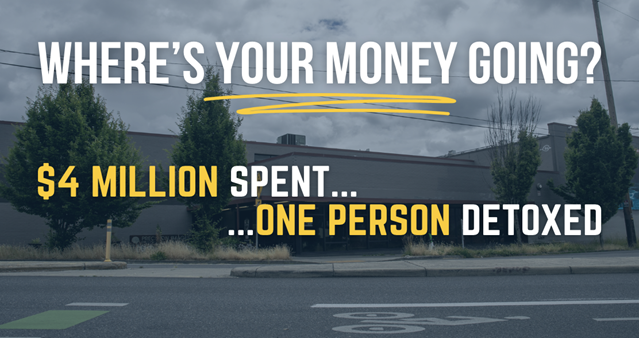
The Coordinated Care Pathway Center opened in Multnomah County in October. The mammoth project cost $3.8 million to build and has operated off a $4.3 million state grant since its opening.
Designers of the treatment facility envisioned a substitute for jail, where law enforcement could take people using or in possession of drugs. However, this vision has fallen short. Only 62 people have been deferred to the facility since its opening — of those, only 42 chose to engage with staff. Ultimately, only one person has been successfully detoxed through the program.
The $4.3 million grant will run out next month, but the county anticipates the state funding to renew in October.
The problem here isn’t about the money being spent to help rehabilitate people struggling with addiction; it’s that we are spending money to do a whole lot of nothing. Oregonians expect us, as elected leaders, to spend their taxpayer dollars wisely. If we allocate large sums to programs or projects, we must ensure they deliver real results.

As it stands, Oregon state law allows nineteen exemptions that qualify “bulk buyers” to purchase a driver’s personal information from the Department of Motor Vehicles. Exempt entities include insurance companies, attorneys, researchers and private investigators.
Information stored at the DMV is subject to public records requests, so anyone can access an individual’s data by paying a fee. The profit is then split between the DMV and ODOT, its parent agency.
|
Forestry’s new regional air-attack platform sees immediate success
SALEM, Ore. — Oregon’s wildfire response continues to evolve with the Oregon Department of Forestry’s (ODF) recent addition of regional air attack and ongoing investment in severity aircraft.
Deputy Director of Fire Operations, Kyle Williams, explained, “the severity aircraft and regional air attack gives us a huge advantage, both are excellent investments. These help us fight wildfires with surgical precision, quickly cutting off wildfires in critical locations.”
In terms of geographical scope, ODF is the state’s largest fire department. The department typically responds to more than one thousand fires each year. Most fires you never hear of because ODF’s fast, effective response keeps most wildfires under 10 acres.
Chief of Fire Protection, Michael Curran, explained, “this takes a coordinated effort using aircraft and on-the-ground firefighters to quickly stop these fires. ODF has hundreds of firefighters and multiple aircraft strategically located across the state to do this work.”
What is air attack?
Air attack is the airplane and crew that fly above a wildfire to coordinate aircraft and groundwork to stop a wildfire—a flying air traffic control center. Air attack has three primary responsibilities—keeping firefighters safe, ensuring accurate drops of water or retardant, and giving incident commanders a full, clear picture of the fire.
Safety takes priority. Keeping firefighters and air crews safe requires maintaining space between aircraft and coordinating precise water drops. Air attack monitors and directs flight paths based on multiple factors. The key factors are spacing and whether the pilot can drop the water on target while keeping on-the-ground firefighters safe.
Hitting the target keeps fires smaller. Accuracy depends on clear communication from the firefighters to air attack about target coordinates and timing. The firefighters determine the spot to hit, which can change quickly based on the speed that a fire spreads, winds, and aircraft.
Air attack calculates and coordinates based on how soon the aircraft can be on location, whether it is an airplane or helicopter, where the firefighters are, and how many parts around the fire need help. Air attack looks at the whole picture, triages the requests and details, determines which aircraft are best used where and when, then directs drops to stay on target.
While an aircraft drops water or retardant on the leading edge of the fire to check it, this allows on-the-ground firefighters to suppress the fire’s push by digging and creating a fireline, a non-flammable, mineral soil buffer around the fire. This early stage takes clear communication and coordination for precise water drops and keeping firefighters safe and out of the drop zone. Keeping everyone safe and maximizing the effectiveness of this oft called “airshow” on a wildfire takes calm disposition, clear communication, strategic thinking, and decisive action—that’s air attack.
Why does it matter?
Historically, when a wildfire started, aircraft, let alone air attack, were not readily available. When the wildfire grew to a size that warranted air attack, then the dispatcher would order it from a central location. The response time slowed the effectiveness, because of the limited air response and support. Even if an aircraft and firefighters arrived, the lack of big-picture coordination stifled the work.
Recent investments by Oregon’s legislature gave ODF two regional air attack teams.
Williams explained, “now, dispatchers can send air attack during the initial attack phase of emergency response. It’s a game changer.”
The regional air attack builds on the “severity aircraft” program to better use state resources. Over the past couple of decades, the legislature has continued investing in firefighters and technology that return great results.
|
Curran concluded, “we’re seeing a huge return on investment using these aircraft early—cutting costs, keeping wildfires small, and better protecting natural resources and the public.”
|
|
|
Read KATU’s story here
DMV records indicate that seven million requests have been made since the exemption law passed in 2020 — turning nearly $60 million in profit.
Currently, there is no option for Oregonians to opt out, but there are provisions against information being sold to marketers and solicitors.
Your information is being sold to data brokers. How do you feel about it? Should ODOT and the DMV be able to profit by selling your private information?
In July, Oregon’s unemployment rate hit the highest rate since the pandemic. At 5 percent, the state is ahead of the national average, which is at 4.2 percent.
|
This summer, during June and July, Oregon lost 11,300 jobs, with Intel’s layoffs hitting the market especially hard.
Because of Governor Kotek's anti-business policies, businesses are being forced to flee the state, and jobs are rapidly disappearing. There is no doubt that we are falling behind.
|
|
 |
Building and sustaining a robust and resilient economy that empowers the next generation and generates jobs in the private sector will remain one of my top priorities going into the 2026 session.
The last step in the legislative life of a bill is whether it is signed or vetoed by the governor.
Post sine die, the governor has 30 days to sign or veto a bill before it becomes law. Now that the deadline has passed, August 8, we know which bills have made it through the legislative process.
Here is a list of bills that were passed by the House and Senate but were vetoed by Governor Kotek.
 |
|
Senate Bill 976 — Allows an individual to verify whether cattle are pregnant without holding a valid license issued by the Oregon State Veterinary Medical Examining Board under certain circumstances.
|
Senate Bill 1047 — Requires Curry County and the Water Resources Department to expedite review of applications for use on specified lands.
House Bill 2596 — Enacts the School Psychologist Interstate Licensure Compact. Prescribes that the purpose of the compact is to facilitate the interstate practice of school psychology in educational or school settings.
Senate Bill 875 — Modifies the Oregon Foster Children's Bill of Rights and the Oregon Foster Children's Sibling Bill of Rights. The House and Senate overrode the veto, and this bill passed into law without the governor’s signature.
Senate Bill 302 — Requires the Department of Education to conduct an audit of assessments administered to kindergarteners in public schools.
|
Good news for the Portland Trailblazers! The team confirmed its sale to Carolina Hurricanes owner, Tom Dundon — meaning the team will be staying in Oregon!
With all the businesses fleeing Oregon in recent months, I’m happy to be bringing you good news.
We are looking forward to this next season under Dundon’s leadership and are eager to see what he accomplishes with this team.
|
|
 |

As we celebrate Labor Day, I want to take a moment to recognize the hard work, dedication, and resilience of the people who keep our communities strong. From the first responders who protect us, to the farmers who feed us, to the skilled tradespeople, small business owners, teachers, and countless others who keep Oregon moving forward. Your contributions matter ever single day.
Labor Day is also a time to reflect on the values of service, perseverance, and community. These are the qualities that build our state and will guide us into the future. I am grateful for the opportunity to represent you and to work toward policies that support family-wage jobs, strengthen our economy, and ensure a brighter future for the next generation.
Wishing you and your loved ones a safe, restful, and meaningful Labor Day.
Capitol Phone: 503-986-1418
Capitol Address: 900 Court St. NE, H-385, Salem, Oregon 97301
Email: Rep.RickLewis@oregonlegislature.gov
Website: http://www.oregonlegislature.gov/lewis
|