|
Replies to this message are sent to an unmonitored mailbox.
To contact me, please click here: Rep.EmersonLevy@oregonlegislature.gov
Hello Friends and Colleagues,
We crossed the finish line around 11 p.m. on Friday night. The final week of the Legislative Session is always a little chaotic, especially for those of us on the budget committee, with countless last-minute meetings. But amid the whirlwind, I carved out a quiet moment. I stood on the House Floor, looked around, and felt overwhelming gratitude for the opportunity to serve our community and represent Central Oregon.
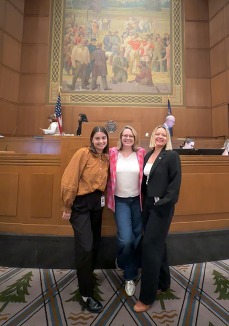
I'm especially thankful for my incredible staff, Marilyn Fleener and Rachel Hamid, who keep our office running smoothly. They are the first point of contact for many constituents and work tirelessly to resolve issues—whether it’s help with paid leave, benefits, or other concerns. When the gavel came down Friday night, our constituent email inbox was at zero. Every message had been answered (unless it contained profanity or graphic content—we don’t respond to those).
They also help put together this weekly newsletter. It takes significant effort, and I’m proud to say we sent an update every single week of the Legislative Session. We’ll send out a full roundup of passed legislation later this month and then transition to monthly newsletters.
|
Thank you again for trusting me to represent you. I’m honored to do this work, and I’ll continue showing up with integrity, accountability, and heart.
Warmly,
Transportation Package: A Moment of Reflection
As you may have seen in the news, the final week included some tough moments. One of the biggest disappointments was the failure to pass a Transportation Package—we simply didn’t have the votes.
If I can be vulnerable with you for a moment: as someone who grew up in a family where paying bills was sometimes a challenge, I was losing sleep over parts of the original package. Some of the proposed taxes would have hit everyday families too hard. Thankfully, several of us in our caucus felt the same way, and many worked around the clock to revise the package and remove those burdens. That resulted in a smaller, more balanced version—but in the end, it still didn’t move forward.
Here’s what I’ve learned—both from polling and from the emails I’ve received: many Oregonians don’t believe our roads and bridges are in bad shape, and there’s a real lack of trust in how our state transportation agency manages its funding. But the reality is stark. One of our bridges is rated a 6 out of 100. That’s not just bad—it’s dangerous.
Looking back, we should have led with a separate accountability package for ODOT before asking for more funding. While I’ve received some emails expressing disappointment that we didn’t pass a large package, 80% of the messages I received said: “We can’t afford this right now.”
We’ll take what we’ve learned and do better. For me, that means:
- Lower taxes
- Higher accountability
- A better case to the public for why this matters
- A bipartisan package
Legislative Wins
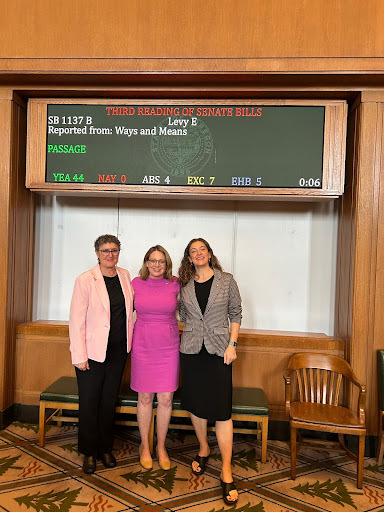
Despite the challenges, we achieved some major successes:
 |
|
✅ Repealed the wildfire maps and established stable funding for wildfire response
✅ Health care improvements for women: increased insurance coverage for women in perimenopause and those undergoing breast cancer reconstruction
✅ Support for families: Senator Reynolds’ Mominus Package, which includes support for doulas, lactation counselors, and housing protections for families with infants
✅ Funding wins for Central Oregon—including new youth mental health beds. [Read more here.]
|
Central Oregon Successes
We brought home some critical investments for our community this legislative session:
Mental Health: $3 million dollars to establish a Child Psychiatric Facility in Central Oregon. Central Oregon currently lacks any dedicated child psychiatric crisis or residential treatment centers. For nearly a decade, a committed coalition, including St. Charles Medical Center, PacificSource, Central Oregon Health Council, BestCare, Deschutes County, and provider partner Jackson’s House, have been working diligently to plan, design, and secure support for a facility that meets the unique behavioral health needs of our region’s youth. The proposed 15-bed sub-acute facility in Redmond is close to becoming a reality thanks to this state funding.
Healthcare: $4 million dollars for Mosaic Medical’s new Conner’s Campus, a project that will dramatically expand access to integrated healthcare in our region, increasing Mosaic’s capacity in Bend by 50% for primary care, 200% for dental services, 75% for pediatric care, and 35% for pharmacy services.

Emergency Management: $10 million dollars to support the establishment of the Central Oregon Ready, Responsive, Resilient Center (CORE3) in Redmond, Oregon. The State of Oregon is facing growing threats from natural disasters including wildfires, flooding, etc. Once constructed, CORE3 will be a dedicated multi-agency coordination center and collaborative training facility for local, state, and federal public safety and emergency management personnel in Central and Eastern Oregon.
Juniper Mitigation: $4.6 million dollars to fund juniper tree removal projects, aiming to reduce wildfire risk and promote water conservation. Thank you to Representative Vikki Breese-Iverson for championing this!
|
House Votes to Repeal Wildfire Risk Maps
Last week, I successfully withdrew Senate Bill 83, which would repeal the Oregon Department of Forestry’s Wildfire Hazard Map, out of its committee and brought it to a vote in the House Chamber. The bill would eliminate the one-size-fits-all building code mandates associated with the map and direct state agencies to develop new model defensible space standards. SB 83 is extremely important to my community, as I have heard from so many of you regarding the frustrations and stressors these maps have caused. After the first successful bill pull since 2007, this legislation passed out of the House of Representatives by a vote of 50-1. In addition to the statewide hazard map, there are several statues that will be repealed with this legislation:
- Building code standards for wildfire hazard mitigation
- Mapping tool for wildfire hazard mitigation
- The definition of “defensible space”
- Limitations on use of minimum defensible space requirements
- Establishment of classes of wildland-urban interface
- Fire protection for lands outside of forest protection districts
This truly was an effort led by the public, so I appreciate every one of you who spoke out and shared your experience. I fully support the intent of this legislation and believe we should be educating communities about the ways to eliminate wildfire risk in their homes. But these maps were extremely flawed and disregarded the efforts that homeowners have taken to protect their land from fire. I hope we can continue these critical conversations and put forward more collaborative solutions to mitigate wildfires throughout Oregon.
Expanding Access to Homelessness Services for Youth
The House passed HB 3970, one of my priority bills this session, to expand eligibility for emergency housing services to include those who are pregnant or have children between zero and five years old. The Youth Emergency Housing Assistance program (YEHP) provides housing-focused services to enhance family stability and school success. However, currently, only school-aged children and families with school-aged children are eligible for the YEHP. Here in central Oregon, there is a severe lack of beds and resources for those experiencing house insecurity. It is even more difficult for young children to access these services. As our region continues to grow rapidly, we must ensure we are addressing the high rates of homelessness and implementing solutions to prevent adult homelessness. Passed unanimously out of both chambers, this bill is currently awaiting a final signature from the Governor.
Ensuring Healthcare Coverage for Menopause Treatments
The Legislature passed a bill this session to ensure individuals experiencing perimenopause, menopause, and post-menopause have access to essential treatments through their healthcare insurance. Menopause is a significant life transition that affects half of our population, yet it remains poorly understood and inadequately addressed in our healthcare system. Passed unanimously in the House and Senate, this legislation requires insurers to cover critical treatments such as hormone therapy, antidepressants, and osteoporosis-related medications. It would also ensure that new-to-market treatments are available to women. This bipartisan effort closes this gap in insurance and takes a critical step towards health equity in Oregon. HB 3064 awaits the Governor’s signature.
Funding for Wildfire Suppression and Mitigation
The Legislature has introduced a new revenue mechanism that will go directly towards wildfire mitigation efforts. Beginning January 1st, 2026, there will be a 65 cent tax on oral nicotine products, like Zyns. The revenue earned from this tax will go towards to two critical programs in Oregon:
- The Landscape Resiliency Fund: a grant program to fund landscape projects that reduce wildfire risk on public and private forestlands and rangelands.
- The Community Risk Reduction Fund: managed by the State Fire Marshal, provides grants to local governments to reduce wildfire risk.
This legislation also requires 20% of interest earned by the Rainy Day Fund, the state’s savings account designed to cushion the impacts of economic downturns or other emergencies, to be diverted into these programs. Finally, the bill proposes an increase in the Forest Products Tax for the purpose of wildfire suppression.
This session, the topic I received the most constituent emails about, was concerns regarding wildfire mitigation and risk. After experiencing historical fire seasons in Oregon the past few years, it was clear the Legislature needed to address this gap in funding. I believe this legislation is a critical first step towards ensuring our communities are equipped with the safety measures to protect their homes and address wildfires in a timely manner.
Fireworks: Dos & Don’ts
The Fourth of July is this week, so it is important to celebrate in both a patriotic and safe way, especially as we enter wildfire season. Here are some details to keep in mind as we gear up for the summer holiday. Be sure to also check your local laws regarding the use and sale of fireworks.
To help reduce the risk of fire and injury, fire officials urge Oregonians to follow the four Bs of safe fireworks use:
-
Be prepared: Have a bucket of water or a hose nearby.
-
Be safe: Keep children and pets at a safe distance. Never use fireworks near dry grass or other flammable materials.
-
Be responsible: Do not relight duds. Soak used fireworks in water before disposal.
-
Be aware: Use only legal fireworks and only where they are allowed.
Consumer-legal fireworks may be purchased only from permitted retailers and stands. These fireworks may not be used on:
- Public lands and parks
- National parks and forests
- Bureau of Land Management lands
- U.S. Fish and Wildlife Service properties
- Oregon state beaches, parks, and campgrounds
- Private lands protected by the Oregon Department of Forestry
Oregon law prohibits the possession, use, or sale of any fireworks that fly into the air, explode, or travel more than 12 feet horizontally on the ground without a permit from the state fire marshal.
Violations are a Class B misdemeanor, with a maximum fine of $2,500. Those who misuse fireworks or are found to be responsible for them causing damage may be held financially responsible for fire suppression and other costs. Parents can also be held liable for damage caused by their children.
The Oregon State Fire Marshal offers resources on fireworks laws, retail sale permits, and safety tips on its fireworks webpage.
Capitol Phone: 503-986-1453
Capitol Address: 900 Court St. NE, H-486, Salem, Oregon 97301
Email: Rep.EmersonLevy@oregonlegislature.gov
Website: https://www.oregonlegislature.gov/levye
| 

