|
Replies to this message are sent to an unmonitored mailbox.
To contact me, please click here: Rep.LisaFragala@oregonlegislature.gov
 Dear Friend,
Welcome to the final newsletter of my first legislative session as your state representative! The 2025 legislative session ended last Friday at close to midnight. Now that the dust has settled a little, I want to take a moment to thank you for the opportunity to represent you in Salem.
It has been an honor to participate in the legislative process and to enact real, tangible change for the well being of our state’s communities. The engagement I’ve seen from people in my district is astounding and I’ve appreciated every email, every visit to the capital, and every voice at constituent coffees. I truly believe we can shape a positive future together.
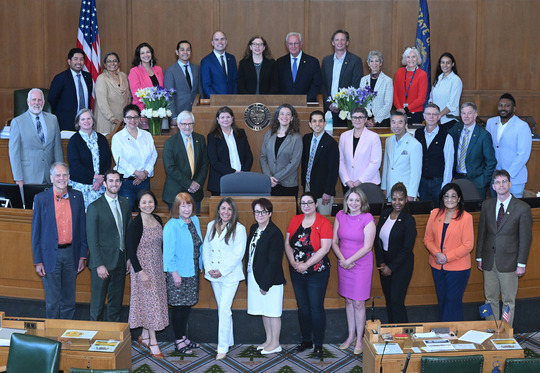
Oreogn House Democrats 2025
Legislative Recap
It has been a long six months, but I’ve learned a lot and I'm excited to share about this session's accomplishments. In this newsletter, I’ll reflect on the work we've done in the 2025 session and my final thoughts at the end of my first year as a state representative. |
|
 |
Investments in Housing and Homelessness
Oregon’s overall homeless population increased 13.6% since last year, according to the U.S. Department of Housing and Urban Development, and we’ve all heard stories about the increasing cost of housing. Addressing housing affordability and homelessness are some of the major reasons I decided to run for State Representative, and these are top priorities for me.
This year the legislature invested in critical affordable housing and homelessness solutions, including over $200 million for emergency shelters and $50 million to help people transition into permanent homes. The budget supports long-term rental assistance, eviction prevention, and tribal housing initiatives. It also funds housing for older Oregonians, supports modular construction, and pursues development of affordable rental and ownership opportunities for Oregonians in every corner of the state. On top of all of this we passed multiple bills that remove barriers to housing production.
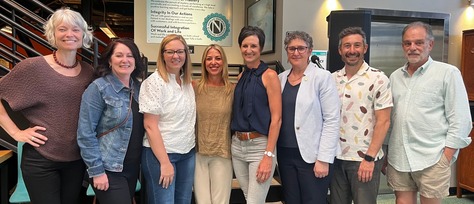
Better Housing Together Conference
I’ve been thrilled to serve on the House Committee for Housing and Homelessness and to be part of crafting solutions to address this challenge in our state. Two bills I'd like to highlight are:
-
Investing in a Permanent Statewide Shelter Program (HB 3644): This legislation continues essential funding for shelter programs in Oregon and was a committee priority bill. HB 3644 defines what kinds of facilities should be eligible for state funding, how that money would be disbursed to communities, and what data needs to be reported back to the state. I advocated for an expansion of definitions in this legislation that helps to include shelter types in Eugene that were not previously eligible for funding. These investments will help support critical services in our community and help to stabilize the lives of many Oregonians.
-
Establishes a Senior Housing Development Initiative (HB 3589): People aged 50+ are the fastest-growing group of people experiencing homelessness in America. This situation is magnified by the fact that fewer than 10% of housing is aging-ready, meaning it does not meet the financial and physical needs of this population. HB 3589 addresses the challenge of affordable housing for low-income seniors. It will help to fund modest accessibility modifications to homes and will incentivize housing development for older Oregonians. This bill was an important committee priority I was happy to advocate for to my fellow representatives.
There is still a lot of work left to do on behalf of Oregonians before we can really resolve the housing challenges that face our neighbors, and I stand ready to confront those challenges in future sessions.
Wins for Healthcare Access
Ensuring access to affordable and accessible healthcare for all Oregonians was another of the top reasons I ran for the Oregon State Legislature. One of our biggest priorities early in the session was passing HB 2010 to help strengthen and stabilize the Oregon Health Plan. OHP serves 1.4 million Oregonians and over half of Oregon’s children. This investment is critical at this time when the federal government continues to threaten Medicaid.
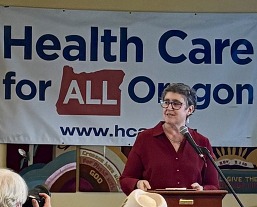
During the 2025 session we also passed legislation to protect Oregonians from predatory billing practices, delayed evictions for Medicaid families with babies, required health insurers to cover menopause treatment, and removed medical debt from credit reports. The following are two pieces of legislation that I saw as critical to our community and took leadership in advocating for:
-
Strengthening Oregon’s Corporate Practice of Medicine (SB 951): This was one of my top priorities of this session because of its importance to our community. SB 951 ensures medical decisions are made by medical professionals and not corporations, ensuring that in Oregon we put patients first over profits. This legislation addresses the crisis of access, affordability, and quality that followed the purchase of Oregon Medical Group (OMG) by Optum and prevents this from happening in other communities.
-
Protects Access to Lifesaving Medications for Oregonians (HB 2385): This law protects Oregonians’ access to comprehensive health care services at Oregon’s Federally Qualified Community Health Centers (FQHCs). Oregonians’ access to this program has been threatened by drug manufacturers refusing to provide discounts to community health centers working with local pharmacies. These restrictions force patients to travel farther to fill prescriptions and threaten safety net providers’ funding. HB 2385 prevents this and ensures some of our most vulnerable community members still have access to the healthcare they need.
Click here to see some of the other legislation I co-sponsored this session and worked with others to pass. As a state representative I’ll continue advocating for access to an affordable and comprehensive healthcare system in Oregon in future legislative sessions.
|
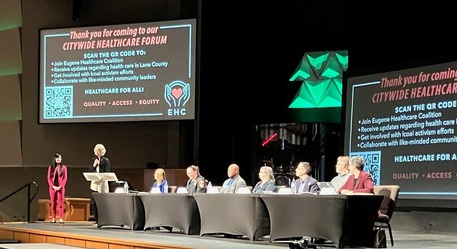 |
The Citywide Healthcare Forum
Tackling the Challenge of Wildfire Resiliency
Oregonians witnessed the tragic consequences of extreme weather last year in a record-breaking 2024 wildfire season, and fire officials warn this summer has the potential to be similar. Oregon communities are at an elevated risk for large fires due to the lack of rain this past winter and expected hot weather conditions this summer. The risk of extreme wildfires is a challenge that touches every Oregon community. Solving this issue is a priority for many of us in the state legislature, one we took steps to address this session, and one we need to continue to work on in the future.
-
Funds fire resiliency efforts and wildfire mitigation by imposing a tax on the distribution of oral nicotine products that are not combustible (HB 3940): Addressing the cost of wildfire mitigation and suppression is a priority the Oregon Legislature is working to address in order to protect communities from wildfire. This problem represents an on-going funding dilemma, but HB 3940 successfully identifies a new revenue stream to take a positive step in addressing this statewide challenge. I heard a lot from constituents on this issue in the past six months and will keep it front of mind in future sessions as an important priority.
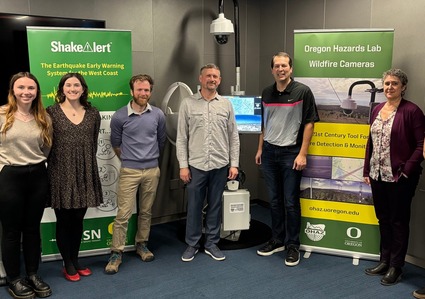
OR Haz Labs-- they operate critical wildfire cams throughout Oregon!
Reinforcing Environmental & Conservation Efforts:
This session we took strong steps towards a sustainable future and to safeguard our state's environment for the next generation. Legislative wins focused on a broad range of topics from education, conservation & the treasury to landfills, beavers & plastic bags. Two personal accomplishments this session were bills with a conservation and climate resiliency focus:
-
Expanding Opportunities for Land Conservation (HB 2256): I learned a lot working on this bill and it was my first success of the session. It helps expand conservation opportunities for the protection of drinking water resources, wildlife habitats, and recreational spaces by removing barriers for conservation land trusts. This technical fix has significant impacts on how quickly land trusts are able to protect an area, as well as maintain access to grant funds to establish conservation efforts. I was the Chief Sponsor for HB 2256 and worked with the McKenzie River Trust on its passage.
-
Ensuring K-12 access to Climate Education (HB 3365): Going into this session I knew I wanted to include students in the climate change conversation effort, so for HB 3365 I collaborated with a statewide coalition of students, teachers, and scientists. This legislation ensures that goals & objectives for climate science and resiliency are included in Oregon’s core content areas. Access to climate education provides future generations with critical knowledge about the world they live in, and it empowers them to take leadership in helping to address the many challenges that exist. I am proud to be the Chief Sponsor for this legislation.
Many small changes add up, and that is a large part of what we do at the state legislature. Click here for a quick peek at additional victories for a sustainable and renewable future that I co-sponsored and worked together with other state legislators on.
Strengthening K-12 Education in Oregon
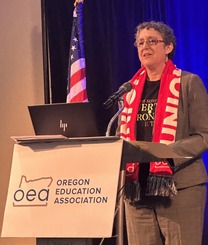
Sustainable stewardship for the future also means ensuring we have a strong education system in Oregon. The Legislature dedicated $11.4 billion to Oregon’s State School Fund, matching the Governor’s request and marking a significant investment in K-12 education. Combined with local revenues, schools will receive $16.7 billion over the next two years. The budget also supports Summer Literacy Programs and makes other K-12 investments through the state’s Student Success Fund.
Here are two bills I spent time promoting this session to help protect and improve Oregon’s education system and ensure all students across the state have the ability to learn and grow:
|
-
The Freedom to Read Act (SB 1098): Every child deserves to see themselves represented in instructional materials in their classroom and as an educator this bill was personally important to me. It is a big win that helps safeguard K-12 schools from discriminatory book bans and censorship. It ensures students have access to a diverse selection of books by prohibiting book bans based on race, gender identity, sexual orientation, religion, or other protected characteristics. I was honored to be a Chief Sponsor of this bill and to work along side others for its passage.
-
Addressing Chronic Absenteeism (HB 3199): Chronic absenteeism is a silent epidemic with profound consequences for Oregon students. This legislation seeks to address the underlying causes of this issue such as trauma, poverty, and housing instability. HB 3199 combines several previously independent approaches to tackle the problem through increased family engagement, data-driven strategies, and targeted funding. I was honored to work on this bill with Representative Hoa Nguyen who co-chaired the Chronic Absenteeism Workgroup during the 2024 interim.
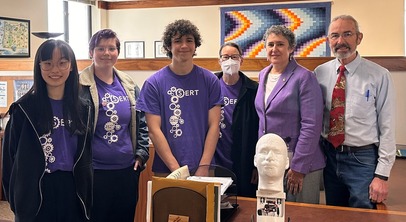
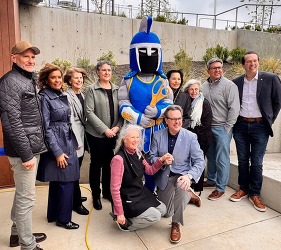
SCR 6: Honoring the South Eugene Robotics Team
Sustaining Oregon’s Higher Education System
In a time of uncertain state funding and a bleak economic outlook, Oregon’s Higher Education System didn’t get the money community colleges and universities need. The Legislature passed a $3.9 billion Higher Education budget, which does include an increase in spending from the last biennium, but this level of investment is still far from what is needed to keep institutions financially stable and meet evolving student needs.
This session I spent considerable time advocating for greater investments in Higher education with leadership in both chambers. I also co-sponsored the following bills and worked to see funding provided in the state budget:
-
Student Basic Needs Programmatic Support (HB 3182): Benefits Navigators provide critical support to low-income students at Oregon’s community colleges and universities. HB 3182 targeted investments to expand basic needs support programs, infrastructure and personnel. This bill successfully passed out of the House Higher Education Committee and was sent to the Joint Ways & Means Committee (JWMC). This bill didn’t make it out of the JWMC, but critical investments were included in this session’s final budget package.
-
Textbook Affordability and Open Educational Resources (HB 3183): Higher Education students in Oregon face difficult choices between paying rent, buying groceries or purchasing textbooks. HB 3183 would have helped in this area by making investments to expand Oregon’s statewide textbook affordability program, Open Educational Resources (OER). Like the previous bill, it also passed out of the House Higher Education Committee and was sent to the Joint Ways & Means Committee (JWMC), only to die there. Investments in OER were fortunately sustained in the governor’s budget through advocacy efforts by many.
As a state representative, I'm committed to tackling the chronic lack of stable funding for community colleges and universities in Oregon. During the interim, I plan to meet with other representatives in both the legislative and the executive branches to strategize on how we can tackle this critical challenge and do better on behalf of Higher Ed students in Oregon.
|
Protecting Worker's Rights & Wages
-
Eliminating Wage Theft in Oregon (SB 426): When you work in Oregon you should get paid. This legislation tackles the problem of persistent wage theft in Oregon’s construction industry by creating joint liability for owners and contractors. This ensures workers are paid and incentivizes owners and contractors to create an industry that doesn’t tolerate wage theft practices. SB 426 was by far the hardest piece of legislation I worked on this session, and it faced significant opposition. I was a Chief Co-Sponsor for this bill and was proud of the work I accomplished on this legislation in collaboration with Senator Floyd Prozanski.
-
Pay Parity for Part-time Faculty at Community Colleges (HB 2669): The average part-time faculty member in Oregon earned 58% of what a full-time faculty member earned for the same credit load in 23/24 school year. Part-time faculty at our community colleges teach the same students, the same courses, with the same expertise as their full-time counterparts, but they are doing it for significantly less pay. HB 2669 was designed to address the need for pay parity for part-time faculty. I was proud to be a Chief Co-sponsor, even though it didn't receive the funding it needed. This is a piece of legislation we will bring back in a future session.
Click here for a quick peek at additional victories for protecting Oregon’s working families and ensuring they are treated equitably. These are bills I co-sponsored and will continue to advocate for together with other advocacy groups and legislators.
Ensuring Community Safety for All
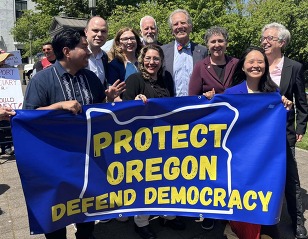
In the 2025 session, community safety took many forms, but the following two bills were ones I personally spent time promoting.
-
Gun Violence Prevention (SB 243): Every family in Oregon should be able to send their child to school knowing they will come home safe later that day. City and County employees should be able to go to work and know that it is a safe workplace. SB 243 takes two very reasonable steps to ensure school children, public employees, and community members are safer from gun violence. It bans accessories that turn semi-automatic weapons into fully automated weapons and allows cities to ban firearms from certain public buildings. I spoke passionately in support of SB 243 on the House floor. Ensuring we continue to make progress on gun violence prevention is a personal priority for me as a long-time educator.
|
-
Prohibits landlords from discriminating against tenants based on immigration or citizenship status (SB 599): This legislation is about more than documents, it is also about ensuring the safety of our immigrant communities. No Oregonian should have to live in fear that where they were born or their nationality could cost them their home. SB 599 makes it clear: housing is a human right, and discrimination has no place in Oregon. I was proud to be a co-sponsor of this legislation in a time when immigrant communities are under attack.

Reflections on the Transportation Package
Throughout the 2025 legislative session, I was a strong voice for a transportation re-investment package that would help to stabilize and strengthen a modern transportation system in Oregon. I advocated for a broad range of revenue options that spread costs across all users in the system, and I looked to balance this with a need to minimize financial impacts on Oregonians.
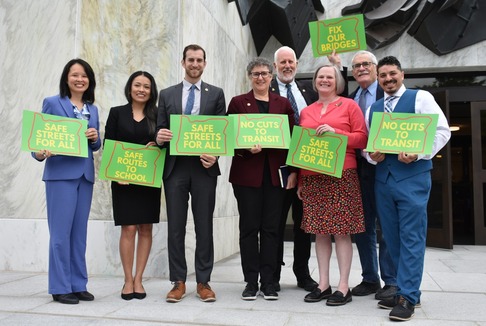
Others in the Environmental Caucus and myself advocated for policies that would stabilize our transit system as well as make additional investments in pedestrian safety, and programs like Safe Routes to School, Great Streets, and Community Pathways. I believe community safety and multimodal transportation are critical priorities. Oregon’s communities also need investments that repair our bridges and maintain our roads. We’ve underinvested in these critical needs for a long time. Many of us also called for a plan of action for electrification and other strategies that help to address how our transportation system can decrease carbon emissions.
We knew what was at stake with this package. Communities across Oregon were counting on us to fix dangerous roads, keep transit running, and make sure ODOT is accountable. The House did the work, and we listened, negotiated, and brought forward a balanced, thoughtful plan grounded in what Oregonians told us they need.
We never stopped fighting to get this bill passed—not when the details were tough, not when the politics got complicated, and not when the path forward narrowed.
I know it is deeply disappointing that the Legislature couldn’t come together to get this important priority over the finish line this session, and I’m equally frustrated to come so far and not be able to deliver the investments Oregonians deserve. This isn’t the outcome we wanted, and we know it’s not what Oregonians need.
That being said, I’m committed in future sessions to keep working on delivering a Transportation Re-Investment Package that prioritizes our communities for safety, multi-modal forms of transportation, and investments in electrification to decarbonize the system. It might take time, but I’ll keep working to make this a reality. Please feel free to contact me with any questions or input that you may have on this subject.
Targeted Investments in Our Community
Although Oregon's budget was tighter than expected this year and our state continues to see negative impacts from an economic downturn, myself and others in the Eugene/Springfield delegation were able to secure several key fundinginvestments that will positively impact our community and region.
★ Lane County Behavioral Health Stabilization Center: Lane County received nearly $15 million for a much-needed stabilization center to support the mental and behavioral healthcare needs of our regional community. With a potential site located next to PeaceHealth Hosptial, this investment will expand the mental health resources we are able to offer our community and increase the number of beds for our region’s intake capacity. We’ve heard loud and clear that this is an important priority regionally.
★ Northwest Youth Corps: Located in the Laurel Hill Neighborhood on the eastern edge of my district, this organization provides a stimulating education and job training experience that helps youth develop the skills they need to live productive lives. The $2 million investment I advocated for will help the program complete infrastructure investments and expand their wildfire resiliency work across Oregon. The school also provides a needed community meeting space in the Laurel Hill Neighborhood.
★ Infrastructure Development at Clear Lake: Ensuring that our city has opportunities for economic development is critical. The vision for the Clear Lake area is primarily as a green employment center offering large sites for low-impact manufacturing, light industrial uses, commercial services, and health & technology uses. A regional sports park is planned for nearby Golden Gardens Park. Our local delegation was able to secure just over $6 million for infrastructure investments to expand opportunities in this area.
★ Investments in Lane County’s Judicial System: Lane County has seen significant increases in the number of cases our local judges need to address for a variety of reasons. This session saw funding for two additional judges in Lane County, and this investment means community members move through the judicial system in a quicker and more equitable manner.
Thank You for Being A Part of This Process!
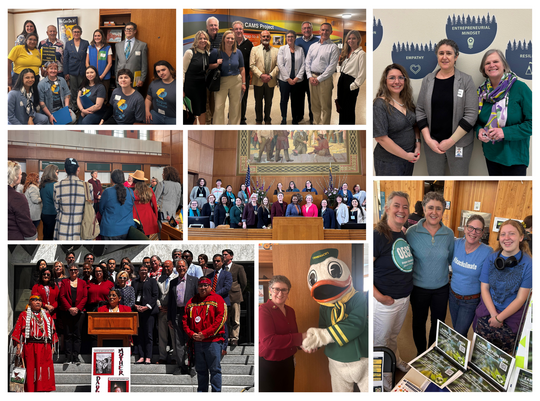
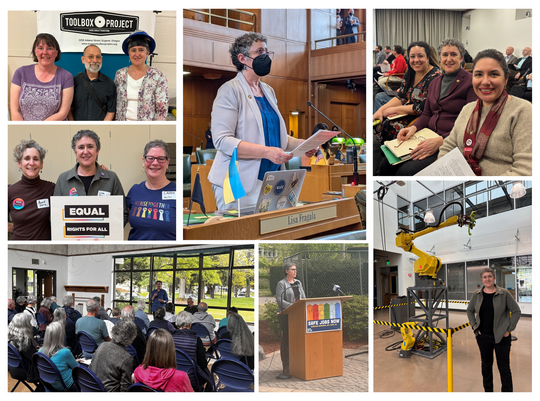
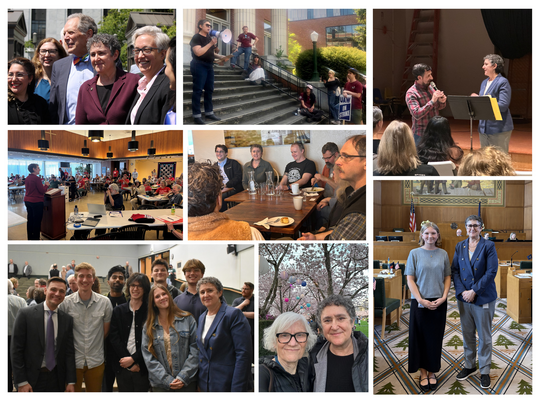
I met with many wonderful constituents and organizations who passionately advocated for what they believe in during the 2025 session. Your emails also informed my work as a state representative, and I enjoyed meeting & hearing from constituents who joined my monthly coffee gatherings. Engaging with my community is incredibly important to me.
If you participated in the legislative process this session in any fashion-- thank you! If you haven’t, it is never too late! Here are some of the many people I was able to connect with in the 2025 Legislative session!
 Upcoming Summer Events
Constituent Pizza Party:
July 20th, Location TBD
The end of the session calls for pizza! This event will be similar to my other Constituent Coffees; it will be an opportunity to ask questions and hear how the final weeks of the session played out. Stay tuned for more information. We will create a Facebook event and send out an additional newsletter invite once the location is nailed down.
The best way to stay updated during the interim is by following me on social media. This is where I'll announce special events first.
Click the icons here to be taken to my social media profiles!
  
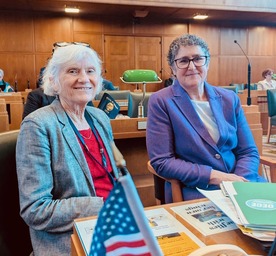
Although the 2025 Legislative session has come to a close, my office is still here for you! We will continue to be available for help with government agencies, answer your questions, and support other constituent needs. See my contact info below to get in touch!
Additionally, I am planning to attend many summer events as well as continue to meet with constituents. I’m thankful to have this time to engage with my community. I look forward to staying connected during the interim and continuing the conversation of how we can move our community and our state forward together.
Thank you again for coming along with me on my first legislative session! This is only the beginning, and I’m excited to share my progress in the future sessions to come.
Sincerely,
Representative Lisa Fragala
House District 8
|
My Office Is Here For You
Email: Rep.LisaFragala@oregonlegislature.gov I Phone: (503) 986-1408
Address: 900 Court St NE, H-484, Salem, OR, 97301
Website: https://www.oregonlegislature.gov/fragala
Facebook | Instagram
Please get in touch if you need assistance!
Click here to access my full compilation of resources!
|