|
Replies to this message are sent to an unmonitored mailbox.
To contact me, please click here: Sen.SuzanneWeber@oregonlegislature.gov
Join us for this week's update of the 83rd Oregon legislative session as we discuss recent peaceful protests in District 16 compared to the violence in urban areas, safety concerns following tragic events involving legislators in Minnesota, and the intense political polarization. We also chat about the unexpected breakdown of transportation package negotiations due to the Democrats' introduction of HB 2025, which I oppose due to the proposed significant tax and fee increases impacting citizens and a lack of transparency, contrasting it with the Republican alternative that focuses on roads and bridges.
You can listen in on SoundCloud or watch on Youtube.
|
While I was initially part of the selected members of the legislature to be on the negotiating team for the Transportation Package, that privilege was taken from the group as the majority leadership became impatient to move forward and took over the process. They were not willing to let us continue to work together as a team to make sure that all Oregonians were represented regardless of party affiliation. This is what we are left with.
This week House Bill 2025 was shared with us and then immediately brought to the public by way of an informational hearing and then public hearings throughout last week in Joint Committee On Transportation Reinvestment.
Day 1 - June 9th the Joint Committee on Transportation Reinvestment introduced the Oregon Transportation Reinvestment Package (Oregon TRIP) to keep Oregon's roads and bridges safe, support city and county transportation needs, and provide needed oversight of the Oregon Department of Transportation.
Day 2 June 10th focused on repairing the state’s aging roads and bridges, investing in city and county transportation systems, completing major “anchor” projects, and holding the Oregon Department of Transportation (ODOT) accountable for delivering those investments efficiently and transparently.
Day 3 June 11th focused on the need for greater investments in safer, more accessible transit, rail, bike, and pedestrian infrastructure across Oregon. The hearing was the third in a series of four public hearings on the bill this week.
Day 4, June 12th focused on the urgent need to invest in the basic operations, maintenance, and preservation of Oregon’s transportation system. This was the fourth hearing on the bill this week.
Full recordings of each day's hearing can be found by clicking the link on the dates of each hearing noted above.
2025 Legislative Session - Updates from the Water Caucus
Summer is nearly here and the end of session is just around the corner. The Constitutional sine die (meaning the date that the legislative session has to end according to the State Constitution) is June 29, but the session can end earlier if all of the work gets done. If you've been following along with the water bill tracker you know that the number of water related bills has been whittled down considerably. According to the tracker, there were 183 bills with a clear water nexus introduced in the 2025 session. Of these bills, 88 bills met the first chamber deadline, meaning that they are still under consideration. Some of the bills that are policy only bills (no fiscal impact) are working their way through both chambers (the House and the Senate). Of these bills, 14 have already been signed into law. 58 bills are currently in the Joint Committee on Ways and Means for consideration in the biennial budget. Only a portion of these bills are likely to be funded. A printable summary of water-related bills grouped by the priority areas of the Caucus is available online.
Thank You for Visiting!
Thank you to all of the individuals and groups that came to Salem and the Capitol to share their time, knowledge, and passion with us. We have met with a wide variety of water stakeholders this session. We hope to see more of you at the Capitol in the future.
Water and Wastewater Infrastructure Workshop - June 26 in Hermiston
Business Oregon, in partnership with the Oregon Department of Environmental Quality, hosted a Water and Wastewater Infrastructure Workshop on June 5 in Coos Bay and will be hosting another one on June 26 in Hermiston.
The workshop will guide the attendees to:
- Learn from municipal representatives on how they prepped for water and wastewater project readiness and implementation;
- Listen to funders discuss project do’s and don’ts;
- Participate in a mock One-Stop financing scenario;
- Pitch a potential project and seek feedback from the expert.
Find more information, including registration form and agenda for the workshop online here.
Other Summer Events and Opportunities
Summer is a great time for gatherings, conferences, celebrations, and tours. Check out the upcoming opportunities to get more plugged in to the water world:
Oregon Water Data Pilot Portal - Beta Version Ready for Testing
The beta version of the pilot portal for the Oregon Water Data Portal is live and ready for testing. The pilot portal is accessible at https://www.oregonwaterdata.org/. This project is about improving access to data and information to help users make water and water infrastructure decisions and was funded by the Legislature in 2021 and 2023. The concept of a water data portal was initially described in the implementation portion of Oregon’s 2017 Integrated Water Resources Strategy and Oregon’s 100-year Water Vision.
This Oregon water data pilot portal was developed through a collaboration with multiple Oregon agencies, Oregon State University, and the Internet of Water Coalition based on the experience and knowledge of this group as well as the input and questions the team has received through various engagements. The objective of this initial pilot portal is to test functionality using limited data and will evolve over the next six months as data is added and improvements are made based on user feedback. The team will continue to build their understanding about user needs and experiences through this pilot portal phase. Users can provide feedback about the beta version of the pilot portal by completing a survey or emailing OWDP@deq.oregon.gov. Changes to the pilot portal will be made intermittently from input received during the beta testing until June 2025, as resources allow.
Let me just say up front this is not a tax that I am trying to raise, it is a tax that already exists and I am trying to help our communities by dividing what is already collected from tourists to help keep our community and visitors safe and happy. In fact our goal for the north coast is to help make sure local governments don’t have to raise this tax on guests that come to visit to support the burden that is placed on our infrastructure.
For many years there has been a desire to work on changes to the Transient Lodging Tax or TLT that makes it work best for both our local residents and to continue to encourage tourism in our communities. This is not a small topic and to really understand the challenges that surround the debate on “TLT” you have to dig into the issues in each city, county, and region.
Municipalities are especially looking for additional revenue in these really tight times where revenue is scarce and public service needs are greater. Speaking of revenue, I have often pointed out the error in the HCP in regards to our ability to harvest timber. The chosen HCP will cause countries like Clatsop and Tillamook to lose what used to be a large source of revenue to fund schools, law enforcement, and county health care from their timber harvest. As that revenue goes away, it only adds to the already overburdened system that supports our tourists as well as our local citizens.
Let’s get into the basics of Transient Lodging Tax or TLT as we like to call it.
What is TLT? It is the tax that guests pay on any overnight stay in Oregon. That includes hotels, motels, campgrounds, and short-term rentals. The tax is collected by the lodging provider on behalf of the local government and the lodging provider is paid an administrative fee for their service.
What does this TLT go to? This is where the controversy and confusion begins. The TLT prior to 2003 were allowed to go to broader tourism related uses. Additionally, those that had pre-2003 TLT are frozen in place regarding how much is passed through to tourism and how much goes to the general fund of the local government.
In 2003 the legislature enacted ORS 320.300 to 320.990, which governs the collection and use of state and local transient lodging taxes. OR 320.350 specifically restricts how local governments may spend the revenue from transient lodging taxes imposed or increased on or after July 2, 2003.
As I said, it can get very complicated depending on the city, or county that the lodging is located in. Currently the biggest issue, and the reason I have fought so hard for this change, is that our communities get 30% of that tax to go to the general fund in that city or county, while 70% is required by law to fund tourism related activities and that generally surrounds promotion of our region.
In communities like ours along the coast, we don’t have a struggle in enticing visitors to come to the coast. Just a couple weekends ago Astoria enjoyed doubling its population when Goonies from all over the world descended on the small community of 10,000 to celebrate the 40th anniversary of the release of the Goonies film. Those visitors were not only using the services in Astoria, but also traveled along our coastal highways, where the rescue services are generally provided by our Rural Fire Districts that are dependent on property tax and volunteer firefighters. The Goonies weekend is just one very small example of the problems we face every day as a visitor destination in a rural area. I could go on and on with examples of our infrastructure crumbling, but if you live here, you already know and have experienced these challenges.
My hope is that with HB 3962 crafted by myself, Representative Javadi and Representative Walters we will find a better balance between using the current tax money to promote more tourism and support the services that keep our visitors and our citizens safe and happy.
Current law dictates that at least 70% of net revenue from a new or increased local transient lodging tax shall be used to fund tourism promotion and tourism related facilities. No more than 30% of net revenue from a new or increased local transient lodging tax may be used to fund city or county services.
Our bill would change that percentage to 40% of net revenue to fund tourism promotion and tourism related facilities while 60% may be used to fund city, and county, to include special districts, such as our rural fire districts that are heavily burdened by tourism impacts.
This bill still allows a local government to choose to put more into tourism promotion where it is needed. But it gives the option to open those funds up to be used as needed for other than “tourism promotion”.
If you have an opinion about this one, I would love to hear it. Please do feel free to send me an email with your thoughts on TLT.
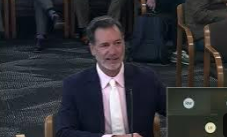
Senate Bill 916 has been a very divided issue among my colleagues in the House and Senate. Initially in the Senate all of the Republicans and 2 Democrats voted No. It made its way to the House and had further controversy where it was altered somewhat and sent back to the Senate for concurrence. The Senate did not agree with the changes and with that disagreement a conference committee is formed and the the bill must go before that newly formed committee. I have included a video with an explanation of how that comes to be and what it looks like.
SB 916 changes the rules around who can get unemployment benefits when workers are out of work because of a strike or lockout (a labor dispute).
Prior to SB 916, if you were out of work because of a strike or lockout, unemployment benefits were not expected.
With the passage of SB 916, If you’re locked out by your employer, you can now get unemployment benefits right away. If you’re on strike (you walked out), you can’t get benefits the first week, but after that you can get up to 8 or 10 weeks of benefits, depending on how much money is in the state’s unemployment fund.
Below, I've included some of the reasons I've seen for opposing this bill as well as supporting this bill.
|
Opposition
|
Support
|
|
🔸 Could lead to more or longer strikes, since the financial pressure is reduced.
|
🔹 Supports workers during strikes or lockouts, ensuring they can afford essentials.
|
|
🔸 Increases unemployment insurance costs for employers, possibly leading to higher taxes.
|
🔹 Levels the playing field between workers and employers in labor disputes.
|
|
🔸 Gives special treatment to unionized workers, creating fairness concerns.
|
🔹 Recognizes that lockouts are out of the worker’s control—they shouldn’t be punished.
|
|
🔸 Public employers (like schools) may pass costs on to taxpayers or cut budgets.
|
🔹 Helps workers resist pressure to accept bad contracts just to survive.
|
|
🔸 Adds complexity and administrative burden for the Employment Department.
|
🔹 Provides clear, consistent rules on benefits during labor disputes.
|
|
🔸 Risk of fraud or double-dipping (if workers get both back pay and benefits).
|
🔹 Could discourage employers from using lockouts as a negotiation tactic.
|
|
🔸 May make Oregon less attractive for business investment due to pro-labor rules.
|
🔹 Promotes economic stability for families during labor actions.
|
|
Capitol Phone: 503-986-1716 District Phone: 503-300-4493
Capitol Address: 900 Court St. NE, S-405, Salem, Oregon 97301
Email: Sen.SuzanneWeber@oregonlegislature.gov
Website: https://www.oregonlegislature.gov/weber/
| 

