|
Replies to this message are sent to an unmonitored mailbox.
To contact me, please click here: Rep.Farrah.Chaichi@oregonlegislature.gov
Whether you walk, bike, drive, or take public transit as your primary way of getting around, transportation impacts every community and is a vital aspect of public health and safety. According to US Census data from 2023, the average American commutes 26 minutes to and from work, adding nearly an hour to their overall workday. The same data tells us that two thirds of commuters drive alone to work instead of carpooling or using public transit. We can extrapolate a few things from this data: safe and well maintained roads are critical to keeping our communities safe, in order to reduce our greenhouse gas emissions (DEQ reports that more than one third of Oregon’s greenhouse gasses come from transportation), we must reduce our dependency on single occupancy vehicles, and we need more robust public transit systems, protected bike lanes, and walking paths to give folks an alternative way of getting around.
Alternatives to single occupancy vehicles are not just an environmental issue, but an economic one as well; gas, registration, and maintenance are inescapable expenses for car owners - expenses many folks struggle to afford. But if we make it possible for families and everyday people to get around easily, safely, and affordably, without a car, we can reduce this financial burden and climate pollution. And for families who choose to drive, safe roads and highways, sound bridges, and timely inclement weather responses are paramount in keeping those folks moving safely. Transportation is so much more than streets. It is sidewalks in school zones so kids can walk to class, it is protected bike paths so cars and bikers are at less risk of dangerous collisions, and it is fewer emissions so we can have clean air and water.
Back in April, the House and Senate Majority Offices released the Transportation ReInvestment Package (TRIP), as a first draft to address the critical needs present in our transportation infrastructure. This plan included $1.9 Billion every two years for the State Highway Fund, paid for by a number of revenue-raising mechanisms including the gas tax, registration fees, and a one-time, 1% of sale price fee on all vehicles at time purchase.. Under this plan, most of the revenue ($1.9B) would go toward cities, counties, and the State of Oregon to maintain roads, bridges, sidewalks, and bike lanes. The rest ($250M) would go toward finishing a variety of infrastructure projects around the State.
Safe Routes To School is a program that focuses on building safer sidewalks and bike paths connecting neighborhoods to their local schools. This program has too many benefits to list, but most important among them are peace of mind for parents and children who walk or bike to school, reduced dependency on car transportation, and less vehicle traffic near our schools. Washington County has received two grants from this program. One grant, awarded in 2022 for just under a million dollars, went toward building sidewalks along Witch Hazel Road. Another project that was approved in 2024 for $1.5 million is the SW 175th Sidewalk Gap Project.
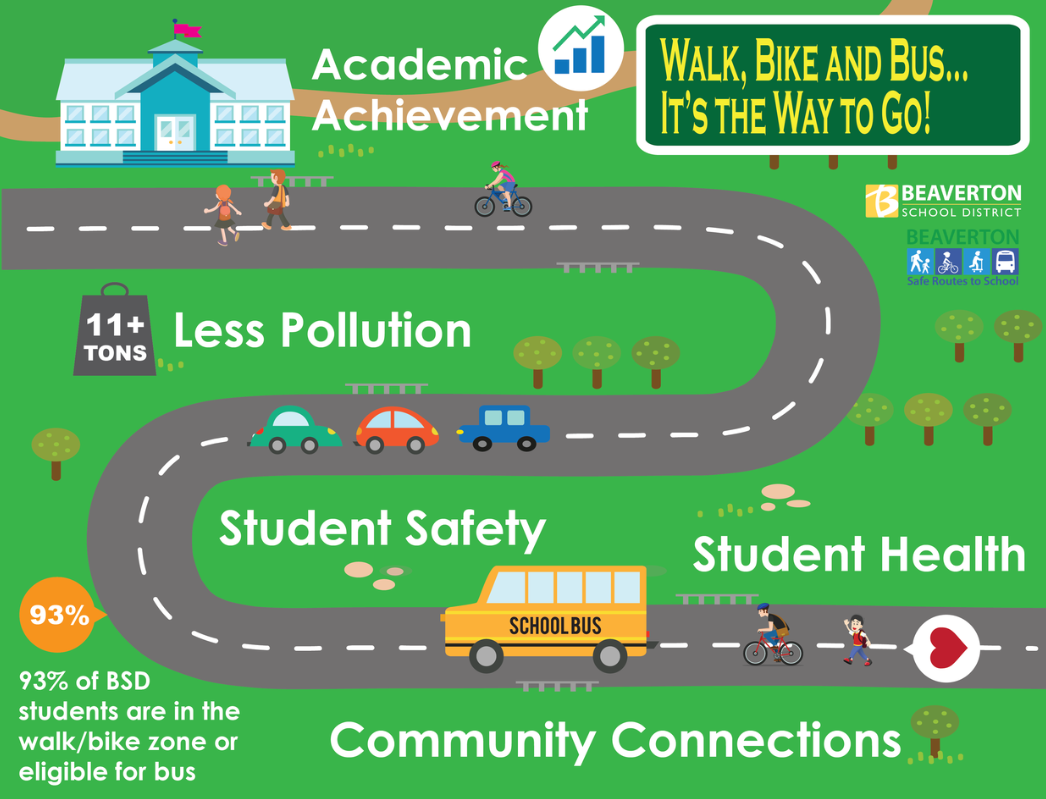 Graphic from the Beaverton School District Newsletter outlining the benefits of the Safe Route to School Program.
The Great Streets Program works to transform notoriously dangerous ODOT-owned thoroughfares into safe, accessible, city streets. The first round of Great Streets funding was awarded for the years 2022-2027 and funded through the Statewide Transportation Improvement Program (STIP). While it is not yet official, we expect that Washington County will be included in the 2027-2030 Great Streets Proposal. These funds would make up the gap in funding for the existing TV Highway Project.
Oregon Highway 8, known as TV Highway, is a heavily trafficked transportation corridor in Washington County that connects regional and town centers from Beaverton to Forest Grove. As you probably know, TV Highway is in critical need of investment. Furthermore, TV Highway has an extremely high collision rate, with more than half of collisions involving pedestrians. This is absolutely unacceptable. With regard to transit, Bus Line 57 has the highest ridership in Washington County, yet 54% of stops don’t have a shelter, 34% don’t have seating, and 41% have no lighting.
This leads me to one of my top funding requests this year. Alongside our partners in Washington County, I am asking for $50 million in state bonding for the Tualatin Valley Highway Bus Rapid Transit Project, led by TriMet and Metro. This project will bring critical transit and safety improvements to an urban arterial in desperate need of investment. The total cost of the project is $300 million - a state investment of $50 million will help close the gap required to draw down $150 million in Federal dollars. Metro, TriMet, Washington County, and the Cities of Beaverton, Hillsboro, Forest Grove, and Cornelius have been involved since the early stages of this project and have collectively agreed to provide $100 million to see this project to completion.
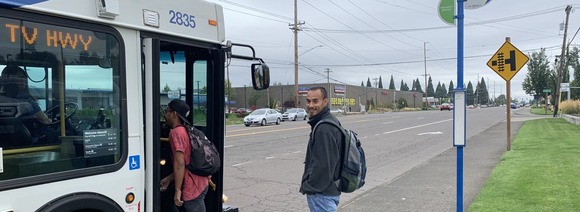 Photo of riders boarding the line 57 bus.
Have you heard of Fix-it Fairs? They’re community events where volunteers help folks fix small appliances, bikes, furniture, textiles and more for free! You can sign up to be a volunteer fixer or register to bring an item in need of repair. Whether it’s a bike with a broken chain, a pair of vintage jeans missing a button, or small appliance in need of a new cord, repairing your items keeps them out of landfills and saves you money. These are awesome community events, and I highly recommend you check them out.
Unite Oregon came by to talk about the importance of protecting affordable housing.
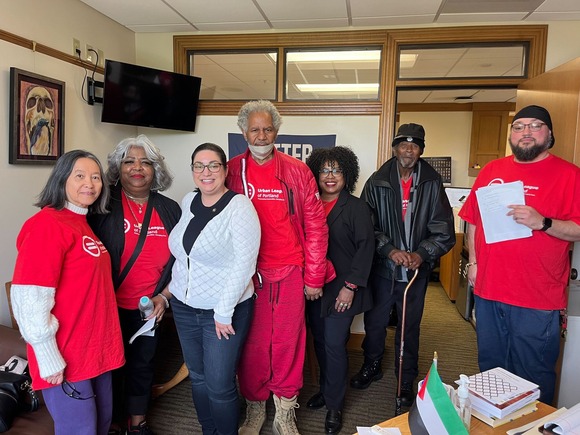 Six members of Unite Oregon, wearing red t-shirts, with Rep. Chaichi in her office.
The Carpenters Union stopped by to talk about construction workers experiencing wage theft.
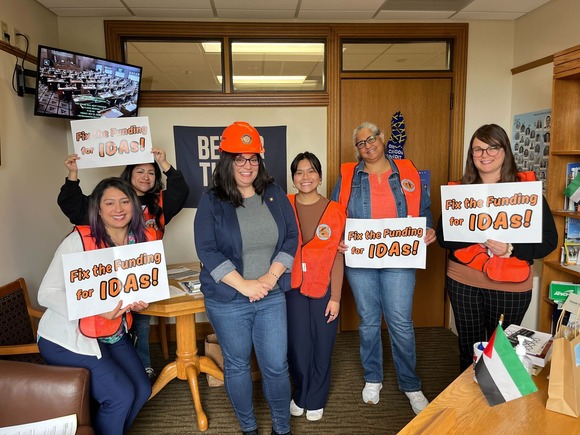 Five members of the Carpentors Union, holding signs that say "Fix the Funding for IDAs," with Rep. Chaichi in an orange hard hat in her office.
Cool firetrucks outside the capitol for First Responders Day!
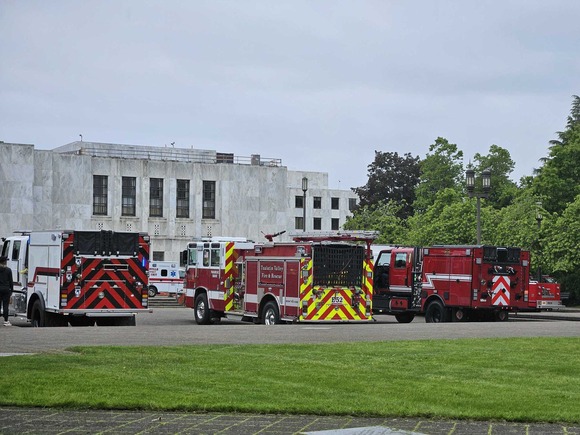 Three first responder vehicles parked in the Capital Mall.
As we near the end of the 2025 Legislative Session, most policy Committees, like the two I am assigned to, are finished moving bills, and the remainder of the time left in Session will be dedicated to having informational hearings. There are a few exceptions to this however, both the House and Senate Committees on Rules, the House and Senate Committees on Revenue, and the Joint Ways and Means Committee can continue to move legislation.
Please reach out to my office at any time for legislative or constituent matters. My staff and I are committed to serving the constituents of HD 35 and you can reach us at: Rep.FarrahChaichi@oregonlegislature.gov, or 503.986.1435. To keep up with my office, consider following me on Facebook or Instagram.
Thank you for taking the time to subscribe to and read my newsletter. I am honored and grateful for the opportunity to represent HD 35 in the Oregon State Legislature.
In Solidarity,
 Representative Farrah Chaichi, HD 35
Capitol Phone: 503-986-1435
Capitol Address: 900 Court St. NE, H-478, Salem, Oregon 97301
Email: Rep.Farrah.Chaichi@oregonlegislature.gov
Website: https://www.oregonlegislature.gov/chaichi
Facebook: https://www.facebook.com/RepresentativeFarrahChaichi/
Twitter: https://twitter.com/FarrahChaichi
| 

