|
Here are some highlights from the past week and helpful community information for you!
- Shelly
MIDDLE HOUSING UPDATE
The Housing and Homeless Committee advanced Governor Kotek's middle housing expansion bill, HB 2138. As I have mentioned before, the issue of middle housing has been the one I have heard about most often from constituents in the last year or more.
I introduced an amendment to Kotek's bill to give local cities like Albany a little more control to be responsive to the infrastructure challenges that middle housing causes. But we were told by the Democrat chair of the committee that it would not go forward.
I want to thank Vice Chair Breese Iverson for advocating for the amendment and raising the issues of infrastructure to the committee in the conversation around middle housing. I will continue to look for ways to advocate for the return of control over local planning to local governments. You can watch the committee vote on HB 2138 here.
The Statesman Journal recently published a story highlighting the unintended consequences of the Governor's middle housing in North Albany specifically.
OREGON’S ECONOMY: POLICY CHOICES DRIVING HEADWINDS FOR WORKERS AND FAMILIES
Oregon’s economy is showing troubling signs for workers and families, driven by Democrat-led policy choices.
High taxes and strict regulations advanced by the Democratic supermajority are making it harder for businesses to grow and for families to keep up with rising costs. These policies are driving up the price of gas, groceries, and rent, pushing people and employers out of the state and making it tougher for Oregonians to make ends meet. A new report from the Oregonian shows that it is causing more Oregonians to have to work multiple jobs just to get by.
A recent University of Oregon report found that the state is losing thousands of potential jobs and billions in private investment as businesses increasingly choose to expand outside Oregon. High taxes, regulatory burdens, and an unfavorable business climate are pushing companies, especially in manufacturing, to states like Texas, Washington, and California, instead of Oregon. This makes Oregon workers lose out on potential high-paying jobs.
We aren't just missing out on potential jobs coming to Oregon, we are actively losing jobs. Intel, Oregon’s largest private employer with over 20,000 workers, is preparing for another major round of layoffs as part of a global restructuring effort to cut costs and regain competitiveness. While the exact impact on Oregon is still unclear, last year’s cuts eliminated 1,300 local jobs, and further reductions are expected as the company seeks to shed up to 20% of its global workforce.
Despite a long-term decline because of overregulation, Oregon’s wood products industry remains a vital source of employment, especially in rural counties. In 2024, the sector provided 22,400 jobs and $1.5 billion in payroll, with higher-than-average wages for many positions that do not require a college degree. While technology and mill closures have reduced overall employment, projected growth in engineered wood products and retirements are expected to create nearly 9,000 job openings over the next decade, offering some hope for rural families.
Meanwhile, Oregon’s economic growth has lagged behind the national average, with job creation slowing and population growth stagnating. Unless Oregon changes course on taxes, regulations, and business climate, workers and families will continue to feel the squeeze from policies that are making the state less affordable and less competitive.
BILL THAT PREVENTS STATE PROCUREMENT OF ELECTRICAL VEHICLES, SOLAR PANELS FROM FORCED LABOR ADVANCES
On Tuesday, my colleagues and I celebrated another win, this time for humanitarian rights, when House Bill 2425 passed with a vote of 43 to 13.
This bill, brought forward by Representatives Ed Diehl and E. Werner Reschke, establishes an 11-member task force to ensure that the state doesn’t purchase electrical vehicles and solar panels from manufacturers that rely on forced labor, including of children.
Child Labor in Congo
Cobalt is a key component in electric vehicle batteries. 75 percent of the world’s cobalt supply comes from the Democratic Republic of Congo, where children as young as 7 years old work in dangerous conditions without safety equipment in artisanal mines, exposed to life-threatening risks such as cave-ins, toxic dust and chronic diseases.
Forced Labor in China
Similarly, 95 percent of solar panels are made up of polysilicon, and nearly half of polysilicon global production comes from Xinjiang, China, where Uyghurs and other Muslim minorities are subjected to harsh forced labor under constant threats from guards in mines and factories.
Importance of the Task Force
The task force this bill establishes will report out on how the state can stop buying these products from manufacturers that exploit children and forced labor.
As my colleague Representative Diehl so aptly articulated during the public hearing: “As Oregonians, we pride ourselves on standing up for human rights and social justice. Our green energy policies should reflect those values. We can’t claim moral leadership on climate action if it comes on the backs of child laborers and forced labor victims.”
OREGON’S EDUCATION CRISIS: A NATIONAL OUTLIER
IN ABSENTEEISM, SCHOOL YEAR LENGTH,
AND ACADEMIC PERFORMANCE
Oregon stands out for all the wrong reasons when it comes to student success. The state’s education system is marked by one of the highest chronic absenteeism rates in the country, a shorter school year than most states, and some of the lowest academic achievement scores nationwide.
Oregon’s chronic absenteeism rate is staggering - about 38% of students missed at least 10% of the 2022-23 school year, far above the national average of 26%. In some of Oregon’s largest school districts, nearly half of all students are chronically absent, a problem that cuts across grade levels and demographics.
As shown in a new Stand for Students Oregon report, chronic absenteeism is compounded by Oregon having one of the shortest school years in the nation (172 days). The average minimum instructional hours in the U.S. is 975 a year, but Oregon students only average about 900 hours per year. This is notably shorter than states with higher-performing schools, such as Massachusetts (180 days) or Kansas (186 days), meaning Oregon students lose weeks, sometimes months, of instructional time over the course of their K-12 education. Kansas students will get one full more year of school than an Oregon student by the time they graduate high school.
How do these trends translate to student performance? The consequences are clear in Oregon’s academic outcomes. On the 2024 National Assessment of Educational Progress (NAEP), Oregon ranked 48th in 4th-grade math, 46th in 4th-grade reading, 38th in 8th-grade math, and 31st in 8th-grade reading. When scores are adjusted for student demographics, Oregon ranks last or nearly last in the nation in every category.
FEDS THREATEN OREGON’S TRANSPORTATION FUNDING
AS KOTEK PRIORITIZES DEI INITIATIVES
Oregon’s transportation system faces a new crisis as federal officials threaten to withhold funding over the state’s diversity, equity, and inclusion (DEI) and driver’s license policies. This warning comes at a pivotal moment: Democrats in the Oregon Legislature are pushing forward an ambitious (and irresponsible to Oregonians) plan to raise billions in new taxes and fees for the Oregon Department of Transportation (ODOT), including higher gas taxes, registration fees, and new surcharges on vehicles and tires.
Despite the looming threat to federal dollars, Governor Tina Kotek and state bureaucrats have doubled down on their commitment to DEI initiatives. Kotek has publicly refused to roll back DEI policies, even as the federal government warns that they violate federal law.
This pattern is now repeating in the transportation sector. Instead of seeking compromise to secure federal support, Oregon’s leadership is signaling a willingness to risk hundreds of millions in infrastructure funding to preserve state-level DEI mandates. Meanwhile, legislative Democrats are asking Oregonians to shoulder billions in new taxes and fees to fill the gap for ODOT, even as polling shows strong public opposition to higher transportation taxes.
 FLAWED WILDFIRE HAZARD MAP ONE STEP CLOSER TO GONE
Let’s hear some good news!
On Tuesday, the Oregon Senate passed Senate Bill 83, which repeals the state’s wildfire hazard map and removes the strict regulations that came with it. This bill closely mirrors the legislation my colleagues and I introduced with House Bill 3944. It's is a big win for rural Oregonians who've been fighting against these costly and unfair mandates.
Now the bill heads to the House of Representatives for consideration, and I'm ready to help put an end to these terrible maps and restore property rights for rural Oregonians.
HARSHER PENALTIES FOR SWATTING GETS SECOND CHANCE
Last week, House Bill 3935, which would have imposed tougher penalties for swatting, died in the House Committee on Judiciary. But Republicans are giving this effort a second chance with House Bill 3969.
Swatting happens when someone makes a false emergency report to law enforcement. What some people might think is just a prank can quickly become dangerous, or even deadly very quickly. And unfortunately, it’s happening more often.
According to the Educator’s School Safety Network, there was a 546% increase in false active shooter reports from 2018/2019 to the 2022/2023 school years. In that latter year alone, over 446 false reports were made. These fake calls don’t just waste resources—they cause real harm. Emergency responses are costly, both financially and emotionally.
Right now in Oregon, swatting is classified as a misdemeanor, with penalties ranging from 10 to 30 days in jail. House Bill 3969 would reclassify swatting as a felony, with penalties of 5 to 10 years in jail and/or fines between $125,000 and $250,000.
The bill was read on the House floor on Wednesday and has now moved to the Joint Committee on Addiction and Community Safety Response.
Remembering Senator Aaron Woods
Senator Aaron Woods (D-Wilsonville) passed away Saturday morning, surrounded by family, after losing his battle with cancer. Born in 1950 and raised in Chicago, Senator Woods was a U.S. Army veteran who worked in the tech industry before being elected to the Legislature in 2022.
Woods was a dedicated public servant who loved serving his constituents and the state. Please keep his family in your thoughts and prayers. He will be missed.
Oregon lawmakers consider gun control bills amid legal battle over Measure 114
But Republicans including Rep. Rick Lewis, R-Silverton, argue the Legislature has already done too much to regulate guns. In recent years, Oregon has passed laws banning untraceable 3-D printed guns, requiring secure storage of guns and allowing courts to temporarily remove firearms from people at risk of harming themselves or others. “Every session since I’ve been here we’ve had at least one gun bill and it never seems to be enough for this body,” Lewis said before voting against one bill. “I’ve received probably well over a thousand emails from people in opposition to this...”
...“The gun industry will tell you that (dealers) are heavily regulated … that’s wildly untrue,” alliance executive director Jess Marks said. House Republicans oppose House Bills 3075 and 3076. “These bills force additional, expensive regulations on law-abiding citizens that many of them cannot afford,” said Rep. Greg Smith, R-Heppner. “Writing a blank check to the Department of Justice to enforce what’s already codified in federal law is bad policy.”
Proposed siting standards for large solar projects scrapped
Oregon lawmakers have decided against imposing the same siting standards on all renewable energy projects, whether they’re regulated by statewide officials or local governments. Supporters argued that House Bill 3422 would level the regulatory playing field while protecting high-quality farmland from energy development by requiring an analysis of alternative sites with lower agricultural value. “This bill will ensure no matter which layer of government you’re talking to, the rules are the same,” said Dru Draper, a legislative aide for Rep. Shelly Boshart Davis, R-Albany, the bill’s sponsor.
Port of Portland rescinds social equity policy, citing Trump executive order and federal funding
The policy said the Port was committed to promoting social and racial equity and believed “more diverse voices lead to better business decisions.” It defined racial equity as “ensuring that all races have access to opportunity, and that access may need to be tailored to meet an individual’s or group’s specific needs.” It directed Port staff to integrate social equity considerations into its decision-making processes.
Asked by The Oregonian/OregonLive which components of the social equity policy conflict with federal law, a spokesperson said Port officials “believe that the policy itself conflicts with the executive order, and taking action today positions us to be in compliance with federal law and protects our ability to fulfill our mission and serve the region.”
St. Helens high school principal resigns amid allegations of failing to protect students from sex abuse
The principal of St. Helens High School resigned on Friday amid ongoing public backlash after the arrest of two teachers at the school in late 2024 for allegedly sexually abusing students. Katy Wagner previously had been put on administrative leave after the sexual abuse accusations came to light, and she was indicted on November 26 on charges of criminal mistreatment and official misconduct, court records show.
Monthlong Portland crackdown leads to 46 arrests, 44 pounds of fentanyl seized
Portland police, partnering with county and federal officers, made 46 arrests and seized 44 pounds of fentanyl powder, 2,507 fentanyl pills and 22 pounds of methamphetamine in February, they announced Tuesday. They made the arrests throughout the city, supported by a $15,000 grant that allowed overtime pay for sheriff’s deputies and Portland police. “The challenge is so immense” and can be addressed only through law enforcement collaboration, Portland Police Chief Bob Day said at a news conference...
...Also seized over the one-month enforcement effort: 20 guns, $204,007 in cash, 9 pounds of cocaine and 2 pounds of heroin.
DEA: Cartels using children to distribute fentanyl in Portland
The DEA at a news conference Tuesday revealed that cartels are exploiting children to distribute fentanyl and other drugs in Portland...
...The Special Agent in Charge for the DEA, Seattle Field Division, David Reames announced at the news conference that Honduran drug trafficking organizations are working with the Sinaloa Cartel, one of the most powerful and violent drug trafficking organizations in the world, to flood the Pacific Northwest with fentanyl. Agent Reames added, these traffickers are exploiting children by using them to sell dangerous drugs in Portland, Seattle and other cities.
Increased punishment for drone flying passed by Oregon House
A bill looking to expand penalties for those found to be intentionally flying a drone during emergency response efforts has unanimously passed Oregon’s House. Sponsored by Gold Beach State Rep Court Boice, House Bill 3426 modifies the offense for knowingly or intentionally causing an unmanned aircraft to interfere with a law enforcement or firefighting operation from a misdemeanor to a Class ‘C’ Felony.
The need to increase the punishment came to lawmakers attention after several high profile close calls grounded firefighting operations last fire season. “We’ve just increased the penalties a little bit,” Boice tells NBC5 News. “We want people to be aware that drones are fine, but that if you use them improperly there could be some serious consequences for you.”
Bill to close ‘loophole’ allowing some domestic abusers to be convicted of just one charge — not 2 or 3 — passes Oregon House
House Bill 2875 plots a legislative path around a 2024 Oregon Court of Appeals ruling, State v. Miles, which determined that a 29-year-old Douglas County man who was found guilty of the strangulation and fourth-degree assault of his mother could only be convicted of one of those counts because both counts had resulted from domestic violence. Legal experts say the ruling — unfairly — singles out only domestic violence crimes — and that a person who commits those same acts against a stranger could still be convicted separately for strangulation and assault under Oregon law.
Data projects Oregon will meet less than 1/3 of Kotek’s housing production goal this year
Oregon Republicans in the state house of representatives on Thursday shared new data which shows the state is on track to meet less than one-third of Governor Tina Kotek’s annual housing production goal for 2025. The data was originally reported by the DJC Oregon. The U.S. Census Bureau data shows residential housing permits in Oregon have been declining every year since 2023. Gov. Kotek set an ambitious goal of 36,000 housing units for 2025.
The data shows Oregon is on track this year to build 11,184, or about 31% of the governor’s goal. “The numbers don’t lie,” said House Republican Leader Christine Drazan (R-Canby). “Governor Kotek’s housing policies are deepening the housing crisis, erasing Oregon’s identity, and blocking more families from achieving their dreams of owning a home.” FOX 12 has reached out to Governor Kotek’s office for comment.
Bills to permit behavioral health treatment by out-of-state providers were sailing, then hit the rocks
Four bills that sought to provide Oregonians with access to out-of-state psychologists and counselors under interstate licensing compacts appeared to be sailing toward approval in Salem with bipartisan support. But all four have died quietly, apparently following concerns raised privately by opponents, including Oregon’s Mental Health Regulatory Agency. At the last minute, the Speaker pulled them all,” said Rep. Ed Diehl, a Republican who sponsored the four bills. It was, he said, an “extreme disappointment.”
The bills — HB 2554, HB 2596, HB 3339, and HB 3351 — would have allowed psychologists, counselors and social workers licensed in other states participating in interstate professional compacts to provide care to patients in Oregon. The bills also would have allowed Oregon behavioral health providers to provide care to out-of-state patients, if those patients lived in states that participate in the compact.
 Government Accountability Hotline
Did you know that the Oregon Audits Division operates a State Government Accountability Hotline? If you suspect that a state agency is misusing taxpayer funds, you can report it anonymously and securely to the Hotline under Oregon’s Whistleblower Protection Law.
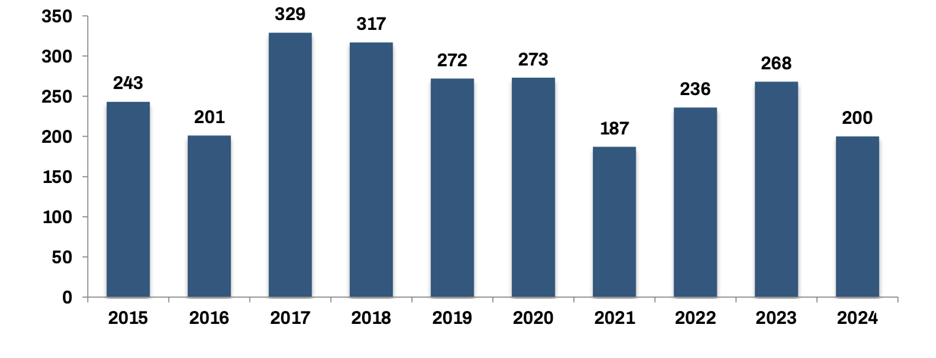
We must hold the government accountable, and we need your help! In 2024, the hotline fielded 200 reports, including 6 reports of voter fraud which were referred to the Secretary of State Elections Division. The graph below shows how many reports have been made since 2015:
To learn more about the reporting process or to report suspected fraud, click here. You can also call 800-336-8218.
REAL ID, Real Wait: What You Need to Know Before Heading to the DMV
From our friends at ODOT:
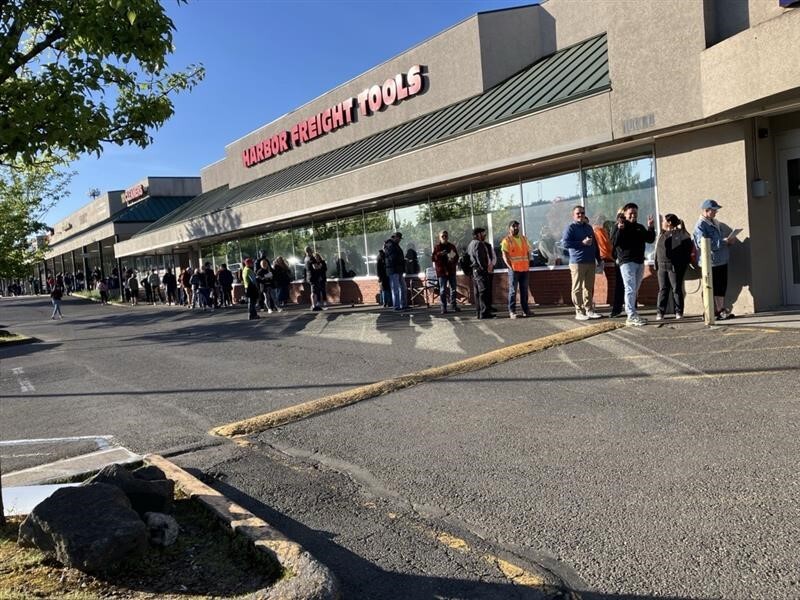
If you don’t need a REAL ID to travel soon, or if you already have a passport or another federally accepted form of identification, you may be better off waiting until the current rush subsides.
However, if you do plan to travel soon, don’t have a passport, and need a REAL ID now, there are a few things you can do to help the process go smoothly.
DMV recommends making sure you’re bringing the correct documents to avoid a return trip. You’ll need to provide one proof of identity and two proofs of your home address from two different sources. A full list of acceptable documentation is available here. I also strongly encourage using DMV’s documents guide in advance to help create a checklist of the right documents to bring.
Finally, be sure to build in three weeks to your travel schedule. That’s how long it can take for your REAL ID to arrive in the mail after your DMV visit, and we’ve been told that TSA will not accept the temporary paper ID you receive at the DMV.
Additional Considerations:
When deciding whether to get a REAL ID, here are a few things to keep in mind:
-
First, check to see if you already have a REAL ID. Oregon REAL IDs have a star in the upper right corner.
-
You don’t need a REAL ID if you have a valid passport or another federally accepted form of identification.
-
If you’re not planning to fly anytime soon, you may want to wait until your current license or ID expires before upgrading to a REAL ID.
-
REAL ID appointments are available but not required—DMV offices welcome walk-in customers. If you can’t find an appointment right away, keep checking—new appointments are released daily. Please note: REAL ID appointments are strictly for REAL ID transactions. If you book one for something else, you may be turned away.
-
If you already have all the documents you need for your REAL ID, you can use the self-check-in station in the lobby at most DMV offices instead of waiting at the front desk.
-
At busier DMV locations, once you have your ticket number, ask if you can receive text updates. That way, you can leave and return when your number is getting close.
More information on REAL ID
Work Zone Safety - Protecting those who keep Oregon moving
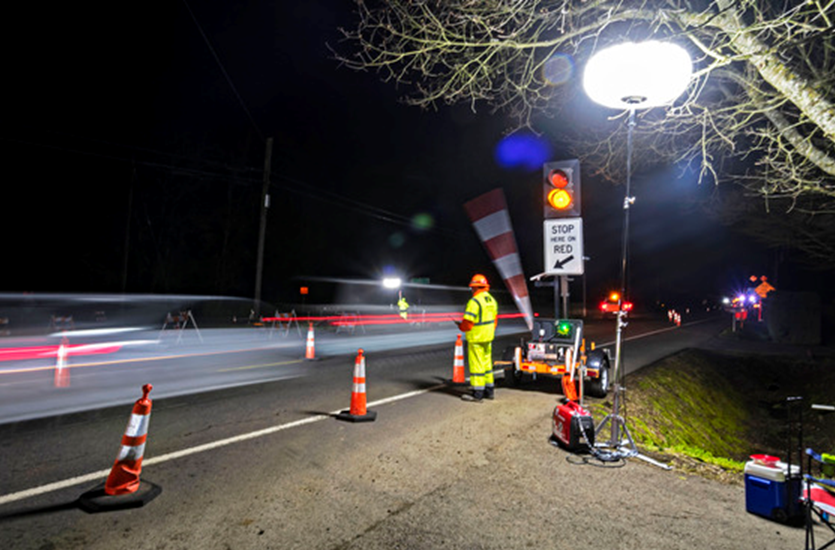
SALEM – Every day, workers around Oregon put their lives on the line to keep our roads safe, clear, and flowing smoothly. From construction crews and flaggers to tow truck drivers and incident responders, these workers are often just feet—or inches—away from passing vehicles.
"The people working in Oregon’s work zones are real people—our neighbors, friends, and family. They’re out there every day improving the roads we all rely on. As drivers, we owe it to them to slow down, stay alert, and move over when we can. Their safety is in our hands," said ODOT Director Kris Strickler.
Yet, work zones remain dangerous places. In 2023 alone, Oregon saw 584 work zone crashes, 572 injuries, and 10 fatalities—all of them preventable. Even more alarming, near misses are severely underreported, happening every day but not always making it into official statistics.
This week ODOT and state leaders gathered to recognize National Work Zone Awareness Week (April 21-25), but the message resonates far beyond one event. Work zone safety isn’t about a single week—it’s about making every day safer for those who keep Oregon moving.
Amy Ramsdell, ODOT Delivery & Operations Administrator, reinforced the call for safe driving: "One moment of distraction, one bad decision, can have life-altering consequences. Every driver has the power to prevent work zone crashes. We need everyone to take that responsibility seriously."
What Drivers Can Do to Help
Work zones are a shared space. As a driver, you are part of the work zone, and your choices directly impact the safety of those working in it. Here’s how you can help:
- Pay attention. Distracted driving is one of the top causes of work zone crashes.
- Slow down. Speed limits in work zones are set for everyone’s safety. Follow them.
- Move over. It’s Oregon law—when you see roadside workers, emergency responders, or maintenance crews, move over or slow down five miles below the speed limit.
- Plan ahead. Check TripCheck.com or call 511 for up-to-date road and work zone conditions.
- Remember: Fines double in all work zones—even if workers aren’t present.
Oregon Work Zone Crash Data
|
Year
|
Fatalities
|
Serious Injuries
|
Total Crashes
|
|
2023
|
10
|
43
|
584
|
|
2022
|
11
|
48
|
507
|
|
2021
|
4
|
23
|
476
|
With an increase in reported work zone incidents in 2024, the need for safer driving behaviors has never been greater. Drive as if you work here. Because for these workers, the highway is their office. And they all deserve to go home safely.
For more information on work zone safety, visit our website here!
Progress on the OR 24 Van Buren Bridge in Corvallis
From our friends at ODOT:
We've been working on the OR 34 Van Buren Bridge in downtown Corvallis over the past couple of years.
In February, we installed a platform under the Harrison Boulevard Bridge to get access to the drain and sewer system in the area.
This platform is heavy, so we had to temporarily restrict the weight allowed in the right lane.
We're still working on the system and need to extend the temporary weight restriction through mid-June.
For Van Buren Bridge, you can expect:
- Crews working during the day.
- Construction noise.
- An alternate route for pedestrians while the sidewalk is closed on NW Van Buren Avenue and while the crosswalk at NW 1st is closed.
- No access to NW Van Buren Avenue from NW 1st Street.
- No access to NW 1st Street from NW Van Buren Avenue.
- All businesses in the area to remain open – you can access the businesses on the southern portion of NW 1st Street using NW Jackson Avenue.
Visit ODOT webpage for more information
Save the date: LBCC Ag Center Breaking Ground!
During the 2025 legislative session my office will continue to keep you updated and informed - and is always at your service. Please don’t hesitate to reach out if you have any community event announcements, legislative questions, or concerns.
Talk soon,

Capitol Phone: 503-986-1415
Capitol Address: 900 Court St NE, H-389, Salem, OR 97301
Email: Rep.ShellyBoshartDavis@oregonlegislature.gov
Website: http://www.oregonlegislature.gov/boshartdavis
Replies to this message are sent to an unmonitored mailbox.
To contact me, please click here: Rep.ShellyBoshartDavis@oregonlegislature.gov

|