 * “I am only one, but still I am one. I cannot do everything, but still I can do something; And because I cannot do everything I will not refuse to do the something that I can do.”
—Helen Keller
Replies to this message are sent to an unmonitored mailbox.
To contact me, please click here: Sen.JeffGolden@oregonlegislature.gov
 One session milestone has passed...
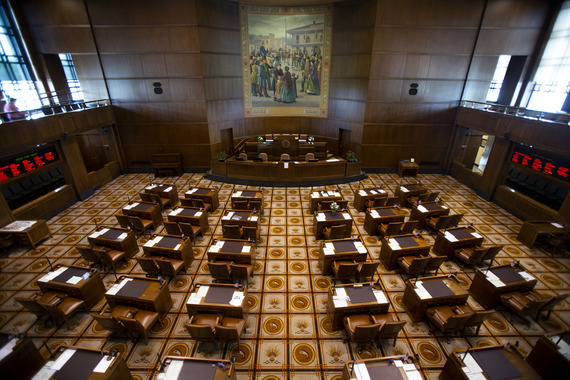
It happened Wednesday with the First Chamber deadline: the day most Senate bills die if they haven’t been passed by a Senate committee (same deal in the House). Here’s the current status of some of the bigger bills.
The three most important wildfire issues have been clear since early in the session.
—Repealing the wildfire hazard map that soured so many rural residents on SB 762, which created the overall wildfire program. Walking the ground with angry and confused property owners over time was eye-opening. The “large landscape” methodology of the map-making had a fatal flaw that all but destroyed the all-hands-on-deck collaboration we need. I pointed it out in this February 4 Senate Floor speech and began working with folks across the aisle on a bill that would repeal the map while keeping 762’s valuable elements in place. This week my committee unanimously passed that bill, SB 83, onto the full Senate—here’s some brief news coverage. We’ll soon be passing it, maybe unanimously, onto the House to do its work.
—Taking on the insurance crisis that massive wildfires have created. While I’ve talked to enough insurance industry folks to know that the growing insurance coverage crisis stems from wildfire, not the wildfire bill, the crisis is still real—and huge. Millions of Americans living in the midst of climate chaos—wildfire, hurricanes, flooding, tornadoes, horrific temperature extremes—can’t find affordable insurance anymore. Without it, home ownership itself is threatened. It’s hard to exaggerate the scale of this threat across America and much of the world.
The solution lies in a combination of reducing the number and intensity of these disasters (which is the whole purpose of the broad-based wildfire program that SB 762 launched) and working with the insurance industry to agree on realistic risk-reduction standards for homes and the grounds surrounding them. The general idea is that homeowners who meet these standards should be able to find affordable and adequate insurance coverage. The industry has already developed a model for “wildfire-prepared homes” that could serve as a universal standard. A nationwide conversation is now underway to expand that to “wildfire-prepared neighborhoods.”
Focusing on this neighborhood scale is the best way to engage insurers. Because of the intensity of recent fires—their flame length and massive ember showers— the good risk-reduction work you do on your own property may not matter if your neighbors aren’t doing their part. But when a neighborhood of, say, 20 or 30 adjacent properties reduce risk together, you’re creating a large enough landscape to materially improve the odds of surviving wildfire. That’s why my committee’s SB 85, which we also passed this week, directs the State Insurance Commissioner and Fire Marshal to keep negotiating with the industry on risk-reduction standards they’ll recognize with more favorable insurance rates.
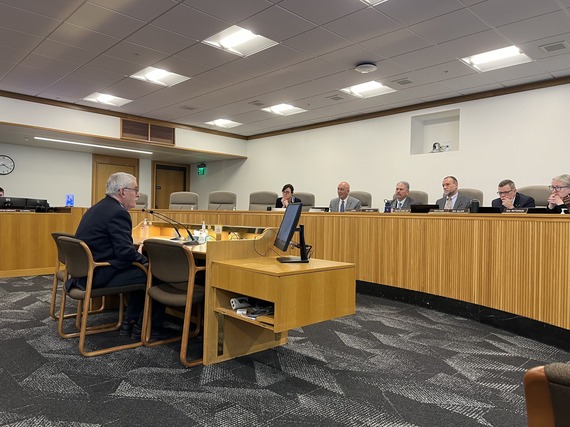 Senator Golden tesifying on SB 1177
—Funding wildfire programs with less dependence on the General Fund. We can talk all day long about the effectiveness of SB 762 programs for preventing and fighting wildfires, but that talk’s idle if we don’t fund them properly. I’ve written before about the interim workgroup that came up with alternative funding sources. l think most of them will have a rough time getting through the session; more on that in a future edition. I push for the one-and-done option that makes so much sense to me. I’ve written it up in SB 1177 and had a chance to lay it out this week, here, before the Senate Finance and Revenue Committee.
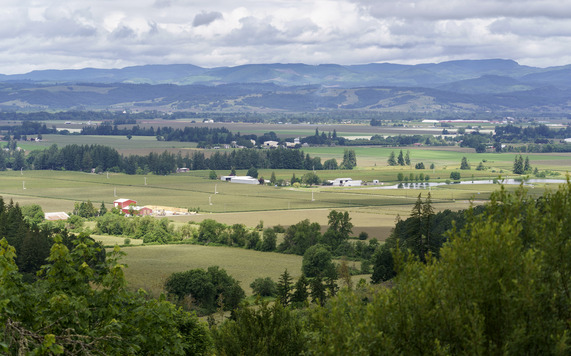 Photo by Kristyna Wentz-Graff / OPB
Oregon’s land use system, established in 1973, puts high priority on protecting prime farmland. It’s done that pretty well through most of the time since then. But in the last few years that’s been changing.
My committee received four bills this session to address the weakening of farmland protection. All met fierce opposition from development, real estate and corporate interests, as well as the Oregon Farm Bureau. I could only get one of them close to a final vote: SB 78, which said that when a non-farm dwelling on agricultural lands is replaced, the new structure can’t be larger than 2500 square feet or 125% the size of the original structure, whichever is greater. Today’s Oregonian clearly explained the issue, and where the argument on this whole issue of farmland protection stands today, in this article.
There will be no legislation this session to protect Oregon’s farmland.
The effort to join other states in the national movement to hold the fossil fuel industry liable for climate catastrophes reached its conclusion this week. A large and loud crowd showed up Monday to support SB 1187 before the Senate Energy and Environment committee. I kicked off the testimony by listing the facts in play. I was followed by dozens of Oregonians of all ages, some who lost everything they owned in the 2020 fires. Their passionate testimony made for an emotional afternoon.
Two days later, at the committee’s final meeting before the chamber deadline, the Chair announced that the bill wouldn’t move forward this year. The meeting ended with a conversation among committee members. You might want to watch the whole video, because it's a clear distillation of the climate change fight we’ve had for years now in Salem. We just can’t seem to break through.
The high-energy public hearing on SB 1187 was the first win in what will clearly be a long journey. It can have the ending we want if the believers in climate justice can stay the course and increase their numbers. A lot of big ideas needed several sessions to get over the finish line. The Climate Superfund, the system that has polluters pay, could be another.
SB 426, one of the session’s major labor bills, passed the Senate this week with all Democratic and one Republican vote. It obligates project owners or their general contractors to make sure that all workers, including those of their subcontractors, get paid. Opponents say it's not fair to put that burden on general contractors who might have no clue about their subcontractors’ business practices; we should be going after the bad actors directly, they say. I think the bill does go after the bad actors, and here’s why.
 Photo by Joni Land/OPB
Just about every vote having to do with climate change falls exactly on party lines. That’s what happened this week with SB 726, which advances the use of new aerial technology like drones to monitor the methane gas generated in landfills. The current technology for required monitoring is pretty much a joke: workers criss-cross over vast mountains of garbage with hand-held wands to sniff out gas. In other words, we have no real idea how much of this potent greenhouse gas is escaping from landfills, and therefore what we should do about it.
Opponents framed this data-collecting measure as another heavy burden laid on the shoulders of struggling businesses. I saw it differently and explained why on the floor.
My last newsletter shared the short floor speech I gave the morning I learned that the Trump Administration was cutting emergency food support to Oregon Food Banks by one-third. Reading that at the same time that the White House pushes renewal of tax cuts that skew so heavily to billionaires was shocking. I said at the time I’d be following up with a proposal.
What I wanted to test was whether the combination of these two events was shocking enough to break through the partisan standoff that has nearly paralyzed civic life. So I drafted this letter and invited every Senator to co-sign it with me. All Democratic Senators did. One Republican Senator got back to me and said he would sign if I edited out all references to the tax cut. I didn’t and he didn’t.
The letter goes out in today’s mail. All of the signers belong to one party.
So…not yet.
I’ll check in with you again before the second chamber deadline. Take care until then.
 Senator Jeff Golden, Oregon Senate District 3
Among the legislation still in play this session, these are getting a lot of attention.
Education
- HB 2251
- House Bill 2251 requires school districts to adopt a policy prohibiting the use of personal electronic devices by students during regular instructional hours, including passing time and meal periods. Exceptions are made for students with medical conditions or individualized education plans, and the policy must include consequences for violations and be made available to district personnel, students, and parents.
- HB 3652
- House Bill 3652 expands the subjects of mandatory collective bargaining for school districts to include class size and caseload limits.
Environment
- SB 1154
- Senate Bill 1154 modifies provisions related to groundwater quality and management in Oregon. It focuses on declarations of groundwater quality concern and management areas and mandates interagency collaboration led by designated agencies to manage these areas. The bill emphasizes the development of action plans for contamination reduction, public health responses, and stricter regulations, including monitoring and management by the Department of Environmental Quality, the State Department of Agriculture, and the Oregon Health Authority.
Finance and Revenue
- SB 110
- Senate Bill 110 regulates the use of incremental baseball tax revenues for financing a major league stadium, setting new thresholds for the stadium’s cost, expanding eligibility for professional athletes, and establishing provisions for grant agreements, including requirements for minority- and women-owned business participation.
Healthcare
- SB 951
- Senate Bill 951 prohibits management services organizations from controlling medical entities and voids noncompetition, nondisclosure, and non-disparagement agreements that limit medical professionals' ability to report unethical practices. It also bans retaliation against professionals for speaking out and allows them to sue for damages.
Housing
- HB 3054
- House Bill 3054 limits rent increases for spaces in manufactured dwelling parks and floating home marinas to match the Consumer Price Index and caps the maximum increase for home sales at 10%. It also prohibits landlords from requiring aesthetic improvements or internal inspections as conditions for selling homes, and mandates a study on water, sewer, and septic system improvements in these facilities.
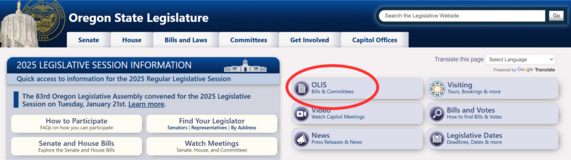
Step 1: Visit oregonlegislature.gov and click "OLIS". This will take you to the website where you can search for a bill.
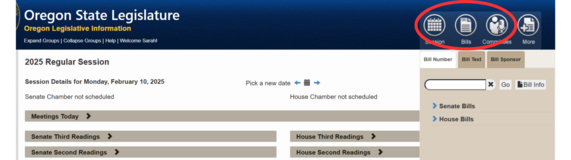
Step 2: Click "Bills" in the upper right hand corner to search for a bill by number, text or sponsor.
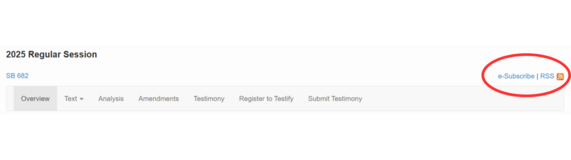
Step 3: When you've found a bill you'd like to track, click e-subscribe and add your email. Once you've done this you'll receive emails when the bill progresses through the legislative process.
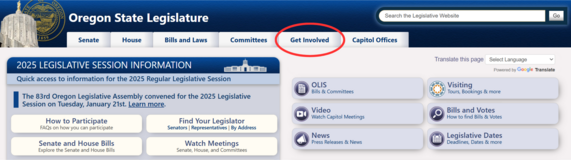
Step 1: Go to oregonlegislature.gov and click "Get involved"
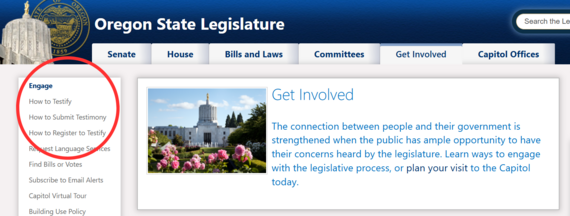
Step 2: In the left hand column, you'll find guides on how to testify, register to testify, and submit testimony.
Unemployment Insurance:
If you are experiencing difficulties accessing unemployment insurance, please contact our office by calling (503) 986-1703 or emailing sen.jeffgolden@oregonlegislature.gov
Food Assistance:
ACCESS operates 30+ food pantries in Jackson County, offering 3-5 days of meals for low-income residents.
Eligibility:
- Must live in Jackson County
- Meet USDA TEFAP Income Guidelines
- No ID or proof of income is required.
REAL ID Deadline Approaching:
- Starting May 7, 2025, anyone 18 and older must have a REAL ID or alternative ID (like a passport) to fly domestically or access federal facilities. The REAL ID is available at DMV offices—appointments are recommended. You’ll need to bring original documents to prove your identity, address, and lawful U.S. status. REAL IDs cost an additional $30. It takes about three weeks to receive your card, so plan ahead!
- For more details, visit Oregon.gov/REALID.
Legal Challenges to the Trump Administration's Actions:
- A comprehensive tracker by Just Security monitors the legal disputes against the Trump administration's executive orders and actions, covering areas like immigration, federal spending, and diversity programs. As of March 4, 2025, the tracker lists 96 active cases, providing case names, filing dates, summaries, and recent updates.
| 
