|
Replies to this message are sent to an unmonitored mailbox.
To contact me, please click here: Rep.LucettaElmer@oregonlegislature.gov
April 5, 2025 Legislative Update
House District 24,
It has been another very busy week inside and outside of Salem! On Thursday, I made a very exciting announcement on the House floor! In the past two weeks, I have become a first-time Grandma (x2). Click here to watch my full announcement.
This Wednesday, April 9th we have what is called the "First Chamber Deadline," meaning every bill that originated in either the House or the Senate must be voted out of their respective policy committees (or referred to another committee that is not subject to the traditional deadlines) in order to move forward. Keep reading below for an update on the Legislative Session. We have a very busy week ahead.

Oregon Adoption Day & Youth Suicide Awareness
This Monday, April 7th, House Bill 2019 which would establish Oregon Adoption Day on August 25th, and House Bill 3643 which would establish October 9th as Oregon Youth Suicide Awareness Day are going to be up on the House floor for a vote! Both of these bills are very personal for both myself, and our community.
To Tune In Live: Click here @ 11:00am on Monday, April 7th.
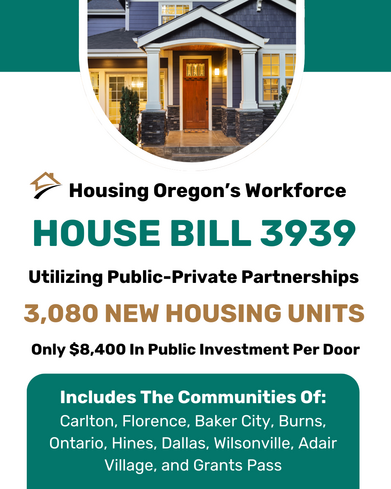
House Bill 3939 - Increasing Workforce Housing
My legislation, "Housing Oregon's Workforce," or House Bill 3939 is will be up for a public hearing this Monday, April 7th in the Housing and Homelessness Committee.
- You can register to testify in support of this legislation HERE. Click "Register to Testify."
- You can submit written testimony HERE.
What This Bill Does:
This legislation would provide 3,080 new housing units in the communities of Florence, Baker City, Burns, Ontario, Hines, Dallas, Carlton, Wilsonville, Adair Village, and Grants Pass. Each of the 3,080 housing units is priced at $8,400 in public investment per door.
To qualify for this public-private partnership funding, cities had to show they had shovel-ready infrastructure and housing ready for development, within the city’s current urban growth boundary (UGB), that could be completed within 60 months of receiving a direct allocation from the state. Additionally, local developers in each area had to confirm the affordability would pencil for them: 30% of the completed housing units must be available for sale or rent at 130% or less area median income (AMI) for the county.
I am thrilled to be bringing this legislation forward which directly funds desperately needed, shovel-ready infrastructure projects that will lead to more housing for our workforce. This legislation is modeled after House Bill 4134 which successfully passed and was signed into law during the 2024 Legislative Session. I am a firm believer that our publicly invested dollars go much further when attached to a commitment from private investment.
House Labor & Workplace Standards Committee
As you may know, I serve as the Vice-Chair of the Labor & Workplace Standards Committee. On Monday, April 7th and Wednesday, April 9th the Committee will be having several work sessions (this is where we vote to move policy out of committee). There are a LOT of bad bills that have the potential to further impact Oregon's business climate, and disproportionately impact rural Oregon - including our small cities and counties. A high level overview is below.
Bad Bills
House Bill 2548 - Agriculture Workforce Standards Board
-
What This Does: This legislation has a proposed amendment. House Bill 2548 a board of unelected bureaucrats who would have the authority to dictate regulate farmworkers’ wages, schedules and work conditions.
House Bill 3838 - Long Term Care Workforce Standards Board
-
What This Does: This legislation has a proposed amendment. House Bill 3838 creates a board to oversee working conditions in the direct care industry. This board, like the one above, would have extraordinary authority. The board, appointed by the governor and led by an executive director, would set pay and staffing standards for the roughly 60,000 people who provide care to seniors and developmentally disabled Oregonians.
House Bill 2944 - Allowing Labor Unions To File Civil Action Against Counties/Cities
-
What This Does: This legislation has been significantly amended. House Bill 2944 would add increased financial penalties for cities and counties who do not meet union timelines for handing over employee rosters and collected dues on time. Even if the city has an extenuating circumstance, such as flooding or a fire, they will still be subject to *some* kind of fine.
House Bill 2688 - Establishing Offsite Prevailing Wage
-
What This Does: This legislation has been significantly amended. House Bill 2688 would establish off site prevailing wage for a number of specified industries. Oregon manufacturing companies will have to pay the price, as businesses will turn to other states not subject to this law to purchase their materials.
House Bill 3881 - Penalizing Oregon School Districts To Bolster Apprenticeships
-
What This Does: This legislation has been significantly amended. As amended, House Bill 3881 will require School Districts who receive matching grant funds from the Department of Education to meet a 15% apprenticeship requirement on their public procurement project. For every dollar the contractor cannot meet this requirement, the School District will have to withhold dollars from the contractor, therefore limiting how much of the project can be completed.
Democrats Announce Their Transportation Funding Plan
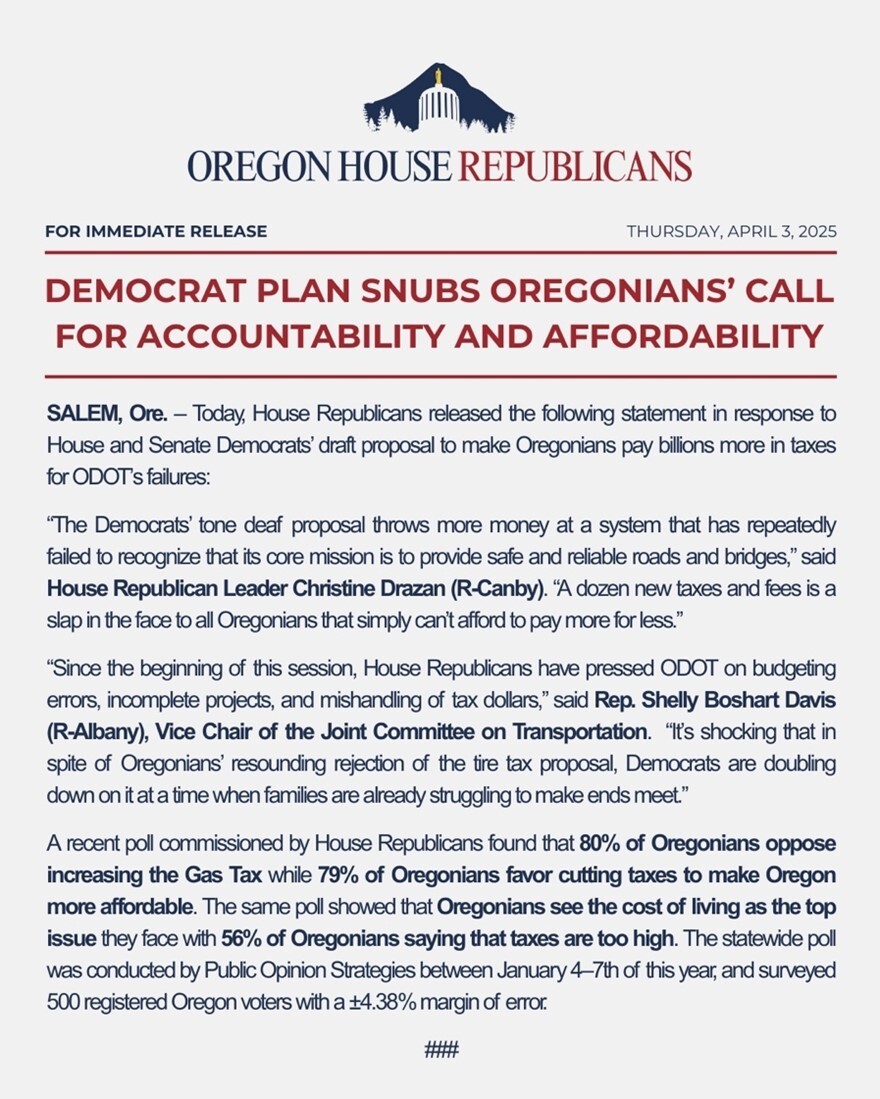
On Thursday, House and Senate Democrats released a multi-billion dollar tax and spend package for the Oregon Department of Transportation (ODOT), that proposes over a dozen new taxes, and fee increases, at a time Oregonians are struggling to make ends meet. Simply put, this plan asks you to pay billions more for ODOT’s failure and get less. The proposal increases gas taxes by 20 cents (a 50% increase), increases taxes on truckers by nearly 17%, creates a new tax on tires, increases payroll taxes, and more. See a full breakdown below:
- $0.20 increase on the Gas Tax
- $66 increase on car registration fees
- $90 increase on new titles/DMV fees
- 9% increase for the Weight-Mile Tax to move goods across our state
- 1% tax on new cars for a “one-time system use fee”
- 60% increase in Car Sales Tax
- 125% Payroll Tax increase
- New 3% Tire Tax
- New EV road use charge
- New delivery vehicle charge
- $9.50 increase on the Bike Tax ($24.50 total)
A recent poll commissioned by House Republicans found that 80% of Oregonians oppose increasing the Gas Tax while 79% of Oregonians favor cutting taxes to make Oregon more affordable. The statewide poll was conducted by Public Opinion Strategies between January 4–7th of this year and surveyed 500 registered Oregon voters.
House Democrats proposed legislation this in March to establish a tax on your tires with HB 3362. A public hearing on the bill made it clear that Oregonians resoundingly reject this tax as well with over 1,700 written testimonies, or 88% of Oregonians, opposing the Democrats’ tire tax.
Oregonians are frustrated by the rising cost of living and all these new taxes and fees will make it more expensive for families to drop their kids off at school, drive to work, and pick up groceries. ODOT is an agency that has mismanaged tax-payer dollars (including a $1 billion budget blunder), failed to deliver on key infrastructure projects from the 2017 transportation package, and refuses to limit their scope by focusing on the core mission of maintaining and keeping our roads safe.
House Republicans want Oregonians to keep more of what they make and oppose these efforts to increase the cost of living while providing zero accountability for ODOT.
Read our press release below:
Businesses Leaving Oregon
A recent University of Oregon report shows out-of-state businesses are actively recruiting Oregon workers, using tax incentives as “by far the most commonly offered” incentive to leave the state.
Researchers surveyed nearly 400 traded sector businesses and conducted more than 30 interviews. The results show:
- 24% of businesses reported being approached by recruiting agencies outside Oregon.
- 68% of businesses contacted by a recruiting agency reported moving or expanding outside Oregon.
- 60% said external recruitment efforts have increased in the past three years.
The fact that Oregonians are being enticed to leave our state is an indictment on the tax structure and regulatory environment that is forcing businesses to plan to grow beyond state lines.
The researchers recommended that the Governor’s office make economic development a more prominent priority, writing, “While we understand the rationale and urgency behind the Governor’s key priorities, we argue that economic development (thought of in terms prosperity for all Oregonians) is deeply linked with the state’s housing affordability and homelessness crises.”
This report concluded what House Republicans have been saying all along: To strengthen our economy, our state must support businesses by improving incentives and cutting taxes and regulatory burdens.
A Letter To The Speaker
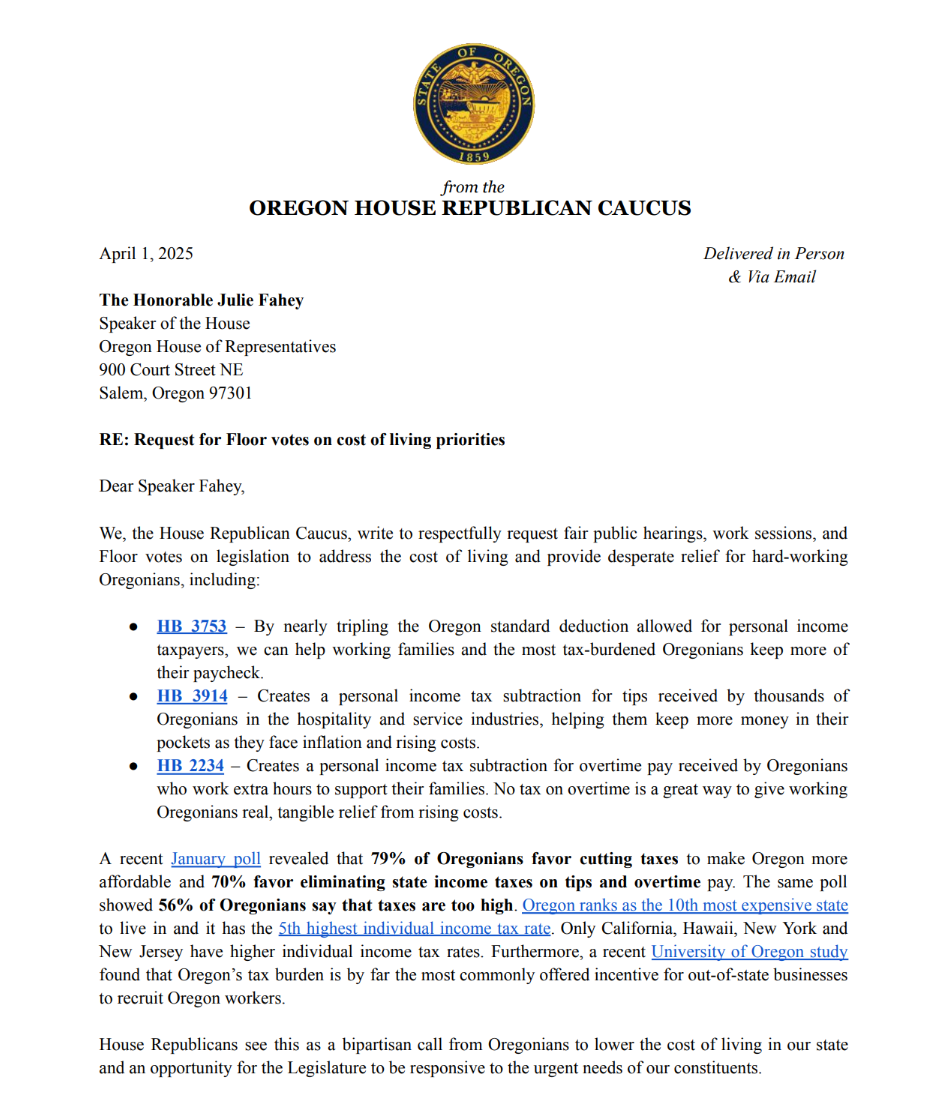
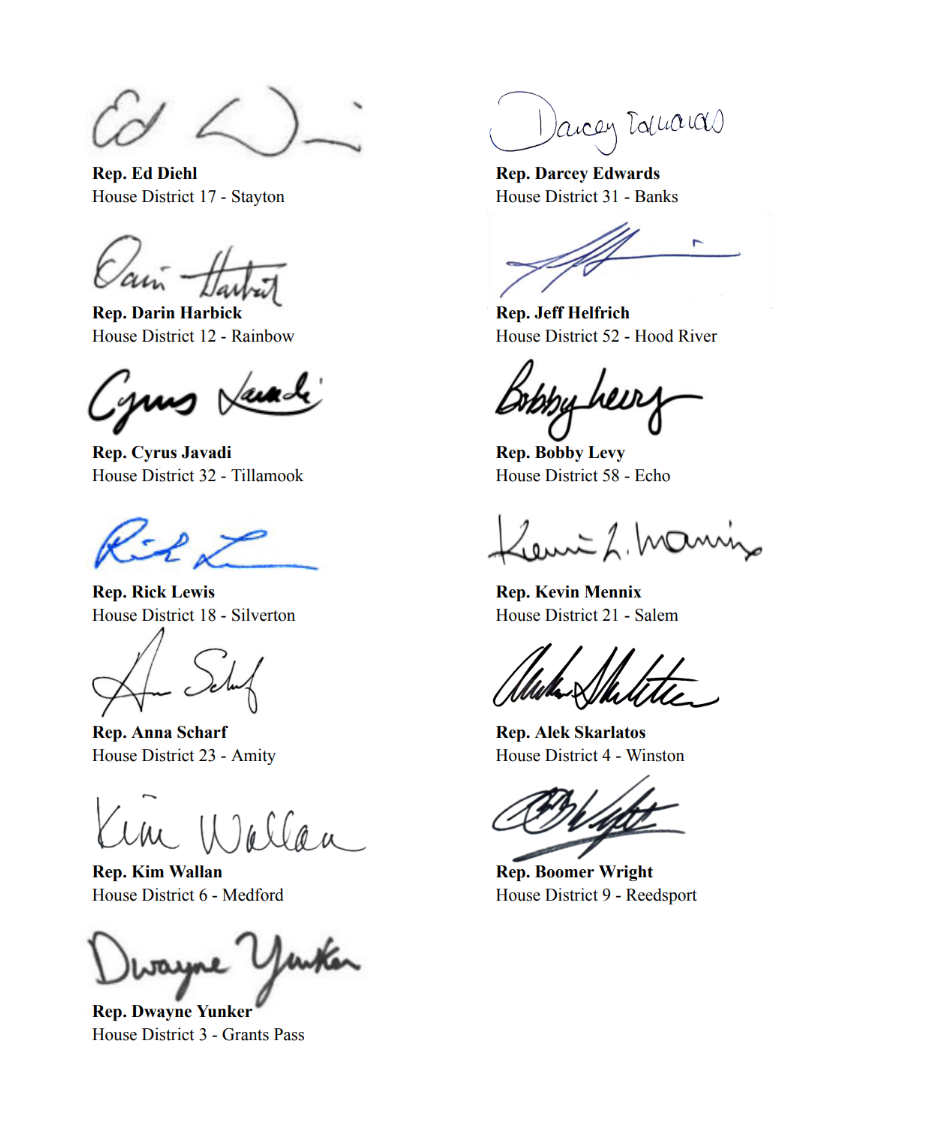
My colleagues and I penned a letter to the Speaker of the House, Julie Fahey, requesting fair hearings, work sessions, and Floor votes for our top priority bills that will help you and your family keep more of what you earn.
In our letter to Speaker Fahey, we asked for three bills to be prioritized to help provide desperate relief to hard-working Oregonians like you. My Republican colleagues and I are united and prepared to use every tool to advance these bills and address Oregon’s affordability crisis.
HB 3753 – Helps working families and tax-burdened Oregonians keep more of their paycheck by nearly tripling the standard deduction allowed for personal income taxpayers.
HB 3914 – Creates a personal income tax subtraction for tips received by thousands of Oregonians in the hospitality and service industries, helping them keep more money in their pockets as they face inflation and rising costs.
HB 2234 – Creates a personal income tax subtraction for overtime pay received by Oregonians who work extra hours to support their families. No tax on overtime is a great way to give working Oregonians real, tangible relief from rising costs.
Oregonians continue to struggle to pay the bills and afford basic necessities like groceries, utilities, gas, and rent. Oregon ranks as the 10th most expensive state to live in and it has the 5th highest individual income tax rate. Only California, Hawaii, New York and New Jersey have higher individual income tax rates than we do.
A recent January poll revealed that 79% of Oregonians favor cutting taxes to make Oregon more affordable and 70% favor eliminating state income taxes on tips and overtime pay. The same poll showed 56% of Oregonians say that taxes are too high.
I promise to continue to fight for policies that lower the cost of living and work to make Oregon a more affordable place for you and your family.
Property Tax Deferral Deadline
If you are a senior or disabled homeowner in Oregon, you might be able to borrow money from the state to pay your property taxes to the county through the state’s property tax deferral program.
To qualify, you must meet all of these requirements as of April 15, 2025:
- 62 years old or older
- Disabled and receiving or eligible to receive federal Social Security Disability benefits
- Own the property and have a recorded deed in your name
- Have both owned and lived on the property for at least the last five full years
If you haven’t lived in and owned your home for the last five years, you may still qualify for the program if you downsized if you meet the following criteria:
- Your previous home was in the Property Tax Deferral program.
- The new home must have a lower real market value (RMV) than you last home.
- You must sell the old home and purchase the new home within a 1-year time frame.
- You must not finance more than 80 percent of the purchase price of the new home.
- You must satisfy the deferral lien on the prior homestead.
- You must have homeowners’ insurance that covers fire and other casualty.
- Your 2024 household income must not exceed the annual limit $60,000.
- Your net worth is less than $500,000.
- Either:
- You don’t have a reverse mortgage
- You were on the Property Tax Deferral program with a reverse mortgage prior to 2011
- You have acquired a reverse mortgage, the reverse mortgage information schedule for more details in years 2011-2016 (See Form OR-RMI for requirements).
- The real market value of your homestead as shown on the 2024-25 tax statement is less than the limit allowed by statute.
To participate, you must file an application with the county assessor either by April 15, or file late from April 16 to December 1 and pay a fee.
A lien will be placed on your property and the state will become a security interest holder. Upon disqualification or cancellation from the program, the following must be repaid in full before the lien or security interest on the property will be released:
- Your property taxes that have been paid by Department of Revenue.
- The accrued interest (6 percent annually).
- The cost of recording and releasing the lien.
- A $55.00 filing fee on manufactured structures.

April 24th - Willamina
May 8th - McMinnville
I am honored to serve you and our community at the State Capitol this session. Please stay in touch and reach out if there are any issues you would like us to work on.
Reach My Office
Follow Our Work On Social Media
All my best,

Representative Lucetta Elmer
House District 24
Capitol Phone: 503-986-1424
Capitol Address: 900 Court St. NE, H-374, Salem, Oregon 97301
Email: Rep.LucettaElmer@oregonlegislature.gov
Website: https://www.oregonlegislature.gov/elmer
|