 * “I am only one, but still I am one. I cannot do everything, but still I can do something; And because I cannot do everything I will not refuse to do the something that I can do.”
—Helen Keller
Replies to this message are sent to an unmonitored mailbox.
To contact me, please click here: Sen.JeffGolden@oregonlegislature.gov
 Photo by Jessica Ventura
It’s happening fast. The 2025 session has almost reached the 50-yard line: ten weeks down, thirteen to go. March 21 marked the first important deadline—bills that weren’t scheduled by then for a work session (where committees vote them up or down) are dead for the session. That took about half of the 3000+ introduced bills out of play. Plenty more will fall by the wayside on April 9, the First Chamber deadline. That’s when Senate bills that haven’t passed through a Senate committee (or House bills through a House committee) are finished. After April 9, my Senate Natural Resources and Wildfire Committee (SNRW) will be hearing only bills that have passed the House, or informational sessions on important issues we might want to start working on for the future.
Speaking of wildfire…tomorrow at 1:00pm, April 1, my committee will hear SB 83, which repeals everything having to do with the wildfire hazard maps from the landmark SB 762 wildfire program. You can sign up to testify (likely with a two-minute limit), submit written testimony, or watch the proceedings online through this page.
 Photo from the Oregon Department of Fish and Wildlife
The most controversial bill we’ve passed through SNRW this session is SB 777. It strikes a compromise forged over years of negotiation and arguments about the best way for wolves and livestock to coexist in Eastern Oregon. The bill would dedicate at least half of the program’s funds to help ranchers with non-lethal practices to keep wolves away from their herds. The remainder would go to citizen committees in 18 counties to allocate compensation to ranchers for livestock losses from verified wolf kills. The conflict centers on provisions that compensation could run as high as five times the value of certain kinds of livestock.
After hearing stories from hundreds of ranching families and wolf advocates over the years, I see this as a fair way to make good for the total wolf-related costs ranchers bear over time, which go far beyond the market value of the livestock they lose. These are folks who never wanted wolves in their counties in the first place, and yet bear all the cost of our collective decision that Oregon should be hospitable to wolves. They think they merit more respect for that than they get, and I’ve come to agree with them. I took to the floor, here, to share my takeaway that, as with most urban-rural conflicts, respect is at the raw heart of this issue.
The hottest bill to cross the Senate floor so far is SB 916, which qualifies striking workers for unemployment benefits if they’re out for more than two weeks. This was organized labor’s top legislative priority in the 2025 session, and their representatives came to tell me about it more than a couple of times.
Believing as I do that labor unions are a critical buffer between us and complete, unfettered control of our economy and government by the biggest corporations, I really wanted to get to yes on this bill. I couldn’t.
I couldn’t agree to put more burden on public employers, mostly cities and counties, that can barely shoulder the burden they have now. Labor’s theme as they lobbied the bill was that it “leveled the playing field.” That’s probably right when it comes to strikes against private corporations, but specific public sector strikes I can remember look like they play out on a pretty level field. I spoke to this in my 5-minute floor speech on the bill.
I don’t think I much impressed union leaders who’ve counted on my vote over the years. But in these times, if you’re voting 100% with any particular interest group, you’re probably either not paying close attention or not interested in the complexities that come up when you’re trying to do what’s best for Oregon and the people you represent.
SB 916 didn’t end up needing me. It garnered sixteen votes, the bare minimum to pass, and now heads over to the House.
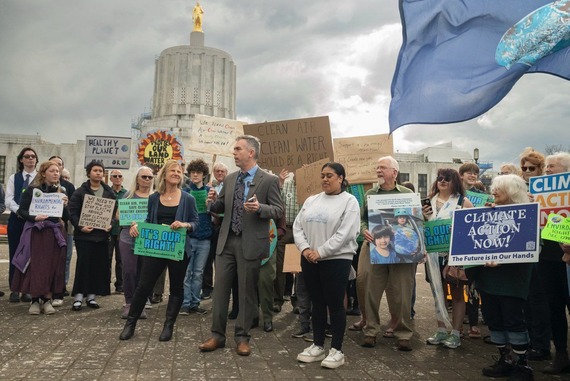 Photo from OCERA
Wednesday’s Senate Rules hearing on SJR 28 was the most crowded and energized that I’ve seen this session. The bill would ask voters if they want to add to the Oregon Constitution an amendment guaranteeing “the fundamental right to a clean, safe and healthy environment,” as Pennsylvania, Montana and New York have already done. A crowd of people came to the Capitol under the umbrella of OCERA, the Oregon Coalition for an Environmental Rights Amendment, which was founded to unite various citizen groups supporting the measure.
Dozens of these folks, many younger than we’re used to seeing, came to testify in committee. I was privileged to start the testimony with a personal story. The committee continued for over an hour (you can watch it here, starting at 9:40), running through the earnest words of youngsters who’ve never done this before to the abrupt entrance of a polished team of business lobbyists to warn us how disastrous this would be for Oregon.
I’ll remember the SJR 28 hearing for a long time. It so clearly reflects this historical moment in human thinking that the next time capsule buried in Oregon should probably include it. Whatever happens to this bill, it’s kicked off a conversation that we have to continue in every possible venue.
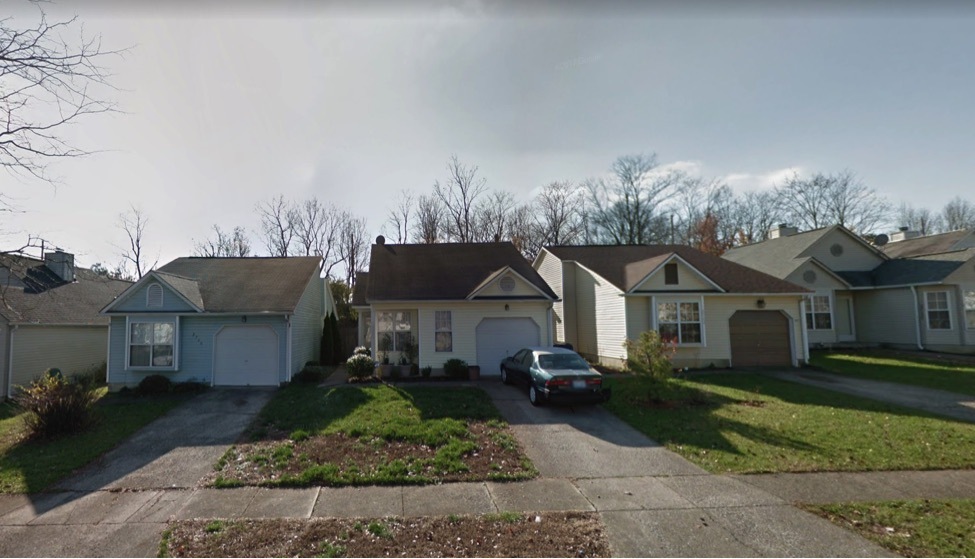
One proposal that surfaces every session is some form of property tax break for senior citizens. These respond to the trickle of emails we all receive from older Oregonians who describe their struggles paying the annual tax on their homes. Some of their stories are heartbreaking.
Oregon took action on this years ago with a tax deferral program. Qualified seniors can skip paying taxes as long as they stay in their home. The state keeps track of taxes owed over time and collects them, with interest, when the homeowner passes away or sells the property to someone else. While the program enables many seniors to stay in their home, many see it as demeaning, and a cost they don’t want to pass on to their heirs.
This year’s tax relief bill is SJR 1, which proposes a program, subject to voter approval, where homeowners 65 or older could choose to freeze the official value of their home for property tax purposes.
I don’t know how Oregonians would vote on this. Anyone with a grain of conscience would want to ease the burden of some of the seniors we hear from. But two factors cut in the other direction.
- Property taxes are what fund cities, counties, schools and various service districts, almost all of which are struggling mightily to pay for the most basic of local services; an increasing number can’t even do that anymore. If I were a county commissioner or city councilor, I’d be able to vote for this only if there were some other change that replaced the lost revenue. Doing otherwise would be failing my citizens. And that “some other change” is tough. Raise taxes on the rest of homeowners? Invent some other fees? Cutting taxes is 1000% easier than initiating new ones.
- The one and only qualification for this tax benefit is that you’ve celebrated your 65th birthday. During the hearing for SJR 1 in Senate Rules, I asked the bill sponsor an admittedly wise-guy question: “Would Phil Knight qualify for this program?” I knew the answer. He would, because he’s older than 65. The bill sponsor answered that he very much doubted that Mr. Knight would apply for the program. I’m guessing that’s right, but everyone knows the main point. Oregon’s municipalities are in no shape to freeze taxes for affluent people, however annoying they find rising property taxes. Even if our government had the means, should they be handing breaks to affluent seniors when so many younger Oregonians working hard at or near minimum wage can’t pay other basic bills when property tax time rolls around?
There are hard economic realities at play here. I couldn’t find a way to vote for a measure like this that gave no attention to the financial need of different homeowners. What do you think?
It’s hard to be shocked anymore by current events unfolding every day, but I got there this week. The first thing I read Thursday morning was this OPB article. For a moment I wondered if we’ve been transported into a Charles Dickens novel.
I used the article a few hours later in a two-minute speech on the Senate Floor. I’d like your thoughts on this one, too.
Thanks for reading, and take care—
 Senator Jeff Golden, Oregon Senate District 3
Education:
-
SB 1098: Would prohibit the exclusion or removal of school library materials, textbooks, or instructional materials based on the topic or author, ensuring no discrimination in their selection, and requires public school districts to follow specific procedures when considering material removal, with the Department of Education providing technical assistance.
-
SB 141: Directs the Oregon Department of Education to study ways to improve accountability and outcomes in the public education system.
-
HB 2551: Would require public universities to review DPSST background checks for campus security officers, mandates safety measures for security vehicles, and ensures officers notify law enforcement when making arrests.
Housing:
-
SB 722: Would prohibit landlords from using certain software to set rents or occupancy rates, establishes statutory damages for tenants affected by such practices, and reduces the duration that new dwelling units are exempt from rent caps from 15 to seven years.
Healthcare:
-
SB 702: Would ban the sale of flavored tobacco and inhalant delivery system products in Oregon, prohibits their distribution, and establishes penalties for violations; it also allows local governments to enact stricter regulations and requires sales to occur at licensed premises.
-
SB 779: Would appropriate $2 million from the General Fund to support the operation of the AgriStress Helpline, which provides mental health services to Oregon's agricultural workforce.
-
SB 537: Would establish workplace violence prevention requirements for health care employers, including the development of safety programs, data reporting on incidents of violence, and training for staff. It would also create a grant program for health care entities to fund workplace violence prevention efforts and implements safety measures for home health care settings.
-
SB 606: Would expand the list of workers eligible for presumption of workers' compensation for stress-related disorders, including certain healthcare employees and emergency responders. It ensures that conditions like post-traumatic stress disorder and acute stress disorder are recognized as occupational diseases for these workers.
-
SB 951: Would prohibit management services organizations from controlling or owning shares in professional medical entities and restricts certain noncompetition, nondisclosure, and non-disparagement agreements that limit medical professionals' ability to speak out or work for others.
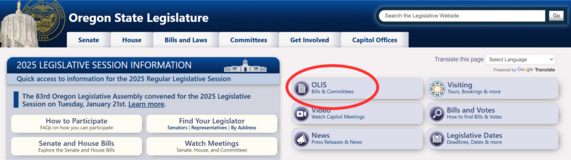
Step 1: Visit oregonlegislature.gov and click "OLIS". This will take you to the website where you can search for a bill.
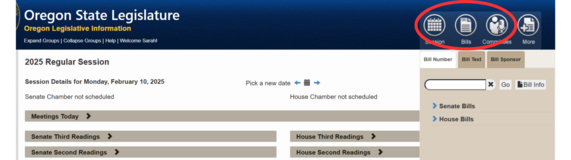
Step 2: Click "Bills" in the upper right hand corner to search for a bill by number, text or sponsor.
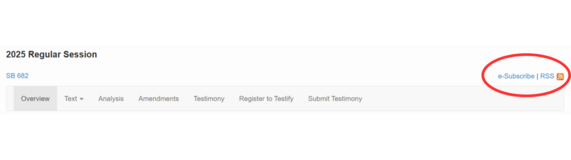
Step 3: When you've found a bill you'd like to track, click e-subscribe and add your email. Once you've done this you'll receive emails when the bill progresses through the legislative process.
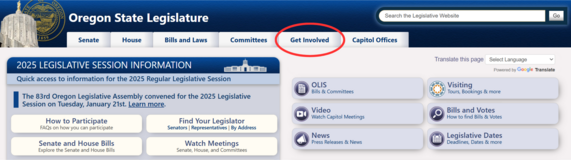
Step 1: Go to oregonlegislature.gov and click "Get involved"
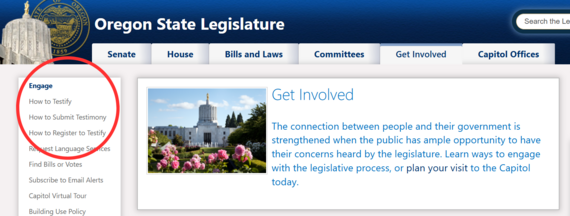
Step 2: In the left hand column, you'll find guides on how to testify, register to testify, and submit testimony.
Unemployment Insurance:
If you are experiencing difficulties accessing unemployment insurance, please contact our office by calling (503)-986-1703 or emailing sen.jeffgolden@oregonlegislature.gov
Food Assistance:
ACCESS operates 30+ food pantries in Jackson County, offering 3-5 days of meals for low-income residents.
Eligibility:
- Must live in Jackson County
- Meet USDA TEFAP Income Guidelines
- No ID or proof of income is required.
REAL ID Deadline Approaching:
- Starting May 7, 2025, anyone 18 and older must have a REAL ID or alternative ID (like a passport) to fly domestically or access federal facilities. The REAL ID is available at DMV offices—appointments are recommended. You’ll need to bring original documents to prove your identity, address, and lawful U.S. status. REAL IDs cost an additional $30. It takes about three weeks to receive your card, so plan ahead!
- For more details, visit Oregon.gov/REALID.
Legal Challenges to the Trump Administration's Actions:
- A comprehensive tracker by Just Security monitors the legal disputes against the Trump administration's executive orders and actions, covering areas like immigration, federal spending, and diversity programs. As of March 4, 2025, the tracker lists 96 active cases, providing case names, filing dates, summaries, and recent updates.
| 
