|
Hello Friends,
The 2025 legislative session in Oregon is in full swing! We’re holding floor sessions more frequently (3-4x a week) and are making significant progress on proposals that will lower the cost of living for Oregonians, make our communities fairer and safer, and make government more efficient and transparent. Read on for important legislative updates, my work in Salem, my thoughts on the federal landscape, and more.
Key bills on health care, education, consumer protection, housing affordability, and homelessness are moving through the legislative process.
Safeguarding Access to Healthcare (HB 2010A) – Chief Sponsor – Passed the House!
Over the last few weeks, we’ve been closely tracking reports out of DC that Republicans in Congress may cut federal funding to Medicaid. Oregon receives billions of dollars from the federal government to help fund the Oregon Health Plan, which covers one in three Oregonians and half of all children. Preserving their health care shouldn’t be political–it’s a matter of life and death.
Here in Oregon, the Legislature is working hard to protect Oregonians' access to care. In February, the Oregon House of Representatives passed HB 2010 with a bipartisan vote. The bill extends insurance and hospital assessments – key funding mechanisms that help support OHP, ensure hospitals and providers have the resources they need, and stabilize the state’s insurance market.
HB 2010 passed the House with bipartisan support because this isn’t a partisan issue – it’s a critical measure to position our state so Oregonians have access to the healthcare they need in the face of uncertainty in Congress.
|
Boosting K-12 Student Outcomes (HB 2009) – Chief Sponsor
Over the last few years, Oregon has made significant investments in K-12 education, but our student outcomes remain among the lowest in the nation. That is unacceptable. We need to be clear-eyed about the challenges facing Oregon’s K-12 system and treat the current situation with the urgency it demands – we need genuine accountability and real results now. Oregon students can’t wait for us to get this right down the road.
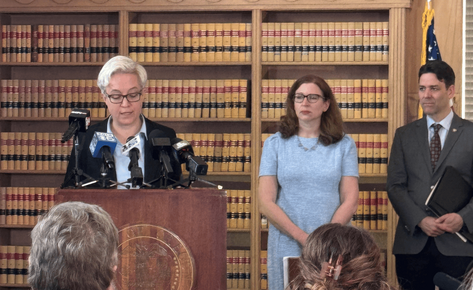
Last week, the legislature held public hearings on HB 2009 and its companion bill (SB 141), which will help ensure that as we invest more in our schools, we will see improvements in student outcomes. These reforms will ensure that school districts receive the resources and support they need so that teachers can deliver the high-quality education our students deserve.
Education accountability is a top priority in the Oregon House of Representatives this legislative session, alongside other proven strategies like targeted summer learning programs and research-based early literacy efforts. Oregon’s future depends on the choices we make today. House Bill 2009 and Senate Bill 141 are about building an education system that is innovative, accountable, and effective – one that truly delivers for our students.
If you’d like to learn more about the Legislature’s commitment to improving student outcomes, check out my joint interview on KATU News’ ‘Your Voice, Your Vote’ with Senate President Rob Wager, or this article from the Oregon Capital Chronicle.
A joint press conference with Governor Kotek and Senate President Wagner annoucing HB 2009 & SB 141
Tackling Out-of-Control Rent Increases in Manufactured Home Parks (HB 3054) – Sponsor

In Oregon and across the country, there has been a growing trend of corporate takeovers of manufactured home parks. House District 14 has been no exception – I’ve heard from many residents about how their parks have changed for the worse after being purchased by a corporate entity. Unreasonable rent increases, higher fees for fewer services, and punitive aesthetic requirements are making it harder for residents on fixed incomes to stay in or sell their homes. You can read about some of the real human costs of these rent hikes in this excellent article from OPB.
While I served as Chair of the House Committee on Housing and Homelessness, I was proud to pass a bill that makes it easier for residents to purchase their parks when they go up for sale. Unfortunately, I know that isn’t always a viable option for residents, so it was important to me that the Legislature act to better protect manufactured homeowners – especially when it comes to corporate park ownership and unreasonable rental rate hikes.
This session, I’m proud to sponsor HB 3504, which would lower the maximum allowable rent increase for residents of manufactured home parks and help people stay in or sell their homes. I want to sincerely thank all of my constituents who have taken the time to write, email, or call me to share their support for HB 3504. I know how important this issue is to them, and I will be closely tracking its progress through the legislative process.
|
Protecting Oregonians from Predatory Lending (HB 2561) – Passed the House!
For nearly two decades, Oregon has imposed a 36% interest rate cap on short-term consumer loans to prevent predatory lenders from preying on Oregonians. In recent years, however, some out-of-state lenders and banks have exploited a loophole in our laws and are providing online loans to Oregonians at interest rates ranging from 73% to nearly 200%.
HB 2561 closes the loopholes that allow this predatory practice in Oregon and protects consumers from harmful online lending practices that aim to skirt our laws. The Legislature has a responsibility to ensure that Oregonians, in a moment of financial need, are not being preyed upon by digital corporate loan sharks, so I was proud to vote in favor of HB 2561 when the bill passed in the House.
Making Utilities more Affordable (HB 3179, HB 3546)
Oregon lawmakers seek to make utility bills more affordable, transparent: Over the last few years, Oregonians have seen significant utility rate hikes, increasing the cost of living and making it more difficult for working families to get by. This session the Legislature is considering the Fair Energy Act, which would give Oregon utility regulators broader discretion in setting power rates and would increase affordability, stability, and transparency for customers.
‘POWER Act’ bill would require Oregon’s large energy users like data centers pay fair share of energy use - OPB: Data centers in Oregon, owned by companies like Amazon, Google, and Meta, are using an increasing amount of electricity – and their power needs are only going to grow in the future with the rise of AI. A new bill in the legislature, HB 3546, aims to ensure these large energy users pay their fair share of their energy use and that the costs for providing power to these sites aren’t shifted on to residential customers.
Improving our Response to Homelessness (HB 3144)
Oregon Gov. Kotek, lawmakers push for more regional collaboration for homeless shelters and services: When Gov. Kotek took office in 2023, she declared a state of emergency on homelessness, and the legislature funded an intensive effort to expand the number of shelter beds statewide and move people off the streets. This session, a bill proposed by Gov. Kotek would improve and formalize the regional shelter coordination model to better support those seeking services.
Addressing the Shortage of Housing in Oregon (HB 2138)
Oregon governor wants to see thousands more duplexes and townhomes built: Building off a landmark 2019 bill which allowed for “middle housing” (duplexes, townhomes, etc.) to be built in more places in Oregon, the Legislature is exploring further incentives for the development of this kind of higher-density housing throughout the state. HB 2138 would cut some of the red tape in the development process and incentivize developers to build more affordable housing, with the goal of more choice and affordable options for Oregonians.
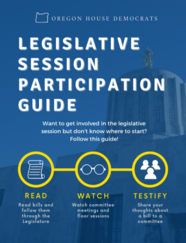
During the 2025 session, I’ll be providing updates on key bills as they work through the legislative process. I encourage you to reach out if you have any thoughts, questions, or concerns about a bill you might be interested in.
Besides contacting me, testifying is a great way to share your perspective. The Legislature offers both in-person and virtual opportunities to provide testimony in support or opposition of proposed legislation. My office has prepared this testimony guide to help you navigate the process of submitting testimony on a bill.
If you’ve never testified in a legislative committee, know that you don’t need to be a policy expert or lawyer. Legislators prioritize hearing from members of the public whose lives are impacted by the policy they are considering. The most important thing to talk about is how the issue affects you, your family, or your community.
|
Like many of you, I’ve been reading the news and tracking the chaos and confusion coming out of the Trump administration over the last 8 weeks. In Oregon, we will do everything we can to push back and, as much as possible, insulate Oregonians from the effects of federal decisions.
During Trump’s first administration, Oregon’s Attorney General, Governor, and state agencies had an impressive track record at stopping unconstitutional or illegal actions through the courts. Oregonians should know that when the administration oversteps their legal authority, Democratic AGs, including our own Dan Rayfield, will be there to hold them accountable. In the last two months, Oregon has initiated or signed on to a number of federal lawsuits, including:
-
Lawsuit Over Mass Firings of Federal Probationary Employees:
A coalition of 20 states, including Oregon, filed a lawsuit against the Trump administration over the mass firings of federal probationary employees– an action that violates federal laws and regulations governing large-scale employee reductions. The lawsuit seeks a temporary restraining order to prevent further dismissals and demands the reinstatement of those already fired.
-
Federal Freeze of Grants and Loans:
A federal judge has blocked the Trump administration from freezing trillions of dollars in grant and loan payments in certain states, ruling that the freeze undermined the constitutional balance of powers between the branches of government. The Courts issued a preliminary injunction, stating that the executive branch had overstepped its authority by imposing a spending freeze on congressionally appropriated funds. The injunction applies to the 22 states, including Oregon, and the District of Columbia, whose attorneys general filed the lawsuit.
-
Opposition to Executive Order on Transgender Youth Healthcare: Oregon, along with Washington and Minnesota, filed a lawsuit in the federal District Court for the Western District of Washington to block enforcement of an executive order that would withhold federal funds from hospitals providing gender-affirming care to minors. Earlier this month, the courts issued a ruling blocking the executive order's enforcement in the involved states, meaning funding for Oregon hospitals is secure for now.
At the end of February, state economists released their quarterly revenue forecast and Oregon’s economy continues to be strong and growing. The risk of recession remains low, and our labor market is healthy, with prime-age employment near record highs and household earnings outpacing inflation. These are all signs that Oregon families and businesses continue to benefit from steady economic growth.
At the same time, we must remain cautious. The Trump administration’s trade policies, including tariffs, pose a real threat to Oregon’s economy – new tariffs could impact key industries in Oregon, creating uncertainty for businesses and workers across the state.
Our state’s available resources for the coming years are projected to be slightly higher than previously expected, which is good news, but we must continue to budget responsibly. We need to be prepared for both economic headwinds created by the federal administration’s actions and for potential cuts to federal programs that Oregonians rely on, like Medicaid.
Oregon’s economy is strong today, and we are committed to keeping it that way. By maintaining a responsible approach to budgeting and investing in what Oregonians need most, we will continue to build a resilient and thriving economy for the future.
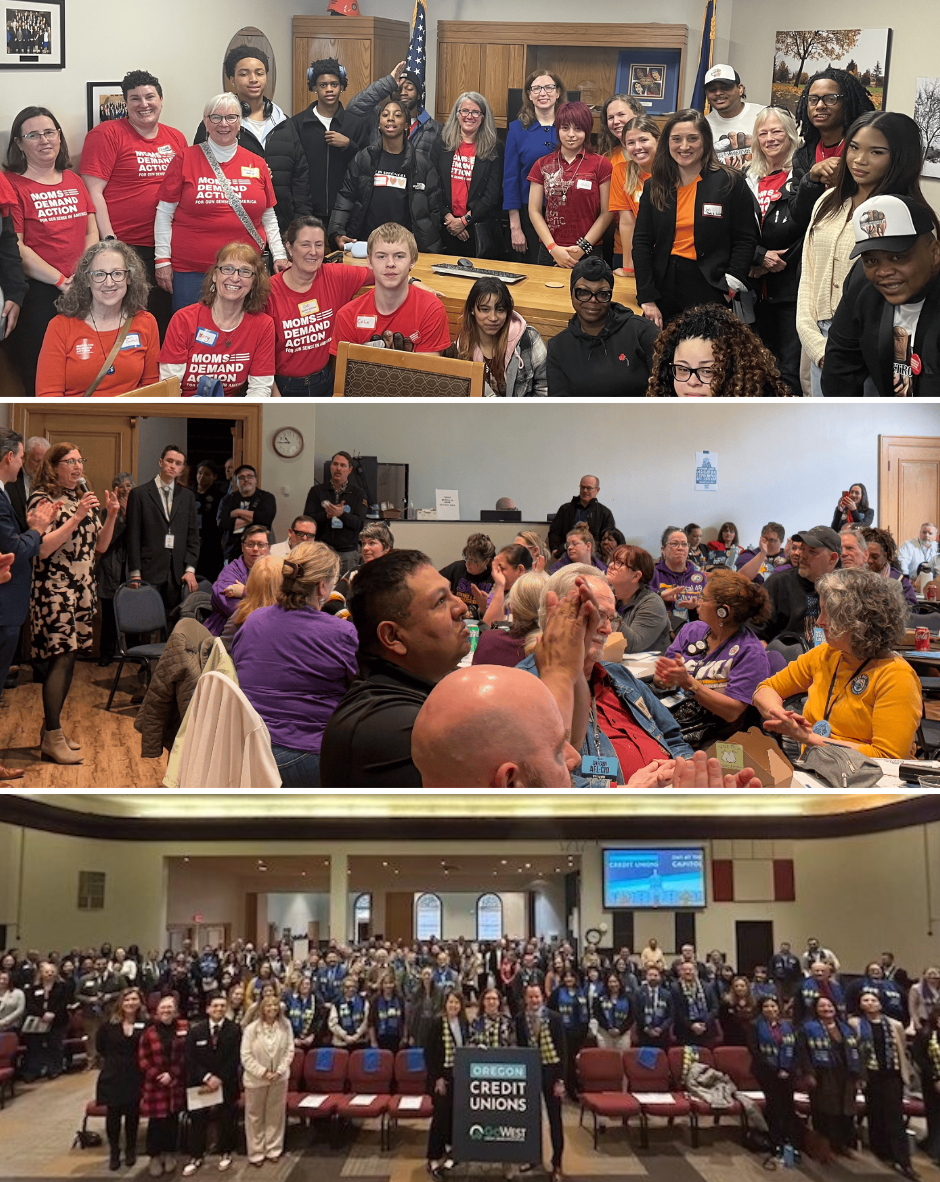
During our legislative sessions, lawmakers have many opportunities to connect with constituents and advocates about bills they’re supporting. Check out the photos below for a few of the groups I’ve met with recently!
Top: Moms Demand Action Lobby Day, Middle: Oregon AFL-CIO Lobby Day, Bottom: Oregon Credit Union Lobby Day
Oregon Taxpayer Advocate
It’s tax season! For many Oregonians, it’s as simple as hopping on their computer and plugging in their W-2 – but for some, it can be a complicated and sometimes daunting task. In 2019, I introduced and passed HB 3373, which created the Taxpayer Advocate Office in the Department of Revenue (DOR), tasked with helping taxpayers resolve problems related to tax and debt collection programs administered by the Department. This concept came to my attention when my office worked with a constituent to address a complex and challenging tax case. That situation reinforced the need for resources within DOR dedicated to working directly with taxpayers and ensuring that tax law is implemented fairly.
The Taxpayer Advocate Office is available to all Oregonians, completely free of charge. They can help identify issues or barriers to equitable and fair tax collection, suggest solutions to taxpayer issues that exist through normal channels, and provide expedited services to taxpayers whose problems are not resolved through ordinary channels. If you or someone you know needs assistance, contact their office at (503) 378-4988 or visit their website.
Oregon Kids Credit
You may be eligible for the Oregon Kids Credit!
During the 2023 legislative session, Oregon Democrats championed the effort to create a new child tax credit in Oregon, through HB 3235. The Oregon Kids Credit is a fully refundable $1,000 tax credit per child between the ages of 0 and 5, for families earning $25,750 or less – families earning between $25,750 and $30,750 are eligible for a reduced amount per child. “Fully refundable” means that even if you don’t owe any state taxes, you’ll still be eligible for the $1,000 per child amount.
More information about the Oregon Kids Credit and other tax benefits (including the Earned Income Tax Credit, which offers a credit for low- to moderate-income workers, whether or not they have children) can be found on the Department of Revenue’s Tax Benefit for Families webpage. Free tax preparation assistance can be found on the Department of Revenue’s Free Tax Help webpage.
Please don’t hesitate to reach out to my office if you need help navigating local or state government services or if you have thoughts about bills for the 2025 legislative session. Your input is valuable as I consider what to prioritize in the coming months.
Yours truly,
 Capitol Phone: 503-986-1414
Capitol Address: 900 Court St. NE, H-295, Salem, Oregon 97301
Email: Rep.JulieFahey@oregonlegislature.gov
Website: http://www.oregonlegislature.gov/fahey
Replies to this message are sent to an unmonitored mailbox.
To contact me, please click here: Rep.JulieFahey@oregonlegislature.gov
|