 * “I am only one, but still I am one. I cannot do everything, but still I can do something; And because I cannot do everything I will not refuse to do the something that I can do.”
—Helen Keller
Replies to this message are sent to an unmonitored mailbox.
To contact me, please click here: Sen.JeffGolden@oregonlegislature.gov
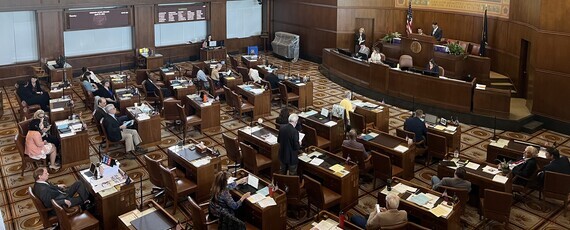 Activity on the Senate Floor
This week I’m writing just one section of our newsletter. The rest comes from my staff, who you’ll meet further down the page. I think you’ll see why I’m lucky to have them.
The Wildfire Hazard Map
The burning issue (sorry) this week is the same as it’s been since session started: the wildfire hazard map, and the upset of thousands of Southern Oregonians that their property was categorized high-hazard. There’s misinformation and a lot of confusion about what that designation means. One thing is certain: a lot of people are frustrated and deeply concerned about a designation they can’t understand. After walking some of their properties with them, I know I’d feel the same way.
That led to the short speech I delivered February 4 on the Senate Floor, here, explaining why the map shouldn’t be used to assign hazard levels to individual properties. That set off a growing conversation in the Capitol about the overall purpose of the map in our wildfire program. It was originally included in SB 762 as a tool to guide deployment of the state’s limited resources for the best possible pattern of protection. It’s done that for three years now, helping to decide where forest stands should be thinned; local fire districts should be fortified with better equipment and more personnel; communities should be helped with risk reduction and evacuation planning activities; and public clean air spaces should be established for some of the worst smoke episodes. That’s helped, but do we still need it at this point? Would dropping it from the program pose any additional risk to Oregonians?
I don’t think so. Conversations with our wildfire professionals tell me we know pretty well how and where to deploy our resources. And what we know after years of fierce argument is that the map’s become a massive obstacle to forging the collaboration between government and citizens this crisis demands. I think the best path forward is to delete it from the wildfire program, raise enough funding to effectively prevent wildfires and fight those that do break out, help protect communities from the devastation we saw in 2020, and continue to work with the insurers towards a simple but—in these times—difficult goal: any property owner who takes all reasonable measures to reduce wildfire risk should have access to affordable and adequate insurance.
Oh, and that funding part? It’s time for lawmakers to be straight with Oregonians: any program that offers us a decent level of protection will cost us more, one way or another, than we’ve been used to paying. That’s what turns the simplest of propositions—we should do all we can to keep our communities, forests and rangeland from burning down—into one of this session’s steepest political challenges.
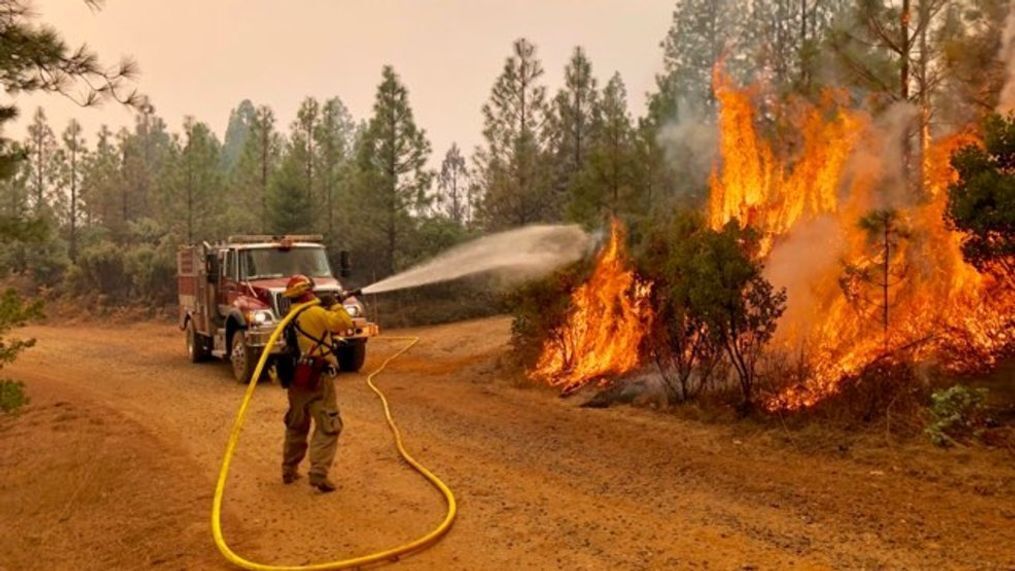 Photo from the Oregon Department of the State Fire Marshal
Two articles this week gave a good snapshot of where we are right now:
I was struck in this second piece by two comments from House Minority Leader Christine Drazan. “’There’s a lot of different ways to approach this,’ [she said], including working more closely with Democrats.” Amen to that. I want to think our shared commitment to see Oregon weather the tough fire seasons ahead will get us to check our partisan knives at the door and face this as a profound duty rather than a 2026 campaign opportunity. We’ll see.
Here's the part where I’m not so sure: “Drazan said she and Oregon Republicans are not worried about how [federal] cuts will impact the state’s ability to prevent and respond to wildfires this year. ‘I have every confidence that our federal partners are as committed as we are to ensuring that our federal lands are managed and that we do negate the risk of wildfire here in the state of Oregon,’ she said.”
The past month’s news from Washington has me skeptical, but let’s all hope that Leader Drazan’s right.
One more note: We're still hearing calls to repeal SB 762. That would be a huge mistake, because of the many parts of the bill that have nothing to do with the map and are working well to protect us from wildfire. That prompted me to make these comments on the Senate Floor yesterday.
To clarify the situation once more for people who may want to appeal their hazard designation—there are two steps:
-Step 1: Submit what’s essentially a notice to appeal by March 10. For this step, no attorney or any other professional is required. Just fill out the form in a very simple way, and if you think you might want an attorney at a future time, check the appropriate box. This step simply saves a place in the queue to pursue a full appeal at a later date.
-Step 2: After March 10, there will be clear directions for taking further action.
Thanks for following our newsletter, and let friends who might be interested know about it.
 Senator Jeff Golden, Oregon Senate District 3
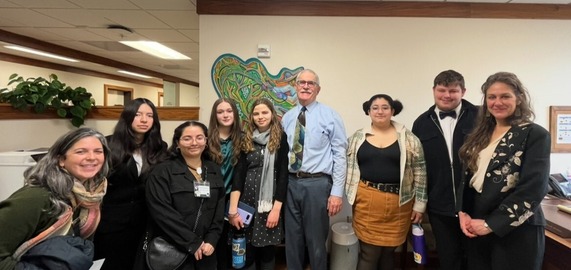 It was great to have the talented youth from Rogue Valley Mentoring's Youth Leadership Advisory Board (YLAB) visit the Capitol this week. They had the opportunity to observe the Senate floor in session and tour the building. Then we had lunch with Senate President Rob Wagner, Senate Majority Leader Kayse Jama, Ways and Means Co-Chair Senator Lieber, and Representative Marsh. YLAB’s visit highlighted Rogue Valley Mentoring's dedication to empowering young voices in southern Oregon.
We want you to know who you'll meet if you call or write Senator Golden’s office.

Sarah Settimo, Chief of Staff: I grew up in southern Oregon and started working in Senator Golden's office in 2020. I feel honored to be serving my community in this role.
I attended OSU's Honors College and double majored in Political Science and Religious Studies. After college I worked at the USDA Farm Service Agency, which deepened my interest in agricultural and natural resource policy. When I'm not in the office, I can be found knitting, hiking, baking, and rooting for the Vancouver Canucks.
|

Vincent Flores, Legislative Assistant: I hold a Bachelor of Arts in Political Science and Economics, with a minor in Global Cultural Studies from Willamette University, where I also studied abroad in Strasbourg, France. My experience includes internships at the U.S. Department of Housing & Urban Development at the federal level and the Oregon State Senate at the state level. Additionally, I served as a Clerk for the Associated Students of Willamette University. My family has lived in Portland their whole lives, and as a lifelong Oregonian, I am proud to be working for the State of Oregon. In my free time, I enjoy traveling, writing music, and spending time with my partner.
|
 |
|
Gabriel Gottfried, Intern: I'm a senior at Willamette University studying Economics and Classical Studies. My interest in legislative work comes from a fascination with how policies on the environment and disaster recovery are developed. I'm excited to learn about the legislative process, gain firsthand experience, and support the work being done to represent you. In my free time, I enjoy reading political thrillers, baking, writing short stories, and attempting escape rooms. |
These bills are currently drawing a lot of attention. Below this section are instructions on how to track a bill and testify. Don't forget—we always like hearing your views on legislation like this.
Labor
-
SB 916 - Unemployment for Striking Workers: Allows striking workers to receive unemployment benefits.
Fire
-
SB 545 - Volunteer Firefighter Tax Credit: Provides up to a $1,000 tax credit for volunteer firefighters meeting service and training requirements.
Housing & Social Services
-
SB 611 - SNAP Benefits for Immigrants: Establishes a state-funded food assistance program for immigrants ineligible for federal SNAP benefits.
-
SB 684 - Loans for Developers: Creates a revolving loan fund to provide low-interest construction loans for mixed-income housing developments.
-
SB 814 - Modifications to Long-Term Rental Assistance for Youth: Expands rental assistance eligibility for homeless youth and those in substitute care or treatment facilities.
Education & Child Welfare
-
SB 867 - Changes to Education Investigations and Sanctions: Expands the Oregon Department of Education’s authority to investigate and penalize schools for discrimination and misconduct.
-
SB 868 - Special Education Funding Report: Requires the state to calculate and report funding needs for special education programs biennially.
-
SB 694 - Child Tax Credit Increase: Increases Oregon’s child tax credit to $1,200 per child and raises income eligibility limits.
Public Health & Consumer Protection
-
SB 702 - Ban on Flavored Tobacco and Inhalant Products: Bans the sale of flavored tobacco and inhalant delivery products starting October 1, 2025.
-
HB 2010 - Healthcare Provider Taxes Extension: Extends healthcare provider taxes to maintain funding for healthcare services through 2032 or 2038.
Legal & Liability Protections
-
SB 179 - Landowner Immunity Law Changes: Permanently shields landowners from liability for injuries on recreational trails, except in cases of gross negligence or fees.
We want to be sure you have the opportunity to weigh in on bills when they’re being considered by legislative committees. You can testify, either in the hearing room in Salem or remotely on computer (in person is more impactful, but driving from our district takes close to four hours). You can also submit written testimony for the record (though it’s not as certain that it will register with legislators, who don’t always read written submissions). You can sign up for email notifications to know when a particular bill will be heard.
See below for instructions on how to do this.
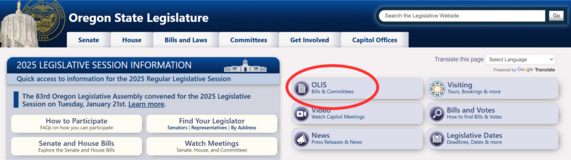 Step 1: Visit oregonlegislature.gov and click "OLIS". This will take you to the website where you can search for a bill.
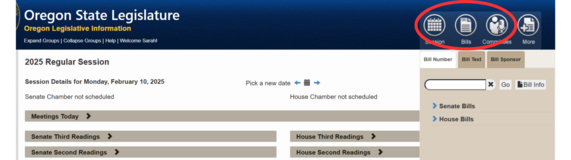 Step 2: Click "Bills" in the upper right hand corner to search for a bill by number, text or sponsor.
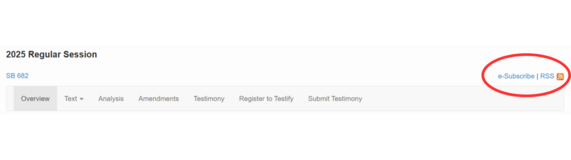 Step 3: When you've found a bill you'd like to track, click e-subscribe and add your email. Once you've done this you'll receive emails when the bill progresses through the legislative process.
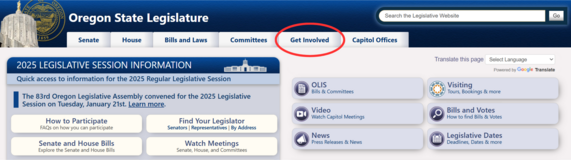 Step 1: Go to oregonlegislature.gov and click "Get involved"
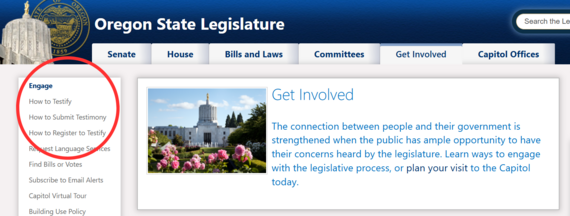 Step 2: In the left hand column, you'll find guides on how to testify, register to testify, and submit testimony.
Food Assistance:
ACCESS operates 30+ food pantries in Jackson County, offering 3-5 days of meals for low-income residents.
Eligibility:
- Must live in Jackson County
- Meet USDA TEFAP Income Guidelines
- No ID or proof of income is required.
Energy Assistance:
-
The Energy Assistance Program helps low-income households with heating and cooling costs. Eligible households can receive a one-time payment for electricity, natural gas, propane, oil, or wood bills, funded by federal, state, and utility grants. Assistance is available for families, veterans, seniors, and individuals with disabilities, and no disconnection notice is required to apply.
-
Book an appointment or call (541) 779-9020 for more information.
Fire Survivor Services:
The Center for Community Resilience (CCR) offers support for fire survivors, helping them transition from short-term housing to stable, permanent homes. Services include housing navigation, rental assistance, and case management, and are available for low-income families, seniors, veterans, and individuals with disabilities.
For assistance, call (541) 414-0318 or email the service at fire.recovery@accesshelps.org (se habla Español).
Learn more about the Homeowner Assistance and Reconstruction Program (HARP) for those impacted by the 2020 wildfires.
| 
