 * “I am only one, but still I am one. I cannot do everything, but still I can do something; And because I cannot do everything I will not refuse to do the something that I can do.”
—Helen Keller
Replies to this message are sent to an unmonitored mailbox.
To contact me, please click here: Sen.JeffGolden@oregonlegislature.gov
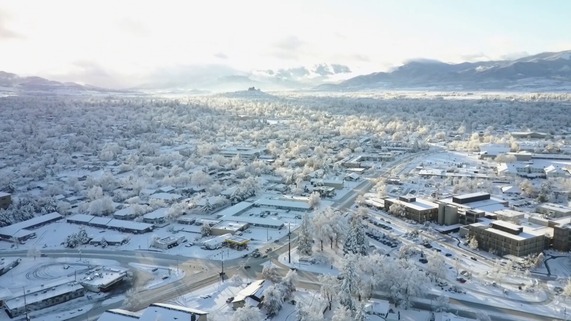 Winter settles in on Medford
Three weeks into the 2025 session feels more like three months. We’re stepping into conversation on a remarkable number of sharply controversial issues, some further intensified by destabilizing events at the federal level. Here’s a summary of what has me most preoccupied right now, followed by an invitation for you to weigh in on issues you care about at the most pivotal moment.
This week my Senate Committee on Natural Resources and Wildfire will revisit two issues that have divided urban and rural Oregonians for decades. Tomorrow (Tuesday) at 1:00pm we consider SB 769, which would allow voters in individual counties to decide that cougars can be hunted with dogs, under the supervision of a state agency. This would contradict the ban on that practice that Oregon voters supported twice in the 1990s.
On Thursday, February 13, we’ll hear SB 777, which proposes changes in the way cattle and sheep producers are compensated when wolves kill their livestock. This is an unusually complex issue that a workgroup of diverse stakeholders tried to resolve two years ago. They reached deadlock. This definitely needs resolution if we want wolves to have a viable future in wild parts of our state.

You’ll see these on the agenda as “public hearings,” meaning that we want to hear the views of interested members of the public, and won’t be voting on the measure. Some bills move from public hearings to “work sessions,” where committee members discuss the bills and vote on whether to move them to the next stage of the legislative process. Many of the bills we hear don’t receive a subsequent work session. We know for a fact that these two bills will trigger passionate testimony from Oregonians in fierce disagreement. (if you’d like to testify, see instructions below on how to register).
Different committee chairs think differently about holding public hearings on controversial bills they may not support. Some tend to avoid them, mostly to keep from raising temperatures in legislative sessions that get more than hot enough already. I tend to schedule hearings for these kinds of bills more than some other chairs, because they can provide a platform for principled public debate. That’s important at a time when there tends to be more shouting than listening and careful thinking about difficult issues. If we want to ease conflict in Oregon politics, suppressing these disagreements doesn’t seem smart. Most likely they’ll continue to fester, along with the frustration of minority legislators who feel they don’t have a fair chance to make their case. This doesn’t mean we should give hearings to all bills—a practical impossibility, with the number of bills introduced and a limited number of committee meetings to hear them. There are more complex factors at work as well. But as Senate Natural Resources Chair, I believe that leaning into hearing some of these bills could be one way to narrow the persistent urban/rural divide that hinders Oregon’s progress.
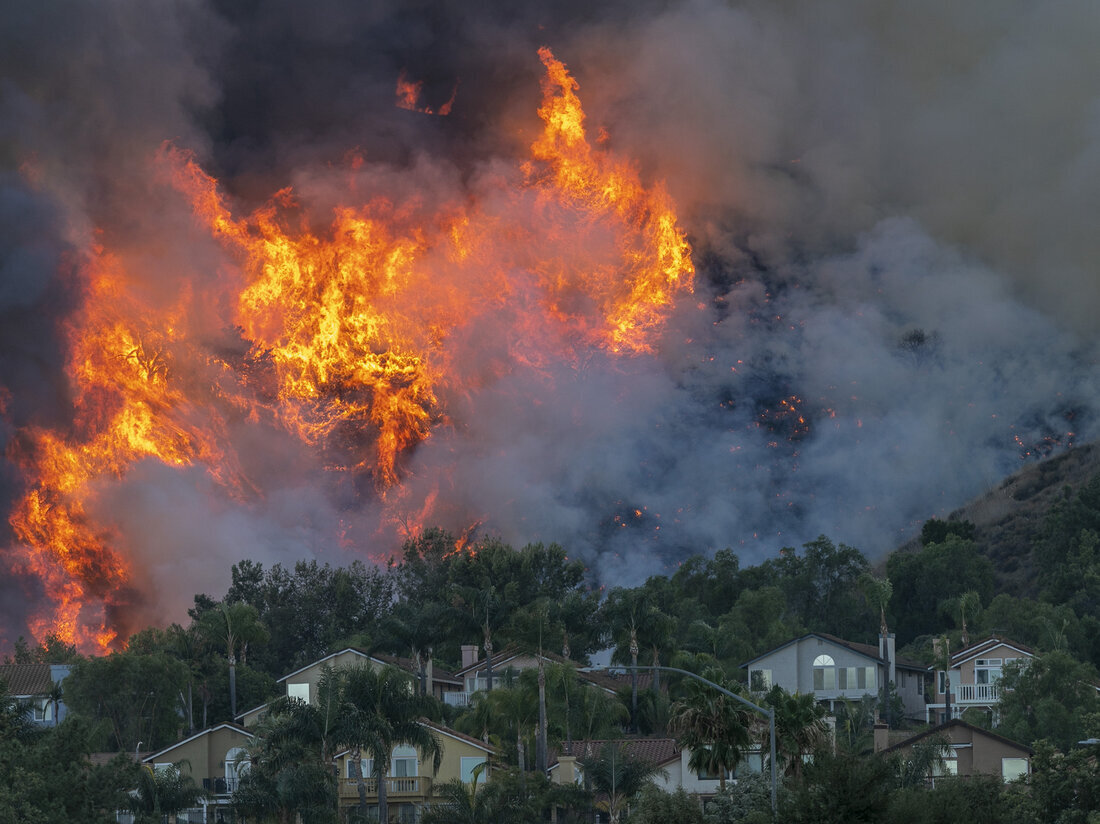
As easy as it can be to forget with so much snow on the ground, the 2025 wildfire season is four or five months away. Recent history tell us it will be another rough one that calls for smart preparation and robust programs. That’s what SB 762, passed in the 2021 session, was designed to provide.
I’m getting dozens of form emails demanding the repeal of SB 762. They reflect a lot of anger and frustration, and in every single case focus solely on the recently released statewide map that classifies all properties as either low, moderate or high hazard for wildfire. These folks believe that their designation triggered very serious problems for their properties —first and foremost, steep increases in their homeowners insurance and, in some cases, policy cancellations and non-renewals. These very real problems are currently hitting millions of victims of weather-related catastrophes around the nation. While nobody’s figured out a solution to this history-changing crisis, we’re searching hard this session for options that would improve the picture.
The people who are angry about SB 762 believe that it’s the cause of these serious problems. After a lot of hearings and interactions with the insurance industry, I’m confident that’s not correct; these problems don't come from our wildfire bill. They come from wildfire itself (and, in other parts of the country, huge increases in hurricane, flooding and tornado damage). But I’ve found that debating the issue with understandably upset Oregonians is worse than pointless—it tends to make people even angrier.
There is, though, one important place where we do agree: the wildfire hazard map has a serious flaw, one we have to remedy to effectively protect our state. I took two minutes on the Senate floor last week to describe it, and the need to correct course. A video of the speech is here. A press release that points to the work ahead is here.
The upset in rural Oregon over these maps, amplified by other issues that have left some rural folks feeling ignored—and by similar themes we hear at the national level—make it unlikely that my proposal will bring Great Healing to the Land. But it’s the right thing to do, and if it opens some minds to the fact that the motivation behind SB 762 truly is to make Oregon safer in the face of the immense ongoing wildfire threat—well, that would be important progress.
A note about appeals:
We want to clarify how the appeal process works.
If you live in a high risk area you should have received a packet from ODF. If you have not, or need more information on filing an appeals please reach out. I've also provided more information below.
Appealing designation of hazard zone or wildland-urban interface
The appeal process is a two-step process:
- STEP 1: Those who wish to appeal should submit the appeal form by March 10.
- For this first step no attorney, or any other professional, is required. Simply fill out the form in a very simple way and check the box if you intend to hire an attorney for “Step 2”.
- This step simply ensures those wanting to appeal are in the queue.
- STEP 2: Following March 10, there will be clearer directions for proceeding to Step 2.
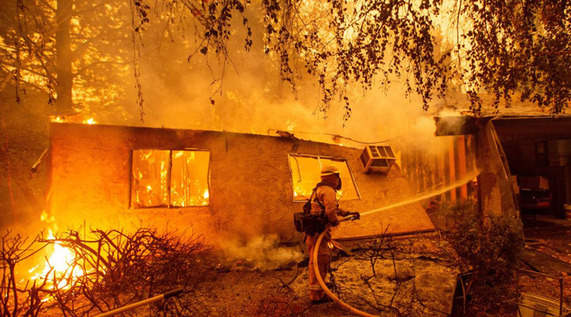
There’s another hard question we have to face this session about our wildfire programs: how are we going to pay for them? So far resources have come mostly from the state General Fund, but a wave of expensive unmet needs are converging all at once this session. It’s clear that wildfire programs need another source.
A governor-appointed group of 35 stakeholders set out last summer to find it. I expect a bill that tries to consolidate its recommendations—a difficult task—to come forward some time this month. I have a strong view on where some of the money (about $180 Million of the total $300 Million we’re estimated to need every two years) should come from. I recently made my case on the editorial page of the Oregonian, here.
Oregon’s unique income tax kicker is a battleground every legislative session. Most Democrats see it as foolish policy, figuring that good revenue years are opportunities to pro-actively invest in places that could become serious crises in lean revenue years. We argue that that’s what smart, successful businesses do (which should be appealing to those who want to see government run in more like a business). Republicans mostly maintain that we should never re-direct the kicker; it’s the taxpayer’s money, they say, not the government’s. The argument goes on and on with no sign of a breakthrough. I’m hoping the exceptional urgency of wildfire might change that.
I’ve had about a dozen email reactions to the article. My personal favorite said, in full “Great, GREAT idea! Go for it!” But I’m afraid that’s not the majority view so far. Some said they pay enough in taxes and don’t want wildfire to take any more of their money. Just pay for it, a couple of people said, by eliminating waste, fraud and abuse (it’s not that there’s NO waste in state spending, but…really?).
Common to the emails that don’t like the idea is a notion that we can somehow fund wildfire programs in a way that asks nothing of them at all. That’s just not on offer. Oversimplifying a little here, all of the other proposals would have wildfire programs back fighting for taxpayer dollars—the dollars these folks don’t want to see spent—every two year, when a new budget’s made. The kicker-redirect is the only one that pays for most of the bill once and for all, rather than coming back with hat in hand every biennium.
I’ll be pushing this proposal—on an uphill slope, which is true for different reasons for all of the forthcoming options—as long as it has even the slightest chance this session. Feel free to tell me what you think (reminder: “Great Idea!” responses are preferred).
I can’t think of a bill that people have asked more about this session than SJR 28. It refers to voters a constitutional amendment that would establish a right to a healthy and livable environment. Three states already have that constitutional provision, and several other state legislatures are considering similar measures this year.
It surprises no one that this is controversial legislation. One thing that strikes me is the number of young Oregonians who are rallying to support it. It’s the first serious step some have taken into political engagement, a very big plus in itself.
An unusually broad coalition of community groups has formed to push for the bill’s passage. You can find a lot more about their campaign at their website, here.
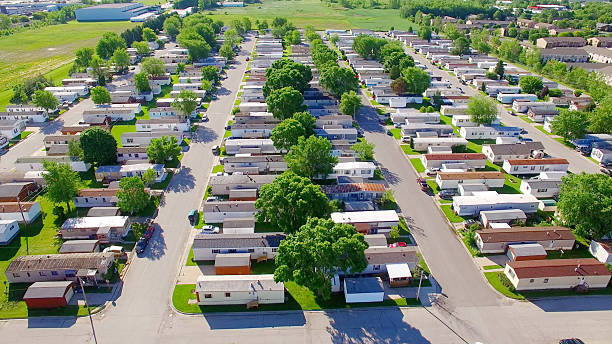
There are a lot more consequential bills this session that I’ll cover in coming newsletters. One that’s close to my heart, HB 3054, had its first hearing last week. It addresses a longtime problem that’s become really oppressive to more than a few folks in our district. Owners of homes in manufactured home parks, they’re often obligated to pay rents for their spaces that have skyrocketed in recent years. I described in committee testimony, here, why that needs changing.
We’ll send you updates as time permits. Take care in the meantime.
 Senator Jeff Golden, Oregon Senate District 3
I want to be sure you have the opportunity to weigh in on bills when they’re being considered by legislative committees. You can testify, either in the hearing room in Salem or remotely on computer (in person is more impactful, but driving from our district takes close to four hours). You can also submit written testimony for the record (though it’s not as certain that it will register with legislators, who don’t always read written submissions). You can sign up for email notifications to know when a particular bill will be heard.
See below for instructions on how to do this.
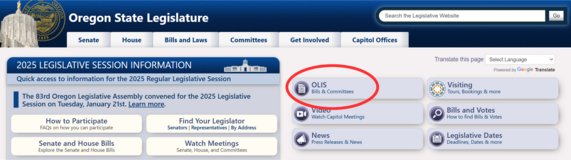 Step 1: Visit oregonlegislature.gov and click "OLIS". This will take you to the website where you can search for a bill.
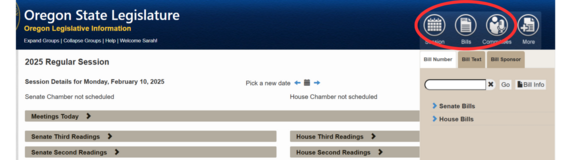 Step 2: Click "Bills" in the upper right hand corner to search for a bill by number, text or sponsor.
 Step 3: When you've found a bill you'd like to track, click e-subscribe and add your email. Once you've done this you'll receive emails when the bill progresses through the legislative process.
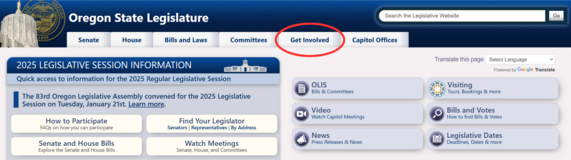 Step 1: Go to oregonlegislature.gov and click on "Get involved"
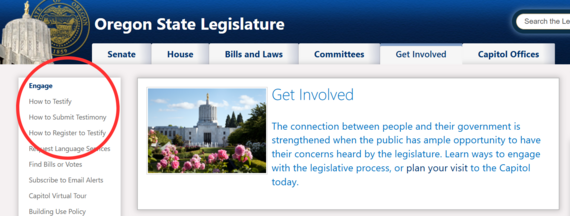 Step 2: In the left hand column, you'll find guides on how to testify, register to testify, and submit testimony.
In future newsletters we'll list bills getting a lot of attention that you may want to follow. For now, here's two:
SB 88: This bill prevents electric and gas companies from charging ratepayers for costs related to advertising, political activities, litigation, and certain compensation. It requires companies to report non-recoverable expenses annually and imposes penalties for violations.
SB 948: This bill would allow school boards to incorporate play-based learning into the regular school day for students in pre-kindergarten through grade five. It also directs the Department of Education to offer professional development on play-based teaching methods for educators in these grade levels.
Scholarship Opportunity: TC Energy Build Strong Scholarships
TC Energy is offering over 850 scholarships of up to $5,000 for individuals pursuing post-secondary education. These scholarships fall into three categories:
- STEM Learning
- Indigenous Legacy
- Trades
To qualify, applicants must:
✔ Be enrolled in a post-secondary institution for the upcoming academic year
✔ Be a U.S. citizen or permanent resident
✔ Reside in a community near TC Energy’s operations or projects
✔ Demonstrate a financial need for supplementary education funding
Application Details: Click here to learn more and apply
TC Energy’s Build Strong initiative also provides grants, scholarships, and in-kind donations to non-profits, registered charities, municipalities, Indigenous groups, and foundations. Learn more about their community investments here.
Oregon’s FY 2026 Appropriations Process
Senator Jeff Merkley and Senator Ron Wyden are accepting applications from Oregonians for:
-
Community-Initiated Projects (CIPs) – Also known as Congressionally Directed Spending (CDS) or Community Project Funding
- Programmatic Funding Priorities
- Submission Process: Both Senate offices will be using a shared online webform to collect CIP requests. The deadline for submitting is 11:59PM PST on Sunday, February 23, 2025.
For more details on how to apply, visit here.
Wildfire Preparedness: Protecting Your Home
Wildfire risk reduction starts in your own backyard. Learn how to prepare and safeguard your home from wildfire threats with clear, practical steps: Preparing Homes for Wildfire – NFPA Guide
| 
