|
Replies to this message are sent to an unmonitored mailbox.
To contact me, please click here: Rep.SusanMcLain@oregonlegislature.gov
Dear Friends and Neighbors,
I hope you all had a good Thanksgiving holiday however you celebrated. I had the entire family for Thanksgiving dinner, including the grandchildren, and it was a special opportunity to have so many generations gathered together and to see my youngest grandchild play with the wooden blocks that all my children and older grandchildren also enjoyed. I am truly thankful for my family, my friends, my church, my colleagues, and for the community I am fortunate enough to live in.
Next week is turning out to be one of the busiest of the entire year. Monday, my Joint Transportation co-chair, Senator Chris Gorsek, and I are holding a breakout session on Transportation at the Oregon Business Plan Leadership Summit at the Oregon Convention Center. Tuesday, I head down to the Capitol for Legislative Days and a Special Session. I'm booked for meetings on Tuesday and Wednesday, and have two committee meetings on Wednesday and one on Thursday morning. After my Emergency Board meeting on Thursday, the Special Session will start. We are hopeful that the Session will just be one day and that we can head home on Thursday night. On Friday, I have a Recycling Council meeting and will be visiting with 3rd and 4th graders at the Model Elementary School on the campus of Pacific University.
This week, I had the pleasure of giving a speech on my legislative work to about 19 of my fellow Rotarians at a meeting of the Forest Grove Daybreak Rotary Club. It was a great opportunity to talk about the work I have been doing on Transportation, Housing and Land Use issues, and Education this year. I also talked about upcoming bills and what I am looking forward to in the 2025 Legislative Session. Thank you to our president, LeAnn Garrison, for inviting me to speak to our group.
This week's newsletter includes the following topics:
- Next week's Special Legislative Session on Wildfire Season costs
- Governor Kotek's recommended budget for 2025-27
- Funding assistance for Newborn Screening
- I-5 Rose Quarter Project secures funding to begin construction
- Federal grants awarded to Oregon for carbon reduction and EV charging
- Expanded opportunities for affordable housing
- Upcoming Interstate Bridge Replacement project meetings
- Community Shout-outs
- National Impaired Driving Prevention Month
- Events happening in Western Washington County
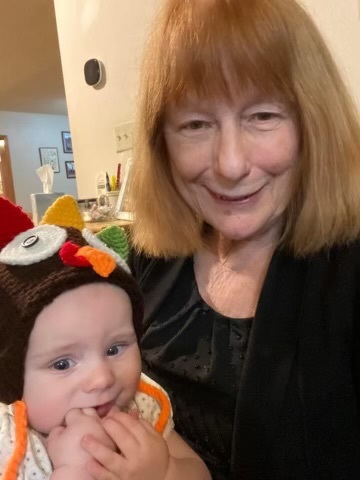
BELOW: Spending quality time with my youngest grandchild is a blessing.
BELOW: Thank you to President LeAnn Garrison and the Forest Grove Daybreak Rotary Club for inviting me to speak on my legislative work at Tuesday's meeting.
GOVERNOR CALLS SPECIAL LEGISLATIVE SESSION
Last week, Governor Tina Kotek announced that she is calling a special session of the Oregon Legislature for Thursday, December 12. The purpose of the special session is for Legislators to appropriate funds to pay for the historic 2024 wildfire season. A record 1.9 million acres burned this wildfire season, far exceeding the state’s 10-year average of 640,000 acres per season and incurring costs upwards of $350 million. While over half of the costs will eventually be covered by disaster relief funds from the federal government, the state needs to pay its bills before all of that money is received.
The Governor is asking the Legislature to release a combined total of $218 million to the Oregon Department of Forestry (ODF) and the Oregon Department of the State Fire Marshal (OSFM) to address all costs for the season assumed to date. This includes meeting the state’s financial obligations to small, medium, and large contractors who worked tirelessly to protect and support Oregonians for more than five months.
Wildfires this season destroyed at least 42 homes and 132 other structures, and caused severe disruptions and damage to transportation facilities, utility infrastructure, and natural resource economies. In July, Governor Kotek declared a State of Emergency in response to the threat of wildfire and invoked the Emergency Conflagration Act a state record 17 times to mobilize structural firefighting resources coordinated by OSFM to local communities and thousands of wildland firefighting personnel and resources coordinated by ODF.
I will have an update in my next newsletter about the outcome of the special session and you can follow the proceedings on OLIS.
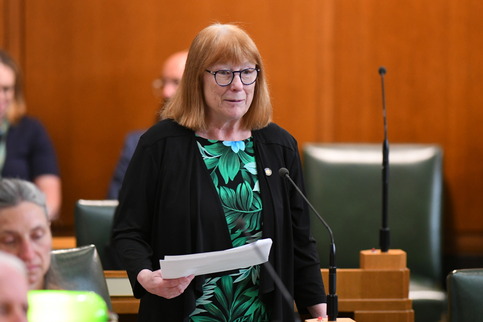
BELOW: Speaking on the House Floor last Session. Looking forward to being back next week for the Special Session and working with my colleagues.
GOVERNOR'S RECOMMENDED BUDGET FOR 2025-27
Every two years, the Legislature passes a biennial state budget in our Long Session, as will happen in 2025. The state requires that the Governor first send a recommended budget to the Legislature by December 1 in even-numbered years for consideration in the next Session. On Monday, Governor Kotek sent her 2025-2027 recommended budget entitled Building on Progress.
Governor Kotek is recommending investments for the Legislature that focus on many of the critical issues Oregonians across the state care about. Here are some of the key recommendations that the Legislature will consider in the 2025 Session:
Homelessness:
-
$217.9 million to maintain Oregon’s statewide system of shelters
- $188.2 million to maintain current efforts to transition Oregonians out of homelessness and into housing
- $173.2 million to maintain services to prevent Oregonians from becoming homeless in the first place
Housing Supply:
- $880 million new bond authority to build more affordable housing and homeownership pathways
- $100 million to establish a new housing infrastructure program
- $57.6 million to continue efforts for supporting first-time home buyers and Oregonians looking to buy an affordable home
Behavioral Health:
- $90 million investment towards capacity building for adult mental health services, substance use disorder residential treatment, and withdrawal management
-
$50 million focused on increasing the supply and distribution of a diverse and culturally responsive behavioral health workforce by investing $25.7 million in behavioral health education and training programs, wrap-around supports for students, and tuition assistance and scholarships, and investing $24.3 million in graduate stipends, loan repayment, and peer and manager support for the community mental health workforce
- $40 million to continue deflection services through the Criminal Justice Commission
Children and Youth:
- $600 million increase to strengthen the State School Fund Current Service Level (CSL) for a total of $11.36 billion
-
$205.5 million to provide additional targeted funding to help more students get on track for success - $127 million to maintain and strengthen previous early literacy investments and $78.5 million to expand and make ongoing investments in summer learning programs
-
$25 million for youth behavioral health investments, including new investments in targeted residential and community-based behavioral health and substance use disorder capacity, expansion of mental health services, prevention services for school-based health centers, and funding to expand youth suicide prevention work
Transportation:
The Transportation budget will be transformed this next Session because our current funding tools are no longer sufficient. We rely heavily on the fuels tax at a time when efficiency and electrification mean we are consuming, and will continue to consume, less fuel every year. The current system and the status quo on funding sources are not sufficient or sustainable. When my Joint Transportation co-chair, Senator Chris Gorsek, and I talk with our jurisdictional partners or listened to the public during our statewide tour, we hear that safety in all multimodal modes is critical, and that we need sufficient, stable, and diversified funding tools to pay for our system. We understand that affordable living is on the minds of all Oregonians and we are working conscientiously to ensure that we keep costs down and save money, which continued maintenance of our roads does in the long run, as we chart our new Transportation plan. We must update our funding tools and create a balanced and efficient budget, and the Governor's recommended budget is a place to start. Below are some key elements that she has outlined:
State Highways Funds: A $1.75 billion investment is proposed to address support for ongoing operations, including the restoration of 988 positions, as well as investments to advance progress on near-term safety and resiliency needs, including:
-
Maintenance operations, which would allow repairing existing transportation infrastructures and keeping the highways systems and open and functional
-
Preserving, repairing, and replacing existing bridges and pavements to ensure long-term performance
-
Investing in various safety programs that include but are not limited to fatal and serious injury crashes on all Oregon roadways and developing additional safe routes to school projects
-
Expanding the Highway User Tax revenue bonding capacity and debt services to support House Bill 2017 (2017) commitments
Continued resourcing for the Interstate Bridget Replacement project: Oregon needs a safer bridge that will serve future generations, provide transportation choices like high-capacity transit, and is a better solution to helping solve our climate crisis. The Interstate Bridge Replacement project is an important partnership with Washington State and the federal government. The budget supports a second installment of General Obligation bonds of $250.0 million against the initial $1.0 billion bonding commitment for the project. The bonds are expected to leverage $6.0 billion in federal, state and local funding for this project, which expects to begin construction in 2026.
Public Transportation: Expanding staffing resources at ODOT to assist with the state and federal grant programs for public transit providers.
Housing Initiative: ODOT will work with several other state agencies to establish a single point of contact related to expediting housing project permits and establishing a portable DMV office to assist Oregonians who are leaving state institutions in obtaining DMV ID cards.
Rural Veterans Healthcare Transportation Grant Program: Adding a program administrator to run and expand program grants on behalf of the Oregon Department of Veterans’ Affairs.
To see the Governor's full recommended budget, click here.
FUNDING HELPS SCREEN NEWBORNS
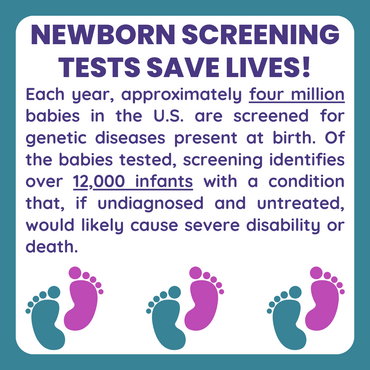
Newborn Screening is a critical service that Oregon provides, and it saves the lives of children. It identifies over 12,000 infants in the U.S. each year with a condition that, if left undiagnosed and untreated, would cause severe disability or death. Regular readers of my newsletter will know that I have been an advocate for Newborn Screening in Oregon since 2018 and worked on several bills to ensure we have a pristine and nimble process that keeps up-to-date with scientific breakthroughs and centers the experiences and knowledge of families and medical experts.
Last Session, I strongly advocated for the funding necessary to test every baby at birth, even those whose families pay out-of-pocket. I am so pleased to say that $250,000 was awarded in the budget last Session to Oregon's Newborn Screening Lab to subsidize the costs of newborn screening for families who pay out of pocket for the birth of their child. The Newborn Screening Advisory Board met this week and gave an update on the implementation of these funds. I couldn't be happier to report that 117 families have been covered so far this year. This funding removed the financial barrier that families faced and enabled access to lifesaving newborn screening that they otherwise would not have had.
Stay tuned for upcoming information in a future newsletter on my newborn screening work next Session, which I will be partnering with Representative Mark Owens on. Rep. Owens and I are committed to securing the funding necessary to ensure that Oregon has an up-to-date screening process that follows the science and that all babies have access to life-saving testing at birth for as many diseases as possible.
I-5 ROSE QUARTER PROJECT SECURES FUNDING
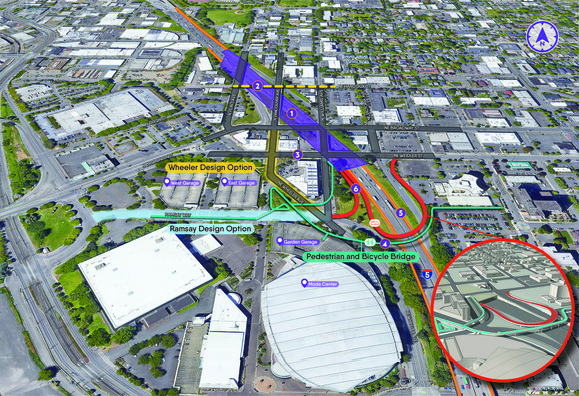
This week, the Oregon Transportation Commission allocated $250 million to the I-5 Rose Quarter Improvement Project. Combined with existing funding and a recently secured federal grant of $450 million, the project now has $850 million – sufficient funding to begin construction and deliver many of the project’s most critical improvements. Construction will begin in summer 2025.
The $250 million allocated today was originally dedicated by the commission to the Rose Quarter project. The Commission redirected that funding to the I-205 Abernethy Improvement Project in 2022 to jumpstart construction on that critical earthquake safety project. At that time, the Abernethy Project was further along in design and more ready for construction. Tolling was envisioned as a central funding component of the Abernethy Bridge. With tolling postponed, and with this funding transitioning from Abernethy, the Abernethy Bridge project will rely more on funding from ODOT’s dedicated bridge funding program.
The I-5 Rose Quarter Improvement Project has had a string of successes in 2024 that have made the project ready for construction. After ODOT made a series of community-inspired revisions to the scope of the project, major partners including the City of Portland, Metro and Albina Vision Trust endorsed the full project. In the spring, the federal government approved the project’s Supplemental Environmental Assessment giving the project the legal approval to begin construction. Lastly, the federal government invested $450 million in the project through the Reconnecting Communities program. This grant gives ODOT, the agency’s Historic Albina Advisory Board, and Albina Vision Trust, the agency’s essential community partner in securing that grant, the ability to deliver on many of the core community reconnection aspects of the project.
With the funding now available, ODOT can build the central core of the planned highway cover, build the full southbound auxiliary lane and shoulder from I-405 to the Morrison Bridge exit, extend an initial portion of the northbound auxiliary lane and shoulder under the highway cover, complete bridge work in the southern project area, and construct storm water facilities near I-405.
Read more about the I-5 Rose Quarter Improvement Project here.
ODOT WINS GRANTS FOR CARBON REDUCTION
The sidewalks, roads and bridges Oregonians rely on to get around are poised to become more environmentally friendly in the coming years thanks to a recent grant from the Federal Highway Administration.
Earlier this month the federal Low-Carbon Transportation Materials program awarded ODOT up to $31.9 million to research and test ways to reduce the greenhouse gas emissions associated with construction materials like concrete, asphalt and steel.
ODOT was one of 39 state departments of transportation to receive funding from the federal grant program, which is funded by the 2022 Inflation Reduction Act.
Reducing emissions from ODOT operations and materials is one of the ways we’re working to reduce emissions from transportation and address climate change. The latest data says that by 2050, Oregon is on track to reduce emissions from transportation by about 60%. Learn how on ODOT's transportation emissions website.
Another $11.3 million was just awarded to projects across Oregon that reduce greenhouse gas emissions. Electric vehicles, EV charging stations, transit improvements, and bicycle and pedestrian infrastructure are among the 14 projects across Oregon to receive funding from the second round of the federal Carbon Reduction Program.
The 14 projects were split among 13 local agencies and one Tribe. Over 70% of the funds will go to projects in disadvantaged communities, following the federal government’s Justice40 initiative.
Eligible projects for the grant were in urban and rural areas of the state with populations under 200,000. Cities, counties, Tribal governments, and local and state transportation agencies were eligible to apply.
The Carbon Reduction Program will distribute $82 million of federal funding over five years for transportation projects in Oregon. The ODOT Climate Office administers the program. Office staff worked with a consultation group of local transportation organizations and advocates to develop strategies, priorities and evaluation criteria for the program.
EXPANDED AFFORDABLE HOUSING OPPORTUNITIES
Oregon Housing and Community Services has revamped the Flex Lending program to expand affordable homeownership opportunities.
Oregon Housing and Community Services (OHCS) recently completed a $163 million bond sale to finance first-time homebuyer loans through its Flex Lending program, which now offers two new loan products: FirstHome and NextStep.
The FirstHome loan product incorporates elements of the traditional Oregon Bond Residential Loan program, which is being phased out, offering first-time homebuyers, veterans, and previous homeowners (if purchasing in Targeted Areas, which are defined by the U.S. Census) a mortgage loan with a below-market interest rate. This loan is designed to increase purchasing power and keep monthly payments affordable.
Homebuyers may also receive a down payment assistance (DPA) loan of 4% or 5%, which can cover up to 100% of the borrower’s cash requirements at closing. This assistance may be used for down payment, closing costs, prepaid items, upfront borrower-paid mortgage insurance, and other allowable fees.
The NextStep loan product is similar to FirstHome, but without a first-time homebuyer requirement and with more flexible qualification requirements. Income is capped at $125,000.
Homebuyers interested in either Flex Lending product need to work with an OHCS-approved lender. First-time homebuyers are required to take a homebuyer education class through a certified housing counselor at one of the homeownership centers throughout the state.
More information and a list of participating lenders can be found at https://www.oregon.gov/ohcs/homeownership/homebuyers/Pages/flex-lending.aspx.
GREG JOHNSON TALKS WITH THE COLUMBIAN
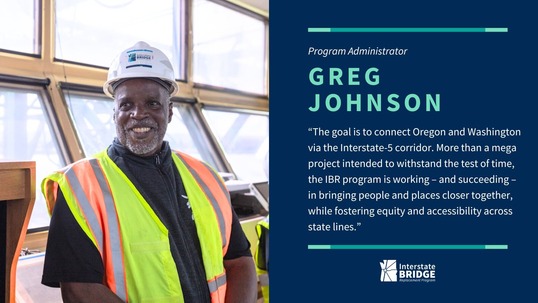
Interstate Bridge Replacement (IBR) Program Administrator, Greg Johnson, recently sat down for an interview with The Columbian, the main Vancouver newspaper, about the challenges and opportunities we face in replacing the I-5 Bridge. I appreciated his frankness and the perspective he brings from decades of experience working on major transportation projects. He spoke about the end of the public comment period and shared his perspective on criticisms of the project. I've included some key points from the article below this image. The article, "Tolling, light rail, more: I-5 Bridge project director says he’s not worried about change in administrations" was written by Henry Brannan and published on The Columbian website on November 30th, 2024.
Columbian Question: Some in Clark County worry that expansion of Portland’s MAX light rail to Vancouver will drive an increase in crime. What’s your response to that?
- Our office sits here in Vancouver, and our office has been broken into twice, and I don’t see light rail bringing those criminals across the river. Every community has certain levels of crime, and crime on light rail is a function of the community that it exists in. If folks police light rail, incidents of things happening on light rail will be minimized. I’ve built infrastructure around the country. In West Michigan, folks assured me that “You’re building this bike path, folks are going to be stealing TVs and riding them on their bikes to make their getaway.” It’s an old trope that has very little basis in reality. I was just reading an article today that Arlington, Va., is one of the safest areas in the country. And guess what? Arlington, Va., has light rail coming out of Washington, D.C. I understand people’s concerns, and you do have to make sure that you are policing certain activities on light rail or buses, but the idea that crime is going to be exported is, it has this basis in race and racial politics.
Columbian Question: Another controversial aspect has been tolling. Where does that stand?
- The main purpose of tolling on this program is to help pay for the bridge itself and help pay for future maintenance and operation for this bridge. Tolling is a feature of large projects like this across the country, because these two states don’t have an extra $1.5 billion laying around to send to this program to construct it, the federal government doesn’t have an extra $1.5 billion. They want to see, “Are we making sure that we are doing smart things to help pay for and help maintain this bridge in the future?” And, one of the ironic things is that this bridge, at several times during its life, has been tolled in the past. This is not a new thing for this location. It’s not the most popular thing in the world, but neither is it the end of the world. Policies can be made to take care of folks who cannot afford that daily trip and who have to travel for work. But we know that there are some spin-off benefits from tolling, that some of the discretionary trips that are taken during peak hours, some of those trips can now be pushed out to a less expensive time of day for folks to travel across the bridge, which helps traffic flow in the corridor.
Columbian Question: Generally, Republicans have opposed the project, and Democrats have fought for it. And its future was cemented by Bipartisan Infrastructure Act funding, which President Joe Biden’s administration has, in part, attached to his legacy. Do you worry about the future of the project and its funding in light of that and in light of the coming transfer of administrations?
- We know that this project has a lifespan that has spanned Republican and Democratic administrations. It’s so strong that it does not have an R or a D or red or blue behind it. It has good infrastructure practice behind it. So we think that the Trump administration is going to be amenable to the discussions of, “How can you make this corridor more effective and more efficient going into the future?” We think that this is a good project under any administration.
Columbian Question: Some argue that creating more freeway lanes will drive traffic instead of alleviating it. What’s your response?
- Induced demand occurs if we were to build a third bridge corridor with interchanges that currently have no businesses, no connections, then you’re going to induce demand, because you’re going to get changes in land use that will drive folks to say, “Yeah, I want to be in this corridor.” This corridor is over 100 years old, and even if you were inducing demand, this is the corridor that you want to induce demand on. You do not want to induce it 20 miles down the road in green fields. You want to induce it where the infrastructure supports it. That argument gets thrown out very casually without a lot of in-depth thought behind it. We are trying to, No. 1, make this a multimodal corridor by accommodating the current 140,000 vehicles that cross every day. But also, we’re trying to increase the use of high-capacity transit by getting folks out of those single-occupancy vehicle trips and getting them onto light rail or express buses that can help free up some of the capacity of the freeway. The auxiliary lanes that we are proposing are lanes that only go between interchanges. They’re not through-lanes. If I’m getting on the freeway at SR 14 and I’m only going to Hayden Island, I can stay in that auxiliary lane and not get into the flow of traffic and not have to slow down through traffic. We are not creating any more through lanes, but what we are seeking to do is make the three through lanes in each direction work as they were designed to do.
Columbian Question: Looking back on this project decades in the future — maybe once it’s completed, maybe 10 years after it’s completed — what would success look like to you and what would failure look like to you?
- Success is to have a resilient bridge where you are getting folks who are driving, folks who are biking and walking, and folks who are taking transit trips rather than just driving a vehicle across this bridge. That’s what success looks like. Failure? I’m not in the business of considering failure as an option. Failure would be if we did not get a bridge built and this process failed once again — that would be failure.
UPCOMING IBR PROGRAM MEETINGS
There are several upcoming meetings for the IBR Program that you can attend or watch a recording of to learn more about the program to replace the I-5 Bridge. With the exception of the Office Hours, which is already an opportunity for 1:1 conversation, there is an option to provide public comment and share your perspective. You can find all past meetings at the IBR Youtube channel.
-
Community Advisory Group - Thursday, December 12, 2024 from 4:00 PM - 6:00 PM. The CAG is representative of community members with balanced membership from both Oregon and Washington. The CAG provides input and makes recommendations to help ensure the program outcomes reflect community needs, issues and concerns. CAG members and the program team engage in ongoing community dialogue with a commitment to meaningful, two-way feedback. View the meeting on YouTube: https://www.youtube.com/watch?v=JKEKA91g0Vk. If you are interested in submitting public comment, need accommodations, or want to find out more, please click here.
-
Equity Advisory Group - Monday, December 16, 2024 5:30 PM - 7:30 PM. The EAG helps ensure that the Interstate Bridge Replacement (IBR) program remains centered on equity. The group makes recommendations to IBR program leadership regarding processes, policies and decisions that have the potential to affect equity priority communities. View the meeting on YouTube: https://youtube.com/live/NCHYuS4ib-w. If you are interested in submitting public comment, need accommodations, or want to find out more, please click here.
-
Community Benefits Advisory Group - Thursday, December 19, 2024 9:30 AM - 11:30 AM. The Community Benefits Advisory Group will develop recommendations for community benefit efforts to achieve the greatest positive benefit to the communities in the program area and broader region from the program’s work, in alignment with the program’s equity framework and community priorities. The meeting will be live streamed on YouTube. If you are interested in submitting public comment, need accommodations, or want to find out more, please click here.
-
IBR Program Office Hours - Friday, December 20, 2024 8:00 AM - 11:10 AM. Do you have questions and want to speak to a real person? The IBR Team answer questions on a range of topics, including design, equity, Disadvantaged and Small Business Enterprise opportunities, community engagement, financial plans, and much more! Join them for IBR office hours, virtually or in-person, and get your questions answered! Sign up and get more information here.
-
Bi-State Legislative Committee Meeting - the next meeting date will be set for the second week in January, 2025. As an Oregon co-chair of this committee, I am looking forward to meeting with our counterparts from the Washington Legislature soon. As soon as the final date and time are set, I will announce it in my newsletter.
CONGRATS TO THE FAMILY JUSTICE CENTER
This week I would like to celebrate the Family Justice Center of Washington County for breaking ground on Oregon's first Family Peace Center. I was unable to join them on their "Demo Day," but this is an organization that I admire very much and I want to take this opportunity to congratulate them and also thank them for the work they do in our community by providing wrap-around services to survivors of family violence, all in one place.
Their recent groundbreaking demolition event marks the official start of construction on the Family Peace Center, Oregon’s first co-located collaborative center for survivors of domestic violence, sexual assault, and child abuse. The 64,000-square-foot building, acquired during Domestic Violence Awareness Month 2023, will be transformed into a state-of-the-art, trauma-informed space designed to support survivors and their families. With renovations now underway, the project represents a significant milestone in the mission to end cycles of violence and abuse in Washington County.
The Family Peace Center will house an expanded range of services, adding capacity for new partner organizations to join the 18 agencies already collaborating at the FJCWC. The new building will further enhance services with:
-
Trauma-informed design for safety and comfort
- Child and adult forensic medical services
- Larger childcare and play areas
- Expanded court services and advocacy spaces
- Survivor community and counseling areas
I hope you will all join me in sending congratulations and best wishes on this new effort, and thanking all the staff, volunteers, and supporters who make it possible for the Family Justice Center to bring such critically important services to Washington County.
BELOW: The groundbreaking celebration for the Family Justice Center of Washington County's new Family Peace Center. I was sorry to miss it.
PLAN AHEAD TO AVOID IMPAIRED DRIVING
Did you know that one-third of all traffic fatalities in the U.S. (10,000 per year on average) involve drivers with blood alcohol levels at or above 0.08? Still, millions of people drive under the influence each year, not only putting themselves in harm’s way but also endangering passengers, pedestrians, and first responders. Even just one drink or one pill can ruin lives, but alcohol is not the only cause of impaired driving. Drugs, including opioids, marijuana and some over-the-counter medicines, can impair driving by causing drowsiness, altering visual functions and affecting mental judgment and motor skills. Other factors, such as fatigue and stress, can also impair the ability to drive safely.
Impaired driving is a year-round problem in the U.S., but December has been designated National Impaired Driving Prevention Month because Christmas Eve and New Year's Eve are two of the most deadly days to be on the road. It is a devastating contrast to consider that two of our most celebrated days on the calendar also mark the worst moments of grief for millions of families who've lost loved ones to impaired driving during the holidays.
Always Plan Ahead:
Taking personal responsibility for a safe ride saves lives so please have a plan when you may be potentially impaired. This can include a designated driver, a taxi or ride share, or an overnight stay at a friend's home. Even if you only plan to have one drink, remember that a single drink can cause a decline in visual function, mental judgment and motor skills, resulting in driver impairment.
Free TriMet Rides on New Year's:
If you live in the metro area, please remember that TriMet offers free rides on MAX, buses, and the Portland Streetcar after 8 pm on New Year's Eve. And with special extended late-night MAX service, you can get to the celebration — and home again — the safe and smart way. Plan your New Year's trip here and select January 1, 2025 as the trip date to see extended service.
THE CORNELIUS ANNUAL HOLIDAY TREE LIGHTING
The City of Cornelius will hold its Eleventh Annual Holiday Tree Lighting event on Friday, December 6, 2024, at Veterans Memorial Park beginning at 6PM. Veterans Memorial Park is located at 1251 Baseline Street between 12th and 13th Street.
Santa Claus and Mayor Jef Dalin will kick off the holiday season by lighting the Holiday Tree at 6:05PM. They will lead everyone to Cornelius Elementary School for singing performed by our local school Choirs. Enjoy hot chocolate and cookies!
CENTRO'S ANNUAL HOLIDAY FOOD & TOY EVENT
The festive season is here and as always, Centro Cultural is on a mission to bring joy to families with culturally specific toys and food baskets. You can help Centro make this annual event an even bigger success than last year by:
⇒Donating toys for children ages 2-10. For suggestions, check out the Amazon Wish List and have the gifts sent directly to Centro: https://amzn.to/4hWAtnI
VIRGINIA GARCIA STUDENT VACCINE EVENT
Virginia Garcia Memorial Health Center is hosting a vaccine event for students at Century High School's Student-Based Health Center on Tuesday, December 17, 8:30 am - 4:00 pm. All school-required vaccines and recommended vaccines will be provided, including HPV, Meningococcal, and Flu. Appointments are strongly encouraged and can be made by calling the SBHC in advance at 503-597-4580. Please bring your insurance card and vaccination record, if available.
More information can be found here.
 
My office has compiled a list of resources for our community. You can click on the images below to open a document with the relevant links. If you know of a resource that should be included here, or you need a resource and are having trouble finding the information you need, please do not hesitate to reach out to my office at rep.susanmclain@oregonlegislature.gov.
EDUCATION RESOURCES
Click here, or on the image to the right for a list of Education-related resources. This includes links to the Forest Grove and Hillsboro School Districts, the Oregon and US Departments of Education, information on how to pay for college, student lunch programs, and much more!
|
|
 |
WILDFIRE-RELATED RESOURCES
Click here, or on the image to the right for important resources related to wildfire prevention and recovery. This list includes links to current fire restrictions and recreation site status maps, the Oregon Department of Forestry's fire prevention tip page, and important resources for wildfire victims.
|
|
 |
RESOURCES FOR OUR VETERANS
Click here, or on the image to the right for a list of important resources for Veterans, including links and phone numbers to the various divisions of the Oregon Department of Veterans Affairs, local Washington County assistance, supportive and community-based groups like the American Legion, and mental health resources.
|
|
 |
STATE & LOCAL GOVERNMENT
Click here, or on the image to the right for links to important local and state government pages, including the Hillsboro, Forest Grove, and Cornelius city government pages. You can also access the Oregon Legislature's page, and other important state agency sites, like the Department of Motor Vehicles, the Unemployment Department, and the Oregon Health Authority.
|
|
 |
BELOW: With my oldest daughter, Emily, in my office at the Capitol. We take a photo together in my office every Legislative Session, and soon it will be time for us to take the next one when the 2025 Session begins in January!
Yours truly,
 Representative Susan McLain
House District 29
email: Rep.SusanMcLain@oregonlegislature.gov I phone: 503-986-1429
address: 900 Court St NE, H-493, Salem, OR 97301
website: http://www.oregonlegislature.gov/mclain
|