* “I am only one, but still I am one. I cannot do everything, but still I can do something; And because I cannot do everything I will not refuse to do the something that I can do.”
—Helen Keller
Replies to this message are sent to an unmonitored mailbox.
To contact me, please click here: Sen.JeffGolden@oregonlegislature.gov
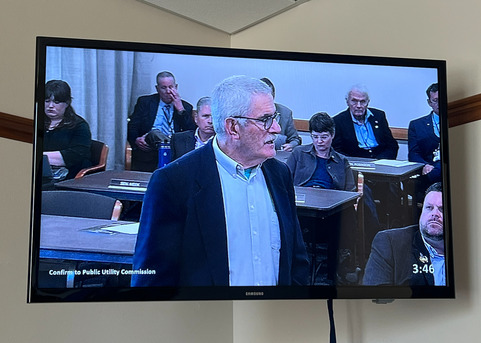
Speaking during the confirmation of Governor appointments at the one Senate floor session during Legislative Days.
Every interim between legislative sessions has three sets of Legislative Days, two- or three- day clusters of committee meetings and conversations with people and groups interested in our work. The first of these ended today, May 31, giving us an early glimpse of what the 2025 session will look like.
Though there are seven months (and an election that will change the composition of the Legislature) before the opening gavel next February, it’s a sure bet that we’ll be continuing our work on housing, the infrastructure that housing needs, addiction recovery, mental health and K-12 funding needs. It’s just as sure that my time and attention will continue to go where it’s been going.
The Governor’s workgroup is ready to launch
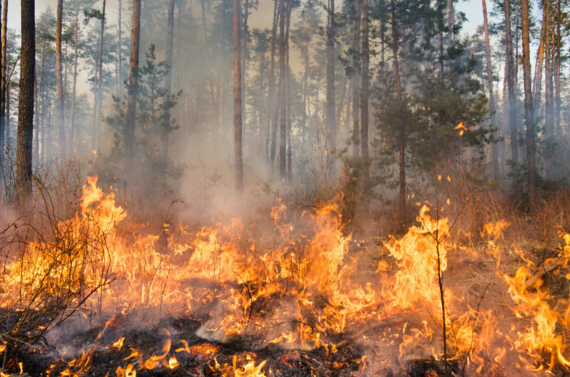
The big news so far is the large group of stakeholders that the Governor is bringing together to answer the big questions on wildfire. None looms larger than the challenge of adequately and reliably funding programs that can protect our communities through the hot, dry summers ahead. That’s why I sent the Governor this letter in advance of the group’s first meeting on June 3.
If you follow this newsletter you’ve heard me more than once on this score. The current state budget all but abandons SB 762 programs that demonstrably reduce the risk of wildfire catastrophe in our cities and towns, and the state general fund doesn’t have capacity to pick that responsibility back up (see “Will the legislators change taxation next session?” section below). So how do we pay for the programs that greatly improve Southern Oregon’s chances for surviving the big wildfires that are sure to come?
That question has stumped several groups that have convened around wildfire issues over the past decade. Everyone in the conversation agrees that a lot more revenue is needed, but so far—despite how graphically 2020 showed us what’s at stake—we’re pretty much in the zone that the late Senator Russell Long described long ago with this ditty:
Don’t tax you,
Don’t tax me,
Tax that fellow behind the tree.
Those of us taking part in this workgroup will have a lot to regret if we end up watching more Oregon communities burn to the ground because we couldn’t meet the political challenge of raising the money needed for effective community protection programs. I’m hoping we’ll keep that in the forefront of our conversation.
 |
Open house on mapping
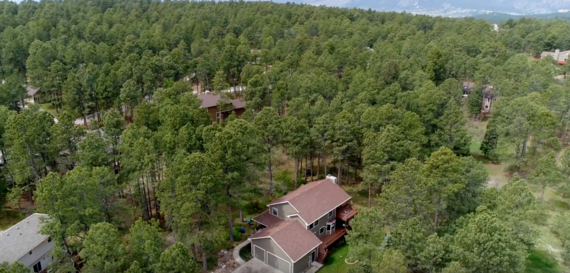
Whatever became of the statewide mapping process to identify the most wildfire-prone areas, so that we know where to concentrate our limited program dollars? You’ll remember that the “risk map” released in June of 2022 was withdrawn because of a combination of confusing categories and completely inadequate public engagement. A new map with three categories of hazard—low, moderate and high—is scheduled for release in July. Before then state agencies will hold open houses around the state for all things wildfire—reducing risk around your property, emergency planning, home hardening, fire insurance, how the maps are constructed, how to have your voice heard on rules and codes. The Jackson County meeting will take place on Monday, June 17, 2024, from 7:00-9:00pm at the Expo Mace Building in Central Point. The preliminary draft map at that meeting won’t be refined enough to know for certain which hazard zone applies to which single property, but you’ll be able to get a good general idea of the Valley’s most wildfire-prone areas.
Those of you who followed the unfolding of SB 762, the comprehensive set of wildfire programs we created in 2021, know that wildfire mapping has been the most fraught chapter. With rumors flying around about chainsaw-wielding bureaucrats ready to scrape properties bare, and the real-life home insurance battles people are fighting, that’s not hard to understand…and the false start of the first roll-out in 2022 didn’t help things. It reminded us that programs that support Oregonians doing good work to protect their homes and neighborhoods will take us much closer to our goals than the prospect of top-down regulation. That understanding will guide some of the bills coming to the 2025 session.
It's not puzzling that some people are upset by the prospect of wildfire maps that could designate their property as high-hazard. When I hear from them, I ask for some reflection on the broad reality we’re facing. The conditions for catastrophic wildfire will be with us for many summers to come. We’ve already seen in terrifying detail what can happen. At the state level we’ve developed a web of effective programs to detect fires early, to dial down their intensity, to suppress them, and to reduce the fuels within communities that provide the kind of transmission that incinerates towns like Paradise, Talent and Phoenix. We’re likely to avoid that kind of devastation or worse only if we can pull together with some trust and shared determination to protect where we live.
It's a stretch for all of us. I’ll stretch to listen more carefully to the concerns of people who’ve been angry about what they see as government overreach. I ask those people to stretch to curb their suspicion that we have some agenda that goes beyond the simple goal of keeping Oregon communities safe through tough times ahead. Achieving that is a pure and classic all-hands-on-deck project.
We’ve written before about the ingredients that have made our wildfire seasons so volatile. One was highlighted in a recent story about logging operations in the Ashland watershed. It’s well worth a read, here.

Another kicker?
Tax deliberations—the unending conversation on how we pay for state services—seem to get weightier and dramatic every session. I’ll probably retain a front-row seat as a member of the Senate Finance and Revenue Committee. We met jointly with the House Revenue Committee on Wednesday to hear the state economist deliver the latest revenue forecast for the next budget.
It’s up from the last forecast, as has been true every time since the darkest days of the pandemic. Here is the relatively rosy news, including projection of yet another income tax kicker—much smaller than this year’s—in 2025.
This is crystal ball stuff, and could—likely will—change in coming months. And the state economist suggests that economic trends will likely sour if current interest rates don’t come down in the next year or so. For the moment, the odd paradox, both nationally and in Oregon, continues: an “objectively” good economy that seems to so many people like anything but.

Will the legislators change taxation next session?
Some of my legislative colleagues will try. As the Senate Revenue Committee sat in joint session with our House counterparts to hear the revenue forecast on Wednesday, one member called reforming Oregon’s estate tax “unfinished business.”
Our estate tax is arguably the strictest in the country. Only twelve states tax inheritance, and Oregon’s kicks in at a lower level than any other; only the first $1 million of an inheritance is tax-free (after that the rate ranges from 10 to 16% depending on the amount). This drives to distraction those who staunchly believe in the right to pass on undiminished wealth to the next generation. Every session we see bills to either eliminate the tax outright, or to dramatically increase the amount that escapes taxation. Some suggest lifting the exclusion to $13.61 million, which would copy the federal tax code.
While I think it makes more sense to tax inheritance than low-income people struggling to make it in this lifetime, I understand the argument. It’s a sure bet that I’ll hear it again in the Revenue Committee next session when someone introduces a “death tax” reform bill. I’ll have the same reaction I’ve had to the long list of recent bills to reduce taxes, or exempt some Oregonians from them (one example: a proposal last session to exempt most military pension income from state taxation, regardless of how wealthy the taxpayer is). I’ll ask how they plan to replace the lost revenue.
More than ever I think that’s the right question. Of course you do, a political opponent might say—You’re a tax-and-spend liberal. But I don’t think it’s about politics. I think it’s about looking clearly at where we’ve arrived as a state and a country. The bill has come due on a basketful of needs that we’ve ignored or shortchanged for decades, and they’re not cheap. My particular stubborn focus has been programs to protect Oregon communities from wildfire destruction—overdue in the sense that it results from decades of unwillingness to shift from fossil fuel to renewable fuels.
And there are so many others. A couple of weeks ago I found myself with the yellow tablet I often carry around, a pen, and ten minutes to kill. I scribbled “What’s the growing pile of Oregon’s costly, critical needs?” at the top of the page and easily filled in the 26 lines below:
- Housing & homelessness (we’ve spent a pile on this and will spend a pile more)
- Mental health (same)
- Substance abuse treatment (same)
- Criminal court services
- Public defenders
- Prosecutors (competitive wages)
- Judges (competitive wages)
- Transportation (a huge backlog of dangerously deferred maintenance, major initiatives to relieve paralyzing congestion, a safe interstate bridge, new funding mechanism as more efficient vehicles cut the legs out from under the fuel tax)
- K-12 education
- Special ed
- Classified (lower-paid) workers—recent news that 52% of them need 2nd/3rd jobs to get by
- Fill the holes caused by declining enrollment
- Higher education –university and community college tuition keeps soaring beyond affordability
- Agency staffing levels
- Closed DMV offices, waits for various services that can last months
- Impossibly high caseloads at Dept of Human Services agencies—burnout, turnover
- Water: system development, protection, storage, efficiency improvements (could run into the billions as drought continues).
- State Police: Oregon’s 2.46 troopers per thousand residents ranks 48th in the nation (from #1 Louisiana at 4.78 to #50 Washington State at 2.21).
I stopped only because my yellow page ran out.
What do you think?
Not everyone agrees that government should be responsible for every item on this list. But it’s clear that if we want Oregon to thrive, state government has far more weight on its shoulders than its coffers will support. More weight is on the way.
Is more revenue on the way? You can stoke up a fight around here just by asking the question. (Russell Long one more time, for good measure: Don't tax you, don't tax me. Tax that fellow behind the tree).
I can’t predict when or whether we’ll start dealing with the vast gap between our state’s growing needs and its revenues, but we’d do well to start asking harder questions now. At a minimum, if we’re serious about serving Oregonians well, we can’t be cutting taxes that annoy us without finding a way to replace the revenue. There’s no shortage of sensible options for doing that—just a shortage of popular ones.
I wouldn’t be surprised if you’ve already pondered some of this. What do you think?
Enjoy summer’s arrival—
 Senator Jeff Golden, Oregon Senate District 3
By the way, congratulations to La Clinica on the opening of their Acute Care Clinic. La Clinia does incredible work in our community. You can learn more about their services here.
Wildfire Hazard Map Open House:
A series of six open houses about the state’s new community wildfire risk reduction programs are scheduled June 3 through July 1 across Oregon. These events will offer opportunities to learn about new defensible space and home hardening standards, as well as the draft wildfire hazard map.
Jackson County's open house will be:
Monday, June 17 from 7-9pm
Jackson County Fairgrounds, Mace Building
More information can be found here.
Unemployment Insurance:
If you have filed an Unemployment Insurance claim and are in need of assistance, the Employment Department can be reached at:
frances.oregon.gov/claimant or by calling 877-345-3484. If you continue to have questions or concerns about your claim, please reach out to our office for assistance at sen.jeffgolden@oregonlegislature.gov
Housing and food:
If you are in need of housing assistance, ACCESS has resources here. ACCESS also has a food pantry locator and food program information here.
|