|
Friends and neighbors,
I hope you had a relaxing Thanksgiving with friends and family. I am grateful for this time of the year to slow down and focus on the things that matter. It's easy to let our divided politics take up too much of our attention, so this time of year is always a good reminder to refocus on the most important things in life. I hope you can do the same.
As we head toward the year's end, we look forward to the 2024 short legislative session. The Legislature meets every year, but in odd-numbered years, like 2023, we meet for six months. In even-numbered years, we meet for 35 days from early February to the middle of March. Much attention will be paid to Measure 110 - more about that below.
Over the last few months, I have been getting out in our community to hear from you. I have held three Community Conversations in Salem and Woodburn since the end of the long session in June. I look forward to getting more on the calendar next year!
My office is gauging interest in producing parts of this newsletter in Spanish. If you would like to receive newsletters from me in Spanish or know someone who might, please sign up at this link. If there is enough interest from the district, my office will look at making it a reality.
The Kicker has been finalized! Take a moment to estimate your Kicker at this dashboard!
As always, please don't hesitate to contact me with comments, questions, or concerns at 503-986-1422 or Rep.TracyCramer@oregonlegislature.gov.
Best,
 Tracy
I commend Marion County District Attorney Paige Clarkson for standing up for crime victims last week when she requested Governor Kotek revoke the commuted sentences of 57 Marion County criminals. According to the letter Clarkson sent to Kotek, 11 of the 138 people in Marion County who had their sentences commuted by former Governor Kate Brown have committed felonies or misdemeanors since their release, and an additional 28 are wanted for crimes or violations of their release.
Her letter highlighted convicted felon Thomas Healy. Healy was released from prison December 17, 2020, because he was deemed medically vulnerable. He was charged with murder in August last year got the shooting death of Scott Tanner Jr. at Geer Park, and is being held in the county jail awaiting a trial.
We cannot afford to be soft on violent criminals and allow them to walk free. According to a new report, shootings in Salem has increased by 100% since 2018, going from 8 to 16. This, in part, was likely due to when the Salem Police Department disbanded its Gang Enforcement Team in 2019. Other factors, like Senate Bill 1008 going into effect in 2020, the COVID-19 pandemic impact on criminal justice system programs, supervision and services for high-risk youth at schools, and the riots of 2020, could also play into the increase in gun violence.
Defenders of Measure 110 will tell you that drug decriminalization “needs more time to work.” What that means in practice is “more people are going to die before we make a change.” That is not acceptable to me, nor should it be acceptable to Oregonians.
No one believes Measure 110 is working the way it is supposed to.
In response, the House Speaker and Senate President have put together a committee to figure out what we need to do when it comes to drug use and Measure 110. Most of us already know what needs to be done: Repeal Measure 110. But in the meantime, this new legislative committee will meet in the run-up to the 2024 short session and talk about potential paths forward.
On Monday, December 4, the committee will accept public testimony on Oregon's drug crisis. To sign up to testify in person, or online, click here. To send written testimony, send an email here: JACSR.exhibits@oregonlegislature.gov
Much of the blame for our current drug crisis is correctly placed on on Measure 110, but a lesser-known court case is also wreaking havoc on law enforcement's ability to charge drug dealers. District Attorneys and other law enforcement officials recently appeared before a Legislative committee to advocate for a change to the law.
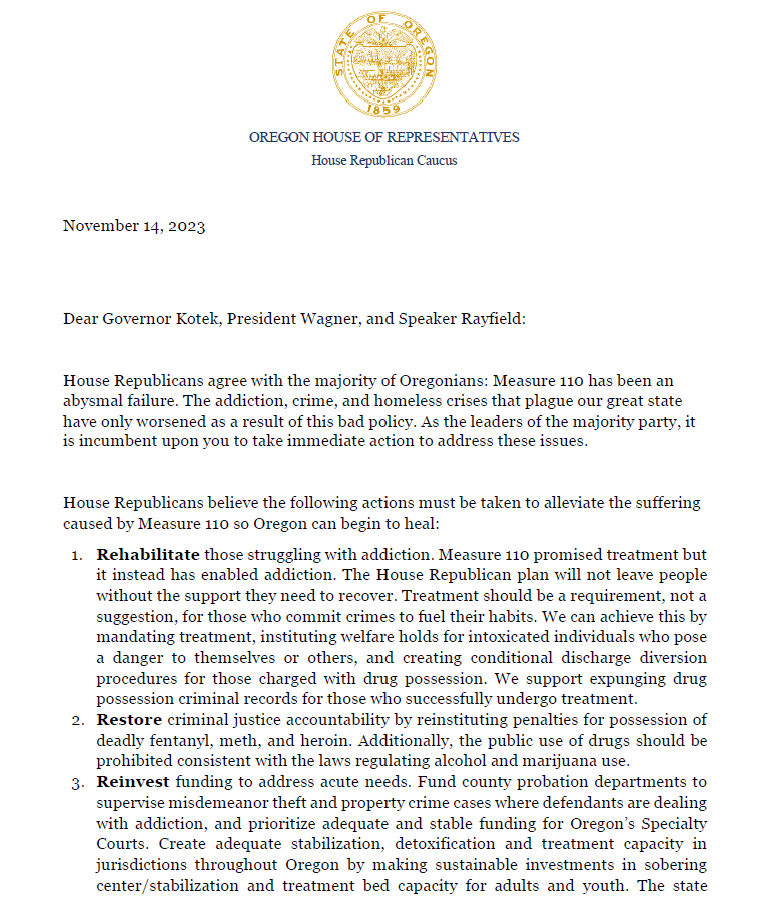
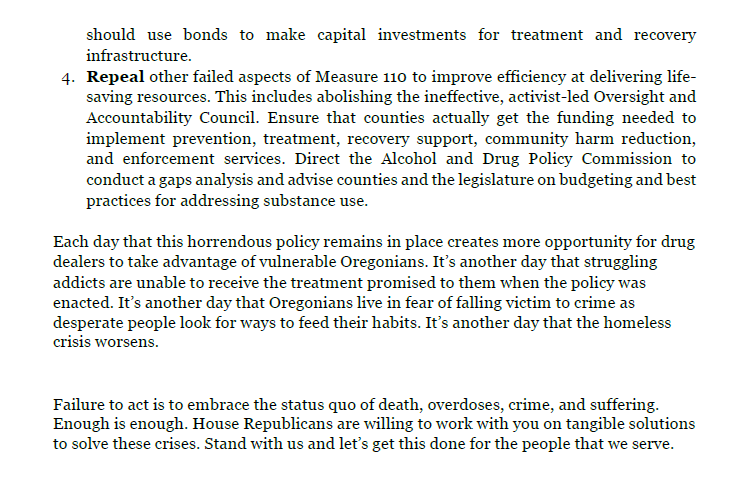
I recently signed a letter with my House Republican colleagues outlining the changes we want to see to Measure 110. Those include rehabilitating those struggling with addiction, restore criminal accountability for possession of deadly drugs, reinvest in proven methods that get people clean and sober, and finally repeal the failed aspects of Measure 110, which included scrapping Governor-appointed boards that have proven ineffective at getting money to projects ready to help people get sober. Read that letter here:
I am not optimistic this committee will turn out anything like the policy reforms needed to stem the tide of the drug addiction crisis in Oregon. The chairs of the committee rejected multiple attempts from Republicans to reform Measure 110 in the last session.
But the public pressure against Measure 110 is mounting. Marion County became one of the growing counties that have formally passed resolutions calling for the recriminalization of hard drugs. This comes at the same time that homeless people in Salem have said they haven’t seen the benefits of Measure 110.
A combined 60% of Oregonians said that homelessness and drug addiction were the most pressing issues facing the state, according to a new poll. The news is filled with events like the mass overdose event that happened over a month ago in a Portland park.
Quality of life issues like Measure 110, homelessness, and related crime have big impacts on other parts of our state. People don’t want to travel here, and increasingly, people don’t want to live here at all. This has serious implications for the future of our economy.
We know what needs to be done. Repeal Measure 110. We just need the political courage to do it.
This week, the month-long Portland Teachers Union strike finally ended. Over 40,000 Portland-area students were shut out of the classroom for almost the entire month of November. Many students struggled to study for tests without teacher help, while special needs students struggled with the disruption of their routine. We already know the devastating results of lost classroom time had on student learning from our COVID experiment of school lockdowns. I hope district and union leadership will come together to avoid similar strikes in other districts around the state.
The teacher's strike put a lot of focus on how schools get funded, how they spend that money, and the results we get for it.
Let's look at the numbers. As of the 2019-2020 school year, Portland public schools spent $14,829 per student. For additional context, Woodburn School District spends $13,605, Gervais spends $10,311, and Salem-Kiezer spends $12,210. These numbers are expected to rise significantly over the coming years because of the Corporate Activities Tax revenues and declining enrollment. Regardless of how much we spend per student, data shows that is not a good indicator of outcomes. And we know that Oregon schools are not producing good outcomes right now.
What are we getting for all that money? While graduation rates have increased slightly in the last few years, general trends show that academic achievement has declined over the decade.
This is causing many parents to look for better student learning environments. Homeschooling has skyrocketed in Oregon, increasing homeschool enrollment by more than 200% in some areas.
I have long advocated for state policy to give parents and students more flexibility on where to spend their education dollars. And polling suggests Oregonians support it as well.
Oregonians want options, but again, politicians have to have the courage to give it to them.
The 2023 holiday shopping season is here and the Oregon Division of Financial Regulation (DFR) is reminding people to watch out for financial scams that can target their pocketbook, particularly gift card scams.
Gift card scams often start with a call, text, email, or social media message. Scammers will say anything to get you to buy gift cards – such as Google Play, Apple, or Amazon cards – and hand over the card number and personal identification number (PIN) codes.
According to the Federal Trade Commission, here are some common tactics scammers use:
- Scammers will say it is urgent. They will say to pay them right away or something terrible will happen. They don’t want you to have time to think about what they are saying or talk to someone you trust. Slow down. Don’t pay. It is a scam.
- Scammers will tell you which gift card to buy (and where). They might say to put money on an eBay, Google Play, Target, or Apple gift card. They might send you to a specific store – often Walmart, Target, CVS, or Walgreens. Sometimes, they will tell you to buy cards at several stores, so cashiers will not get suspicious. The scammer also might stay on the phone with you while you go to the store and load money onto the card. If this happens to you, hang up. It is a scam.
- Scammers will ask you for the gift card number and PIN. The card number and PIN on the back of the card lets scammers get the money you loaded onto the card — even if you still have the card itself. Slow down. Don’t give them those numbers or send them a photo of the card. It is a scam.
Scammers tell different stories to get you to buy gift cards so they can steal your money.
- Scammers say they are from the government. They say they are from the IRS, the Social Security Administration, or even the Federal Trade Commission. They say you have to pay taxes or a fine. However, government agencies will not contact you to demand immediate payment, and they never demand payment by gift card. It is a scam.
- Scammers say they are from tech support. They say they are from Microsoft or Apple and there is something wrong with your computer. They ask for remote access and say to pay them to get it fixed. Don’t give them access to your computer. It is a scam.
- Scammers say they are a friend or family member with an emergency. If the scammer uses voice cloning, they may even sound just like your loved one. They ask you to send money right away – but not to tell anyone. It is a scam. If you are worried, contact the friend or relative to check that everything is all right.
- Scammers say you have won a prize. But first, they tell you to pay fees or other charges with a gift card. It is a scam. No honest business or agency will ever make you buy a gift card to pay them for a prize. And did you even enter to win that prize?
- Scammers say they are from your utility company. They threaten to cut off your service if you don’t pay immediately. Utility companies don’t work that way. It is a scam.
- Scammers ask for money after they chat you up on a dating website. Romance scammers will make up any story to trick you into buying a gift card to send them money. Slow down. Never send money or gifts to anyone you have not met in person – even if they send you money first.
- Scammers send a check for way more than you expected. They tell you to deposit the check and give them the difference on a gift card. Don’t do it. It is a scam. That check will be fake and you will be out that money.
Here are somehelpful reminders to help prevent yourself from getting scammed:
- Don’t answer unknown numbers – block unwanted calls and text messages.
- Don’t give personal identifying information to unsolicited calls, texts, or emails. Hang up, look up their number, and call them to verify.
- Be skeptical. Ask questions and be wary of offers “too good to be true.”
- Resist the pressure to act immediately. Scammers use urgency as a tool.
- Stop and talk to someone you trust. Talking about it can help you spot the scam.
- Never pay someone who insists you pay with a gift card, money transfer, or cryptocurrency.
Remember, if it is too good to be true, it probably is.
If you feel you may have been scammed, the division’s consumer advocates may be able to help. They can be reached at 1-888-877-4894 (toll-free) or dfr.financialserviceshelp@dcbs.oregon.gov.
The Oregon Department of Consumer and Business Services (DCBS) will be hosting a public hearing on prescription drug prices on Thursday, Dec. 7, from 1:30 to 4 p.m. via Zoom. The public is invited to participate and here are some ways you can:
Share your stories. DCBS is asking for the public’s help before the 2023 public hearing on prescription drug prices. The department has set up a brief survey for consumers to share their stories about rising prescription drug prices. Drug prices play a major role in health care decisions of Oregonians, and the cost of prescription drugs have steadily increased. The department wants to hear your stories about the costs of prescription drugs and how it has affected you and your family. The previous testimonials are available on their website.
Attend the hearing via Zoom. There will be opportunities for public comment, and Oregon legislators will serve as moderators for panel presentations. We encourage you to testify at the hearing or provide written testimony. For more information about the hearing, email rx.prices@dcbs.oregon.gov.
Some of the agenda items this year will be highlights and recommendations from the Drug Price Transparency team, including:
- Diabetic drugs approved for weight loss. There will be presentations on drugs approved to treat diabetes that are now also approved for chronic weight management for nondiabetic adults with obesity.
- What determines the costs of a generic prescription drug and why are they so expensive? There will be presentations about why some generics are so expensive and have a very small discount when compared to the brand-name drug.
You can learn more about the agenda on their website. The Prescription Drug Price Transparency Act (ORS 646A.689) directed the Oregon Department of Consumer and Business Services to establish a transparency program to accept reports and disclose certain information from prescription drug manufacturers, health insurance carriers, and consumers on drug prices. The goal of the program is to provide accountability for prescription drug pricing through the notice and disclosure of specific drug costs and price information from pharmaceutical manufacturers, health insurers, and consumers.
 |
|
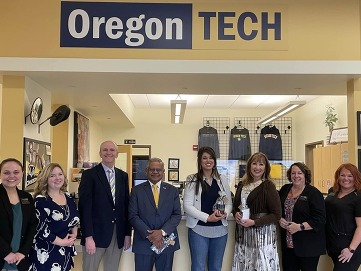
I recently toured the Oregon Tech Dental Hygiene Clinic on the Salem Chemeketa Community College campus with Senator Kim Thatcher. The clinic serves the area with low-cost dental cleanings, reaching many patients who have limited access to care in the community. The clinic includes 20 operatories, a sterilization area, a reception area, 7 radiology rooms, and a dental lab. |
They also have one dedicated classroom for the dental hygiene students that is just down the hall from the clinic. Students at this location can receive a Bachelor of Science degree and make a median salary of $98,000!
Thank you to Dr. Naganathan and the Oregon Tech and Chemeketa teams for sharing this incredible program with us!
|
Thank you to the Chemeketa Woodburn Center and Dean Villegas for hosting my Community Conversation about the state of education in Oregon.
We had a great conversation about how to raise standards in our school, the burden of new unfunded mandates on school districts, and a lot more. Thank you to everyone who came out to participate!
|
|
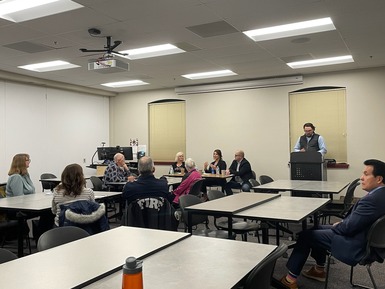 |
Thank you to Gervais Superintendent Dandy Stevens and Woodburn School District Vice-Chair Santiago Puente for participating.
 |
|
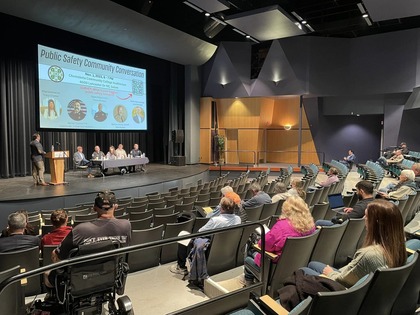
Eariler this month, I held a community conversation about public safety in NE Salem with local public safety officials. It was great to have such a wealth of knowledge join me on the panel to answer our community's questions. |
Thank you to our local public safety leaders Marion County Sheriff Nick Hunter, Marion County Fire District No. 1 Chief Kyle McMann, Salem Police Chief Trevor Womack, and Salem City Councilor Jose Gonzalez.
It is very clear that our neighbors want our houseless population off of the streets and that Ballot Measure 110 is broken. I am committed to continuing to work together to make our communities safer.
 |
|
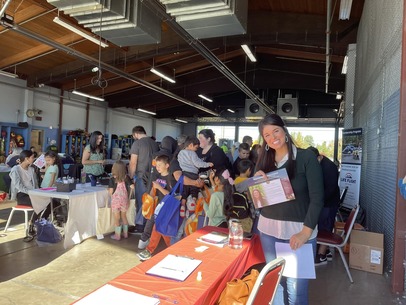
Last month, I had a blast at the Woodburn Fire Department’s Open House & Safety Fair!
Before I could stamp their passport saying they’d been to my booth, I had to ask each kid a question related to what I do. I asked about the three branches of government, who the first president was, and some other questions. |
My favorite was explaining the Gold Man at the top of the Capitol building in Salem and asking the kids if they thought he actually had any gold on him. The way their eyes lit up was amazing when I said he does in fact have just enough gold on the outside to fit in the palm of my hand!
Capitol Phone: 503-986-1422
Capitol Address: 900 Court St. NE, H-376, Salem, Oregon 97301
Email: Rep.TracyCramer@oregonlegislature.gov
Website: https://www.oregonlegislature.gov/cramer
|