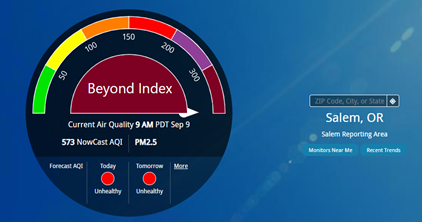
Air quality update: Advisory lifted for Oregon Coast, smoke to remain elsewhere next couple of days
Date: Sept. 16, 2020
The Oregon Department of Environmental Quality, Lane Regional Air Protection Agency and the Southwest Washington Clean Air Agency updated an air quality advisory Wednesday for Oregon and Southwest Washington due to smoke from fires in Oregon, Washington and California.
** Información en español **
DEQ has lifted the air quality advisory for the Oregon Coast. The coast should stay clear through the weekend.
Health officials encourage people to open up windows and begin clearing out their indoor air once smoke levels have dropped into moderate (yellow) and good (green) categories.
Updated air advisories cover:
-
Western Oregon, Southwest Oregon and Southwest Washington, including the Portland-Vancouver metro area, Willamette Valley, Medford area, and Klamath Falls area. The advisory remains in place through end of Thursday and those areas should see clearing by Friday morning. Active wildfires may continue to produce smoke impacts for nearby areas.
-
Columbia River Gorge and Central Oregon. The advisory has been extended through Saturday morning. The area should clear by Saturday morning. Active wildfires may continue to produce smoke impacts for nearby areas. Fires can be unpredictable so DEQ and its partner agencies will continue to monitor air quality.
-
Northeast Orego:. The advisory has been extended through Saturday evening. The smoke should clear by Saturday evening.
-
Southeast Oregon: The advisory has been extended through Monday. The region may continue to see smoke from CA fires until next week.
Smoke levels have recently fluctuated between unhealthy (red) and hazardous (maroon) for Oregon and Southwest Washington. When smoke levels are hazardous everyone needs to take steps to protect themselves. Health officials encourage people to open up windows and begin clearing out their indoor air once smoke levels have dropped into moderate (yellow) and good (green) categories.
Emergency managers are discouraging travel to lessen the spread of COVID-19 while allowing firefighters and other emergency crews to remain focused on wildfire. Relief from wildfire smoke should be coming soon to all parts of Oregon.
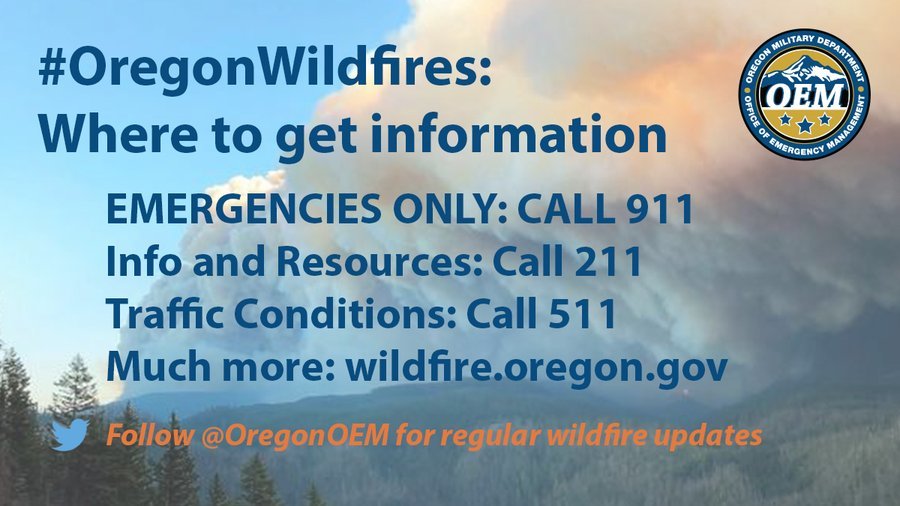
Smoke levels can change rapidly depending on weather. Check current conditions by visiting the Oregon Smoke Information Blog , downloading the free OregonAIR app on your smartphone, or going to on the U.S. Environmental Protection Agency’s Air Now .
Smoke can irritate the eyes and lungs and worsen some medical conditions. Young children, adults over 65, pregnant women and people with heart disease, asthma or other respiratory conditions are most at risk.
 Protect your health when smoke levels are high:
- Avoid outdoor activities and stay inside if possible. Keep windows and doors closed.
- Be aware of smoke in your area and avoid places with the highest levels.
- Use high efficiency particulate air (HEPA) filters. These can be portable filters or can be installed in indoor heating, ventilation, cooling and air purification systems. You can also create your own air purifying filter by following these easy to follow DIY air filter instructions .
- Check with your local health department or this 211 list to see if they have community clean air shelters set up where people can get temporary relief from the smoke.
- If you have heart or lung disease or asthma, follow your healthcare provider’s advice.
- Consider leaving the area if smoke levels are hazardous and you have heart disease, asthma or other respiratory conditions. If you choose to leave the area, remember to take face coverings and hand sanitizer with you to help protect yourself and others from COVID-19.
Cloth, dust and surgical masks don’t protect from the harmful particles in smoke. N95 respirators that are tested to ensure proper fit and that are worn correctly may provide protection. Otherwise, they might just provide a false sense of security. They are not available in children’s sizes and are not recommended for strenuous activities. N95 respirators are in limited supply due to COVID-19. Additional information on wildfire smoke and COVID-19 can be found on the Centers for Disease Control webpage .
DEQ’s color-coded Air Quality Index provides current air quality conditions and ranks air quality as follows: Green is good. Yellow is moderate. Orange is unhealthy for sensitive groups such as children, seniors, pregnant women and those with respiratory conditions. Red is unhealthy for everyone. Purple is very unhealthy for everyone. Maroon is hazardous.
Several highways and roads are closed around Oregon. Check TripCheck for the latest information. The Oregon Health Authority asks the public to refill prescriptions at pharmacies and not to go to emergency rooms to refill them. They also advise that you refill them as early as you can and, when possible, keep extra on hand.
 OREGON GRANTED MAJOR DISASTER DECLARATION FOR SEPTEMBER WILDFIRES
News Release from Oregon Office of Emergency Management Posted on FlashAlert: September 16th, 2020 1:20 PM
Following an expedited request to President Trump by Oregon Governor Kate Brown on Monday, Oregon was notified within 24 hours that federal emergency aid has been made available to the state to supplement state, tribal and local recovery efforts in the areas affected by wildfires and straight-line winds beginning on Sept. 7, 2020 and continuing.
“Oregon is resilient, but to fight fires on this scale, we need all the help we can get,” said Governor Kate Brown. “I am grateful for the White House’s swift response in quickly granting a Presidential Disaster Declaration and the immediate implementation of FEMA’s individual assistance program, which will help bring additional relief to Oregonians impacted by the devastation of these fires.”
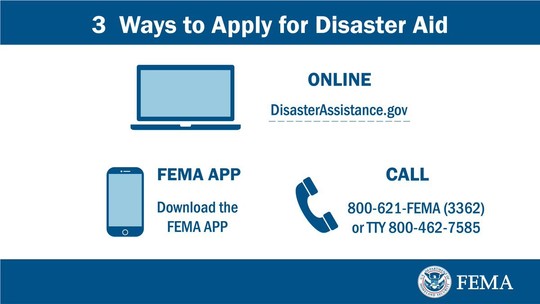
 The declaration makes federal funding available to affected individuals in Clackamas, Douglas, Jackson, Klamath, Lane, Lincoln, Linn and Marion counties. Assistance can include grants for temporary housing and home repairs, low-cost loans to cover uninsured property losses, and other programs to help individuals and business owners recover from the effects of the disaster. Individuals and business owners who sustained losses in the designated area can begin applying for assistance by registering online at www.DisasterAssistance.gov or by calling 1-800-621-3362 or 1-800-462-7585 TTY.
Affected Oregonians are encouraged to apply as soon as possible. Federal assistance through FEMA’s Public Assistance program is available to Benton, Clackamas, Columbia, Coos, Deschutes, Douglas, Jackson, Jefferson, Josephine, Klamath, Lake, Lane, Lincoln, Linn, Marion, Multnomah, Tillamook, Wasco, Washington and Yamhill counties.
“Our office will be working hand-in-hand with FEMA over the coming weeks to ensure that Oregonians know how to apply for assistance,” said OEM Director Andrew Phelps. “This is an important step toward rebuilding the strength of our communities.”
 News Update and Resources:
 More News:
Two Oregon businesses issued more than $23,000 in fines for coronavirus violations
Wildfire aftermath adds to Employment Department workload
Gov. Kate Brown, OHA grant exemption for Oregon Ducks, Oregon State Beavers sports pending approval of Pac-12 plans
Coronavirus in Oregon: 195 new cases, 2 deaths as state launches early detection system
for links to the rest of today's stories, see News & Opinion
|