From the Desk of the Co-Chairs of the Joint Committee on Student Success
School is out for most Oregon kids, and the Joint Committee on Student Success is more than halfway through with our statewide tour of schools. We are tasked with developing a proposal to make sure every student has a fair shot at success, including stable and sufficient funding for schools.
While the graduation rate for Oregon students is improving, our state continues to be among the lowest in the nation. On our journey with this committee, we have learned that behind every number is a story. Let’s start with the numbers – and then we’ll tell you the story.
We’ve held six public hearings in different communities to offer parents, guardians and community members the opportunity to share their observations and innovative ideas about how to improve Oregon’s schools.
We have had eight listening sessions with students from all walks of life who shared their hopes, dreams and fears with us. Candid conversations with students have proven to be some of the most informative moments on our tours.
We have convened 11 community roundtables with more than 300 participants, including local parents, teachers, administrators, principals, school board members, business owners, and other leaders who are invested in public education. The roundtables are an opportunity to discuss key metrics like chronic absenteeism, graduation rates, as well as student, teacher, and workforce needs.
Finally, we have toured 22 schools, each with various struggles and successes. Some of our stops include very small schools with low graduations rates, rural high schools with cutting edge CTE training, and early childhood programs that ensure young children from every socioeconomic background are ready for kindergarten.
These are just a few highlights – every school and every student has told us an important story that will inform our plans going into the 2019 legislative session.
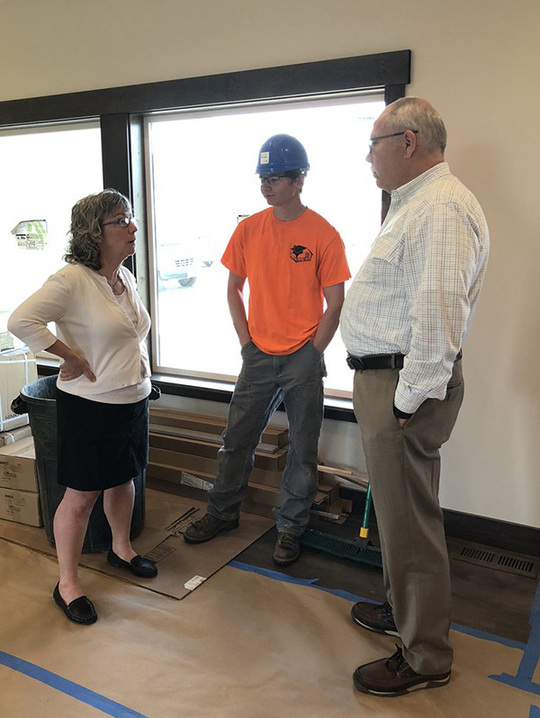 Co-Chairs Smith Warner and Roblan talk with a Hermiston student
Take for instance, the preschool teacher who provides high quality, culturally specific early childhood education. This teacher has drastically reduced behavioral issues to help her students be kindergarten-ready on their first day, and that benefits everyone in the classroom.
Clearly, smart investments in early childhood education are critical to the long-term success of Oregon children.
In our listening sessions, we’ve met too many students who are being impacted by trauma at home, whether they are experiencing hunger, homelessness, addiction, or a parent’s job loss. They’ve asked us to ensure that there are more adults in schools – not just teachers – but counselors, mental health professionals, social workers, and teacher aides.
Schools are the center of our community, and they need wraparound resources that help students cope with hardships and focus on school.
More than one student we met was close to dropping out, but was pulled back in by specific career and technical education (CTE) classes that made them excited about learning again.
When students see a clear path to their future, whether college or career, they’re more likely to stay in school.
Educators and parents know that, while adding school days is important, we also need to address the barriers that are preventing students from engaging and thriving while they are at school. Some of those changes may mean improving curriculum, while others include additional teacher training and preparation time.
Teachers need additional capacity, tools, and time to help our students succeed.
Finally, part of the reason for this tour is to recognize the different needs of different communities. Districts have been able to creatively improve student outcomes with how they allocate their funds – whether that’s investing in wraparound services, CTE, or language immersion programs. Districts are using their spending flexibility to address needs specific to the community, and there is an opportunity for them to share those creative ideas with other parts of the state. Meanwhile, Oregonians also deserve transparency and accountability from districts to ensures that funds are distributed equitably to students.
Our schools need stable and sufficient resources, and accountability between the state and districts, to help students succeed.
This committee’s tour is about more than costs, spending, days of school, or graduation rates. Each stop gives us a story behind the numbers that we won’t forget – and an opportunity to impact the future of Oregon. We are going to take the lessons we have learned from these Oregonians, and translate them to a policy and budget proposal. Ultimately, we want to give every Oregon student an equal opportunity at a reaching their full potential, no matter where they live in the state.
Please follow us on Facebook and Twitter as we reflect on each stop of our statewide tour. So far, we have been to Lane County, Baker City, Hermiston, Arlington, North Clackamas, Marion County, Medford and Grants Pass. Our final stops are Beaverton, Central Oregon, Portland, and Coos Bay. Find a full list of our stops here – and please plan to join us to discuss ensuring every Oregon students to succeed.

| 

