|
It
has now been more than a year since former Oregon Governor John Kitzhaber
resigned in disgrace. He quit a few weeks into his historic fourth term amid
federal investigations and allegations of cronyism and corruption.
A
series of bills was proposed during the 2015 regular
legislative session to try and address some of the major issues that emerged
through this unprecedented crisis of confidence in our state government. The
only bills
that passed were introduced by Governor Brown and related to minor changes in ethics laws.
They did not address more accountability and transparency from our various
state agencies.
In
a previous newsletter, I discussed the myriad problems
associated with the state’s controversial Business Energy Tax Credit program
that was being run through the Oregon Department of Energy (ODOE). Based on the
information brought forward by two whistleblowers, my
office was among those who called for a criminal investigation
into the circumstances surrounding the questionable actions of that Agency and
the Department of Revenue related to the issuance of those tax credits. The
Oregonian newspaper's editorial board agreed that a criminal
investigation was warranted.
ODOE
claimed that some of their more contentious actions were the result of legal
advice they had received from the Oregon Department of Justice (DOJ). When
asked to produce that advice, ODOE refused to disclose it, claiming the
information is protected under attorney-client privilege.
Senate
Bill 1579 represents my proposed solution to that blatant lack of
transparency, as well as to other agencies exhibiting similar behavior, such as
the Oregon Water Resources Department. I and my staff, as well as Senate
President Peter Courtney’s staff, worked with Legislative Counsel over a period
of about four months in carefully drafting the bill.
This
guest editorial in the Oregonian spells out the reasons why I believe SB 1579’s passage is
needed to bring about greater transparency and accountability from out state
government.
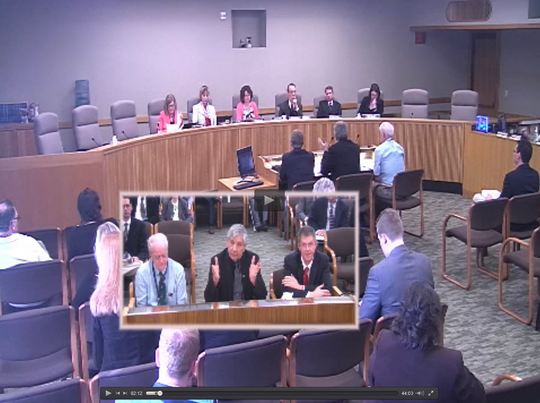
A public hearing was held on SB 1579 last Tuesday in the Senate
Workforce and General Government Committee. I testified beside Senate President
Peter Courtney (D-Salem) and a representative from the Oregon Farm Bureau. Senator
Courtney’s testimony was based on his status as the bill’s chief co-sponsor.
Legislative
Counsel carefully drafted SB 1579 to allow for disclosure of a condensation or
summary of legal advice that would not waive attorney-client confidentiality. The
bill would also require a circuit court judge to decide disputes regarding what
is or is not privileged communication, as well as whether the summary is
accurate and comprehensive.
Attorneys
from the DOJ testified in enthusiastic opposition to SB 1579. In apparent
contradiction to existing statute, they based most of their dissent on claims
the bill would require disclosure that would waive attorney-client privilege.
DOJ further claimed the bill would potentially cause the state to incur
significant expenses. Those cost are allegedly related to verifying the
summaries of legal advice they provide are, in fact, comprehensive and
accurate.
Even
though the bill had been posted on the legislative website
for well more than a week, it is my understanding that no representative from
the DOJ contacted me, my staff, the Senate President’s staff or Legislative
Counsel to discuss any of their “concerns” prior to the public hearing.
Unfortunately, DOJ staff continues to employ this specious behavior because it
works for them. The bill died in committee primarily due to their testimony.
The
Legislative Counsel attorney who drafted SB 1579 strongly believes the bill
would not jeopardize attorney-client confidentiality. Current Oregon law
appears to support her legal opinion.
ORS
192.423 provides, in part, that when a public record is subject to
disclosure, in lieu of making a public record available for inspection by
providing a copy of the record, the public body may prepare and release a
condensation from the record of the significant facts that are not otherwise
exempt from disclosure. The law states unambiguously that the release of the
condensation to the public does not waive attorney-client privilege.
The
DOJ argument regarding cost appears specious at best. A circuit court judge
would determine whether the required summary or condensations was complete and
accurate, while maintaining strict confidentiality.
A
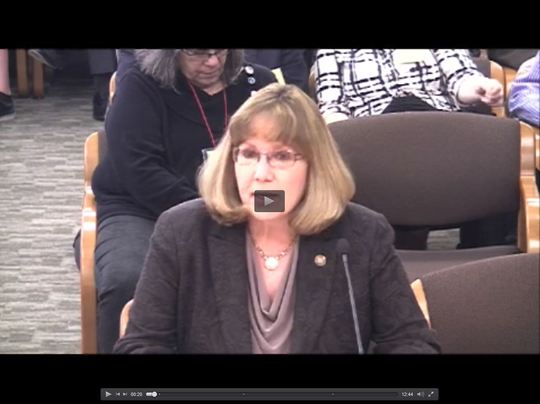
public hearing was held the same afternoon in an adjacent hearing room for House
Bill 4138. That bill, sponsored by Rep. Gail Whitsett (R-Klamath
Falls), would authorize the Legislative Assembly to request appointment of
independent counsel by joint resolution.
The
introduction of this bill was also motivated by the myriad scandals that
plagued the Kitzhaber administration in its final months. Rep. Whitsett
introduced a very similar bill for consideration in the 2015 session. It never
made it out of committee.
We
continue to believe the bill is necessary, due in part to the
seeming reluctance of Attorney General Ellen Rosenblum
to investigate Kitzhaber after his scandals first became public in late 2014.
Federal authorities eventually assumed
control of the investigation after Kitzhaber resigned
his position.
Rep.
Whitsett testified on behalf of HB 4138 during a meeting of the House Consumer
Protection and Government Effectiveness Committee, along with House Republican
Leader Rep. Mike McLane (R-Powell Butte). Just as DOJ had done minutes before
in the nearby hearing room, their attorneys once again testified in strident opposition.
No
one from DOJ contacted Rep. Whitsett, her staff or Legislative Counsel prior to
the hearing despite the fact that the same issue had been addressed by a nearly
identical bill in the previous session. The only changes in this year’s
version of the bill were drafted by Legislative Counsel to expressly address
concerns expressed by DOJ toward last year’s bill.
HB
4138 was carefully drafted by our Chief Legislative Counsel attorney. He told
me that in his opinion, the testimony provided by DOJ was factually inaccurate
on virtually every point. We have requested an informational hearing on the
bill to provide Legislative Counsel the opportunity to rebut the DOJ testimony
that attempted to publicly trash his work. We understand that hearing is
scheduled to occur this week.
DOJ’s
tactics last week were remarkably similar to the ones the department used last
year regarding a Standing
Modernization work group facilitated through the Oregon Law Commission.
The
work group became necessary due to the Attorney General’s (AG) refusal
to mount a defense to a challenge of a statewide ballot measure
passed by voters in 2004. Some of the state’s top legal minds met in good faith
for months to devise a legal solution to the problem presented by the AG’s
refusal to participate in the defense of the Oregon Constitution. I was a member of that work group, which was chaired
by former Attorney General Hardy Meyers.
Although
a workable
solution seemed to be achievable, the AG’s office appeared to work
behind the scene to help sway members of the panel to oppose those efforts. It
also appeared that several of the panel members may have been selected for
their views opposing the proposed solution.
Perhaps
it is worth reviewing how the current AG first came into her position.
Rosenblum
was appointed
by Kitzhaber following the resignation of her
predecessor, John Kroger. Her predecessor had resigned under
mysterious circumstances, citing health concerns, before being
selected President of Reed College in Portland. Although she has since been
elected to the position, Ellen Rosenblum may quite literally owe her office to
John Kitzhaber.
From
my perspective, Oregon needs an AG who will prioritize the representation of
the people over the representation of state agencies. We need an AG who will equally
apply the law and insist on legal accuracy, honesty and fair treatment by her
staff. Further, we need an AG who will refrain from the selective application
of Oregon law. My hope is for Oregonians to elect an AG with those attributes
in the November general election.
Please remember--if we do not stand up for rural Oregon, no one will.
Best Regards,
Doug
Senate District 28
Email: Sen.DougWhitsett@state.or.us I Phone: 503-986-1728
Address: 900 Court St NE, S-311, Salem, OR 97301
Website: http://www.oregonlegislature.gov/whitsett

| 

