Message from Executive Director Ben Cannon
This month's newsletter focuses on ways we are engaging with partners across the higher education and workforce landscape as we launch several significant new projects for Oregon.
We know that postsecondary education is critical to our state's future. Higher education and training prepare thousands of Oregonians each year for promising careers, drive economic mobility, strengthen innovation that fuels our economy, and foster civic, cultural, and community vitality that make Oregon a place that people are drawn to. And yet, this is a challenging time in postsecondary education, with intense fiscal pressures and changing dynamics that result from a confluence of state and national factors.
As we respond to these headwinds as a state, I can't emphasize enough how appreciative I am for the high level of community and partner engagement in the HECC's work, and the commitment I witness daily to protecting and strengthening opportunity to quality higher education and training across the state. We welcome public testimony at all our public meetings on the decisions before us, and Oregonians show up for this regularly, both through oral testimony and in writing, sharing their often personal and impassioned perspectives with our Commission. Every voice in this process is valued. As an agency that supports every type of higher education institution and workforce training program across the state, our work depends upon the ongoing advice and expertise of people across our postsecondary communities, and on the robust collaborative processes underway. In addition to the Commission, HECC convenes nine other public boards, plus numerous advisory work groups, task forces, and committees to advise and inform on initiatives, engages in ongoing consultation through the tribal government to government process, and more.
This month, with the help of Oregon Consensus and the input of numerous partners, we will establish advisory processes to prepare for the comprehensive analysis of the postsecondary education system that has been assigned to us through House Bill 4124 (2026). We are simultaneously leading numerous other projects that involve and depend upon strong partner engagement, including planning for next biennium's comprehensive postsecondary education budget request during a time of tight resources, addressing Southern Oregon University's emergency funding needs, launching a process for developing a new General Education framework, completing a statewide outreach campaign on how we can foster a sense of belonging for all in higher education, partnering to expand college credit in high school, and more. I encourage you to stay connected with us and our work through our public information and meeting processes, and to invite others in your network to stay connected, too.
In addition to the updates below, this week, the HECC and the Workforce and Talent Development Board (WTDB) are hosting the Oregon Talent Summit, bringing together hundreds of statewide partners to consider the talent needs of Oregon industries and the forthcoming results of this year's Oregon Talent Assessment. This biennial assessment helps us to better connect education strategies with workforce needs, and we look forward to sharing the results of this important analysis soon.
Thank you for taking the time to read this update and for your continued engagement.
Legislative and Budget Outcomes from the 2026 Short Session
Oregon’s short legislative session concluded on Friday, March 6, and the HECC is pleased to share a report on key postsecondary and budget outcomes from the 2026 session. This report details any new investments as well as bills and budget notes related to postsecondary education and training. The 2026 session largely focused on issues of financial sustainability and the health of higher education institutions. Highlights included:
Emergency funding and financial planning for Southern Oregon University (SOU): The 2026 Legislature took several actions in response to SOU's financial status through House Bill 5204 (2026) and associated budget notes. Read updates on this work below.
Sustainability of higher education in Oregon: The Legislature also passed House Bill 4124, legislation requiring HECC to develop recommendations for improving the future sustainability and delivery of higher education in Oregon and providing $2.5 million to support this effort. Read updates on this work below.
Higher Education Partners are Informing the Collaborative Process for the House Bill 4124 Study
Oregon Consensus has completed interviews to inform the development of a collaborative statewide public process
A major focus of the HECC’s work in 2026-27 will be the development of a comprehensive study and recommendations on the public postsecondary system in Oregon as assigned by House Bill 4124.
As a first step, the HECC engaged the support of Oregon Consensus to help the agency in developing a transparent, inclusive, and collaborative process for this statewide project. The Oregon Consensus assessment, HB 4124 Higher Education Revitalization Study Process Scoping and Design Assessment, now available on our HB 4124 web page, will inform the scope, process design, and procurement of contracted services to support this study.
Oregon Consensus (OC) conducted a high-level scoping assessment through interviews over several months with groups who interact with the postsecondary system, asking for input on the foundational principles for the project, how to see success, challenges, best ways to engage, and more. Their report provides the collective responses of thirteen focus groups and 33 individual interviews, with a total of 89 participants across a broad spectrum of interests—university and community college administrative leadership and Boards of Trustees, legislators, faculty, students, unions, private foundations and community-based organizations, workforce and economic development interests, and tribal education leaders.
In the executive summary, Oregon Consensus emphasizes that the postsecondary educational system is experiencing an inflection moment, and there is a recognized need and opportunity to reimagine the system in Oregon. Recommendations include:
- Framing the project in terms of long-term system resiliency, with a focus not only on the practical and urgent needs of today, but also on a longer horizon with an aspirational and holistic system view.
- Several recommendations related to working with a trusted, visible and engaged consultant;
- Building common foundational principles together, with a focus on ensuring that student and community needs be the primary 'north star';
- Specific recommendations on the structure for collaboration, including development of a House Bill 4124 advisory group (including specifications on its membership structure), ad-hoc design groups to develop ideas on specific components of the system, a student voices group, a postsecondary institution finance and academic administrators group, regular legislative briefings, regional community forums across the state, and use of other engagement channels.
By summer 2026, HECC intends to engage a contractor (or contractors), and will implement Oregon Consensus’s recommendations to establish the collaborative structure for this analysis.
HECC will Request E-Board to Release Emergency Funds for Southern Oregon University
At its May 7 public meeting, the HECC unanimously approved a motion to ask the Legislature's Emergency Board (“E-board”) to release up to $15 million to Southern Oregon University to address the university’s cashflow needs through June 2027. In February of this year, SOU identified an approximately $15 million shortfall in the funds that would be required for them to meet projected operating expenses during fiscal year (FY) 2027. In addition, the university projects that expenses will continue to exceed revenues in years ahead, projecting an approximately $16.5 million annual deficit for FY 2028 and beyond.
In response to SOU’s financial status, the 2026 Legislature:
- Appropriated $15 million for potential release (pending approval by the E-board);
- Required SOU to increase financial reporting to the state, and demonstrate to the HECC a sustainable operations plan through June 2027;
- Required SOU to collaborate with HECC to develop a plan, that without reliance on ongoing increases in state support, achieves a balanced budget for the 2027-29 biennium and long-term structural fiscal balance; and
- Appropriated funds to the HECC to develop recommendations for SOU’s long-term sustainability plan.
The HECC has been working with experts to fully assess the fiscal shortfall and projections for SOU in both the short and long term, to ensure that all parties have the comprehensive information needed to make well-informed decisions. Since February, three separate external teams comprised of budget and accounting experts have reviewed SOU’s financial data and its fiscal and operational plans for FY 2027. Each team has concluded that SOU indeed requires approximately $15 million to remain solvent through FY 2027. As part of the E-board request, the HECC will submit a report detailing these findings.
To address SOU’s longer-term sustainability, the HECC contracted with Deloitte Consulting, a global firm with a higher education practice. The details on these recommendations and SOU’s path to sustainability are available here. The adoption of a long-term restructuring plan, including any program reduction decisions, is the decision of the SOU independent governing board. On May 8, the SOU Board of Trustees adopted a resolution directing the administration to create an SOU Vitality Plan and corresponding Implementation Plan, using Deloitte’s recommendations as a starting point.
Next steps:
- The E-board will determine on June 17 whether to release the $15 million.
- With engagement from interested parties, SOU will develop a vitality plan to be presented at its June 18 Board of Trustees meeting.
2027 Legislative and Budget Development Planning: Opportunities for Early Input
Every two years, the HECC is responsible for preparing recommendations to the Governor on the comprehensive biennial budget needs of the higher education and workforce system through the Agency Request Budget (ARB) process. At its May public meeting, Commissioners received and discussed an update on the development of the agency request budget, including a preliminary draft ARB based on current estimates, as well as list of preliminary policy option packages (POPs) for consideration. This was for discussion only, and the Commission is not expected to take action on the agency request budget until August 2026.
Under the budget development guidance to HECC and other agencies, most policy option packages in the ARB for the 2027-2029 budget cycle are required to be cost-neutral and not require additional or new revenue. However, agencies will be able to describe long-term funding needs for the system in their narrative submissions.
External Partners Present Funding Priorities
To encourage collaboration and promote transparency, several external partners were invited to join the Commission's Funding and Achievement Subcommittee on May 6 to provide context, perspective, and feedback for consideration during the 2027-2029 ARB development process. The associations representing Oregon public institutions—the Oregon Community College Association and the Coalition of Oregon Public Universities—provided their consolidated funding requests (CFR) for consideration and discussion. Panels representing staff and faculty interests, workforce programs, and financial aid programs also shared their perspectives and input on budget priorities. These presentations are available for viewing under the May 6 meeting materials here.
Legislative Concepts Underway
Legislative and policy director Kyle Thomas reported to the Commission in April that the HECC has filed a list of placeholder legislative concepts (LCs) that the agency is investigating for potential introduction in the 2027 legislative session. The list of placeholder LCs is the first step in a long process, and agency staff are just beginning to engage in conversation with partners to seek early feedback and input on these ideas. The LCs that HECC is considering for introduction are intended to be cost-neutral, per the budget development guidance. Among the concepts, the commission had opportunity to provide input on an early concept to set aside a small percentage of Oregon Opportunity Grant funding for the development of a program to award emergency funding to students facing unplanned situations that may cause disenrollment, and could be resolved with small-dollar, one-time financial support.
Updates on the legislative concept and budget development processes, along with opportunities for public input, will occur at public HECC meetings this summer and fall.

SHEF Report Shows Trends in Oregon Higher Education Funding Compared to Other States
Oregon has made progress in state investments, including investments in financial aid, but the state continues to rank well below the national average in state funding per student
The State Higher Education Executive Officers Association (SHEEO), of which HECC is a member, recently released its annual State Higher Education Finance (SHEF) report, a highly-regarded standard for inter-state comparisons of state higher education funding. The most recent report features national data through fiscal year (FY) 2025 (the 2024-25 academic year). The HECC has produced a summary document for Oregon that provides a few highlights, with more information available in a state profile posted on SHEEO’s website. Highlights for Oregon include:
-
Oregon’s full-time equivalent (FTE) enrollment increased for the second year in a row, rising 4.1 percent from FY 2024, but remains 14.1 percent below what it was a decade ago in 2015. Oregon’s community colleges saw greater enrollment increases than the public universities.
-
Oregon's public investment per student has increased but continues to rank low among states. At $8,580 per student, Oregon’s total public investment in higher education, including institutional support and student financial aid, is 29 percent below the national average of $12,082 and continues to rank 37th among all states. Looking at just Oregon public universities, this rate is $6,531 per FTE student, significantly lagging the national average and ranking 46th among the states. Looking at just Oregon community colleges, this rate is $11,591 per FTE student in 2025, ranking 20th among the states.
- At $1,214 per student, Oregon’s investment in state financial aid now aligns closely with the national average. Although aid levels declined 3.8 percent from 2024-25, Oregon has still increased its per student support by 72.8 percent since 2020, placing the state 24th nationally in FY 2025.
-
Tuition revenue in Oregon on a per-student basis declined in the most recent year, but is still significantly higher than the national average. Oregon public institutions generated $9,913 net tuition revenue per student in 2025, a decrease of 0.8 percent from the previous year, yet continuing to significantly surpass the national average of $7,459.
-
With tuition and public investment combined, funding trails the national average: At $18,493 per student, Oregon’s total educational revenue for public institutions trails the national average by five percent.
Transfer Council Begins Work to Develop a New General Education Framework for Oregon Public Institutions
The Oregon Transfer Council and Oregon institution partners are working to ensure that transferring between colleges is simple, clear, and fair for every student. As part of this ongoing work, we are pleased to announce that the Council is convening a faculty subcommittee to develop an updated Transfer General Education (TGE) framework for Oregon public institutions. Updating the general education framework is intended to help ensure students do not lose credits or have them misapplied when they transfer. This also helps lower costs by preventing transfer students from having to retake classes.
While Oregon’s existing general education transfer tools—including the Core Transfer Map (CTM), Oregon Transfer Module (OTM), and Associate of Arts Oregon Transfer (AAOT)—support partial completion of general education requirements, they do not ensure full general education completion across institutions. As a result, students who transfer are often required to complete additional general education requirements and, in some cases, multiple general education curricula due to differences between community college and university requirements.
In addition, the statewide general education framework, including the 2009 Joint Board Articulation Committee (JBAC) outcomes and related guidance, has not been substantively updated since its development and does not fully reflect current outcomes-based standards or ensure consistent application across institutions. These conditions highlight the need for a more consistent, statewide approach to general education.
The General Education subcommittee will be comprised of representatives from Oregon community colleges and public universities, and the charge document linked below includes ten specific goals associated with this work. They expect to recommend a Transfer General Education framework to the Transfer Council in February 2027.
Oregonians Can Still Share Input through June 1 on What Creates a Sense of Belonging in Postsecondary Programs - Please Share This Opportunity!
In an April press release, the HECC announced an opportunity for Oregonians to share input about what could help create a sense of belonging for students at Oregon college, university, and training programs and settings. The HECC is partnering with Oregon’s Kitchen Table (OKT)—a statewide community engagement program—to hear directly from current, recent, and future students and learners, as well as community members who support learners, about what could help create a sense of belonging in learning settings after high school. The HECC and Oregon’s Kitchen Table are gathering input through an online survey and conversations now through June 1, 2026.
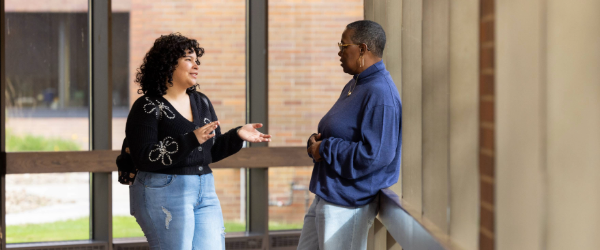 Photo by Allison Shelley/Complete College Photo Library
HECC Approves Community College Bachelor’s Degree in Education to Help Meet Oregon’s Educator Workforce Needs
At its April 9, 2026 public meeting, the HECC voted to approve a new Bachelor of Applied Science - Education (BAS Education) degree to be offered at five Oregon community colleges—Columbia Gorge, Chemeketa, Linn-Benton, Rogue, and Treasure Valley community colleges—after a year-long review process. With the approval of this new applied degree, five community colleges will expand access to teacher preparation for place-bound and working adult students in Oregon, helping to address educator workforce needs in rural and remote regions of the state.
The BAS Education proposal resulted from a multi-year collaboration among the five colleges, known as the BASE Consortium, which was formed in response to persistent teacher shortages. School district leaders across the state, particularly in rural areas, have reported challenges in recruiting and retaining licensed teachers, and many rural districts have to rely on long-term substitutes, emergency licenses, and underprepared teachers to fill classrooms.
Prior to the approval, the BASE proposal progressed through a year-long multi-phase approval process for applied baccalaureate degrees at Oregon community colleges, starting in January 2025, including feedback loops and a 90-day public and university review period. At each phase, including at the April meeting, public testimony from many perspectives across the state was heard. During the 90-day review period, HECC staff convened meetings that brought together consortium representatives and public and private four-year teacher education leaders.
Donna Lewelling, HECC’s director of community colleges and workforce development, says, “We are thankful for the close engagement of the BASE consortium as they refined this proposal, and to the many Oregonians who provided input during this extensive review. This degree builds on community college strengths, including their ability to serve working adults, a focus on flexible course delivery, and partnerships with local employers.”
New Webpage Focused on Efforts to Advance College Credit in High School
The HECC, Oregon Department of Education (ODE), and educators across the state are working together to support equitable participation in college credit in high school for Oregon students. To keep our partners informed, HECC recently launched a web page where you can learn more about this collaborative effort in Oregon and find opportunities for engagement.
Oregon's collaborative work to advance college credit in high school has gained momentum with a two-year policy development project through the College in High School Alliance, starting in 2025. Oregon is one of seven states in this multi-state initiative working to advance state-level policy. The HECC and ODE now have a joint vision for this work, and numerous efforts are underway to support all regions of the state. Stay tuned for an advising toolkit to be released in coming months.
|