|
The Higher Education Coordinating Commission (HECC) announces updates to the Oregon Opportunity Grant (OOG) following the passage of House Bill 3025 which was signed into law during the 2025 legislative session. These changes aim to make college more affordable and accessible for Oregon students and will go into effect starting in the 2026–2027 academic year.
Key Changes Under HB 3025:
-
Flexibility in Award Amounts: The Oregon Opportunity Grant will have the flexibility to award amounts at the per credit level- better meeting students’ financial needs. Previous award amounts were required to be awarded at full time and half time amounts.
-
The restriction for minimum enrollment at half time has been removed.
-
Clearer Definitions: The law clarifies eligibility requirements, including residency which is now defined as 12 months prior to enrollment. It also clarifies that an academic program that is less than a year in length is eligible for OOG.
These changes represent a major step forward in making higher education more affordable for all Oregonians. By simplifying the process and expanding eligibility, the HECC is removing barriers and creating pathways for students to succeed.
Please visit the OOG website for additional information and eligibility requirements.
Oregon Promise Grant:
Helpful Information
Application Review New Feature
The GPA Verification page for Oregon Promise Grant (OPG) within the OSAC Partner Portal now includes a new “Early Grad” certification box. This feature allows high school registrars to confirm that a non-senior student is graduating early.
- Important Note: High school seniors graduating one term or semester early do not need this box selected, as they must apply for the correct OPG cohort based on their graduation date.
- The “Early Grad” certification box is intended only for students graduating a year or more earlier than expected.
Spring GED Cohort Deadline Reminder
The deadline for the Spring 2025 GED Cohort is March 10, 2026, at 11:59 PM. This applies to students who earned their GED between October 1, 2025, and February 29, 2026.
For a new Spring Cohort OPG student to be fully considered for an Oregon Promise Grant award for the Spring 2025-26 term, students must submit:
- The Oregon Promise Grant application, and
- The 2025-26 FAFSA or ORSAA application.
Any questions regarding the “Early Grad” certification box or the Spring 2025 GED Cohort can be directed to our OPG team at OregonPromise@hecc.oregon.gov.
Oregon Teacher Scholars Program
2026-27 Application Now Open
The Oregon Teacher Scholars Program (OTSP) Grant provides funding for eligible candidates who have experience with diverse populations and are in the last two years of their preliminary licensure program for teaching, school counseling, social work, and school psychology. Students who are entering or currently enrolled in an approved Oregon teacher preparation program are encouraged to apply for the 2026–27 cycle if their program begins between Fall 2026 and Spring 2027. Application deadlines vary based on the start date of your licensure program.
For more information or to apply please visit the OTSP website.
ASPIRE
26 Years of Mentoring
For over 26 years, Oregon’s ASPIRE Program has helped students prepare for life after high school by connecting students with trained community volunteers who guide them through career exploration, postsecondary options, applications, scholarships, and financial aid support. Two rural high schools—Sisters High School in Central Oregon and La Grande High School in Eastern Oregon—illustrate the impact of ASPIRE’s mentor-based model.
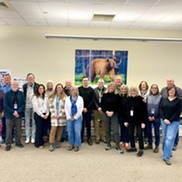
Sisters High School:
Community-Driven Mentorship
Sisters High School has participated in ASPIRE since 2005 and the program serves 415 students each year. Coordinated by Dana Charpentier, the program is supported by 30 active volunteer mentors, including one with more than a decade of service. Mentors work one-on-one with over 100 students, helping them explore education and training options beyond high school.
“Our entire Sisters community benefits by using the ASPIRE mentor model,” Charpentier said. “Mentors use their life experience to support students in their individual pathways after graduation. Students gain a trusted support person who listens, encourages, and helps them stay on track.”
ASPIRE Mentor Shawnie Bailey shared, “ASPIRE mentors provide unbiased life and professional experiences students may not have access to otherwise. As a first-generation college student, I became a mentor because I wish I had someone to walk that path with me.”
|

La Grande High School:
Expanding Opportunity Through Mentors
La Grande High School has been part of ASPIRE since 2001 and serves 590 students in rural Eastern Oregon. With one coordinator supporting hundreds of students, mentors play a critical role. “There is one of me and 590 students,” said ASPIRE Coordinator Charlee Hubble. “Mentors are the key component to ASPIRE. They listen, ask thoughtful questions, share life experiences, and help students see new possibilities. They teach students about community and giving back.”
La Grande High School Principal Chelsea Hurliman noted the program’s recent growth. “ASPIRE has become a powerful support system by connecting students with caring, consistent mentors,” she said. “We’ve seen increased mentor participation, stronger student engagement, clearer post-secondary pathways, and greater confidence in students advocating for their futures.”
The ASPIRE program increases student engagement, improves attendance and academic performance, and inspires hope for the future. By bringing together educators, volunteers, and communities, ASPIRE remains a proven, sustainable model—one that continues to support Oregon students after 26 years of service.
|
|