Message from Executive Director Ben Cannon
Greetings! With the higher education landscape seeming to grow more complex every day, I appreciated the in-depth discussion HECC Commissioners had earlier this month about our agency’s history and how we can best leverage our role to meet the unprecedented challenges facing postsecondary education and training.
Commissioners shared their hopes, concerns, and insights on how our strategic priorities can help steer Oregon higher education and workforce development successfully through an era of tightening public resources, significant federal changes, polarized politics, changing demographics, and rapid technological change. While the convergence of these issues is daunting, I left feeling motivated by the possibility that postsecondary education can not only respond to today’s needs, but also be a driving force in Oregon's future.
One of the immediate and serious challenges we face is the expected impact on Oregon's state budget from the recent federal reconciliation bill, H.R.1.
Higher education is bracing for the potential of budget reductions during the 2026 legislative session, and this comes at a time when many institutions are already wrestling with deficits. In early October, the Legislative Fiscal Office asked the HECC and other state agencies to submit an approach to making a five percent reduction to our 2025-27 budget. The Legislature is months away from making any decisions, and our assignment at the HECC is simply to model and present the impacts of such a cut, in the event it is considered. However, it is important to be clear that about 98 percent of HECC's General Fund budget goes to public universities, community colleges, workforce/employment programs, and student grant aid programs, and there is no way to reduce our $4.2 billion budget by five percent without impacting our institutions and their learners.
While we are clear-sighted about these impacts, the HECC is simultaneously focusing on strategic action in order to rise to today’s complex challenges and support equitable opportunity for Oregonians. Our agency is diving into numerous new activities arising from our five-year strategic plan, and we aim to deepen partnerships and collaborations in this effort. We will need to work with partners to accelerate work that strengthens the responsiveness and flexibility of the postsecondary system to meet pressing community and workforce needs. It is important to remember in this challenging time that postsecondary education needs to both respond strategically to the now and invest in tomorrow – tomorrow’s economy, democracy, and culture. Oregon's public and private campuses and workforce programs are vibrant engines of opportunity that serve hundreds of thousands of learners every year, and awarded more than 40,000 degrees and credentials in 2023-24 alone. The talents, research, and innovative skills of today's learners will shape not only their own lives, but also our local, state and wider communities for years to come.
Thank you for your engagement, as always.
Legislative Presentation Begins Discussion on the Future of Oregon’s Postsecondary Attainment Goals
Recognizing that postsecondary education and training are critical pathways to economic prosperity and thriving communities, the State of Oregon has two quantitative educational attainment goals that are used to guide and drive policy and funding decisions. For more than a decade, Oregon has been working toward 1) the ambitious statewide 40-40-20 goal for young adults, established in 2011 and focused on educational attainment through 2025, and 2) the more recently adopted adult educational attainment goal, established in 2018 and focused on credential attainment through 2030. In addition, there are numerous other goals in Oregon statute for the HECC related to economic, workforce, cultural, civic, and community goals.
On October 1, HECC Executive Director Ben Cannon presented to the House Interim Committee on Education on Oregon’s progress toward achieving the current goals, and proposed a potential process for exploring an update to the goals for postsecondary attainment. Director Cannon was joined by Skip Newberry, President and CEO of the Technology Association of Oregon, and Ariana Jacob, President of the American Federation of Teachers - Oregon.
In his presentation, Ben Cannon discussed the fact that postsecondary attainment goals can serve as a north star to guide education policies and investments and help the state measure progress over time. The process of updating them can also build momentum and foster inclusivity. In the process of launching activities to achieve the HECC’s most recent five-year strategic plan, the HECC identified the need to explore updating attainment goals to help achieve its vision.
And finally, one concrete reason for an update process is that the initial target year for the current 40-40-20 goal of 2025 has arrived. Changes would likely need to be considered by the Governor and Legislature in 2027. The HECC is currently in conversation with partners to identify next steps in this process, and we will share more on this process in upcoming communications.
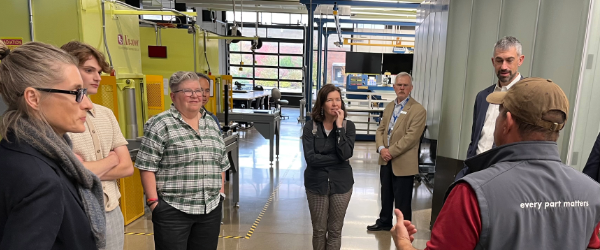 HECC Commissioners and colleagues at the Linn-Benton Community College (LBCC) Nondestructive Testing Laboratory. The Commission held its October meeting at LBCC and had the opportunity to tour the campus.
Welcome to Commissioners Dembrow, Lawson, and Njue
We are pleased to welcome three new commissioners who joined their first public meeting of the HECC in October. On October 1, 2025, the Oregon Senate confirmed Governor Kotek's nominations of Michael Dembrow, Devon Lawson, and Erick Njue. Commissioner Greg Hamann and Commissioner Arnel Fajardo were also confirmed for reappointment to their four-year terms. In addition, we are pleased to share that on October 24, the Governor nominated Demetrius Davis-Boucher for the university student position on the Commission; this appointment will be considered by the Oregon Senate during November Legislative Days this year.
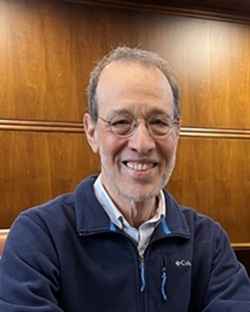
Michael Dembrow is now serving in an at large seat. Commissioner Dembrow served in the Oregon Legislature from 2009 until his retirement in 2025, and he previously served for many years as an English instructor and president of the Portland Community College faculty union. He was first elected to the Oregon House of Representatives in 2008 and was appointed to the Oregon Senate in 2013, including terms as chair of the Senate Education Committee, the House Higher Education and Workforce Development Committee, the Senate Workforce Committee, and the Senate Environment and Natural Resources Committee. Other committee service included membership on the Legislative Policy and Research, Public Education Appropriation, and Ways and Means Committees. In addition, he has served on the State Board of Education and is a founding member of the Cascade Festival of African Films, among other civic leadership roles.
|

Devon Lawson is serving in the community college student position. Commissioner Lawson is a first-generation college student at Lane Community College (LCC) with an intended major in political science. In addition to his academic work, Devon has professional experience as a restaurant manager and as a member of the LCC Bond Oversight Committee. Devon has a background of civic engagement, including testifying on more than 300 education bills before the Oregon Legislature, advocating for lowering Oregon's voting age, running for a public school board seat, and participating in over 30 policy advocacy campaigns focused on equitable access to education.
|
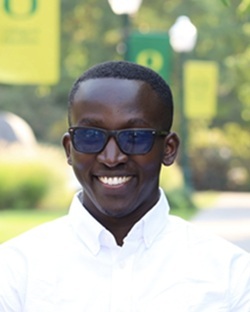
Erick Munene Njue is a current doctoral student at the University of Oregon (UO), specializing in Special Education. Commissioner Njue is a former Fulbright Scholar originating from Kenya and has served on the Tuition and Fees Advisory Board (TFAB), the Council for Exceptional Children, and the College of Education Dean’s Student Advisory Board at UO. His academic interests include exploring how educational institutions can formulate and implement policies to better serve their student populations.
|
HECC Embarks on Review of Funding Distribution Models for Community College and Public University Operating Funds
Collaborative workgroups will review the institution funding models for 2026
At its October public meetings, the HECC Commission previewed a proposed process for review of the state funding distribution models for Oregon community colleges and public universities. The detailed plans were presented by Jim Pinkard, director of the HECC Office of Postsecondary Finance and Capital.
If you are new to funding models, here are some basics. After the Oregon Legislature and Governor make the state's biennial investment in Oregon's postsecondary institutions, HECC distributes these funds to the seven universities and 17 community colleges according to formulas, specifically the Community College Distribution Model (CCDM) and the Public University Student Success and Completion Model (SSCM). The HECC has statutory authority to manage the student success-focused formulas that guide this distribution. The design and regular review of these funding allocation models is a collaborative process with institutions and state partners. In addition, the Engineering Technology Sustaining Fund (ETSF), a fund intended to help engineering and computer science talent thrive in Oregon, has not been reviewed since 2018.
Community College Funding Model Review Plan: HECC staff are proposing a collaborative review of the Community College Distribution Model (CCDM) for the Community College Support Fund (CCSF). A commitment was made during the previous formula revision process to conduct a narrowly-scoped technical review during the implementation phase to identify any unintended consequences and validate data. At the same time, work has been underway recently to reconsider policies related to developmental writing and math courses. The HECC will convene a workgroup charged with this review in the first half of calendar year 2026. In addition to the technical review, the group will review current funding policies related to the reimbursement of developmental education courses. Learn more in the detailed CCSF review process and timeline document.
University Funding Model Review Plan: For the public university formulas, HECC staff have developed a work plan to convene a collaborative workgroup to review both the Public University Student Success and Completion Model (SSCM) and Engineering Technology Sustaining Fund (ETSF) distribution formulas in calendar year 2026. The workgroup will consider workforce needs, policy alignment, and how the two formulas work together to support Oregon’s strategic priorities and postsecondary goals. The workgroup will also consider transfer alignment and other technical aspects of the SSCM. In addition to those themes, the workgroup will be tasked with providing perspective and advice on state funding adequacy. Learn more in the detailed SSCM review process and timeline document.
A Consortium of Oregon Institutions is Working to Better Serve Oregon's Fast-Growing Latine/Hispanic Student Population
Learn more about the collaborative work of the OR HSI Consortium
Oregon institutions welcome many thousands of Latine/Hispanic students every year across their diverse campuses. Oregon has a fast-growing Latine/Hispanic population, and the percentage of Oregon high school graduates who identify as Hispanic is projected to grow. We are pleased to report that through a new inter-institution consortium, representatives from Oregon’s colleges and universities are working collaboratively to better serve Latine/Hispanic students and foster their talent.
Since 2023, an informal group of institution partners have been working together on Hispanic-Serving Institution (HSI) related goals to serve their diverse student bodies; this work has grown into the OR HSI Consortium, now facilitated by staff of the HECC. The OR HSI Consortium is intended to be a hub for resources and best practices where higher education professionals can learn from one another, share evidence-based strategies, and collectively support student success.
HSIs are defined in the Hispanic Association of Colleges and Universities website reports that there are more than 600 HSIs across the country. Oregon currently has six institutions that meet the HSI enrollment criteria and many more that are emerging or aspiring HSIs. While recent federal HSI grant cuts by the U.S. Department of Education for 2025 mean that Oregon HSIs will not have the opportunity to apply for federal HSI grant funds this year, the OR HSI Consortium is continuing the longstanding collaborative work to better serve institutions’ diverse student bodies.
Oregon institutions can designate representatives to the Consortium, and the OR HSI Consortium welcomes public and private institutions at various stages of serving Latine/Hispanic students—from established to emerging and aspiring HSIs. For more information, contact Osvaldo.Avila@hecc.oregon.gov.
Ben Cannon Speaks About the Dynamics of U.S. and Oregon Postsecondary Education in Rhodes Trust Interview
“When we talk to employers and increasingly other policymakers today, we hear from them a desire to see... [students graduate with] skills related to collaboration, complex problem solving, ethics, civic engagement... As a humanist, that gives me hope and optimism — and also creates a lot of challenge. How do we better infuse those values into the degree programs that are offered... and how do we balance that with the legitimate technical needs that employers have...? In terms of optimism and excitement and challenge, that is one area that fuels me."
HECC Executive Director Ben Cannon is one of 25 former Rhodes Scholars across five continents who were interviewed recently by the Rhodes Trust about their work in education. View the short (12-minute) interview with Director Cannon here.
In this short interview, Cannon speaks about the role of the federal government in relation to state roles in U.S. higher education, and where changes to the current federal administration's priorities may have the most impact. He emphasizes that while financial aid – which represents the federal government’s largest role in higher education – has been uninterrupted, impacts to federal research funding and other areas of federal involvement have been extensive. He also describes the role of the HECC, including his own career trajectory, and how his experience in the classroom informs his policy work. Cannon reflects on the value of and demand for skills that will not be replaced by artificial intelligence such as critical thinking and collaboration. And he speaks to the dynamics of higher education in Oregon with the historical shift from a primarily natural resource-based economy to more of a diversified economy that depends more on postsecondary education for Oregonians to secure living wage jobs.
The Rhodes Trust is an educational charity that supports Rhodes Scholars at Oxford University among other programming. Ben Cannon was a Rhodes Scholar in 2000 and attended Corpus Christi College, Oxford University, after which he served as a humanities teacher, state legislator, and Governor's policy advisor before becoming executive director of the HECC.
CCWD Director Donna Lewelling Discusses Adult Education's Role in Helping Oregonians Thrive in the "All In" Podcast
"Oregon's community colleges are our workforce and economic development drivers and they have a history of being such for the communities they serve." - Donna Lewelling
Interested in learning more about adult education in Oregon community colleges? Donna Lewelling, director of the HECC Office of Community Colleges and Workforce Development (CCWD), is featured among other exciting interviews in the latest “All In: Student Pathways Forward” podcast, which focuses on elevating community college student voices to shape inclusive higher education and workforce development strategies that create economic mobility. In this episode, podcast host Marc Goldberg interviews Clatsop Community College graduate Emily Bates and Clatsop Community College President Jarrod Hogue, along with Donna Lewelling.
Director Lewelling shares insights on the value of Adult Basic Skills (ABS) programming in creating accessible, supportive, and innovative pathways from the classroom to career for community college students across Oregon through Integrated Education and Training (IET) program models and holistic student supports. Emily Bates describes her experience as a returning student at the college, including her active involvement in student government helping build community for other students while developing valuable leadership skills. President Hogue reflects on Emily’s interview and elaborates on the critical role the college plays in a rural community supporting workforce and economic development, including strong employer partnerships in that work.
2025 ASPIRE Fall Conference Recap
The ASPIRE Fall Conference continues to be a cornerstone event for Oregon’s college and career readiness community. On October 3, more than 170 college and career practitioners from across Oregon gathered at Chemeketa Community College in Salem for the 2025 ASPIRE Fall Conference. The event offered a full day of professional development, networking, and inspiration for those supporting students on their postsecondary journeys.
This year’s conference featured 24 breakout sessions covering a wide range of topics, including financial aid, postsecondary pathway exploration, and supporting underrepresented students.
A highlight of the day was the introduction of two student panels. Successes in Youth Workforce Development for In-Demand Jobs, hosted by the HECC’s Youth Workforce Development program, spotlighted young people thriving in high-demand careers. A second panel, hosted by the Oregon Department of Human Services’ Child Welfare Division, featured youth with lived experience in foster care who shared their journeys through postsecondary education.
Thank you to everyone who helped make this year’s event a success.
New Academic Programs
At its October 8 public meeting, the HECC approved the following new academic programs at Oregon community colleges. See details on these programs in our meeting materials here.
- Treasure Valley Community College: Facilities Maintenance Specialist, Associate of Applied Science (AAS); Advanced Energy Systems, AAS
- Columbia Gorge Community College: Integrated Agriculture Science and Technology, AAS
- Chemeketa Community College: Emergency Medical Services, AAS; Emergency Services, Less-Than One-Year Certificate of Completion (CC0)
|