|
Having trouble viewing this email? View it as a Web page.
Lea en español
 Jan. 2, 2026
In this issue...

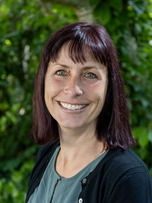
Reflections from Chelsea Holcomb, Oregon Health Authority (OHA) Child, Family and Lifespan Behavioral Health (CFLBH) Director
There's something about January, isn't there? The stores are quieter, the streets a little calmer. The world is shifting back into gear, but at a different pace. January, with its slower rhythm, offers the perfect moment to take that first step: to make progress in the quiet.
I’ve been thinking a lot about beginnings. Not the neat, polished kind where you have everything figured out, but the kind where you step into the unknown. A little uncertain, maybe even a bit uncomfortable.
I think of our transition from the Child and Family Behavioral Health Team to where we are now: the Child, Family and Lifespan Behavioral Health team. I’ve learned that beginnings often don’t wait until we feel fully prepared. They unfold, and we are invited to walk with them, even when the path feels unfamiliar.
This new chapter brings with it real and exciting growth. It includes an expanded focus working with the Mental Health Block Grant, the 988 and Behavioral Health Crisis System and Certified Community Behavioral Health Clinics (CCBHC) teams. With this growth comes new faces, new roles and new opportunities to serve our communities.
This January, I’m inviting you to see this time not as the pressure to reinvent or accomplish something grand, but as a quiet opening — like the first thaw after a long winter. There’s no need to rush forward. Instead, let’s lean into the stillness, the way January makes space for us to reflect, to breathe and to move forward at our own pace. We’re not just welcoming a new year; we’re shaping something new, something alive and growing right now.
A thought to reflect on:
A 2022 study found that mindfulness tends to be lower during the winter months, particularly for individuals navigating Seasonal Affective Disorder. This seasonal dip in awareness and presence suggests that winter may be an ideal time to intentionally slow down and reconnect with ourselves.
As we start the year, consider carving out a few quiet minutes each day for stillness and reflection: whether it's through a short walk, journaling or a moment of reflection between tasks.
|
The second half of 2025 brought exciting changes to the Child and Family Behavioral Health unit. Three teams were added to the unit, which has been renamed Child, Family and Lifespan Behavioral Health to reflect the expanded focus. The three additional teams include 988 & Behavioral Health Crisis System, Mental Health Block Grant and Certified Community Behavioral Health Clinics.
Meet the teams
988 & Behavioral Health Crisis System
The 988 & Behavioral Health Crisis System team works to ensure people in Oregon have timely, compassionate support during mental health or substance use crises. The team works to build a coordinated statewide system that includes:
- Someone to call (988 centers),
- Someone to respond (mobile crisis intervention teams and mobile response and stabilization services) and
- A safe place for help (crisis stabilization centers).
The team works with local partners to provide around-the-clock access to trained crisis counselors and to send in-person response teams when needed. These partners support youth and families with trauma-informed care. The team also focuses on equity and community engagement, ensuring services are culturally and linguistically appropriate and responsive to the needs of underserved communities.
Please reach out to the 988 & Behavioral Health Crisis System team if you have any questions: 988BHCS@oha.oregon.gov
Mental Health Block Grant
OHA receives federal grants to address gaps for mental health and substance use treatment that Medicaid does not cover. The Mental Health Block Grant team works to plan, track and report on those federal grants. The funds are distributed throughout the entire Behavioral Health Division and in several Public Health Division units.
The team also supports an advisory committee called the Addictions and Mental Health Planning and Advisory Council. Two planners make up the Mental Health Block Grant team. They are both newly embedded in the Child, Family and Lifespan Behavioral Health team.
For more information, visit OHA’s Mental Health Block Grant web page.
Certified Community Behavioral Health Clinics (CCBHCs)
CCBHCs are outpatient clinics that offer mental health and substance use care. They provide a wide range of services and work closely with doctors, other health providers and community groups to make sure people get the support they need. CCBHCs serve everyone, no matter their age, diagnosis, insurance status, housing situation or ability to pay. Services can be provided in the clinic or out in the community, including homes, schools and through street outreach.
OHA's CCBHC team is a cross-divisional group that works to administer the program, advance policy, certify clinics, analyze data and manage funding. The team has representatives in several areas of OHA, including the Behavioral Health Division. CCBHC program staff in the CFLBH unit work directly with CCBHCs to provide education, support and technical assistance.
To contact the CCBHC program, reach out to ccbhc@oha.oregon,gov.
OHA is working to improve crisis response services across the state. As part of this work, OHA will update the Oregon Administrative Rule (OAR 309-072-0100) related to crisis response. These updates will help explain important terms, describe what crisis teams do and set training requirements.
OHA will hold community engagement sessions in February and March. A formal Rules Advisory Committee (RAC) will meet in late March to help review and shape the changes. OHA wants to make sure these services meet the needs of all people in Oregon.
For questions about the crisis response rules, contact Brian Pitkin at brian.m.pitkin@oha.oregon.gov.
OHA is also starting work on a new set of rules for Crisis Stabilization Centers. OHA will hold community sessions to hear from partners, community members and people with lived experience. A RAC for these rules is expected to meet in September 2026.
For questions or concerns about Crisis Stabilization Center rules, contact Juliana Wichers at juliana.s.wichers@oha.oregon.gov.
OHA will share community engagement opportunities for both rule sets in a future newsletter.
The Link Center is offering a virtual gathering series in January. These shared learning groups are opportunities to share information, resources and ideas for better supporting people with intellectual and developmental disabilities, brain injuries and other disabilities and co-occurring mental health conditions. The January series will focus on dimensions of wellness for finding balance, strength and joy in daily life.
Registration is required. There are four sessions on the same topic, but for different audiences. Register for the session most relevant to you or the session that best fits into your schedule.
People with lived experience
Families of people with lived experience
Direct support professionals
Clinical professionals
Oregon’s winter months bring long periods of darkness that can be hard for many. They also bring the twinkly lights of wintertime holidays. It seems fitting to take a moment in this season to share about work in Oregon that is both heavy and hopeful: youth suicide postvention.
“Postvention” is a term used in suicide prevention work to refer to the care for individuals, families and communities after a person has died by suicide. In Oregon, suicide postvention supports local communities after they have lost a young person to death by suicide. Losing someone to suicide is an unimaginable darkness. When postvention can support a family and community to move through that darkness with care and connection they, in time, can begin to hold space for the light of hope as well.
In Oregon, each county has a Postvention Response Lead (PRL) who writes, updates and implements a County Postvention Plan for responding to suicide deaths of those aged 24 and younger. They work hard to lead postvention support that is compassionate and rooted in local cultures and strengths. When needed, PRLs can get support from the OHA-funded Suicide Rapid Response program through Lines for Life. The Suicide Rapid Response program works with local community leaders to offer support that matches the needs of the specific community.
Additionally, the Oregon Listening Project launched its second year offering Retrospective Suicide Analysis in Oregon. The project gathers stories from loss survivors to support their healing and inform prevention in Oregon. Families who have lost a young person have expressed this process has been a powerful opportunity to feel heard and to know their loved one has not been forgotten.
While postvention services are heavy work, they represent hope throughout our state.
How to get involved
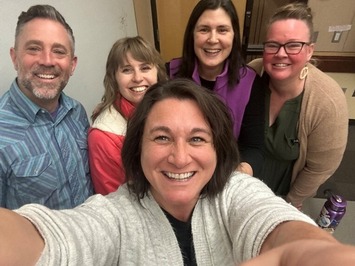
From left to right: Roger Brubaker (OHA), Shanda Hochstetler (OHA), Jill Baker (OHA), Michelle Hampton, suicide prevention coordinator (Lane County Public Health) and Adria Godon-Bynum, suicide prevention coordinator (Lane County Public Health)
Story Pirates Podcast
The Story Pirates Podcast has become a favorite of the some of the families of CFLBH staff. This imaginative show takes stories written by kids and turns them into hilarious, creative audio adventures performed by comedians, actors and musicians. It’s a fun way to celebrate creativity and storytelling — perfect for family listening!
Find events, opportunities, trainings and resources in last month’s posting on our newsletter page. Many of these trainings are also on our training opportunities page. We will send updates mid-month — Look for the next one in your inbox on January 15.
For feedback and suggestions for our newsletter and information: kids.team@oha.oregon.gov.
Subscribe to OHA Behavioral Health Updates
Did someone forward or share this with you? You can subscribe here to get future issues of Holding Hope and other updates for Oregon behavioral health providers and partners.
|