|
Having trouble viewing this email? View it as a Web page.
Lea en español
 Dec. 1, 2025
In this issue...

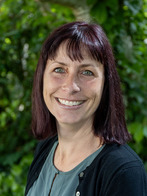
Reflections from Chelsea Holcomb, Oregon Health Authority (OHA) Child, Family and Lifespan Behavioral Health (CFLBH) Director
December feels like a story in full color: trees wrapped in lights, windows glowing at dusk, families in soft pajamas waking up to the chance of snow… The scent of cinnamon in the kitchen, the sound of laughter during winter break, the comfort of nostalgic movies playing in the background all comfort us in the winter months.
It’s the last page of the calendar: a moment suspended between what has been and what comes next.
It’s a time when routines loosen and reflection settles in. For children and families, it’s the small comforts that matter most — warmth, light, togetherness and the feeling of being home.
For those who serve children and families, December is a reminder that we help build the systems and spaces where a sense of belonging can grow. Whether it is ensuring safety, supporting stability or showing up with care, we are part of a quiet foundation that lets joy take root.
Stillness is not empty; it is where purpose regathers. In leadership and in life, the pause matters as it gives us space to notice what is working — and to imagine what is possible.
|
The holidays can be a difficult time for people with substance use disorders. Katie Clemo, youth and young adult substance use disorder program and policy coordinator, shares some tips to make the holidays a little safer and brighter:
-
Plan ahead: Prepare for potential triggers. Plan healthy activities and avoid social situations that may lead to substance use. Visit the Substance Abuse and Mental Health Services Administration’s (SAMHSA’s) digital holiday support toolkit.
-
Set boundaries: Practice declining substances with a trusted friend. Plan to be around safe and sober friends to avoid unwanted offers of substances.
-
Stay connected: Maintain connections with support groups or support people during the holiday season.
-
Engage in self-care: Prioritize mental health and well-being. Plan activities that promote relaxation and stress relief.
-
Be prepared: Be familiar with your recovery plan and have a backup plan to handle any challenging situations that may arise.
Remember you are not alone. Help is available.
The CFLBH unit suggests you utilize these sources of support as needed during times of holiday stress or crisis:
- 988 Oregon: Call or text 988 or chat online at 988lifeline.org
- Veterans Crisis Line: Dial 988 (press 1) or text 838255: Call 800-923-4357
-
Alcohol and Drug Helpline: Call 800-923-4357
- SAMHSA’s National Helpline: 1-800-662-HELP (4357)
- FindSupport.gov
- FindTreatment.gov
Raise Up Oregon is the state of Oregon’s comprehensive plan to support children from before birth through age 5. The plan brings together leaders from early learning, public schools, colleges, health care, housing and human services to work toward shared goals for serving young children and their families.
Almost 1,000 families, professionals and community members in Oregon shared their thoughts through focus groups and surveys led by Early Learning Hubs. Feedback themes included working together with families, meeting rural community needs, offering culturally specific services, engaging with Tribes, improving transportation, and strengthening community-based service navigation.
The Early Learning Council created Raise Up Oregon with help from six state agencies:
- Oregon Department of Education
- Oregon Department of Early Learning and Care
- Oregon Department of Human Services
- Oregon Health Authority
- Oregon Housing and Community Services
- Higher Education Coordinating Commission
The CFLBH team is proud to be part of this important work as members of the Raise Up Oregon Agency Implementation Coordination Team.
An Oregon pilot project called Principles to Outcome-Driven Practice (P2ODP) is attracting international interest. In August 2025, project leaders presented early results at the European Scientific Association on Residential and Family Care for Children and Adolescents in Zagreb, Croatia. Their presentation showed how Oregon is improving residential care using a framework called the Building Bridges Initiative (BBI) Theory of Change.
The P2ODP pilot is a two-year partnership. It involves BBI, the University of Kentucky Center for Innovation in Population Health, the Oregon Department of Human Services, the OHA Behavioral Health Division, and the Child and Family Center for Excellence. In February 2024, five residential providers in Oregon joined the project:
- Madrona Recovery
- Nexus Family Healing
- Parrott Creek
- Mary’s Home for Boys
- A Village for One
Each provider completed a self-assessment and chose goals for change. All five providers focused on improving youth and family driven care. Over the past year, by making important changes in alignment with the Theory of Change, providers saw increased staff involvement in treatment goals, better family engagement and higher satisfaction from both youth and parents.
Charley Downing, director of quality and program development at Madrona Recovery, joined the team in Croatia. Downing said, “To talk about what it has meant for us to begin truly listening to and centering youth and family voices was more than words can describe. The research community in Zagreb was deeply engaged. It affirmed how important it is to build relationships across borders to solve complex problems together.”
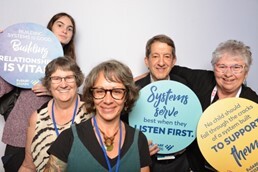
From left to right: Chloe Arneson, Vera Stoulil (Child and Family Center for Excellence), Charley Downing (Madrona Recovery), Robert Leiberman (Association for Children's Residential and Community Services), Nancy Pierce (Building Bridges Initiative)
As we head into winter holidays, the OHA suicide prevention team encourages all behavioral health providers in Oregon to be intentional about the services and care they provide for and with transgender and nonbinary Oregonians. Mental health care and suicide prevention require providers of all kinds to center the unique needs of each person and their community. That care becomes even more important for individuals and communities who have often experienced exclusion and harm.
The Trevor Project has conducted surveys showing that transgender young people report increased rates of suicide attempts. There are many actions caring individuals can take to show support and acceptance for transgender and nonbinary young people.
Take a moment to think about how your organization can be intentional about supporting transgender individuals and their families. With care and thoughtfulness, together all of us can create an Oregon where young people experience belonging and wellness. Review the following list of resources, websites, organizations and ideas to think about how your organization or care setting can better support transgender individuals and their families:
Morrison Child & Family Services’ Infant and Early Childhood Mental Health Consultation (IECMHC) Program supports adults who care for young children in preschools, childcare centers, Head Start, home visiting programs and family homes. This prevention-based program helps caregivers build skills to support children’s social and emotional development from birth to age five.
Instead of providing direct treatment, trained consultants with mental health and early childhood expertise work alongside caregivers. They identify concerns early and improve outcomes for children.
The program offers three types of support:
-
Program-Level Consultation: Consultants train and coach early childhood staff to improve classroom practices and promote social-emotional learning. They also support staff wellness through professional development and skill-building.
-
Classroom and Home-Level Consultation: Consultants and caregivers work together to find ways to support children in care settings and at home.
-
Child and Family-Specific Consultation: Consultants screen individual children, work with families and providers to create support plans, and connect them to community services. They also lead parenting groups like The Incredible Years® and Circle of Security Parenting™ to strengthen family support.
To improve access to services, Morrison created a new, full-time Early Childhood Assessment and Referral Coordinator. This master’s level clinician connects families with mental health services for children ages 0-5. They provide assessments using the Early Periodic Screening Diagnosis and Treatment (EPSDT) Medicaid benefit, along with case management, consultation and parenting education.
This role works closely with the IECMHC team and community partners to identify children who need support. The team offers services both in-person and through telehealth. This position also supports workforce development by offering practicum placements for Master of Social Work interns through Portland State University.
With this new role, Morrison Child & Family Services continues to strengthen the foundation for healthy development in our youngest community members.
Un-Addiction: 6 Mind-Changing Conversations That Could Save a Life
This book explores Dr. Nzinga Harrison’s work on the biological, psychological and sociocultural factors that predict risk for addiction. It provides conversation-starting stories backed by data. It encourages readers to re-think what they know about substance use, challenge stigma and explore solutions.
Find events, opportunities, trainings and resources in last month’s posting on our newsletter page. Many of these trainings are also on our training opportunities page. We will send updates mid-month — Look for the next one in your inbox on December 15.
For feedback and suggestions for our newsletter and information: kids.team@oha.oregon.gov.
Subscribe to OHA Behavioral Health Updates
Did someone forward or share this with you? You can subscribe here to get future issues of Holding Hope and other updates for Oregon behavioral health providers and partners.
|