|
Having trouble viewing this email? View it as a Web page.
Lea en español
 Nov. 3, 2025
In this issue...

Reflections from Chelsea Holcomb, Oregon Health Authority (OHA) Child and Family Behavioral Health (CFBH) Director
It’s a season of listening.
Of asking whose stories haven’t been heard.
Whose voices linger beneath the surface.
And what we might learn when we slow down and listen with intention.
November in Oregon arrives wrapped in fog. It curls through trees, hovers above rivers and softens the outlines of bridges and hills. The air turns crisp against your cheeks. It's the season of warm mugs, crowded tables, familiar spices and recipes pulled from memory. A time to gather close and ask not just what we celebrate, but who we include.
It is also Native American Heritage Month, a time not only to honor the past, but to recognize that Indigenous presence is living, ongoing and essential. The land we walk on holds stories far older than our own, stories carried through language, song and ceremony. November asks us to listen for those voices and acknowledge the ground that carries them.
Listening, after all, is its own kind of action.
It makes room. It deepens trust. It stretches the table wider.
In our work and in our lives, we cannot serve well if we do not hear fully.
This month’s reflection: The Empty Chair
Take a moment to imagine one empty chair at your table this season.
Who would you place there? Someone you miss, someone unheard or someone you wish you understood better?
What would you say if they were sitting there?
Gratitude begins here, in listening for the story behind the silence.
Across cultures and generations, an empty chair has symbolized remembrance and respect; a quiet acknowledgment that our tables, like our communities, are never complete. Advocates for missing persons or justice movements use an empty chair to honor those silenced or detained. Many immigrant and refugee families set an empty place for loved ones still abroad.
So for every chair left empty this season, let’s leave a light on beside it. A light for the youth we haven’t reached yet, for the families still seeking care and for the community partners doing unseen work.
|
As we create space to listen and uplift voices this November, we also want to encourage connection within families and communities.
Linn County recently shared a wonderful set of “Family Conversation Starters” — simple prompts designed to open meaningful dialogue, build understanding and strengthen relationships. These starters can be a fun and easy way to share stories, hopes and dreams together around the table this season.
Check out the Family Conversation Starters and see where the conversation takes you!
Fall is an important time to increase awareness of suicide prevention. OHA and our partners are encouraging all elementary, middle and high school leaders to ensure their school communities are prepared to recognize young people who may be at risk of suicide and connect them to appropriate help. Fall can be a particularly challenging season for Oregon’s youth, with data showing that suicide attempts and related deaths often increase during this time.
OHA, Oregon Department of Education (ODE), Lines for Life and the University of Oregon’s Suicide Prevention Lab’s Call to Action provides resources and practical steps to help school administrators, staff, caregivers and other trusted adults build the skills needed to support students who may be at risk and connect them with qualified mental health providers.
For more information on suicide prevention in Oregon, contact the OHA Suicide Prevention team.
Oregon’s schools are better equipped to prevent and respond to opioid overdoses following a collaboration between OHA and ODE. Nearly 700 middle and high schools, colleges and universities across the state received free opioid overdose reversal kits and expanded substance use prevention resources.
The partnership provided 692 schools with more than 14,000 doses of naloxone as part of an expansion of the Save Lives Oregon program, funded through Oregon’s Opioid Settlement Prevention, Treatment and Recovery Board. Previously limited to junior high schools and above, all Oregon schools are now eligible to receive these kits.
Naloxone, a proven opioid overdose reversal medication, restores breathing while waiting for emergency medical services. Each school received three metal boxes containing 24 doses and face shields for easy access.
The kits reached:
- 137 public school districts, about 70% of Oregon districts
- 31 private schools and 47 charter schools
- 10 universities and five community colleges
More than 80% of schools placed the kits in publicly accessible areas. According to a survey, schools used the kits to respond to seven overdose events involving students and community members.
OHA and ODE highlighted this effort during National Substance Use & Misuse Prevention Month, emphasizing the importance of overdose prevention among youth. Although half of youth who overdosed had someone present, only 24% received naloxone in time. This program aims to change that.
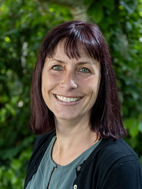
The CFBH team is excited to welcome Beth Villard as the Youth Integrated Behavioral Health Care Program and Policy Coordinator. In this role, Beth will focus on integrating behavioral health and primary care, supporting youth and families to receive holistic treatment and reducing siloed services.
Beth brings 20 years of experience in children’s mental health and systems of care. She has served children, youth and families in homes, schools, communities and clinics through family therapy, crisis intervention and intensive care coordination. She is a strong advocate for cross-system collaboration, removing barriers to care and uplifting the voices of youth and families. As a returned Peace Corps volunteer, Beth brings cultural humility and a trauma-informed approach to all her work.
Beth lives in the Portland metro area and enjoys gardening, dancing and spending time at the coast with her family. She looks forward to collaborating with colleagues and partners to support OHA’s strategic goal of eliminating health inequities in Oregon.
Beth Villard
The Infant/Toddler Mental Health (ITMH) graduate certificate is a fully online, 20-credit program for service providers who work with families and children from prenatal stages to age 3. Early childhood educators, early intervention specialists, mental health professionals, health care workers, social service providers, social workers, counselors, home visitors and childcare providers will benefit from the program’s interdisciplinary and relationship-based approach.
Our instructional team includes faculty from psychology, special education, and counseling. They incorporate the latest research and evidence-based interventions throughout the ITMH courses.
To learn more, visit Portland State University’s Infant/Toddler Mental Health webpage.
Scholarship information and 2024–2025 academic year highlights
OHA funds up to 12 scholarships each academic year for this program. To support and expand the number of qualified early childhood professionals, these scholarships help current and aspiring educators access specialized early childhood education and training opportunities. In the 2024–2025 academic year, 10 students received scholarships, five of whom identify as bilingual or bicultural, with fluency in languages such as American Sign Language and deep cultural connections to Indigenous or immigrant communities. For more information, contact Amy Chandler.
Podcasts can help listeners create healthier habits
This short article explores how listening — something we often take for granted — can actively shape our habits and well-being. It’s a reminder that listening is not just about consuming information but also about reflection, empathy, and growth.
Find events, opportunities, trainings and resources in last month’s posting on our newsletter page. Many of these trainings are also on our training opportunities page. We will send updates mid-month — Look for the next one in your inbox on December 15.
For feedback and suggestions for our newsletter and information: kids.team@oha.oregon.gov.
Subscribe to OHA Behavioral Health Updates
Did someone forward or share this with you? You can subscribe here to get future issues of Holding Hope and other updates for Oregon behavioral health providers and partners.
|