|
 |
|
In this issue: |
|
|
|
We want to let you know that if the federal government shutdown continues into November, people who get SNAP food benefits in Oregon may not get their November food benefits on time. This could affect about 757,000 people, including children, older adults and working families.
We understand this news may feel stressful. Food benefits are important and delays are hard. The Oregon Department of Human Services (ODHS) is working to keep people informed and will share updates as soon as more is known.
ODHS will post updates on its website (in English and Spanish), on its official social media, and through partner organizations and the media.
|
|
 In Oregon, adults 21 and older can legally use cannabis, also known as marijuana, weed, pot or hemp. But just because it's legal doesn’t mean it’s safe for everyone, especially when it comes to pregnancy, breastfeeding and caring for a baby. In fact, cannabis contains nearly 500 chemicals, many of which may be harmful during pregnancy or can be passed to your baby through breast milk.
Even if you’re using cannabis to help with things like nausea, anxiety or pain, it's best to talk with your doctor. There may be safer alternatives during pregnancy.
|
|
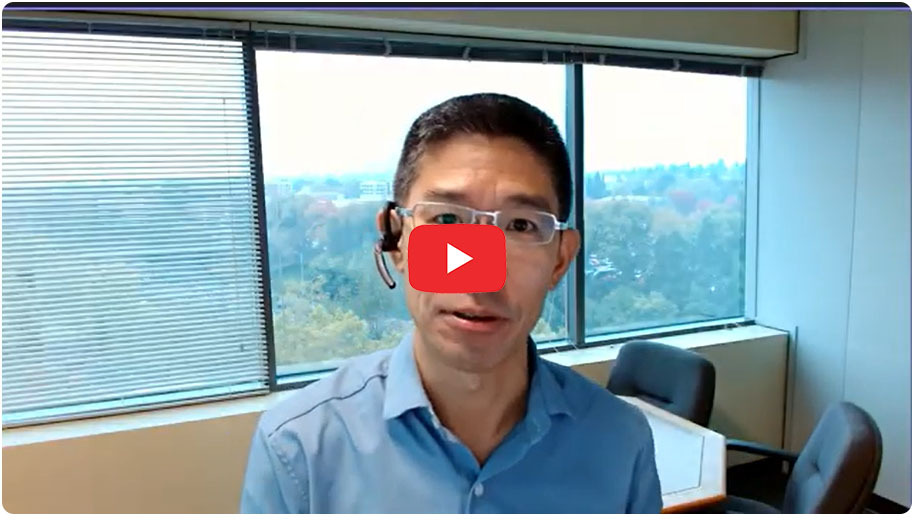 Click video image above to watch OHA Medical Director of Communicable Disease and Immunizations Howard Chiou, M.D., Ph.D., discuss measles detection and wastewater surveillance.
Oregon Health Authority (OHA) is alerting health care workers that routine wastewater testing revealed that one person with measles was in Marion County this month.
The health care alert is precautionary. A single positive test result doesn’t show that there’s an ongoing risk to the community. OHA recommends that people check they’re up to date with measles vaccination.
Measles symptoms include cough, runny nose, eye redness with high fever, followed by a rash that spreads down the body. Find more about measles on the Oregon Health Authority Measles webpage.
|
|
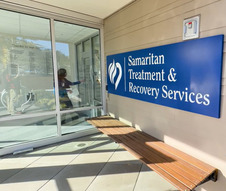
Samaritan Health Services is opening the new Samaritan Treatment & Recovery Services facility this month. It’s the first substance use disorder residential treatment center in Lincoln County.
On-site staff will include a nurse, drug counselors, peer support specialists and care coordinators who connect patients with wrap-around services.
The new 16-bed inpatient and outpatient treatment center was funded in part by a $2.95 million investment from Oregon Health Authority’s Behavioral Health Investments program.
|
|
|
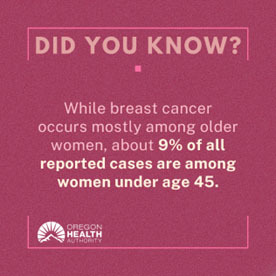
While breast cancer occurs mostly among older women, about 9% of all reported cases are among women under age 45. The risk of breast cancer among young women varies based on factors such as family and personal history of cancer. Know your risk by scheduling a screening appointment with your health care provider. If you don't have a health care provider, contact your local health center or call 211. |
Protect yourself and your loved ones this respiratory season! The best way to reduce your risk from seasonal flu and COVID-19 and its potentially serious complications is to get vaccinated. Both are available for everyone 6 months and older. To find a vaccination place near you, visit vaccinefinder.org. |
|
Unexplained silence and staring, I know this feeling
I long for anything to help me
The night sky, a long hike, walking on the beach calms my mind
Nature wraps its arms around me and I know that I'll be okay
Walk with me friend and I will hold your hand, we will make it okay
|
|
 |
|
Health notes |
|
|
|
Discovery Academy, Oregon’s newest recovery school, celebrated its grand opening with a ribbon-cutting ceremony in August. The school works in partnership with @4DRecovery, a recovery community organization for young people. Discovery Academy will serve youth across Marion, Polk and Yamhill counties, offering education and addiction recovery support under one roof.
|
|
 |
|
OHA answers your questions |
|
|
Questions are answered by experts at OHA, other state agencies or community partners.
Q:Are there any resources available for an adult who is diagnosed with schizophrenia? It seems every therapy place I call is not accepting adult patients with this diagnosis. – Ashley, Portland
A: It can be difficult finding available providers on your own or to even talk to people for support. NAMI, the National Alliance on Mental Illness, can help you do both.
NAMI staff can’t provide therapy, but they can help you find resources and support at no cost. In Oregon, they offer programs through 17 local chapters, both in person and online via Zoom.
You don’t need to pre-register for NAMI support groups, whether they’re in person or virtual. Visit their support group webpage to see what they offer.
Ashley, because you live in Portland, you might want to consider visiting the Washington County NAMI. There also is a Multnomah County NAMI, but Washington County has a unique drop-in policy. During drop-in hours, anyone can go in and poke around, talk to someone, look at their library and resource center, explore the art room or garden, or just sit and be. They can also help you search for providers that take your insurance (including OHP) and who are taking new patients, make phone calls for you, whatever it takes.
If you have questions about health topics in Oregon, submit your question here. Although we are unable to answer every question, we try to address those of interest to a broad audience. Please understand that we are unable to provide specific medical advice for personal medical conditions.
|
|
|
|
|