|

This month, Oregon State Hospital (OSH) celebrated the reunification of 116 people who died in state institutions between 1914 and 1973 whose remains were claimed by distant relatives.
Many of them never saw family again, and after their deaths, OSH became the custodian of their remains. We don't know why their families never came forward. It could have been lack of money, no contact information or living family members or stigma.
Unfortunately, that stigma persists. But so does hope. So does action. So does support and care and recovery. So does the dedication of OSH caregivers who support people in their recovery journey and recognize and honor each person's capacity to live healthy and rewarding lives.
In this issue of Recovery Times, you'll meet some of the caregivers who walk alongside OSH patients and support them in their journey. Plus, learn more about OHA's efforts to strengthen recovery services in communities across the state.
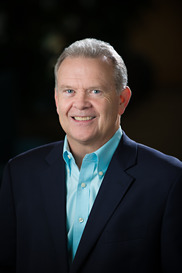
OSH Interim Superintendent
|
|
|
A person’s mental health recovery journey may include a therapist, counselor, social worker, psychiatrist, or other trained professionals. It can also include a peer support specialist, a certified behavioral health professional who has similar lived experiences with the people they serve.
The OSH Peer Recovery Services team includes peer support specialists who provide direct support to patients during their time at the hospital. Their role is focused on empowerment as the team helps patients navigate the challenges of being in an institutional setting and supports them in advocating for themselves and their care. The team also provides designated non-clinical spaces on both campuses where patients can experience a break from the hospital’s structured environment. Peer support specialists also play an important role in preparing patients for discharge by connecting them to resources within the hospital and in the community.
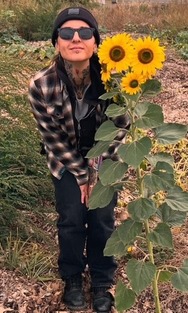
"As a peer support specialist, I extend support to folks living with mental health and/or addiction issues through a shared lived experience," said Xenia Carone, an OSH peer support specialist. "What support looks like is unique and different from each individual to the next. From walks and meals, to games or a shared appreciation for arts – holding a safe space of understanding with empathy is the common ground that makes peer support exactly what it is. It’s sitting in someone’s discomfort with them. We do not instruct. We do not diagnose."
Carone shares more about her experiences as an OSH peer support specialist and the impact of peer support in recovery in a Q&A.
|
 |
|
Interested in how to become a peer support specialist?
OHA works with partners across the state to offer approved peer support training that qualifies people for certification as a peer support specialist.
|
|
|
OSH is a learning lab for many clinical disciplines through its partnerships with universities across the country. For nursing students, psychiatry residents and many others, the hospital provides valuable teaching experiences to help prepare the state’s behavioral health workforce.
In each Recovery Times, we’ll highlight a workforce area and share the educational journey of those careers.
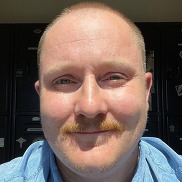
This issue features licensed practical nurse, Kyle Anderson, pictured above.
Students interested in a career in nursing gain experience through nurse preceptors like Kyle Anderson, a licensed practical nurse who as one of the many OSH preceptors provides training, guidance and mentorship to nursing students.
Anderson was recently recognized as one of 20 outstanding nurse preceptors by the Oregon Center for Nursing, a nonprofit center that advocates for nursing workforce issues.
"Nurse preceptors play a pivotal role in workforce development -- providing clinical orientation, professional mentorship, and real-world guidance to students, new hires, and transitioning nurses," notes the Oregon Center for Nursing. "Preceptorship is a key strategy in transition-to-practice success, supporting recruitment, skill development, and nurse well-being."
OSH preceptors like Anderson help inspire psychiatric nursing careers, said OSH Director of Nursing Education and Outreach Emily Neves.
“Kyle makes every nursing student he interacts with feel safe, welcome on his unit, and excited about their future as a nurse," Neves said. "Students routinely report that their experience with Kyle is positive, engaging, and that they end their time with a stronger understanding and appreciation for psychiatric nursing, as well as tangible skills to bring forward with them in their own nursing practice. Kyle is also incredibly patient centered, trauma informed, and compassionate with all patients- setting a high standard and example for all students he precepts. He is always willing to precept as he sees value in stewarding future nurses into the profession.”
More information about the award program and a recording of the awards ceremony are available online.
|
 |
In this short video, one OSH nurse shares how his own clinical rotations as a nursing student at OSH led him to his career at the hospital and about the daily role of nurses in patients' recovery journey.
Education options:
- Licensed Practical Nurse (LPN): Typically, one year program that leads to eligibility for licensure exam.
- Associate's degree: Typically, two years and leads to eligibility for licensure exam to become a registered nurse.
- Bachelor’s degree: Typically, four years and leads to eligibility for licensure exam to become a registered nurse.
- There are several accelerated educational programs in Oregon that can lead to eligibility for RN licensure.
- Advanced or specialized nursing practice require additional education through master's or doctoral programs.
- To find a list of approved nursing educational programs in Oregon, visit the Oregon State Board of Nursing website.
|
|
|
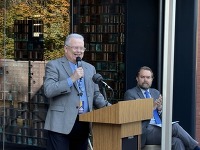
This year, the stories of 116 people who lived and died in state institutions between 1914 and 1973 – and whose remains were never claimed – now have a different ending.
Many of them never saw family again, and after their deaths, Oregon State Hospital became the custodian of their remains. That’s now changed.
On Sept. 23, OSH celebrated the reunification of those whose remains have been claimed by family over the past year at its annual cremains ceremony.
|
“We don’t know why no one came forward – lack of money, incorrect or no contact information – or stigma,” said OSH Interim Superintendent Jim Diegel during the ceremony, pictured above at lectern. “We do know that stigma persists today but so does hope. So does support, care and recovery. So does the dedication of caregivers at OSH to support people in their recovery journey and to recognize their capacity to live healthy and rewarding lives.”
It’s easy to forget the challenges others face – and only see “strangeness,” said a patient at OSH who shared his experiences during the ceremony.
“How many people have lived and died within these walls and felt the same as I feel? How many have died with the hope that their cry would not go unheard? We are not numbers. We are human beings who have a disease of the mind, and we feel just as much as you,” said the patient who asked that his name not be shared. “Too often, the world outside sees only strangeness. But we know inside every delusion is a search for meaning. Inside every hallucination a story waits to be told. Inside every voice there is a longing to be heard.”
OSH operated a crematorium until 1973 and became the custodian of the unclaimed cremains of nearly 3,500 people who died while living or working at OSH, Oregon State Tuberculosis Hospital, Mid-Columbia Hospital, Dammasch State Hospital, Deaconess Hospital, Oregon State Penitentiary and Fairview Training Center.
Connect with OSH Cremains Directory
OSH invites anyone who thinks they may have a family member who passed away at a state institution between 1914 and 1973 to check the online directory.
Families who identify relatives on this list and want to claim the cremains should complete and submit the “Request for Cremated Remains” form. Questions regarding the cremains can be directed to the OSH Health Information Department at 503-945-2976 or at osh.cremains@odhsoha.oregon.gov.
|
|

The OSH Cremains Memorial opened in 2014 to respectfully inter the cremains of the 3,500 people who died in state institutions between 1914 and 1973 when OSH operated the state's crematorium.
The memorial was designed by Annie Han and Daniel Mihalyo of Lead Pencil Studio, and it is one of 50 public art pieces recognized this year during the state’s 50th anniversary celebration of Oregon’s Percent for Art in Public Places Program. The program requires that 1% of direct construction costs for new or remodeled state buildings be used to purchase or commission artwork.
Learn more about the OSH Cremains Memorial.
Learn more about Oregon's 50 for 50 public art campaign.
|
|
|
|
Oregon State Hospital is a division of the Oregon Health Authority (OHA). In each Recovery Times, we'll share stories of OSH and OHA's work to strengthen the behavioral health continuum throughout Oregon.
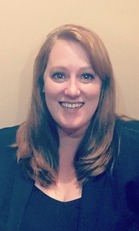
OSH psychologist shares mental health advance directive expertise
OSH clinical psychologist, Andrea Avila, JD, PhD, recently shared her expertise on mental health advance directives (MHADs) at the Oregon Center of Excellence for Behavioral Health and Aging’s conference held Sept. 16-17.
MHADs are legally binding documents that allow people to plan for treatment they would like in the event of a future psychiatric crisis, similar to how healthcare advance directives allow people to plan for future medical issues.
Dr. Avila's presentation covered how MHADs work in Oregon, research on best practices and outcomes associated with MHAD use and actionable tools for communities to implement the use of MHADs.
Visit MyMHAD.org to learn more.
|
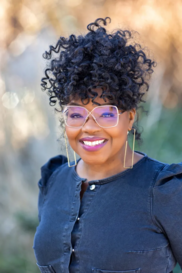
OHA's commitment to recovery: Building a path forward through lived experience and the voice of community
OHA Behavioral Health Director Ebony Clarke, pictured right, recently shared a column about OHA's role in supporting the recovery journey.
At Oregon Health Authority (OHA), we recognize that recovery is not just an individual journey—it is a community commitment. Recovery means hope. It means the opportunity to rebuild, reconnect, and reclaim one’s life with dignity and support. As we reflect during Recovery Month, we reaffirm our belief that recovery is possible for everyone, and that it thrives in environments where people are seen, heard, and supported.
|
Sports betting is on the rise among young adults, OHA encourages conversations about risks and resources
As thousands of Oregon students head to college, many will live away from parental oversight for the first time. With the return of football and other sports, Oregon Health Authority (OHA) is raising awareness about a growing trend--increased sports betting among young adults--and encouraging families to talk about gambling risks.
To address this growing concern, OHA encourages young people to connect with these free resources:
-
GamFin is a confidential counseling service that helps individuals and families navigate gambling-related financial challenges.
-
Evive App offers personalized support whether someone wants to manage their gambling, reduce it, or stop entirely.
For more information, visit Oregon’s gambling support resources website at opgr.org.

Click the image on the right for a short video about problem gambling and resources.
|
|
|

The OSH Museum of Mental Health continues its yearlong celebration of the 50th anniversary release of the film adaptation of Ken Kesey's "One Flew Over the Cuckoo's Nest" with its Knit for Mental Fitness awareness campaign and other events. Learn more at https://oshmuseum.org/.
The OSH Museum of Mental Health is an independent, nonprofit organization.
|
|
|

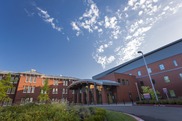
The Recovery Times is a quarterly publication that shares stories about the people and programs of Oregon State Hospital in support of OSH’s vision of hope, safety and recovery for all.
OSH serves a patient population that is traditionally marginalized, stigmatized and underserved, including many people with co-occurring disorders and those impacted by structural racism, and disproportionally represented in the criminal justice system.
|
|
|
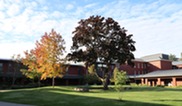
The Oregon State Hospital Advisory Board includes community members, patients and staff and its work supports patient care, safety and security. As part of its role, the board may review state and federal laws related to OSH policies and procedures and make recommendations to the OSH superintendent, Oregon Health Authority and Legislature.
|
|
|
If you need mental health support for any reason, help is out there. |
|
 |
|
|
|
|
|