|
 |
|
In this issue: |
|
|

Children across Oregon are still behind on their routine vaccinations, and it’s critical to get them back on track before school starts to protect them, as well as our schools and communities, from vaccine-preventable diseases. Those diseases include measles, polio, chickenpox, hepatitis A and B, pertussis, and more.
To find out which vaccines your child needs, check out this printable 2025-2026 School Year Immunization requirement sheet for Oregon.
For the 2024-2025 school year, only 86.3% of Oregon’s kindergarteners were up to date on their required vaccinations, slightly down from 86.4% the year before. Twenty years ago, that number was 93.4%. The overall decline has state health officials concerned about a possible resurgence of vaccine-preventable diseases such as measles which can cause severe illness, even in previously healthy children.
“Vaccines have dramatically improved the health and well-being of our children and communities, and are needed now more than ever,” said Dr. Dean Sidelinger, OHA state health officer and state epidemiologist. “They help keep children healthy and in school where they learn best.”
Every child who attends public and private schools, preschools, child care facilities, and Head Start programs in Oregon must be up to date on required vaccinations unless they have a medical or non-medical exemption. Parents and caregivers can learn more about children’s vaccine safety here.
Vaccination resources for families:
- Information on immunization requirements in 17 languages can be found here.
- Families seeking vaccines can contact 211 or their local health department. 211Info offers support in English and Spanish, with interpreter services in multiple languages.
- The Vaccines for Children program provides low- or no-cost immunizations for children ages 0-18 who are enrolled in Oregon Health Plan (OHP/Medicaid), uninsured, and/or American Indian/Alaska Native.
Visit OHA’s interactive School Immunization data page for Oregon's latest school immunization statistics, and track infectious diseases in Oregon on our Monthly Communicable Disease Surveillance Report.
|
|
|
In case you’re wondering about the flu vaccine for the upcoming 2025-2026 flu season, we wanted to provide some information that may help.
In a nutshell, people should be able to receive the updated flu vaccine this fall with ease, just as they have in the past. All people ages 6 months and older are recommended to receive it (especially young children, the elderly, and others at increased risk of severe illness), and the best time to get it is September and October.
But many people still have questions, such as:
- Is this season’s flu shot different from last year’s?
- Did the Centers for Disease Control and Prevention (CDC) recently make changes to flu vaccine policy?
- Will the flu vaccine be covered by insurance?
KFF Health News recently published a Q&A about the updated flu vaccine, which may answer a lot of your questions.
Supplies of the 2025-2026 flu vaccine are being shipped and delivered to providers and pharmacies as we speak. We recommend calling your local pharmacy to confirm they have it before visiting them.
|
|
 |
|
Health notes |
|
|
|
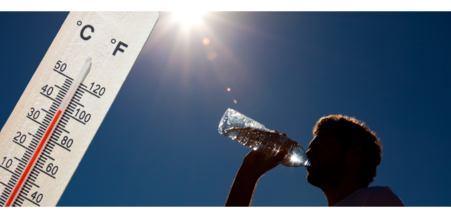
It’s going to be extremely hot over the next several days in many parts of Oregon, with some temperatures expected to reach over 100° F.
Heat waves can seriously harm older people, infants and children, those who live or work outdoors, are pregnant, or who have low incomes or a chronic medical condition such as heart disease, mental illness, poor blood circulation and obesity.
It’s particularly important to know the difference between heat exhaustion, which is treatable by finding a cooler location and drinking water, and heat stroke, which is an emergency that requires emergency medical attention.
Learn more here about heat exhaustion and heat stroke, including symptoms and how to treat.
Tips to prevent these and other heat-related illnesses:
- Drink plenty of fluids (avoid alcohol and sugary drinks) even if you are not thirsty, regardless of your activity level, especially when working outside.
- If you don’t have an air conditioner, visiting friends with an air conditioner or going to free cooling centers in your community can help you stay cool.
- Wear loose-fitting, lightweight and light-colored clothing.
- If you are an employer or work in extreme heat, check out the heat illness prevention information from the state’s Occupational Safety and Health Administration (OSHA).
- Avoid eating hot foods and heavy meals.
- Never leave infants, pets or children in parked cars.
- Try to limit your outdoor activity to the morning and evening hours when it’s cooler.
More extreme heat resources can be found at 211.org. For heat advisories and more tips visit OHA’s Extreme Heat webpage.
|
|
 |
|
OHA answers your questions |
|
|
Questions are answered by experts at OHA, other state agencies or community partners.
Q: When will the latest COVID vaccine be released and how can we schedule vaccination for seniors, whether free or paid ? If we have to pay, will some Medicare Advantage plans cover? Can we still get them at our local pharmacy if there are no vaccine clinics anymore? – Gloria, Portland
A: All good questions, Gloria. Unfortunately, we can provide only partial answers. The timing and type of COVID-19 vaccines that will be available this fall, as well as who will be recommended to receive it, is in the hands of the CDC. We are all waiting to hear what they decide. Their Advisory Committee on Immunization Practices (ACIP) will have to convene and discuss the matter, and their upcoming schedule shows a meeting set for “August/September (dates TBD).” We are watching that page closely for updates.
If a meeting gets scheduled, you should be able to see the meeting agenda (including which items they will vote on), and even watch it live, using links on this webpage. If the COVID vaccine is on the agenda, we may get some answers.
As to whether your Medicare Advantage plan will cover it, it is actually Medicare Part B that is required to cover COVID vaccination, at no cost to you. You can learn more about vaccine coverage regulations here.
Regarding supply at your local pharmacy, we recommend calling them to ask if they have it in stock, or plan to have it. Some pharmacies may require an appointment for COVID-19 vaccination, so you’ll want to ask about that, too.
Q: I got the new COVID-19 vaccination last fall and the booster in February. When should I be getting another one? I’m in my 70s. Thanks. – Anonymous, Newport
A: At this time, you are up to date and not recommended to get another COVID-19 vaccination with the currently available 2024-2025 COVID-19 vaccine. The exception would be if you are moderately to severely immunocompromised, in which case you are eligible to receive additional doses, at least two months apart, after discussing it with your provider. Learn more here.
See the Q&A above for more information on COVID-19 vaccines for the upcoming 2025-2026 respiratory virus season.
If you have questions about health topics in Oregon, submit your question here. Although we are unable to answer every question, we try to address those of interest to a broad audience. Please understand that we are unable to provide specific medical advice for personal medical conditions.
|
|
|
|
|