|
Having trouble viewing this email? View it as a Web page.
Lea en español
 Aug. 1, 2025
In this issue...

Reflections from Chelsea Holcomb, Oregon Health Authority (OHA) Child and Family Behavioral Health (CFBH) Director
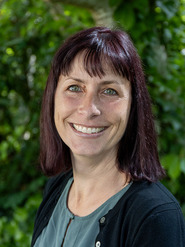
For me, August is a time for acknowledgment — a moment to honor what’s been accomplished so far and refuel with inspiration before the pace of fall picks up. With the back-to-school season underway in many places, August also naturally invites learning, collaboration, and recommitment.
This month, our team joined partners from across the country in Washington, D.C., for the University of Connecticut’s 2025 Training Institutes, a national gathering focused on Systems of Care for children, youth, and families. Oregon was proud to be part of the conversation, sharing our experiences and contributing to a larger dialogue about what’s working across the country.
The conference encouraged us to stay open — as listeners, learners, and contributors. We had the opportunity to celebrate Oregon’s incredible providers, youth, families, and communities on a nationally recognized stage. Just as importantly, we listened.
We sat in rooms filled with stories and strategies from around the country and came away both grounded and inspired. These conversations reminded us that progress is shared work, and we’re proud to be part of a broader community committed to showing up for children, youth, and families.
As we look ahead to the Youth IDD/Mental Health Summit and the DEC Community Summit, we carry that sense of shared purpose with us. August reminds us not just to keep moving, but to move forward together, with intention, humility, and renewed energy for what lies ahead.
|
The Child and Family team is pleased to report several key investments included in the Legislatively Approved Budget for the 2025–27 biennium. Planning is already underway to ensure these funds are disbursed as efficiently as possible.
$1 million for culturally specific youth suicide prevention
This funding will sustain efforts originally launched with one-time federal grants during the 2023–25 biennium, including:
- Tribal suicide prevention work in conjunction with the Nine federally recognized Tribes of Oregon
- Black Youth Prevention Suicide Coalition
- Life-Sustaining Practices Fellowship
- Spanish language suicide prevention and Latino/Latine youth programs
- Latino Community Association
$10 million to expand psychiatric residential services for youth
This investment will support co-occurring mental health and substance use services, as well as expansion of Secure Inpatient level of care. In addition, OHA continues to encourage a move toward smaller, home-like settings where possible, closer to youths’ home communities.
$7 million to expand Intensive In-home Behavioral Health Treatment (IIBHT)
OHA will use this funding to pilot substance use treatment services in IIBHT teams, including both prevention and recovery peer supports for youth returning from residential levels of care.
In addition, the Child and Family team will work closely with the Licensing and Certification team to implement House Bill 2015. The bill requires OHA to establish Oregon Administrative Rules for homes for transition-aged youth. We are pleased that through our new Youth Advisory Council, we will be able to bring in voices of young adults, including the residents of these programs, to center their experiences as we build these rules.
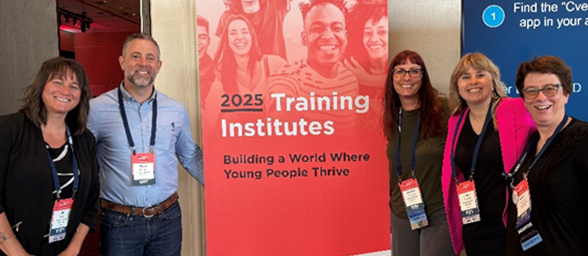
The University of Connecticut’s 2025 Training Institutes gathered people from across the country who work in children’s System of Care. Oregon was well represented with attendees from Child Welfare, Greater Oregon Behavioral Health, the System of Care Advisory Council, Oregon Family Support Network, and the CFBH team, alongside youth and family members.
Oregon participants presented in multiple sessions, highlighting the innovative work happening across the state. We shared ideas, learned from others and left with new strategies and stronger connections to colleagues nationwide.
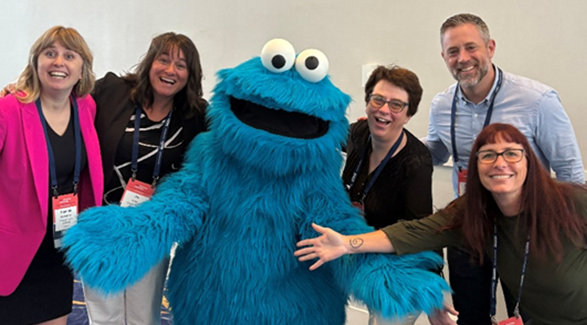
Dr. Vivek Murthy, former U.S. Surgeon General, opened the event by calling this work “sacred.” He emphasized the importance of addressing loneliness, social isolation and the growing need for children’s mental health support. Joined by Cookie Monster at a later keynote session, Jeanette Bettancourt, Ed. D., Sesame Workshop’s Senior Vice President for U.S. Social Impact, shared research-based strategies to support emotional well-being in early childhood.
With more than 100 sessions available, attendees explored a wide range of topics and brought useful insights back to the team. Chelsea Holcomb, Hilary Harrison and Melissa Hendrix from Oregon Family Support Network presented Oregon’s Child and Family Behavioral Health strategy and shared key lessons learned from the process.
“I am proud of the work Oregon has accomplished,” Chelsea said. “It was great to share both our progress and our challenges with other states. We lead in several areas, and people appreciated what we brought to the table.”
From L to R: Jill Baker, Roger Brubaker, Chelsea Holcomb, Shanda Hochstetler and Hilary Harrison
CFBH team with Cookie Monster at the 2025 Training Institutes
At the 2025 Training Institutes Conference, the session "Investing in the Future: Innovative State Initiatives for Children & Youth" addressed the rising suicide rates among Black youth and highlighted the urgent need for culturally responsive prevention strategies.
Presenters from OHA, Multnomah County Health Department, and the state of Tennessee led the workshop, highlighting how state-level initiatives can address racial disparities in youth mental health. They emphasized that racism remains the top reason Black youth report suicidal thoughts, making it clear that systemic issues play a major role in mental health outcomes.
The session examined how social determinants of health — such as housing, education, and access to care — interact with societal risks like institutional racism and generational trauma. Speakers also highlighted protective factors that help youth thrive, including strong family relationships and having a sense of purpose.
Initiatives like the Black Youth Suicide Policy Academy and the emerging Black Youth Suicide Prevention Coalition (BYSPC) are leading efforts to develop culturally responsive, community-specific approaches to support. These efforts, aligned with the National Strategy for Suicide Prevention, are helping to create safer, more supportive environments where all youth can thrive.
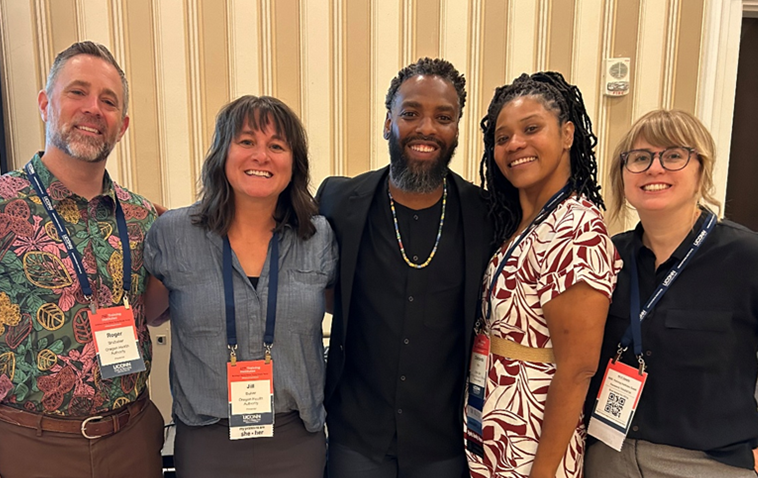 From Left to right: Roger Brubaker, Jill Baker, Kenjus Watson, PhD, Dishanta Kim and Shanda Hochstetler
The Youth Suicide Prevention team — Jill Baker, Shanda Hochstetler, and Roger Brubaker — recently co-presented with national partner Joyce Chu, PhD from the Culture and Suicide Prevention Institute. Their presentation highlighted the work Oregon has done to infuse the Oregon Suicide Prevention Framework and the Youth Suicide Intervention and Prevention Plan (YSIPP) with cultural factors that influence suicide. By integrating cultural understanding into these efforts, Oregon has become the first and only state in the nation to create a culturally responsive suicide prevention system.
"It’s rare to see a state take such a comprehensive and intentional approach to embedding culture, diversity, and equity into suicide prevention. Particularly during a time of national uncertainty and increased concern about suicide-related disparities, the work of the Oregon youth suicide prevention team is not only visionary — It offers leadership and a model for others across the nation."
Dr. Joyce Chu
OHA is marking the third anniversary of 988 — the three-digit number anyone can call, text, or chat when in need of mental health support — with two important milestones. First, OHA launched a new data dashboard to increase transparency, track usage and demonstrate the impact of 988 in Oregon. Second, OHA started a public awareness campaign called “988 Oregon: Connect to Hope.”
Over the past year 988 Oregon has answered more than 85,000 calls, texts and chats, each connecting someone with a trained counselor. Nearly all calls are effectively de-escalated over the phone. By connecting people with resources and upstream support, 988 helps enhance access to care and potentially reduce more costly interventions such as hospital visits.
Research shows that most individuals who reach out to 988 feel significantly less depressed, less suicidal, less overwhelmed and more hopeful after speaking with a trained mental health professional. Callers don’t need to be in crisis to reach out — This is a key message in the new campaign, which was shaped by community input. Family and friends can also contact 988 for advice on supporting someone else.
The new 988 data dashboard answers common questions about 988 trends in Oregon. For example, while 988 began as the simple-to-reach number for the National Suicide Prevention Lifeline, more people call or text 988 about mental or emotional health concerns and family or relationship issues than thoughts of suicide. The dashboard also highlights the rise in call, text and chat volume since it began in July 2022.
The Expedited Assessment Services for Youth (EASY) program has reached a major milestone: 500 referrals. The program delivers fast, thorough psychological assessments in just 7 to 10 days. The team takes an interdisciplinary approach and completes all necessary testing to ensure reliable diagnoses and clear, actionable recommendations.
EASY is free, mobile and now available statewide, with hubs in Multnomah, Deschutes, and Lane counties. It serves youth with complex behavioral health needs, prioritizing those at high risk of placement disruption, juvenile justice involvement, or mental health crises — especially youth in Oregon Department of Human Services care or at risk for temporary lodging.
Recently, one parent shared they had waited seven years for answers — EASY provided the information they needed in just two weeks. In many cases, EASY has confirmed long-missed diagnoses and helps connect families with the right supports.
For more information about EASY or to make a referral, visit the OHA website. You can also get in touch directly with John Linn at john.r.linn@oha.oregon.gov.
At the recent Linn-Benton-Lincoln Wraparound quarterly meeting, Christianna Rhoads and Hilary Harrison from CFBH honored Karen Weiner’s retirement as behavioral health program manager for InterCommunity Health Network Coordinated Care Organization (IHN-CCO). Hilary and Christianna, who worked closely with Karen, thanked her for more than 30 years of dedicated service to youth and families in the region.
Recently, Karen shared her experience and ideas in the statewide Children’s Behavioral Health Wraparound Workgroup to help shape the future of services. “Karen has always stood for youth and family voice and choice,” said Hilary.
They also welcomed Desiree Strang as IHN-CCO’s new behavioral health program manager. Having previously worked in utilization management, Desiree looks forward to learning more about the full children’s system in her new position.
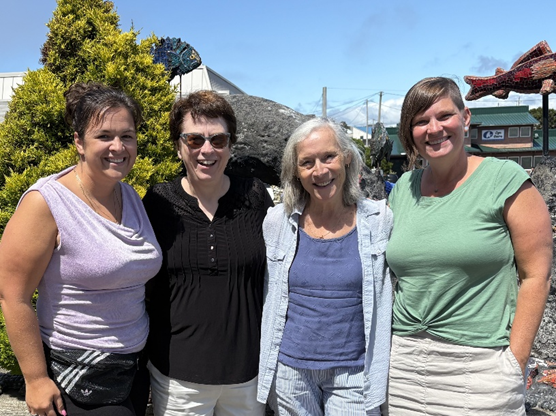
From left to right: Desiree Strang, Hilary Harrison, Karen Weiner and Christianna Rhoads.
The Life-Sustaining Practices inaugural cohort recently launched a healing practices toolkit for adults serving Black, African and African-American youth. Titled “Raising Fireproof Children,” the toolkit contains seven modules designed to help young people navigate life challenges, build resilience, strengthen identity, and nurture healing.
Guided by the question, “What does it mean to protect Black children in a world designed to harm them?” the Life-Sustaining Practices fellowship offers a culturally specific approach to suicide prevention. This program is one of several supported through Oregon’s Youth Suicide Intervention and Prevention Plan.
On Our Minds: “It’s OK Not to Be OK
In this episode, teen hosts Noah and Zion explore the stigma surrounding mental health, sharing stories from high school students in Michigan and Texas. They discuss personal experiences with social anxiety and panic attacks and include guidance on managing those challenges from adolescent health experts. The episode emphasizes that it's OK to struggle and encourages openness in discussing mental health.
Find events, opportunities, trainings and resources in last month’s posting on our newsletter page. Many of these trainings are also on our training opportunities page. We will send updates mid-month — Look for the next one in your inbox on August 15.
For feedback and suggestions for our newsletter and information: kids.team@oha.oregon.gov.
Subscribe to OHA Behavioral Health Updates
Did someone forward or share this with you? You can subscribe here to get future issues of Holding Hope and other updates for Oregon behavioral health providers and partners.
|