|
Having trouble viewing this email? View it as a Web page.
Lea en español
 July 1, 2025
In this issue...

Reflections from Chelsea Holcomb, Oregon Health Authority (OHA) Child and Family Behavioral Health (CFBH) Director
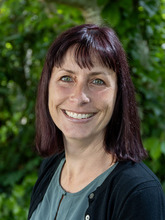
July arrives with a burst of color, warmth, and energy. Kids run through sprinklers, sparklers dance across the night sky, and music drifts from neighborhood gatherings. The scent of fresh fruit and charcoal lingers in the breeze, painting the air with the feeling of summer. But even in the brightness, July also makes space for reflection.
July is Minority Mental Health Awareness Month, a time to center conversations around how mental health challenges touch every community. Mental illness does not choose who it affects, but access to support and treatment is often shaped by race, culture, ethnic background, gender identity, and sexual orientation.
Barriers to care are real, but change is possible. According to the Centers for Disease Control and Prevention, health care systems can help close those gaps by screening patients for mental health conditions, offering accessible and culturally appropriate care, and making educational resources easy to find — in waiting rooms, patient portals, and through everyday conversations. OHA pays approved Oregon Health Plan (OHP) providers an enhanced fee-for-service rate for providing culturally and linguistically specific services (CLSS) to OHP members. These services are outpatient behavioral health services and/or residential substance use disorder services. They support minoritized communities. To learn more, visit this page.
In our unit, we’re exploring how small acts of care can lead to meaningful change. Our summer book club is reading The Age of Overwhelm, a thoughtful reminder that when the world feels heavy, the answer isn’t always doing more — it’s often slowing down, setting boundaries, and giving ourselves permission to rest.
Later this month, many will mark International Self-Care Day on July 24, but truly, the practice of checking in with yourself belongs in every season. Whether it’s reading, reconnecting with people you love, or stepping outside for a deep breath, caring for your mental health doesn’t have to be big or loud to be powerful.
For me, being in Michigan with my family this month has offered that reset — a shift in pace, familiar voices, and the quiet reassurance of trees and water. I hope you find your own space to feel grounded, seen, and supported.
|
2025 Youth IDD/Mental Health Summit
The 2025 Youth I/DD Mental Health Summit will take place on August 6 in Corvallis, bringing together professionals who support children and youth with intellectual and developmental disabilities (I/DD) and co-occurring mental health needs.
Now in its second decade, the summit offers a space to deepen skills, share knowledge, and strengthen collaboration across systems. This year’s keynote speaker, Guy Stephens, founder of the Alliance Against Seclusion and Restraint, will lead a session titled “Behavior is Biology.” His presentation challenges traditional behavior models and offers strategies to create safer, more inclusive environments, especially for youth with disabilities, trauma histories, or neurodivergent identities.
Learn more and register at iddmhsummit.com.
Drug Endangered Children (DEC) Community
The National Alliance for Drug Endangered Children (NADEC or DEC) is a nonprofit organization dedicated to promoting early identification, response, and trauma-informed intervention for children and families affected by caregiver substance misuse, by connecting key community partners, such as law enforcement, child welfare, health care providers, educators, and child advocates, through a collaborative, team-based approach.
The DEC Community Summit is taking place August 5–6, 2025, from 8 a.m. to 5 p.m. Pacific Time, offering two full days of free, in-depth training for professionals working with children impacted by substance use.
This statewide event brings together child welfare workers, behavioral health professionals, law enforcement, educators, and other key partners to strengthen early identification, intervention, and response for drug-endangered children. It combines foundational DEC Academy 101 sessions previously held in six sessions across Oregon — with new content that expands on core concepts and promotes cross-agency collaboration.
The summit supports a larger goal: helping multidisciplinary teams across Oregon deepen their local partnerships and improve long-term safety and outcomes for children and families.
Registration is free and now open, click here to sign up.
Youth and Family Support Specialists must be certified as peer support providers to bill Medicaid. This includes those working in specialized programs such as In-Home Behavioral Health Treatment (IIBHT), Mobile Response and Stabilization Services (MRSS), and Fidelity Wraparound.
The new memo explains the Traditional Health Worker application process and outlines approved training, certification, and re-certification steps. It also includes reminders about required competencies and supervision for Youth and Family Support Specialists, as well as caseload limits for peers working in Fidelity Wraparound.
If you have questions, please contact kids.team@oha.oregon.gov.
This spring, OHA sponsored an I/DD and Mental Health training series. The two-part Ableism and Bias training focuses on:
- Defining and identifying ableism and bias,
- Identifying and understanding the impact of microaggression and discrimination as it relates to individuals with I/DD, and
- Strategies for fostering inclusive communication and environments.
The two-part series on Innovative Therapy and Services Approaches for Individuals with I/DD focuses on:
- Innovative clinical interventions for supporting individuals with co-occurring intellectual/developmental disability and mental health conditions and
- Strategies for addressing challenges during utilization review and the authorization process.
All recordings are now available on the OHA website:
A story recently shared by a trusted community partner underscores the life-saving potential of secure firearm storage. In July 2024, storage devices were distributed at a community Pride event. Nearly a year later, we were informed that one of those devices had played a critical role in preventing a suicide.
When a crisis occurred, the individual attempted to access their firearm but was unable to — A family member had changed the biometric lock. That pause saved a life. “I just heard from a Veteran that the safes you gave out last year saved a Veteran’s life,” shared the community partner. “They used the safe, put a picture on the safe (we have conversations when we distribute items about the many ways to create time and distance, including using pictures of reasons to live — family, dog etc.) and separated the ammo from the gun. They grabbed the ammo and went to the safe, however the Veteran’s parents had changed the biometric log and the Veteran could not access the firearm.
“It’s not often that we get calls like this. We handed them out in July (secure storage), the plan to end life was in October, and they just now called. That leads me to believe there are more stories like this, we just don’t hear them.”
The community partner shared, “This life was saved because of the amazing work of OHA and its trusted messengers. Their programs continue to save lives every day.”
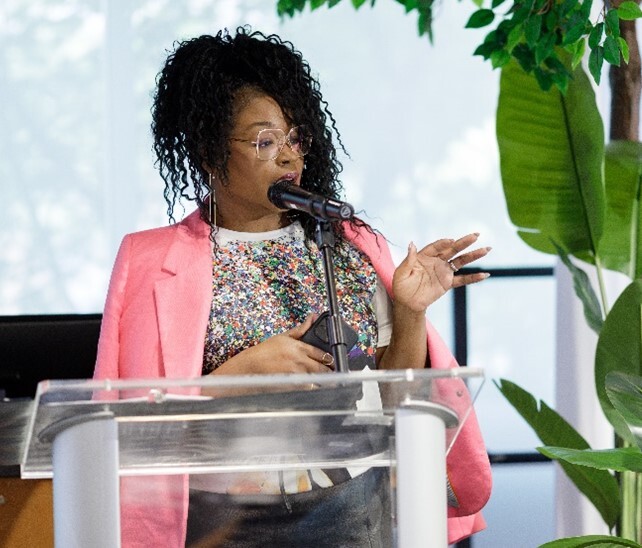
FaithBridge Portland recently hosted Black Girl LIVE! a bold, community-rooted event focused on suicide prevention, storytelling, and healing for Black girls and teens. More than 100 girls from across Portland and beyond, along with parents, school staff, and community members, joined the gathering.
One of the first events of its kind in our community, Black Girl LIVE! was designed to raise awareness and share sobering facts about the rising suicide rates among Black girls — all within an environment anchored in hope and joy. The event featured youth-led storytelling, interactive workshops, music, and healing sessions that highlighted the strength and creativity of Black girls and women. It provided space for the girls to be seen and heard while offering access to culturally relevant resources and strategies for emotional survival and growth.
OHA Behavioral Health Director Ebony Clarke
Lisa Saunders, Founder and Executive Director of FaithBridge Portland, said, “We cannot ignore the silent crisis affecting Black girls and teens. By raising awareness and offering practical tools for healing, we’re disrupting generational patterns and building pathways to hope. We’re so grateful to Oregon Health Authority for making the resources available to do this event, as well as our community partners POIC and REAP, Inc.”
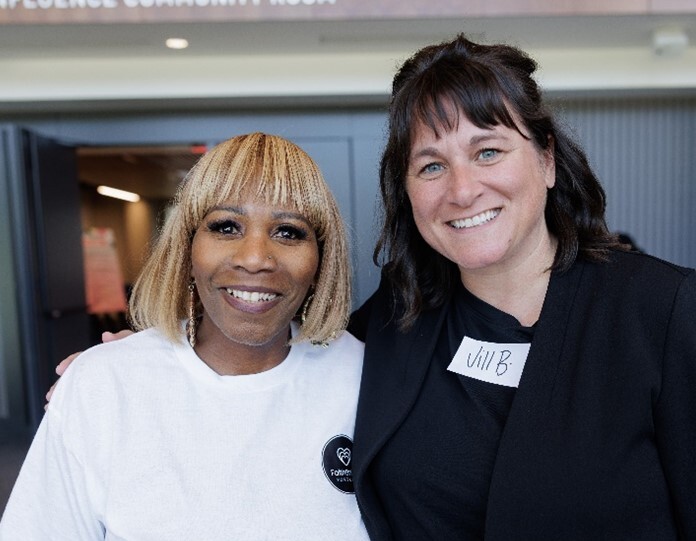
Left to right: Lisa Saunders and Jill Baker
The university's Office of the Vice President for Research and Innovation has announced the recipients of the 2025 Outstanding Research Awards, recognizing exceptional scholarship at the University of Oregon. This year’s Senior-Career Award, the university’s highest research honor, was awarded to Dr. John Seeley, professor of special education and associate dean for research in the College of Education. Seeley, a member of the Oregon Alliance to Prevent Suicide, has led the evolution of the Youth Suicide Intervention and Prevention Plan since 2017. His research focuses on mental health and suicide prevention, with over 300 publications and significant contributions to assessment development, intervention efficacy, and implementation science. He also serves as senior advisor to the Ballmer Institute for Children’s Behavioral Health.
His nominator wrote, “He is such an accomplished scholar who cares about building the next generation of scholars, leaders, and innovators. He is equally thoughtful about his work in community and applied settings and higher education.”
We’re pleased to highlight the role of Dr. Karen Bos on our team. Dr. Bos serves as the Consulting Child Psychiatrist for CFBH, where she provides psychiatric expertise and consultation to support the team’s work.
Here’s a personal introduction from Dr. Bos:
"Hi everyone! It has been an honor to join this team the past year. A little about me: I spent my childhood in Beaverton and have since moved back to Oregon, living in my old neighborhood, which feels like coming home. Academically, I studied the history of medicine at Harvard College, then earned my Doctor of Medicine (MD) from Harvard Medical School and a Master of Public Health (MPH) with a concentration in maternal and child health from the Harvard School of Public Health. I completed my residency at the San Mateo County Psychiatry Residency Training Program in California, focusing on public psychiatry leadership. I did my Child and Adolescent Psychiatry Fellowship at the University of California, San Francisco (UCSF), and went on to work for several years with the San Francisco Department of Public Health.
"In 2018, I returned home to Oregon and joined the faculty at OHSU, where I am an Associate Professor. I am board certified in adult psychiatry, child and adolescent psychiatry, and community and public psychiatry. I’ve served in various roles at OHSU and have worked in clinical care and leadership in intensive outpatient community mental health and day treatment programs, including serving as medical director for LifeWorks Northwest. In addition to my role with OHA, I am also currently the child psychiatry consultant to the Oregon Department of Human Services (ODHS). One of the aspects I love most about my job is developing opportunities for mentorship, and I am the program director for a program at OHSU that encourages medical students to consider child psychiatry.
"My husband Ben is a primary care physician, and we have two kids: Addie and Arlo. We also have a labradoodle named Buzz Lightyear. I am a huge Portland Thorns fan and watch every game! I also love to read and appreciate all book suggestions."
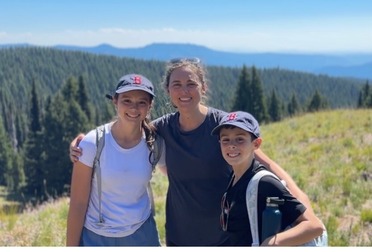
Karen Bos pictured with her two children
How to Tame Stress on The Happiness Lab with Dr. Laurie Santos
This episode breaks down practical, science-backed ways to reduce stress and improve well-being — things you can apply at work, at home, or anywhere life gets overwhelming.
Find events, opportunities, trainings and resources in last month’s posting on our newsletter page. Many of these trainings are also on our training opportunities page. We will send updates mid-month — Look for the next one in your inbox on July 15.
For feedback and suggestions for our newsletter and information: kids.team@oha.oregon.gov.
Subscribe to OHA Behavioral Health Updates
Did someone forward or share this with you? You can subscribe here to get future issues of Holding Hope and other updates for Oregon behavioral health providers and partners.
|