| |

The past few months have been one of challenges and opportunities at Oregon State Hospital.
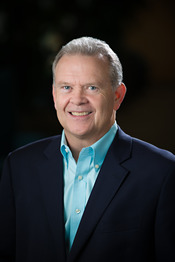
When I accepted the offer to step into this interim leadership role earlier this month, I did so with the same determination I’ve approached every job in my career – with a focus on being a helper. Sometimes this focus is akin to servant leadership. I expect to be here through early fall and during my tenure, I am focused on moving forward the work around the hospital’s strategic initiatives that strengthen and improve processes to ensure the care and safety of every patient at OSH. We share more about those initiatives in our stabilization plan you can learn more about in this issue of Recovery Times.
This issue also features stories on the therapeutic impact of helping as patients give back through volunteerism and how OSH nurse practitioner preceptors help train Oregon’s behavioral health workforce.
There are many good things happening here, and I’m grateful for the opportunity to be a part of the OSH team.
Jim Diegel, Interim Superintendent
|
|
|
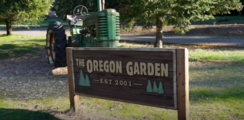
Healing and therapy come in many forms, and for one group of patients at Oregon State Hospital, they’re finding solace in connecting to the community in nature and through service to others.
Through the small therapeutic group called, “Good Medicine” patients have the opportunity to practice and learn new skills while out in community through volunteer work and experiences in nature.
Patients like Clint Allen say the group is not only a way to contribute to the community, but also to help debunk myths people may hold about the people who receive care at OSH.
“It’s nice to be of service and give back to the community,” Allen said. “Mostly, I enjoy the opportunity to show people in the community that people at the state hospital are normal people – that there are people here who are as well-functioning as someone you’d see on the street.”
Hospital Native Services and Spiritual Care team members coordinate the Good Medicine group, named for the Native term that emphasizes healing and finding ways to heal.
The Good Medicine group’s focus on community is intentional, said Mike Patton, an OSH Native Services team member.
“It’s important for them to make connections with people outside of the hospital and to give back to the community,” Patton said. “Particularly in Native culture, community is important. Being able to participate where we’re giving of ourselves and make contributions to our community – that’s important.”
Pictured below, Mike Patton, left, discusses a project Roseanne Yoder, Oregon Garden horticulturist, has planned for the OSH Good Medicine group.
|
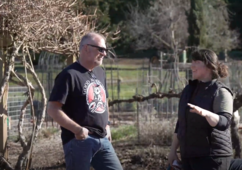
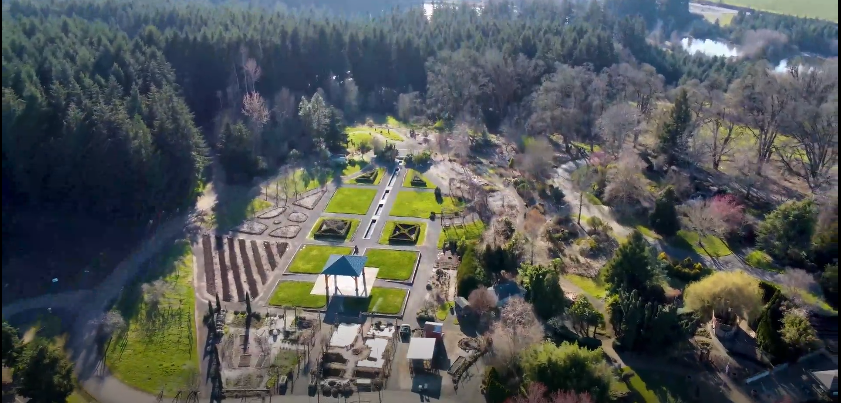
The 80-acre, nonprofit botanical garden is maintained by a small team and every volunteer and every hour they contribute makes a huge impact, said Roseanne Yoder, who is one of seven horticulturists on a team that includes a horticultural manager and assistant manager.
During the OSH group’s recent volunteer visit, Yoder shared with patients the goals for the afternoon – cover the vegetable beds in the Market garden’s demonstration area with cardboard and compost to get them ready for planting. The vegetable demonstration garden is designed to educate visitors about seasonal planting, irrigation methods and general garden maintenance.
Education is also an underlying goal of every volunteer’s experience at the Oregon Garden, Yoder said.
“They’re able to come and learn about what they can grow in their own spaces. Learning how to grow your own food is a skill. With all of our volunteers, we’re also building community,” Yoder said.
Each year about 170 people volunteer at the garden and of that number, about 40 are regular volunteers, said Tabitha Thompson, Oregon Garden Foundation volunteer and membership coordinator.
“We rely on our volunteers, and we’re able to provide unique volunteer opportunities,” Thompson said.
Thompson shared she also recognizes the positive impacts of exposure to horticultural therapy.
“There have been several studies on the impact of getting outside and getting your hands in the dirt being beneficial to your mental health and that’s for anyone,” Thompson said. “For the patients who volunteer with us, we hope that they find some peace while they’re out here. We also support what Mike is trying to do in destigmatizing mental health and who is a patient at the hospital.”
Patton agreed that he also hopes the group’s interactions in the community help raise awareness about mental health.
“People still have an unfavorable impression of people who live with mental health challenges and as we’re out in community – in a subtle way – we hope that we can help change that perception as they see our patients contributing in a positive way in the community,” Patton said.
|
|
|

OSH is a learning lab for many clinical disciplines through its partnerships with universities across the country. For nursing students, psychiatry residents and many others, the hospital provides valuable teaching experiences to help prepare the state’s behavioral health workforce.
In each Recovery Times, we’ll highlight a workforce area and share the educational journey of those careers.
This issue features psychiatric mental health nurse practitioners (PMHNP), Lisa Whitfield and Shane Shelton who were able to complete their psychiatric mental health nurse practitioner training at OSH and work at the hospital supporting patients’ recovery journeys.
|
As a primary care nurse practitioner (NP), Lisa Whitfield had difficulty finding mental health support for her patients, so she decided to gain the education and training to help fill the gap in mental health services she saw in her community.
Whitfield enrolled at Gonzaga University to complete her mental health certification. As part of that certification, she needed to complete 660 hours of clinical practice, so began reaching out to other nurse practitioners and providers like OSH to find a preceptor. (A preceptor is an experienced practitioner who provides coaching and direct supervision to bridge the gap between a student’s knowledge and practice.)
Whitfield had no luck until OSH’s Lori Martin reached out to her. Finding a preceptor willing to take on students can be a major obstacle for NP trainees, said Martin, a psychiatric mental health nurse practitioner. Seven years ago, as a way to respond to OSH’s own need for psychiatric mental health nurse practitioners, Martin coordinated with administrative specialist Andria Beattie to create a standard process for incoming nurse practitioner students to precept at OSH. Preceptor programs like the one at OSH enable nurses to more timely complete their advanced education and put it in practice either at OSH or out in the community.
To precept is also an investment for the preceptor and hospital because a practitioner must have the bandwidth in workload, the skills to teach, and a compatible schedule for their student, among other things. Generally, OSH has between three to seven providers willing to precept at any given time. OSH has also contracted with 11 nursing colleges in Oregon and across the country to provide NP students the opportunity to complete their required clinicals.
Out of the 14 most recent students that have precepted at OSH, 13 chose to stay on as staff. Whitfield was one of those 13.
From the beginning, her day-to-day precepting at OSH was packed full of assessing patients, leading interdisciplinary teams and learning documentation, which factors to consider with each patient and about specific medications for psychotic disorders. These are all vital to providing quality patient care.
Whitfield earned her mental health certification and applied for a permanent role at OSH. As soon as she was able to, she started precepting NP students herself.
Shane Shelton was one of those students. He had already been working at OSH for almost 14 years, beginning as a registered nurse and then as a nurse manager.
Shelton had been considering going back to school to become an NP, so when he heard about the preceptor program from colleagues, he knew OSH was where he wanted to complete his clinicals.
“It comes down to the level of expertise and knowledge. This is by far the largest psychiatric facility in the state, so the top people in the field work here,” he said.
Shelton was able to continue working at OSH while he completed his clinical experience by working with patients in other parts of the hospital. This reduced the likelihood of interacting with the same patients in his day-to-day role as a registered nurse.
Shelton said he believes the various disciplines at OSH offer the support and expertise needed to provide the best patient care.
“One of the best things about working here is that you have a huge amount of people to draw information from,” she said. “I have lots of people around to ask questions and bounce ideas off.”
Both Whitfield and Shelton said they see themselves as part of the OSH team for many years to come. The opportunities for career development, professional growth, and providing care for a vulnerable population are plentiful at OSH, they said.
“I don’t think there’s any alternative for the type of training and environment and patients we work with here,” Shelton said.
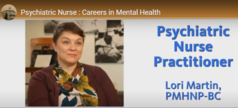
Careers in Psychiatric Mental Health Nursing at OSH
In this short video produced by the OSH Museum of Mental Health, Lori Martin, an OSH psychiatric mental health nurse practitioner, shares about her experiences at the hospital. She is available to talk with anyone wanting to further their nursing education via email at LORI.M.MARTIN@oha.oregon.gov.
Required education to become licensed as a Psychiatric Mental Health Nurse Practitioner includes:
-
Bachelor’s degree
- Registered Nurse license
- A master’s or doctorate degree in nursing
-
The Oregon State Board of Nursing requires at least 500 hours of supervised clinical hours for each certification, but some universities may require more.
Currently, OSH has agreements with the following schools to precept NP students:
- Duke University
- Frontier University
- Gonzaga University
- Johns Hopkins University
- Maryville University
- Norwich University
- Oregon Health and Science University
- Spring Arbor University
- Portland State University
- Vanderbilt University
- Western University of Health Sciences
|
|
|
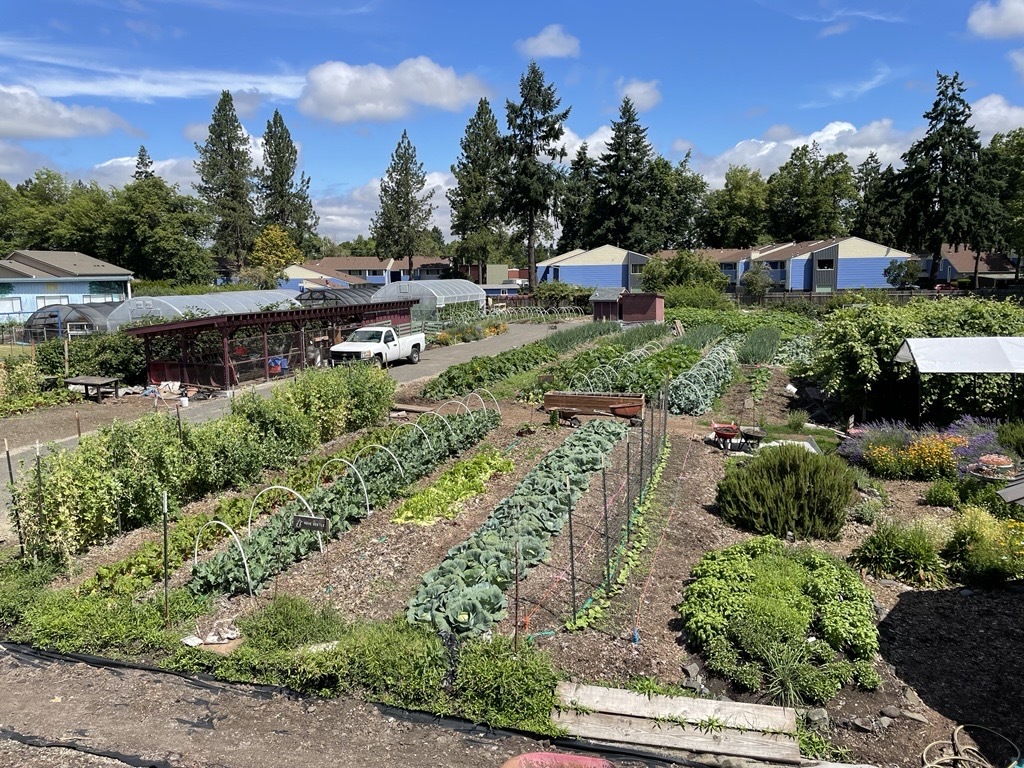
In June, about 3,000 pounds of food was grown at FOOD for Lane County's GrassRoots Garden to support those experiencing food insecurity. Photo by Emily Johnson, GrassRoots Garden field coordinator.
Normalcy. No labels or stigma. Regained purpose. Feeling whole again.
That’s what Oregon State Hospital patients like Anthony say they’ve found through volunteering with local nonprofit, FOOD For Lane County (FFLC).
“It gives us a sense of normalcy we don’t have at the hospital and gives us a break from the daily stuff we have to do here and living in a controlled environment,” Anthony said. “It’s also cool to know you’re making a difference in the community.”
For the past 10 years, a partnership with FFLC has enabled countless Oregon State Hospital patients to experience the therapeutic impact of contributing to their community as they prepare to discharge from the hospital.
Patients have contributed more than 5,000 hours in support of FFLC’s programs and while their work benefits the nonprofit organization, it also impacts their own mental wellbeing.
Contributing is a recognized skill in dialectical behavior therapy (DBT), which focuses on helping people change patterns of behavior by building skills that improve their quality of life. Nurses Angela Isham and Teri Ewing started the patient contributing group and are thrilled to see it still impacting patients 10 years later.
“Contributing was a way to help distract them from their own situation and the circumstances that brought them to the hospital,” explained Isham. “We have a lot of people who may experience shame about the circumstances that brought them here. Shame is a powerful deterrent in making progress in life. Contributing to the benefit of others helps with self-esteem by helping them feel good about themselves. The whole idea is to give to others, and in doing so, there is an opposite action to what some people may feel about themselves and what got them here (to OSH).”
Volunteerism and other structured outings in the community are necessary to help patients build skills that will help them as they discharge from the hospital.
It also helps to have community partners who support patients’ skill-building.
“Some patients are nervous about being back in community in a work setting, and the staff at FLCC are very friendly and have always made us feel welcome and that the jobs they’re given are important,” Ewing said.
Patients volunteer work touches several of FFLC’s many programs that support countless people including Meals on Wheels, the Dining Room and community food boxes. In the warehouse, patients sort food distributed throughout the community to ensure it’s not damaged or expired and build after-school snack packs for children. They also contribute to the livelihood of GrassRoots Garden where the nonprofit grows food used in food boxes and to prepare fresh meals to feed people experiencing food insecurity.
“As far as their volunteer hours, if we put a financial value on that, there’s no way we could staff that many people to process the food that they have,” said Dan Budd, FFLC Volunteer Coordinator. “We need to get donated food turned around and out the door as soon as we can. We work with about 150 partner agencies throughout the county from Florence to Oakridge, but we can’t release anything until we inspect it. Without that volunteer support, we couldn’t do that.”

Volunteers like Anthony and Joseph say they appreciate the opportunity to grow their horticulture skills and to know that their efforts are helping others.
“We’re engaging and making a positive change,” added Anthony.
Joseph said he appreciates that the GrassRoots Garden feeds so many in the community, including the volunteers who share a meal after their work. It also just feels good to give back, he said.
“You can see how it helps people out and it feels good to be a part of that,” Joseph said.
The opportunity to volunteer at FFLC’s different locations enables patients to expand and practice the skills they learn in the hospital. Many of the patients who volunteer with GrassRoots Garden, first volunteered with the OSH Junction City community garden, where patients plant and care for seasonal fruits, vegetables, plants and flowers.
"By volunteering at the GrassRoots Garden, they also have the opportunity to demonstrate skill development and build mastery over a healthy hobby, which is really positive for self-esteem and maintaining engagement,” said Mia Boessen, an OSH occupational therapist who coordinates the hospital’s garden.
There are other positive benefits for patients who are preparing to discharge from the hospital, Boessen noted.
“Volunteering is also a form of occupational engagement through work that is positively correlated with successful community reintegration and community building,” she said. “Because FOOD For Lane County accepts such a variety of volunteers, it also challenges us and clients to build patience, empathy and communication skills on a deeper level.”
|
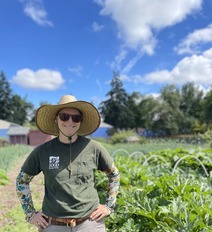
The OSH groups skills and contributions are appreciated, said Emily Johnson, GrassRoots Garden field coordinator, pictured left.
In the past year, the group has helped plant new trees, tomatoes, onions and cabbage, and sifted and made potting soil. As it warms, there will be more planting, and then, harvesting. The 2.5-acre garden produces 52,000 pounds of food each year that is distributed throughout the community.
“Their skill set grows from one month to the next,” Johnson said. “They make my job easier – especially when I have a bunch of new people out here, I can give them a task, and they know what to do and they cruise through it. Their competency level really shines. They ask great questions. If I give an instruction, it is done exactly that way, and they will continue to do it the way it should be done. They’re really good with going with the flow and if there are other people that end up joining their group, they work great with other people.”
The garden and FFLC’s other programs bring together people from all walks of life in the community to support their neighbors, Johnson said.
“It’s powerful to get people here on equal footing,” she said. “Everyone is valued and has a part to play. They are all instrumental in helping us grow food to feed people. Food is such a connector that we all need, so to help create access for other people, it feels good and salient.”
|

Did you know?
Oregon State Hospital and FOOD For Lane County have a long-standing partnership and staff also contribute to the organization’s efforts through donations made each year in support of the Governor’s State Employees Food Drive. This past spring, OSH Junction City employees organized unique and creative events to support the food drive and raised $19,359 and 359 pounds of food. In all, the donations equal about 60,000 meals that will help people experiencing food insecurity.
|
|
|
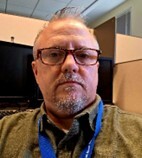
Innovation and improvement in the interest of patient care and safety drive Rodney Wolverton’s work as manager of OSH’s Incident Response Systems Investigation department.
For his dedication to innovation, Wolverton was recently recognized as a State of Oregon Ambassador of Public Service for the Oregon Health Authority.
He joins a cohort of State of Oregon employees who exemplify this year’s public service recognition theme of “Empowering Innovation.”
Wolverton led the design and implementation of a novel way of managing OSH’s incident response, so incidents are addressed quickly and effectively.
In the new process, hospital leaders representing all departments meet every weekday to review incident investigations conducted by unit-level managers and make recommendations for further action or system-wide improvements to prevent recurrence.
To stand up this new process, Wolverton inspired his team to fundamentally shift their daily work. He assigned investigators as liaisons to hospital program areas to advise local managers. The new process has increased incident qualitative review and “close out” to above 94%, a metric the hospital has never previously achieved.
Unit leaders find the new system transparent and supportive of shared learning. Investigators see the impact of their work on patient safety. Weekly hospital-wide communication informs staff about high-impact incidents, how to prevent them and celebrates exceptional staff performance.
Wolverton and his team’s work align with strategic objectives in OSH’s stabilization plan to ensure the daily safety and care of patients. The plan includes objectives focused on decreasing the likelihood of sentinel events (events that can lead to harm, injury or death), to improve OSH’s function as a 24/7 hospital, and to provide staff with clearer direction and empowerment to keep patients safe.
This innovative work focuses on tangible positive impacts on patient safety, staff morale, and regulatory compliance.
|
|
|

A classic Adirondack chair and ottoman in natural stain is one of the many furniture items made by OSH patients through the OSH Vocational Services program.
As part of OSH’s Vocational Services program, patients gain real world work experience by building Adirondack chairs, loveseats and matching side tables as well as other smaller crafts from start to finish. They are responsible for creating each piece at every stage of the process, from cutting the wood to sanding to painting.
“Patients take pride, responsibility and ownership in their work,” said Kate Barnes, OSH occupational therapist. Barnes works with about 40 patients hired in paid positions where many learn and apply carpentry and painting skills needed to create outdoor furniture and other small wood products.
Barnes helps patients develop soft skills like showing up on time, responding to feedback and maintaining safety. There is also a focus on hard skills that would make patients employable, such as woodshop skills.
“Patients have mentioned that having these paid positions gives them a sense of purpose in their day and routine and gives them a sense of normalcy,” said Barnes. “When they are working, they aren’t patients in a psychiatric hospital, they are workers crafting a quality product for others to enjoy.”
To order your own outdoor furniture or to learn more about this program, please visit OSH’s webpage.
|
|
 |
|
In each Recovery Times, we'll share stories of OHA's work to strengthen the behavioral health continuum throughout Oregon.
|
Oregon loneliness line supports older adults
When Carli Cox picks up the phone, she never knows who will be on the other end, but she knows why she’s answering. As a Crisis Intervention Specialist for the Senior Loneliness Line, Cox is one of the voices providing support to older people in Oregon facing behavioral health challenges, including loneliness.
“The Senior Loneliness Line is unique,” Cox said. “It functions both as a warm line for friendly conversation and as a space for crisis support when needed. We get calls from people who just want to start their day with a voice on the other end, to others who are dealing with isolation, loss, aging related issues, and sometimes suicidal thoughts.”
The Senior Loneliness Line is funded by OHA for Lines for Life—an Oregon nonprofit dedicated to preventing substance abuse and suicide and promoting mental wellness. The line offers older Oregonians connection and emotional support amid growing concerns about social isolation in aging populations.
Learn more about how the loneliness line supports older adults.
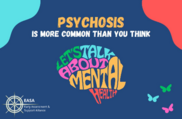
Oregon program offers vital support to help youth reclaim their future after an early psychosis diagnosis
For one Oregon family living outside of Roseburg, life as they knew it took a tumultuous turn when their 20-year-old son began experiencing symptoms of early psychosis.
The family was blindsided by their son’s experience and again after learning it would take three months to be able to schedule an appointment with a psychiatrist.
Then, they discovered the Early Assessment and Support Alliance (EASA)—a nationally recognized program funded by OHA that connects young people and their families to critical early psychosis treatment and support. It became the turning point the family desperately needed.
EASA is a program designed to help young people experiencing early signs of psychosis, typically between ages 12-27 (expanding to age 30 as of July 1). It provides early intervention and critical support in the community where the individual lives.
Learn more about the family’s story and support available through EASA.
|
|
|

The OSH Museum of Mental Health's Mental Fitness Book Club continues at 5:30 p.m. July 16 at Salem Book Bin, 450 Court St. NE, in downtown Salem.
July's selection is "What My Bones Know, A Memoir of Healing from Complex Trauma" by Stephanie Foo.
The OSH Museum of Mental Health is an independent, nonprofit organization that shares the stories of people who have lived and worked at OSH. Learn more about the Mental Fitness Book Club and other events, like the ongoing "Knit for Mental Fitness" fundraiser and current museum exhibits at https://oshmuseum.org/.
|
|
|
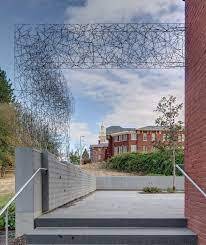
OSH invites anyone who thinks they may have a family member who passed away at OSH, Oregon State Tuberculosis Hospital, Mid-Columbia Hospital, Dammasch State Hospital, Oregon State Penitentiary or Fairview Training Center to check the online directory.
Families who identify relatives on this list and want to claim the cremains should complete and submit the “Request for Cremated Remains” form. Questions regarding the cremains can be directed to the OSH Health Information Department at 503-945-2976 or at osh.cremains@odhsoha.oregon.gov.
|
|
|

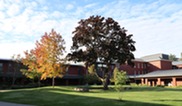
The Oregon State Hospital Advisory Board includes community members, patients and staff and its work supports patient care, safety and security. As part of its role, the board may review state and federal laws related to OSH policies and procedures and make recommendations to the OSH superintendent, Oregon Health Authority and Legislature.
The board’s upcoming 2025 meetings are at 1 p.m. July 17, Sept. 18 and Nov. 20.
|
|
|
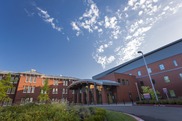
The Recovery Times is a quarterly publication that shares stories about the people and programs of Oregon State Hospital in support of OSH’s vision of hope, safety and recovery for all.
OSH serves a patient population that is traditionally marginalized, stigmatized and underserved, including many people with co-occurring disorders and those impacted by structural racism, and disproportionally represented in the criminal justice system.
|
|
|
If you need mental health support for any reason, help is out there.
|
|
 |
|
|
|
|
|