|
Having trouble viewing this email? View it as a Web page.
Lea en español
 June 2, 2025
In this issue...

Reflections from Chelsea Holcomb, Oregon Health Authority (OHA) Child and Family Behavioral Health (CFBH) Director
June — when we open the windows in the car and the warm breeze brushes against our face. When 6 p.m. still looks like afternoon, and the golden hour lingers a little longer. Parks, beaches, and outdoor spaces fill with the laughter of children and families. Farmers markets open their season across the state, bringing us together to share fruits, vegetables and products from Oregon's hardworking farmers. June doesn’t rush. It simply reminds us to look around and live a little lighter.
Named after Juno, the Roman goddess of marriage and childbirth, it’s a fitting name — June is full of milestones, from graduations and weddings to retirements, reunions, and fresh starts.
June is also a month of celebration. Pride Month honors the history, resilience and joy of LGBTQ+ people. Juneteenth is another key moment — commemorating the end of slavery in the U.S. and a reminder of the ongoing journey toward equity and justice.
In my own family, my son is turning 10 this year. It’s a month full of occasions.
Here at CFBH, we’ve spent the last month attending conferences near and far, strengthening partnerships, and bringing back knowledge and inspiration that will help shape our path forward.
|
Currently, Oregon provides psychiatric services in hospitals and programs licensed as Psychiatric Residential Treatment Facilities (PRTF) for children and youth under 21 years of age. OHA does not yet have a standardized set of eligibility standards to support the determination of whether a youth meets Psych Under 21 criteria.
To address this, we are developing criteria for determining whether a young person receives psychiatric services in a hospital or PRTF setting. This will establish consistent and transparent eligibility standards across all Psych Under 21 services, including those that may be provided in a home and community-based setting through the appropriate Medicaid authority or authorities. These will be applied across programs and settings, consistent with federal and state definitions.
The criteria do not describe the specific requirements for the comprehensive behavioral health evaluation, the documentation and evidence that may be required for the certificate of need process, or any of the necessary implementation activities. Future work and collaboration will be needed to develop these processes for implementation.
We are seeking input from our current PRTF providers, the whole behavioral health community, including providers, families and youth. If you’re interested in sharing your feedback, we invite you to join one of our upcoming input sessions:
- June 4 from 2 to 3:30 p.m. Pacific Time or
- June 9 from 3:30 to 5 p.m. Pacific Time.
You can join the Zoom meeting here or by phone at 1 (669) 254-5252 using Meeting ID: 161 4387 7475.
The draft criteria can be reviewed here: Link to Level of Care draft criteria.
Alternatively, written input can be provided on this survey.
For the past several years, the Child and Family team at OHA has been working closely with the OHSU Data, Evaluation and Technical Assistance (DAETA) team, Intensive In-Home Behavioral Health Treatment (IIBHT) certified providers and youth and families enrolled in services, to collect data and outcomes on the effectiveness of this program.
We are excited to share some of the highlights from the OHSU DAETA team’s 2024 IIBHT Annual Report:
- 269 youth were enrolled in services
- 3 new IIBHT providers enrolled youth this year
- Currently there are 23 certified providers across the state
The data also shows that, of 190 youth who discharged from the program (between 2021-2023), 82 percent were recommended for a lower level of care at discharge, and 92 percent of those youth were successfully connected to their recommended care. If you are interested in learning more, the full report can be found on the IIBHT web page.
Thank you to the OHSU DAETA team and all of our wonderful IIBHT providers!
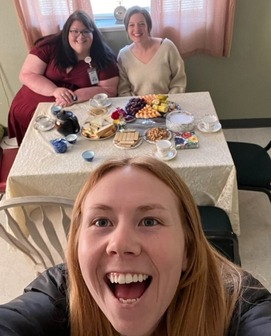
The IIBHT team at Community Counseling Solutions set up a tea party–themed meeting at the request of a youth in their service
On May 1, OHA hosted the annual Oregon Parent-Child Interaction Therapy (PCIT) Conference, where 84 clinicians, program administrators, and clinical staff gathered from across the state.
Dr. Melanie Nelson, a licensed clinical psychologist with over 20 years of experience in PCIT, presented on “Empowering Neurodiverse Children and Families with PCIT.” Her presentation was well-received, and clinicians left the conference equipped with new tools and resources to serve this growing population.
One agency shared their thoughts, reflecting the positive discussions that took place during and after the event:
“We were excited to attend the annual PCIT conference and found the information on working with children on the autism spectrum particularly valuable. This new insight will help us expand our approach and better meet the needs of this unique population.”
For further details on OHA-supported Early Childhood Mental Health programs across Oregon, please contact Amy Chandler.
The Black Youth Suicide Prevention Coalition (BYSPC) hosted its inaugural Town Hall in Portland, Oregon, bringing together just over 100 participants online and in person on May 10, 2025.
Ebony Clarke, Director of OHA's Behavioral Health Division, delivered the keynote address and participated in an interview with Portland radio and television host Tra’Renee of Situations & Conversations w/Tra’Renee. The interview highlighted Clarke’s experience as a Black woman living in Oregon and the policy changes she believes are needed to improve mental health outcomes for Black youth.
Eight youth consultants leading the Black Youth Suicide Prevention efforts joined a panel discussion and workshop during the event. They shared their personal experiences with mental health and suicide, discussed the tools and supports that have helped them, and highlighted the work they are doing to promote wellness among their peers across Oregon.
From left to right: Tra’Renee and Ebony Clarke
On May 22, the 2025 Sources Showcase honored Oregon students and adults working to create belonging and connection in their schools and communities, either through Sources of Strength programming or other youth-led suicide prevention efforts. Held virtually, the event celebrated those who used their words, art, music, influence, activities and collective power to build belonging and connection in schools and communities across the state.
Nominees were recognized for their work in the following areas:
-
Agents of change: how they used their voice, art, words, music, and/or time to advance belonging, connection, and equity in their school or community.
-
Connectors to help: how they elevated positive opportunities for their peers, normalized help-seeking, and worked to break down stigma and codes of silence so often connected to seeking mental health support.
-
Rooted in hope, help, and strength: how they embody strengths-based and inclusive practices.
See the full list of 2025 honorees and categories here.
Mental Health First Aid Coordinator of the Year: Maria Gdontakis Pos
Maria Gdontakis Pos, MFT was named Mental Health First Aid (MHFA) Coordinator of the Year as part of the 2025 Mental Health First Aid Impact Awards, presented by the National Council for Mental Wellbeing. At the ceremony in Philadelphia, she was recognized for her outstanding contributions to expanding MHFA and empowering communities to support one another. Maria has served as the Training Manager and Statewide MHFA Coordinator for the Association of Oregon Community Mental Health Programs (AOCMHP) in partnership with OHA.
"Maria has played a key role in expanding the reach of MHFA, hosting over 50 MHFA Instructor trainings and supporting more than 50,000 courses across the state. Her work has been vital to the health and safety of people in Oregon," said Roger Brubaker, Youth Suicide Prevention Programs Coordinator with OHA. In addition to her work with MHFA, Maria also led a multi-partner initiative to develop the Oregon Mobile Crisis Training Academy, aligning Oregon's mobile crisis response system and training requirements with the Crisis Now model.
TIME100 Health Honoree: Scott LoMurray
Scott LoMurray, Chief Executive Officer of Sources of Strength, has been named to the prestigious TIME100 Health 2025 list for his groundbreaking work in youth mental health and suicide prevention. Sources of Strength is a school-based upstream suicide prevention program that trains students to become peer leaders, helping to create cultures of connection, hope, and resilience.
Rather than focusing solely on crisis intervention, Sources of Strength emphasizes building protective factors and empowering youth to support one another before crises emerge. A study published in the American Journal of Preventive Medicine in January 2025 revealed that high schools implementing Sources of Strength saw a 29 percent reduction in suicide attempts among students. OHA implements Sources of Strength statewide in partnership with Matchstick Consulting.
“At its core, this work is about creating belonging and making it easier for young people to ask for help,” said LoMurray. “Peers have a unique ability to reach each other in ways adults often can’t. We just give them the tools to do it.”
The Early Assessment and Support Alliance (EASA) is a statewide, OHA-funded program overseen by the EASA Center for Excellence at OHSU. EASA provides specialty care to youth and young adults experiencing their first episode of psychosis, and their families. For more information, please visit easacommunity.org.
To strengthen family engagement and support, the EASA Center for Excellence welcomes Karma Clarke-Jung as the new Family Engagement Coordinator.
Karma Clarke-Jung holds a master's degree in special education and brings more than 15 years of experience in the mental health and education fields. Professional background includes teaching children at the Oregon State Hospital for two years and working for 13 years in a day treatment program for adolescents with mental health needs. Most recently, work as an Autism Consultant with the Douglas Education Service District in Southern Oregon further expanded this expertise.
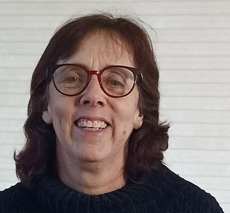
Karma Clarke-Jung
"Hidden Potential: The Science of Achieving Greater Things" by Adam Grant
This book is about how success isn’t just about talent — It’s about the ability to grow. Adam Grant shows that with the right mindset, support, and effort, anyone can develop the skills they need to thrive. The book dives into how people learn, overcome obstacles, and tap into their full potential, proving that greatness is something you build, not something you’re born with.
Find events, opportunities, trainings and resources in last month’s posting on our newsletter page. Many of these trainings are also on our training opportunities page. We will send updates mid-month — Look for the next one in your inbox on June 16.
For feedback and suggestions for our newsletter and information: kids.team@oha.oregon.gov.
Subscribe to OHA Behavioral Health Updates
Did someone forward or share this with you? You can subscribe here to get future issues of Holding Hope and other updates for Oregon behavioral health providers and partners.
|