|
Having trouble viewing this email? View it as a Web page.
Lea en español
 May 1, 2025
In this issue...

Reflections from Chelsea Holcomb, Oregon Health Authority (OHA) Child and Family Behavioral Health (CFBH) Director
May is one of my favorite months! Not only is it Mental Health Awareness Month, but it also brings longer days, blooming flowers and a vibrant energy that breathes new life into our communities.
At the same time, that energy can feel overwhelming. Schedules fill up, expectations rise and change is in the air. In schools, state testing is in full swing, parent-teacher conferences are popping onto our calendars and the end of the school year is quickly approaching. The sunshine is calling — kids want to be outside and honestly, so do we. There is a lot to get done and a lot to hold.
During this busy time, it is important we prioritize mental health — not just as a topic of conversation, but as something we actively model and embody. It’s important to take care of our mental health — not just by talking about it, but by showing it through our actions.
Mental Health Awareness Month invites us to do more than recognize mental health. It calls us to build the bridge between awareness and acceptance. Awareness is where we begin: the statistics, the stories, the growing understanding that mental health impacts every part of our lives. Acceptance is what creates belonging. It’s in how we show up, how we speak with care and how we design spaces that honor people’s mental and emotional needs. Every time we listen and choose empathy over assumption, we add to that bridge, making it easier for others to cross.
We invite you to take that step with us at the annual Children’s Mental Health Acceptance Day Celebration organized by Oregon Family Support Network on May 10 at Salem’s Riverfront Carousel. The event is free for everyone and includes carousel rides and food. The day highlights the importance of support for children navigating behavioral, emotional and mental health challenges.
This year, Oregon Family Support Network’s message is “Joy in the Journey.” It reminds us that mental health journeys are personal and diverse and that they contain the potential for growth and positivity for families and youth.
Let’s keep building the bridge together.
Chelsea Holcomb
|
When we began the strategic planning for our 2020-2024 Roadmap, it was before the COVID-19 pandemic and CFBH was undergoing a Secretary of State audit. We created a plan based on community consultation and national best practices. Four years later, we are issuing the Child and Family Behavioral Health Roadmap 2020-2024-Closing Report to complete this chapter as we work on aligning our next goals and objectives with the new OHA strategic plan.
Between 2020 and 2024, over half the strategies or sub-steps in the Roadmap have become established work or initiatives and we successfully completed a further 35 percent. These accomplishments were possible through strong partnerships outside our agency and collaboration with 31 different departments within OHA.
Throughout this process, we have prioritized inclusion and transparency. This included launching this newsletter, providing regular updates on the Roadmap web page and hosting community conversations. Many of our milestones and achievements have been celebrated here.
Thank you for walking with us on this continuing journey. We look forward to what comes next — together.
OHA recently released the 2024 Youth Suicide Intervention and Prevention Plan (YSIPP) report. This report outlines the progress of implementing the YSIPP and includes the most recent finalized data.
In 2024, 189 initiatives outlined in the YSIPP were actively pursued across Oregon. Of these, 93 percent are currently on track. The Big River suicide prevention program now has 1,992 active trainers in the state. Additionally, 21 of 36 counties have active trainers in all Big River programs.
Key highlights from the report include progress in:
- Equity-related initiatives
- Youth engagement activities
- Increases in the number of trainers who speak languages other than English
Data in the report shows:
- In 2023, 102 Oregon youth died by suicide, compared to 109 in 2022.
- Suicide remains the second-leading cause of death among people aged 5 to 24.
- Preliminary 2024 youth suicide deaths appear similar to 2023. This continues an overall downward trend in youth suicide in the state since the peak in 2018.
- The data continues to reflect racial disparities. Specifically, death by suicide among non-Hispanic white youth has decreased overall since 2018. However, the number of youth suicides of other races and ethnicities has remained similar to 2018 levels or has increased.
Following work on the Senate Bill 1557 report we are beginning consultation with youth and families on the proposed level of care criteria. This will be for implementation in two areas:
- Residential, which means hospital and psychiatric residential treatment facilities, and
- Home- and community-based settings under 1915(k) or other appropriate Medicaid authority.
The criteria do not describe the specific requirements for the comprehensive behavioral health evaluation, the documentation and evidence that may be required for the certificate of need process, or any of the necessary implementation activities.
This workgroup will meet on May 13 from noon until 1:30 p.m.
If you’re part of a family group, we welcome your input. It’s crucial to center the voices of those who have been historically marginalized and those experiencing developmental disabilities.
If you are a family member and would like to be involved, please email Hilary Harrison for the link and more details.
Schools are critical access points to mental health services for many rural communities across Oregon. Partnerships with community mental health partners support bringing much-needed mental health services and supports directly to school campuses. In Malheur County, almost 20 percent of 11th grade students have emotional or mental health care needs that have not been met.
Lifeways, Inc. is the community mental health program in Malheur County working to improve access to mental health services for students and their families. Through partnerships with three Malheur County school districts (Ontario, Nyssa, and Vale) and one community charter school (Four Rivers), Lifeways provides services to children, youth and their families from elementary to high school. The school-based mental health (SBMH) program has grown from one SBMH provider to three full-time and two intern therapists providing services countywide.
It takes a dedicated and flexible professional to provide clinical therapy in an educational environment. Sam Galan is a Licensed Professional Counselor and SBMH therapist with Lifeways. Below, he shares his journey providing mental health services in schools for the past five years:
“My Lifeways career as an SBMH therapist began in the fall of 2020. When approached by leadership with the opportunity to provide therapy in the school, I was excited and jumped at the opportunity. Initial services involved telehealth services due to the pandemic. Ontario School District head of counseling Jose Marquez worked with me to ensure students would have what they needed to participate in secure video telehealth sessions.”
One of the original goals for the SBMH program was to have someone who could follow students, if needed, through their academic advancement towards graduation. Sam is now seeing some youth return to services and is assisting them in making the final transition from high school to college.
Sam shares, “Five years later, I have developed relationships with school officials, counselors and staff, advocating for the mental health well-being of students attending Ontario schools. As I enter the schools, teachers, custodial staff, the administration and of course the students welcome me. One of the biggest outcomes is lessening the stigma of mental health counseling and student struggles with anxiety, depression, or other mental disorders faced by the student populations in the schools. The continued development of SBMH services is one of my goals, collaborating with school counselors, teachers and fellow clinicians serving the schools.”
Across the county, Lifeways has expanded its relationships with schools and districts through increased services that span much of the behavioral health continuum. For example, Lifeways is now providing substance use disorder treatment with peer support and skills training as a group skills opportunity named Discover You. This program provides Ontario High School students the opportunity to learn and practice emotion regulation, impulse control, and social skills. They are also offering Professional Development Skills Training, a new 12-week program combining instruction and coaching, which provides practical tools to adults in the school building who can then support student emotional regulation.
For more information on OHA-supported SBMH programs across Oregon, please contact Fran Pearson.

As part of the Transformation Transfer Initiative, OHA, including the CFBH team, launched the Mobile Crisis Training Academy in 2023 to ensure mobile crisis teams across the state receive consistent, high-quality training. Led by the Association of Oregon Community Mental Health Programs, the Academy provides a centralized training program focused on trauma-informed care, cultural awareness, and real-world response strategies. The curriculum was developed with input from adults, youth and their families with lived experience, community mental health programs, peer-run organizations, and other local partners.
Participants praise the training for its engaging format and practical value. One attendee shares, “There were concrete tools provided and a variety of topics applicable to all mobile crisis teams.” Another participant comments, “What I found most helpful was going over the scenario and hearing how other professionals in the field with more experience would handle the situation.” Many also value the opportunity to connect with peers and learn from a diverse range of presenters.
The training provides essential skills and also helps build connections among crisis responders. It creates a space for professionals to exchange ideas, explore different approaches and strengthen cross-team coordination. “I appreciated the mobile crisis training and enjoyed talking to other providers and triaging scenarios with different teams,” notes one participant. Another shares, “I found the Mobile Crisis training to be great in forming conversations around mobile teams and when and how to utilize law enforcement.”
The Academy has trained over 300 mobile crisis staff over the past year. This effort has strengthened the state’s ability to provide timely and compassionate crisis care while building a strong foundation for future crisis response.
Two members of our CFBH team recently presented at the American Association of Suicidology conference in Columbus, Ohio.
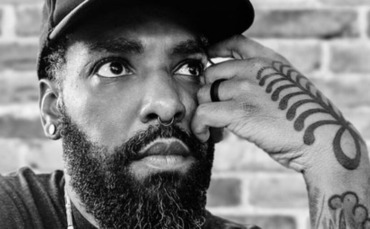
Jill Baker, YSIPP Manager, co-presented with Dr. Kenjus Watson about the Lifesustaining Practices Fellowship pilot program. This program supports youth-serving adults in exploring ancestral and culturally rooted practices for healing. The 18 fellows currently in the second year of the fellowship are finalizing a toolkit for educators that includes culturally specific healing strategies to support young people. More information about Dr. Watson’s work is available on his podcast, “Apocalyptic Education.”
Dr. Kenjus Watson, Professor at American University
Shanda Hochstetler, Youth Suicide Prevention Coordinator, and Jill Baker co-presented on Oregon’s journey towards cultural infusion of our suicide prevention framework and state plan for suicide prevention. Leaning on the "Cultural Theory and Model for Suicide Prevention" (Chu et al), and with consultation from the Culture and Suicide Prevention Institute, Oregon’s team has worked to infuse cultural protective and risk factors into the Oregon Suicide Prevention Framework. Our team is currently finalizing the framework update and anticipates publication in June 2025.
OHA sponsored the 2025 Annual Summit of the Oregon Alliance of Children’s Programs, held April 9–11 at Salishan Coastal Lodge. The theme, “Care at the Core,” focused on improving practices that support youth, families, and the provider workforce.
The conference opened with a panel of young adults with lived experience, moderated by Anna Williams, Executive Director of the System of Care Advisory Council. Panelists shared their experiences with mental health and substance use disorder services and discussed ways to implement trauma-informed practices and improve the system.
During the event, the Alliance recognized Julie Magers with the 2025 Rose Otte Award, which honors individuals who have made significant, long-term contributions to the well-being of children, youth, and families. As a family and policy advocate, Julie focuses on improving care for youth and families through multidisciplinary team approaches, reflecting the values of the award.
The summit included representation from OHA, Oregon Department of Human Services, Oregon Department of Education and Oregon Youth Authority. It’s always wonderful to be together, getting a chance to connect in person and strengthen our partnerships with providers and state agencies.
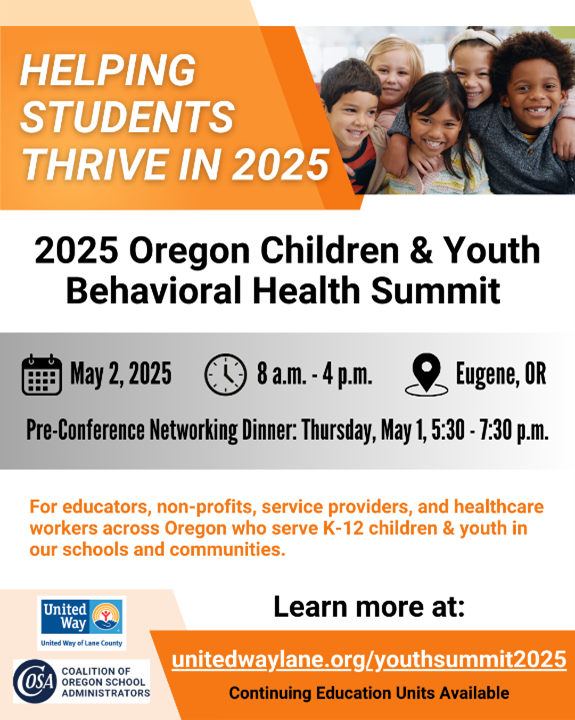
On Friday, May 2, professionals from education, health care, community services and nonprofit leaders serving K-12 children and youth will gather in Eugene for “Helping Students Thrive in 2025: The Oregon Children & Youth Behavioral Health Summit.”
Hosted by United Way of Lane County and the Coalition of Oregon School Administrators, this one-day statewide event will offer opportunities for learning, networking, skill-building, and collaboration. Attendees will share tools and strategies to better support the mental health and well-being of Oregon’s children and youth. Featured speakers include Dr. Pilar Bradshaw, Christian Paige, Patrick Cook-Deegan and former Oregon Kid Governor Zoya Shah.
Learn more and register at www.unitedwaylane.org/youthsummit2025.
For Mental Health Awareness Month, we wanted to acknowledge the stress that we’re all under and some easy ways we can all improve our mental health.
"The Age of Overwhelm: Strategies for the Long Haul" by Laura van Dernoot Lipsky
This book offers practical tools for navigating the stress of modern life, from work and caregiving to activism and community responsibilities. It aims to help ease our burden of overwhelm, restore our perspective, and give us strength to navigate what is yet to come.
The author also hosts a podcast, "Future Tripping," which features conversations about how to respond to overwhelm — guided by listeners' questions. Episodes can be found here.
"The Power of Tiny Interactions + Your Questions Answered: Erica Bailey on Authenticity" on Hidden Brain
At this month’s Alliance conference, there was a question for the state agency panel about the Surgeon General’s health advisory about parenting, and the topic of loneliness as an epidemic also came up.
This episode of the Hidden Brain podcast reviews research on the importance of small everyday interactions and actions we can take to reduce our own loneliness and that of others.
Find events, opportunities, trainings and resources in last month’s posting on our newsletter page. Many of these trainings are also on our training opportunities page. We will send updates mid-month — Look for the next one in your inbox on May 15.
For feedback and suggestions for our newsletter and information: kids.team@oha.oregon.gov.
Subscribe to OHA Behavioral Health Updates
Did someone forward or share this with you? You can subscribe here to get future issues of Holding Hope and other updates for Oregon behavioral health providers and partners.
|