|
Having trouble viewing this email? View it as a Web page.
Lea en español
 March 3, 2025
In this issue...

Reflections from Chelsea Holcomb, Oregon Health Authority (OHA) Child and Family Behavioral Health (CFBH) Director
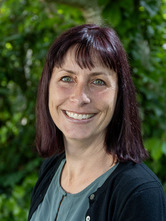
March has arrived, bringing with it a noticeable shift — the days grow longer, the air feels and smells fresher, and signs of spring begin to emerge. It's a time to embrace support and inclusivity. This month, we celebrate the diverse observances that hold meaning for our communities, including Ramadan, Holi, and St. Patrick’s Day. In honor of Developmental Disabilities Awareness Month, we highlight the strengths, dreams, and talents of individuals with emotional, behavioral, and cognitive differences.
But this month isn’t just about raising awareness — it’s about action. As I continue to listen to parents, caregivers, experts, and providers, I realize that I must evolve with what I am learning. This work is ongoing, and it calls me to adapt and act on the knowledge I gain. It’s about learning, growing, and taking meaningful steps to create change. Learn. Adapt. Act.
Supporting individuals with developmental disabilities is about truly valuing them for who they are, always assuming competence and ensuring they have the resources they need — whether through organizations, licensed practitioners, schools, workplaces, or inclusive policies. Small efforts can lead to big, lasting change.
Similar to the holidays we celebrate this month — Holi, with its joyous explosion of colors and unity; and Ramadan, a time of reflection and fasting and generosity that deepens community bonds; and St. Patrick’s Day, a celebration of Irish heritage, marked by parades and a spirit of togetherness — these occasions remind us of the power community, of supporting one another, and of celebrating the richness of our diversity.
|
Parents and guardians raising children and adolescents with intellectual and developmental disabilities (I/DD), along with co-occurring mental health conditions, often face unique challenges when seeking care. In the video Listening to Families: Beyond the Diagnosis, families share their real-life experiences, offering powerful testimonies about their struggles and how they wish providers would better support their children. This reflects the values outlined in Senate Bill 1557 (2024), which emphasizes that children, youth and their families are the experts in their own lives and must be meaningfully included in decisions about their care.
Historically, there has been a belief that people with I/DD could not have co-occurring mental health conditions, however, we know that individuals with I/DD can and do experience mental health challenges, which are often overlooked. Recent studies now indicate that up to fifty percent of children and adolescents with I/DD have a co-occurring mental health disorder.
When working with individuals who have both intellectual/developmental disabilities and co-occurring mental health conditions some best practices include:
-
Understand the individual as a whole: Take the time to learn about the person’s interests, hobbies and what matters most to them. Get to know the person’s baseline. Seek input from those who know them well, such as their parents.
-
Look beyond the diagnosis: Consider other medical or mental health factors that may impact the individual.
-
Practice patience: Give time for processing and responding to information.
-
Always assume competence: Speak directly to the individual rather than making assumptions about their abilities.
-
Engage with empathy: Treat families with the same care and respect you would want for your own loved ones.
In 2021, Senate Bill 5529 (2021), a budget note instructed the Oregon Department of Human Services (ODHS) and OHA to identify barriers for individuals with I/DD and older adults to accessing mental health services through Medicaid. By working closely with service providers, families and the community, important feedback was gathered that pointed out problems like cross-system communication issues and insufficient staff. This 2022 report has led to recommendations for new policies and strategies to ensure that care is focused on the individual, meets the needs of people from different cultures and languages, and is easy to access. These recommended actions also aim to improve teamwork among providers, stop discrimination and provide better training for those who work with people with complex needs.
With the passing and implementation of Senate Bill 1557 (2024), Oregon is reinforcing a fundamental principle: organizations and licensed practitioners may not deny children or youth under age 21 access to mental health assessment, treatment or services based on their intellectual or developmental disability. This law helps dismantle barriers, challenge ableism and ensure equal access to essential care. As Oregon continues to build infrastructure and provide training and support to create positive change, there are opportunities at every level of our systems, provider organizations and communities to support this work.
One way we can continue to come together to do this important work is at the annual Youth I/DD Mental Health Summit, partially sponsored by OHA and ODHS, which started in 2013. This year’s summit on Aug. 6, 2025, in Corvallis, will bring together caregivers and providers to connect and collaborate on transforming systems that support young people with both a mental health diagnosis and intellectual and developmental disabilities.
OHA is reviewing Oregon Administrative Rules (OARs) 309.022, Children & Adolescents: Intensive Treatment Services, with a potential rule change coming fall 2025. These rules cover both psychiatric residential treatment services and day treatment services. A session has been scheduled for March 5 from 2 to 3:30 p.m. The discussion will focus on gathering the experiences of those with day or residential treatment, either as a youth, family member, provider or community member. It will also include obtaining recommendations for improving how these programs operate and collecting suggestions for OAR changes.
Please contact Julie.Graves2@oha.oregon.gov if you have any questions.
In our December memo on minor consent, OHA noted that we would be scheduling follow-up webinars; they have been scheduled for March 10 from 8:30 to 9:30 a.m. and 1 to 2 p.m. Discussions will be facilitated by Trauma Informed Oregon, and content in the two sessions will be the same. The goal of these sessions will be to review Oregon's current rules and statues, gather any questions or concerns, and review next steps. We welcome youth, family members, providers and community to join us for discussion.
OHA and ODHS published the annual memo to Governor Kotek on the state-led initiatives to grow psychiatric residential treatment facilities (PRTF) system capacity. The memo outlines significant progress and ongoing efforts to expand Oregon’s capacity to provide residential mental health and/or substance use treatment for youth and families.
Key highlights include:
-
Newly licensed facilities: The licensing of Madrona Recovery in Tigard and Nexus Family Healing at Walden Crossing in Portland. Both agencies actively engage in the Building Bridges Initiative, a national program dedicated to promoting best practices in residential care.
-
Prioritizing access partnership: ODHS Child Welfare has successfully expanded its innovative partnership, ensuring foster children have prioritized access to residential treatment, reducing barriers and delays for foster youth in care.
For any questions or comments regarding the 2025 memo, please contact the Treatment Services Specialist, Julie Graves.
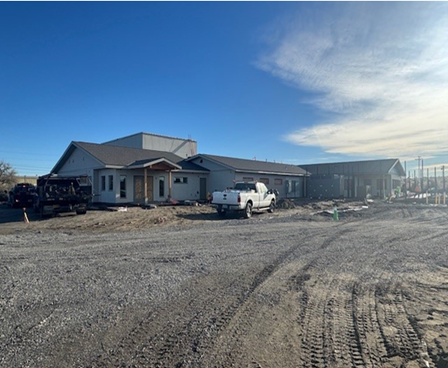
Community Counseling Solutions (CCS) is progressing on the construction of a new 14-bed psychiatric residential treatment facility, which will begin serving children ages 5 to 12 in Boardman, Oregon, tentatively slated to open in late summer of 2025. CCS is currently focused on recruiting clinical and administrative staff to lead the program.
This PRTF will be the only one of its kind in eastern Oregon, providing essential behavioral health services where resources have been limited. It will be a valuable addition to the state’s behavioral health infrastructure, expanding access to care for children and families.
We look forward to the opening of this vital resource and continue to support the CCS team. Children deserve to be served within their communities whenever possible, in the least restrictive level of care to meet their needs.
Construction underway for the new CCS PRTF facility in Eastern Oregon
OHA continues to work with counties to fully implement mobile crisis response services for children, youth, young adults and their families, following national best practices for Mobile Response and Stabilization Services. A key component of these practices is a well-trained workforce, capable of effectively supporting and responding to youth and their families. OHA has heard consistent feedback from parents, youth, and providers about the need for additional training and guidance for working with youth living with co-occurring behavioral health needs and I/DD. We have worked to ensure that crisis response providers have the information they need to support youth with co-occurring behavioral health needs and I/DD.
OARs require all crisis staff to be trained in working with individuals with I/DD. In addition to these training requirements, OHA has updated OAR 309-072-0160 to ensure that all youth up to the age of 21 must be considered for stabilization services without discrimination on the basis of intellectual or developmental disability, IQ score, or physical disability. We have also implemented specific eligibility criteria to ensure access to these services, including the need for assessment, referral and treatment for children and youth with I/DD.
OHA and the Association of Community Mental Health Programs have collaborated to offer additional training opportunities for mobile crisis workers. Trainings include Mobile Crisis Response for individuals with I/DD, Other Co-occurring Disorders, Family-Led Crisis and Safety Planning, The Nurtured Heart Approach, and Collaborative Problem Solving. We are exploring further training options to support the workforce and welcome suggestions for additional programs focused on working with youth and young adults with co-occurring mental health and I/DD. Please send ideas to Brian Pitkin at Brian.Pitkin@oha.oregon.gov.
Matchstick Consulting has developed free Mental Health Units in partnership with educators to address the social-emotional learning needs of older elementary students (grades 3-6). These units offer a scripted lessons series, strategies, activities, and tools to help students build emotional and social skills. Designed for school mental health staff, the resources are available at no cost to professionals in any setting.
The units focus on peer relationships and emotional regulation, offering practical tools to help students improve communication, resolve conflicts, manage stress, and develop healthy coping skills. Instructions for accessing these resources are available for small group lessons and classroom materials.
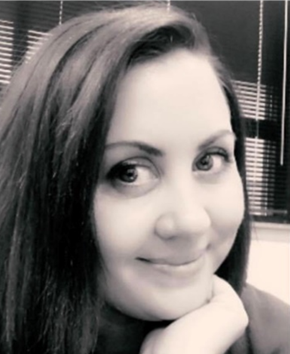
Before joining OHA, Katie worked as the Recovery Support Team Leader for Polk County Child Welfare, a position she held for the last 9 years of her fifteen-year career with the agency. In this role, she focused on connecting families to community resources and support systems to promote their well-being. Katie also worked closely with community partners to improve local services, participating in the local Drug and Family Treatment Courts, and serving as both Co-Chair and a member of the Local Addiction and Drug Planning Committee. She is deeply committed to listening to and respecting the voice and choices of those she serves.
Katie holds a Bachelor’s degree in Social Sciences from San Diego State University, along with four minors in Sociology, Psychology, Anthropology and History. Katie joins the CFBH team as the Youth and Young Adult Substance Use Disorder Policy Coordinator, bringing a wealth of knowledge and expertise, along with a strong commitment to serving individuals affected by substance use disorder.
Katie Clemo
OHA supports providers across the state in delivering Early Childhood Mental Health services. This month, we are honored to highlight the voices and experiences of families impacted by two evidence-based models: Parent Management Training – Oregon model (GenPMTO) and Parent Child Interaction Therapy (PCIT).
GenPMTO: A Trauma-Informed, Family-Based Intervention
GenPMTO is an effective, trauma-informed intervention designed for families with children ages 2-17 years. The program enhances children’s self-regulation, peer interactions, and academic success, while helping parents develop stronger parenting skills and healthier communication patterns.
Reflections on GenPMTO:
-
Family testimonial: “I was able to stop engaging during a heated discussion and not fuel the fire.”
-
Moment of breakthrough: Towards the end of a Family Problem Solving activity, the parent began to cry and said, “Now I believe I can really do this. GenPMTO is teaching me to be the parent I want to be.” A powerful moment of growth.
-
Achievement: A parent in the program was able to graduate last year. They completed all the modules and remained committed to setting limits despite facing significant challenges — having a baby, dealing with medical issues, and navigating a complex system. The parent shared that hearing about their strengths during the PMTO sessions lifted their spirits and made their week. They asked to be sent reminders of their strengths throughout the week to keep them motivated.
Parent-Child Interaction Therapy (PCIT)
PCIT is a well-supported, evidence–based treatment for children ages 2-7 and their caregivers. Through direct coaching from a PCIT therapist, parents learn therapeutic skills that strengthen the parent-child bond, increase children’s social skills and positive behaviors, and reduce disruptive behaviors.
Family stories from PCIT:
-
Family reflection: A family who started PCIT after hearing about it from a friend has been “amazed” at how well it works for them. They’ve seen huge improvements in family dynamics, parent-child relationships, and overall calmness in their home. Both parents have benefitted from learning effective ways to ignore minor behaviors and focus on the positives.
-
Techniques extending to teenagers: A family practicing PCIT techniques with their 5-year-old realized they could apply the same skills with their teenage children. The parent stated they learned so much about avoiding questions and reflecting, and following the child’s lead, that they are now using it with the teenagers in the family. They reported “they show and tell me so much more now!” As a result, they are experiencing improved relationships with all children in the family.
-
Parent testimonial: A 5-year-old referred by their pediatrician for concerns about impulsive behaviors, emotional outbursts, and fighting with siblings, attended all PCIT sessions with their parents. At the end of the treatment, the parent felt confidence using the skills shared, ‘We actually have fun playing together!’
To learn more about these models and other OHA Early Childhood Mental Health programs, click here.
Addressing the Complex Needs of Youth: A Call to Action by the American Public Human Services Association
This report sheds light on the critical challenges and opportunities agencies face when serving youth with complex or high-acuity behavioral needs. It examines the barriers that hinder effective care, such as workforce shortages, limited funding, and regulatory constraints. The report also highlights promising innovations and best practices that can improve service delivery, while advocating for necessary policy changes at both state and federal levels to support better outcomes for these youth.
Find events, opportunities, trainings and resources in last month’s posting on our newsletter page. Many of these trainings are also on our training opportunities page. We will send updates mid-month — Look for the next one in your inbox on March 17.
For feedback and suggestions for our newsletter and information: kids.team@oha.oregon.gov.
Subscribe to OHA Behavioral Health Updates
Did someone forward or share this with you? You can subscribe here to get future issues of Holding Hope and other updates for Oregon behavioral health providers and partners.
|