|
 |
|
In this issue: |
|
|
|
Have a young child who refuses to brush their teeth? Try playing Elmo's Toothy Dance in the morning and night. It’s catchy, and kids love brushing their teeth while listening to it!
Did you know that cavities are the most common childhood chronic disease among children under 19 in the United States? Almost half of Oregon's 1st - 3rd graders have had cavities, and untreated cavities can cause pain and infections that may lead to problems with eating, speaking, playing and learning.
And did you know that dental sealants are one of the best ways to prevent cavities?
A dental sealant is a liquid coating applied to the chewing surfaces of the molars (back teeth). The coating flows into the deep pits and grooves of the tooth, “sealing out" the bacteria and food debris that cause cavities.
Oregon’s Certified School Dental Sealant Programs are a free resource where many elementary and middle school-aged students throughout the state can receive sealants on their molars (back teeth)—a quick, easy and painless procedure that can prevent up to 80% of cavities on those teeth.
Ask your school if they have a school dental sealant program. If they do, you will have to sign a permission slip. When the school hosts a sealant event, a registered dental hygienist will screen your child for sealants, which takes about one minute per student. If sealants are needed, it takes about 15 minutes per student.
🦷 Sealants protect only the molars, however. Students still need to brush their teeth for at least two minutes, twice a day, floss daily, use fluoride, choose healthy snacks/beverages, and visit their dentist regularly. For more tips on keeping teeth healthy, visit our Caring for Your Teeth webpage.
For more on all of Oregon’s no-cost oral health programs in schools, including screenings, fluoride varnish treatments, and the mobile dental van “Tooth Taxi,” visit this webpage.
If you have questions, feel free to email OHA’s Oral Health Unit at oral.health@oha.oregon.gov.
|
|

Starting in March, eligible people can get an additional dose of the 2024-2025 COVID-19 vaccine, which was first made available in Oregon almost six months ago, in September.
An additional dose of the 2024-2025 COVID-19 vaccine is recommended for:
*See this CDC page for recommendations for people who have never received a COVID-19 vaccine, and for some people who received the Novavax vaccine in the past.
People in the above categories can receive the additional dose six months after receiving the initial dose of the 2024-2025 vaccine. If you are moderately or severely immunocompromised, you do not need to show proof to receive a COVID-19 vaccination.
People have weakened immune systems because of certain medical conditions or if they receive medications or treatments that suppress their immune systems.
This includes people:
- Who have cancer and are on chemotherapy.
- Who have had a solid organ transplant and are taking medication to keep their transplant.
- Who use some medicines for a long time, such as corticosteroids.
- With primary immunodeficiency.
Additionally, immunocompromised people who receive one additional dose may receive more doses, after discussing it with their provider, waiting two months in between these additional doses.
|
|
|
 |
|
Health notes |
|
|
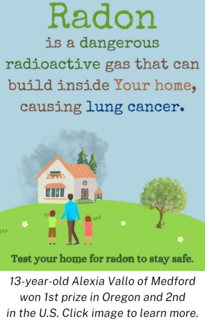
Students cross the Northwest United States are encouraged to get creative and help raise awareness about the dangers of radon gas by participating in the 2025 Northwest Radon Poster Contest.
Radon is a naturally occurring radioactive gas that can build up in our homes, and long-term radon exposure is the leading cause of lung cancer in nonsmokers and the second-leading cause of lung cancer in smokers.
Contest rules:
- Youth must be between ages 9 and 14, and living in Oregon, Idaho or Washington.
- Artwork can be created with crayon, markers, paint (watercolor, tempera, and acrylic), collage, pencil, or computer graphics.
- Deadline to submit is Friday, Feb. 28, at 11:59 p.m.
Learn more at the Northwest Radon Poster Contest page. Find submission form and contact information here.
|
|
|
 |
|
OHA answers your questions |
|
|
Questions are answered by experts at OHA, other state agencies or community partners.
Q: I am in my 70s and have previously had the Pneumonia vaccination and then the Prevnar 13 vaccination. Now they have Prevnar 20, and the medical sites I've visited do not come right out and say if I should take the Prevnar 20 vaccination or not. What do you think? – Alison, Eagle Point
A: Alison, we suspect that what you mean by the “pneumonia vaccination” is the pneumococcal polysaccharide vaccine that protects against 23 strains of pneumococcus (PPSV23). This vaccine covers many strains, but the immune response you get from it is not as good as with the pneumococcal conjugate vaccines (PCVs), which many people know by the name Prevnar.
If you’ve had both PPSV23 and Prevnar 13 (PCV13), you may be eligible for the Prevnar vaccines PCV20 or PCV21; but you should discuss with your doctor whether you really need it. This is called “shared clinical decision making,” and the Centers for Disease Control and Prevention (CDC) refers to PCV20 and PCV21 as options, rather than recommendations:
Based on shared clinical decision-making, adults 65 years or older have the option to get PCV20 or PCV21, or to not get additional pneumococcal vaccines. They can get PCV20 or PCV21 if they have received both:
-- PCV13 (but not PCV15, PCV20, or PCV21) at any age, and
-- PPSV23 at or after the age of 65.
You can find greater detail on pneumococcal vaccination recommendations in this CDC table.
If you have questions about health topics in Oregon, submit your question here. Although we are unable to answer every question, we try to address those of interest to a broad audience. Please understand that we are unable to provide specific medical advice for personal medical conditions.
|
|
|
|
|