|
 |
|
In this issue: |
|
|

A new Oregon Health Plan (OHP/Medicaid) program provides benefits to eligible young adults with special health care needs ages 19 and 20.
The Young Adults with Special Health Care Needs (YSHCN) benefits launched Jan. 1 and are the first of their kind in the nation. These benefits extend OHP coverage, enhanced vision and dental services and the new health-related social needs (HRSN) climate and housing benefits to this young population.
In Oregon, one in five children under 18 has a special health care need—ranging from physical, intellectual and developmental disabilities to complex mental or medical conditions. However, when these OHP members turn 19 they lose their health coverage. More than 80% of young adults with special health care needs lack access to the care they need.
To qualify for YSHCN benefits, applicants must be age 19 or 20 and have:
- At least one qualifying health care need that began before turning 19; and
- An individual or household income up to 205% of the Federal Poverty Level (FPL). Based on current FPLs, that means a single individual with an annual income of $30,873 or less would qualify. For a family of three, that figure is $52,931.
OHA estimates 4,000 young adults in Oregon will qualify for YSHCN benefits through new OHP memberships, and 15,000 current OHP members will qualify.
Current OHP members who qualify for YSHCN benefits will receive a letter asking if they want to apply, or they can contact their coordinated care organization (CCO). Non-OHP members interested in YSHCN benefits can apply for OHP online, or call or visit a local community partner or Oregon Department of Human Services office.
NOTE: People must apply for YSHCN benefits before they turn 21. Once enrolled, OHP members with YSHCN benefits remain in the program until their 26th birthday.
If you have questions, call 1-800-273-0557 or email Ask.OHP@odhsoha.oregon.gov.
|
|
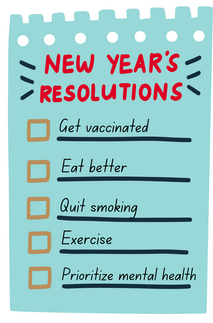
When it comes to health, we’re all connected. Whether choosing to get vaccinated against respiratory diseases or quitting tobacco, the decisions you make about your health affect not only your longevity and quality of life, but the health of all Oregonians. OHA is offering a few ideas for anyone setting goals and making resolutions for the new year.
Here are some ways to prioritize your health and well-being in 2025:
-
GET VACCINATED against influenza, COVID-19, respiratory syncytial virus (RSV) and pertussis (whooping cough). Cases of these infections have been on the rise across Oregon, but it’s not too late to get shots for all four. For pertussis, talk to your health care provider about vaccination, which is required in Oregon for children and adolescents, and especially recommended for pregnant people.
-
QUIT TOBACCO by contacting the Oregon Quit Line at 1-800-QUIT-NOW or online for free help.
-
MOVE MORE: Get outside and move more; make it a family activity in the evenings. The CDC recommends that children and adolescents get 60 minutes of aerobic physical activity each day. Check out this guide to physical activity for all ages.
-
EAT BETTER: Shared and family meals not only improve nutrition but also build stronger family bonds and emotional health. Learn about healthy meals and snacking as well as eating to maintain a healthy weight.
-
TEST FOR RADON in your home. Radon gas exposure is the second leading cause of lung cancer in the U.S. after cigarette smoking and the leading cause of lung cancer among non-smokers. It comes up from the ground into your home through cracks and gaps. Home radon test kits cost between $15 and $30, though people may qualify for free kits (while supplies last) if they live in certain ZIP codes.
-
LOOK AFTER YOUR MENTAL HEALTH AND WELL-BEING. If you need help, visit our mental health resources page to find support that’s right for you. You can also contact your local county mental health department to see what services and supports they may offer.
|
|
|
 |
|
Health notes |
|
|
|
There are only a few days left for people to enroll in, renew or change private health plans through the Marketplace.
Marketplace open enrollment ends Jan. 15, and it is for people not insured through their job, Oregon Health Plan (OHP/Medicaid) or Medicare. If you enroll by Jan. 15, your coverage will begin Feb. 1.
OHA’s newly enhanced Window shopping tool can help you find Marketplace health plans, offering an even easier way to explore health coverage options and maximize potential savings. It provides an easy-to-use experience in both Spanish and English. Based on location, age and income, the tool estimates potential savings and directs users to the appropriate health coverage. New features also include more detailed information on coverage for gender-affirming care—a benefit included in all Marketplace plans for 2025.
The shopping tool continues to offer quick comparisons of health plans including out-of-pocket costs, and also checks for provider, facility and prescription drug coverage.
If you need Marketplace health coverage and miss open enrollment, you may not be able to enroll unless you are eligible for a special enrollment period.
To get personalized help with your search, visit this webpage and choose “Marketplace” in the form to see local agents and community partner organizations near you. Insurance agents and some community partner organizations help with applying for coverage and choosing Marketplace plans.
|
|
 |
|
OHA answers your questions |
|
|
Questions are answered by experts at OHA, other state agencies or community partners.
Q: Are many of the current pertussis cases adults who are infected? – Esther, Lake Oswego
A: The most current data we have on pertussis that is reported to us can be found on our Weekly Communicable Disease Report. There you can see the most recently reported case count for all reportable communicable diseases, including pertussis, but they are not broken down by age group.
To see an age breakdown for any communicable disease OHA tracks, visit our Monthly Communicable Disease Surveillance Report, which offers “data by demographic group,” including age, race, ethnicity, etc. You’ll see age groups in five-year increments through age 29, then 10-year increments for ages 30+. You will also see the year-to-date case totals for each age group, for each month.
At the end of December 2024, the year-to-date pertussis case total for people under 20 was 955, and for people ages 20+ it was 194. If you define “adults” as 18+, we can safely say approximately 20% of the people infected with pertussis throughout 2024 were adults.
Q: In more recent years, my updated vaccines included tetanus and diphtheria, but not pertussis (whooping cough). I am 70. My husband is 81 and has a serious long term progressive respiratory condition. Should elderly people living with persons with respiratory conditions, and elderly persons with respiratory conditions, be currently immunized for pertussis? – Cathy, Dallas
A: We recommend all people be immunized against pertussis, but there is no recommendation for additional doses of Tdap vaccine for people with compromised immune systems or underlying respiratory disease. In other words, if you and your husband each received Tdap vaccination in the past, you do not need to get boosted. The only exception for an adult getting boosted would be if they are pregnant, because infants are especially vulnerable to serious illness from pertussis. All pregnant people between 27 through 36 weeks of pregnancy should receive a Tdap shot, for each pregnancy.
If you have questions about health topics in Oregon, submit your question here. Although we are unable to answer every question, we try to address those of interest to a broad audience. Please understand that we are unable to provide specific medical advice for personal medical conditions.
|
|
|
|
|