|
 |
|
In this issue: |
|
|
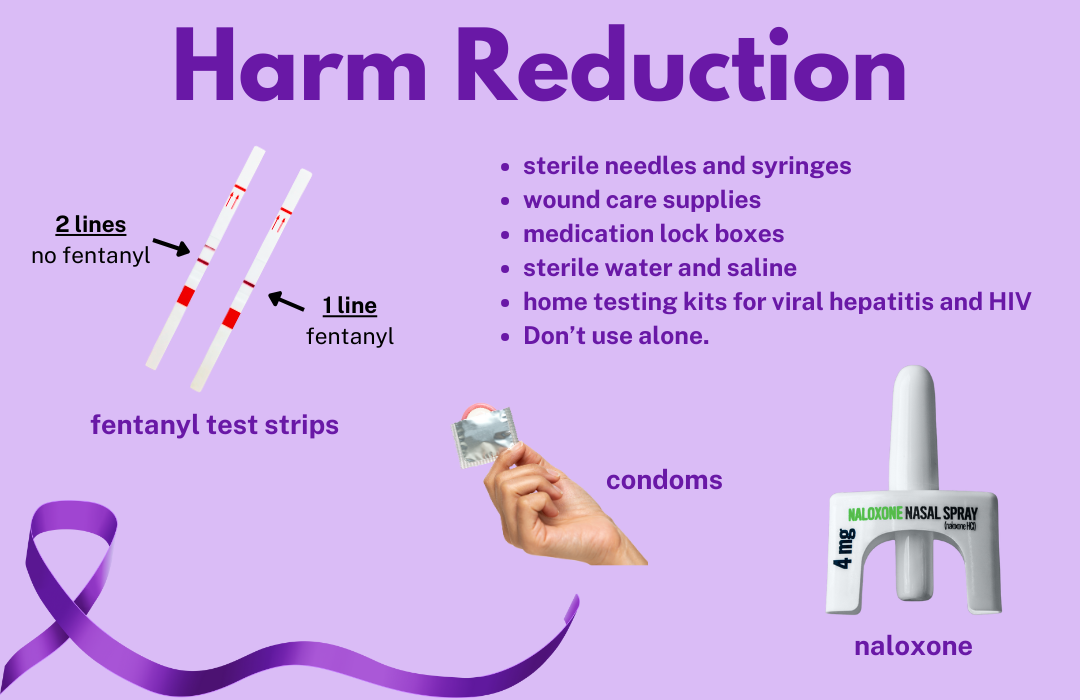
Simply put, harm reduction means what it says—reducing harm. Specifically, reducing the social and physical harms associated with substance use, including death. It centers around the idea that all people deserve safety, dignity and autonomy, and that substance use is not a moral failing.
International Overdose Awareness Day (Aug. 31) is the “the world’s largest annual campaign to end overdose, remember without stigma those who have died and acknowledge the grief of family and friends left behind.”
Those principals are at the core of harm reduction.
To better understand the methods, concepts, and benefits of harm reduction, we spoke to Julia Pinsky, co-founder and executive director of Max’s Mission – a nonprofit dedicated to saving lives in Southern Oregon through harm reduction education and distribution of the opioid overdose reversal medication naloxone. Pinsky lost her 25-year-old son, Max, to a heroin overdose in 2013. Three years later Pinsky and her husband David launched Max’s Mission.
(See a list of Overdose Awareness Day events around Oregon here.)
|
|
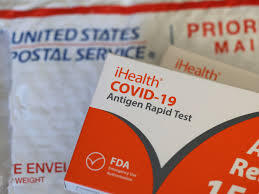
People in Oregon will soon be able to order more free at-home COVID-19 tests from the federal government. The federal program to send free at-home COVID-19 test kits to U.S. residences will restart at the end of September.
Each U.S. household will be able to order four test kits (containing two tests each), delivered for free via U.S. Postal Service.
The online order form is not yet available, but check back at COVIDtests.gov toward the end of September. We will also announce in this newsletter when the order form goes live.
If you have COVID-19 tests that may have expired, check the expiration date on the box and search this webpage, maintained by the U.S Food and Drug Administration (FDA). The FDA has extended the expiration dates of many at-home COVID-19 tests. If your test has expired, you can throw it away in the regular trash.
|
|
|
 Oregon Health Authority has a new look!
On Aug. 7, we launched a new logo to coincide with the development of our Strategic Plan and its focus on health equity.
The logo's design is meant to express health, hope and vitality, and new beginnings after the pandemic. The mountains and sunrise images reflect iconic symbols of Oregon, such as the sunrise and mountain on the state seal, and more global symbols of welcoming and belonging.
It also meets accessibility design standards, which means colors and color contrasts, fonts, imagery, spacing and other design features allow for optimal readability for all readers and on digital devices.
The new logo was the landslide winner of the staff vote we held earlier this year, receiving 80% of the more than 1,300 votes. We then held a focus group with community partners to make sure this logo also resonated with their vision for OHA. They offered their support, their ideas (which we incorporated into the final design), and their help in distributing the new logo to their communities.
|
|
 |
|
Health notes |
|
|
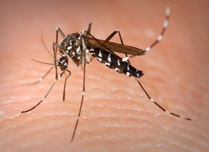
There’s a new mosquito in Oregon, and it’s called Aedes aegypti.
Primarily found across the southeastern United States, the discovery of the invasive Aedes aegypti mosquitoes last month in Jackson County marks the first time the species has been identified in Oregon. Changes in climate are allowing them to expand their range to the western U.S.
“Aedes aegypti mosquitoes are a concern in the United States because they can carry and transmit various diseases that can have serious health consequences such as Zika virus, chikungunya, dengue and yellow fever,” said Emilio DeBess, D.V.M., state public health veterinarian based at OHA’s Public Health Division.
|
In August 2022, a private equity firm became an owner of Kindred Hospice, now known as Gentiva, a hospice company with locations in Lake Oswego and Salem. Last year, Adventist Health bought Mid-Columbia Medical Center (MCMC) in The Dalles, now known as Adventist Health Columbia Gorge (AHCG).
OHA reviews these types of health care business deals to make sure they won’t harm people and communities in Oregon. OHA wants to understand how ownership changes may have affected health care services at AHCG and Gentiva hospice agencies. We’d like to hear from patients, health care providers, employees, and community members who have interacted with AHCG or Gentiva in the past year.
OHA is interested in hearing about:
- Quality of care.
- Availability of services and appointments.
- Access to doctors, nurses, and other clinical staff.
- Employee experiences of the ownership change.
- Availability of financial assistance/charity care.
- Health plan contracting and billing.
Share your thoughts by emailing hcmo.info@oha.oregon.gov, leaving a voicemail at 503-945-6161, or filling out a public comment form. Please mention Adventist Health Columbia Gorge or Gentiva in your comment. OHA will publish all comments received on HCMO’s website.
|
|
 |
|
OHA answers your questions |
|
|
Questions are answered by experts at OHA and other state agencies or community partners.
Q: I’m concerned about the measles outbreak in Oregon. Back in 2015 there was a small outbreak in another state where we used to live. My husband and I both had the blood test before getting the booster. I am 58 and had only the one vaccine dose as a child. Turned out I needed a booster and got two doses in 2015. Am I good, or do I need another booster? My husband did not need a booster in 2015 as his blood test was fine. He had all his shots as a child, plus he had the measles. He is going to be 66 years old next month, so does he need a booster now? He wants to go ahead and get it, but I thought I’d ask first. – Gerry, Cave Junction
A: Gerry, we’re confident that you’re both immune - you, because of your vaccinations; and your husband, who earned his immunity the old-fashioned way: by surviving the measles. I don’t think either of you need another shot.
Follow the current measles outbreak in Oregon here.
Q: Is the RSV vaccine one time only or once a year? – Pamela, Portland
A: Generally speaking, the vaccine for RSV (respiratory syncytial virus) is one time only for older adults. That is the recommendation from the Centers for Disease Control and Prevention (CDC).
RSV vaccine is not currently an annual vaccine, meaning people do not need to get a dose every RSV season. If you have already received an RSV vaccine, you do not need another dose at this time. -- CDC
That said, once a pharmaceutical product is approved by the U.S. Food and Drug Administration (FDA), any licensed physician may prescribe it as they deem appropriate. It’s possible an individual’s doctor may feel that their patient would benefit from receiving a second dose of the RSV vaccine the following year or some other time. It’s important to note, though, because the CDC has recommended only a single dose, that your insurance company will not be required to cover the cost of additional doses.
The maternal RSV vaccine for pregnant people to protect their newborn is given only once. Learn more about that here.
If you have questions about health topics in Oregon, submit your question here. Although we are unable to answer every question, we try to address those of interest to a broad audience. Please understand that we are unable to provide specific medical advice for personal medical conditions.
|
|
If you need mental health support for any reason, help is out there.
|
|
|
|
|
|