|
 |
|
In this issue: |
|
|
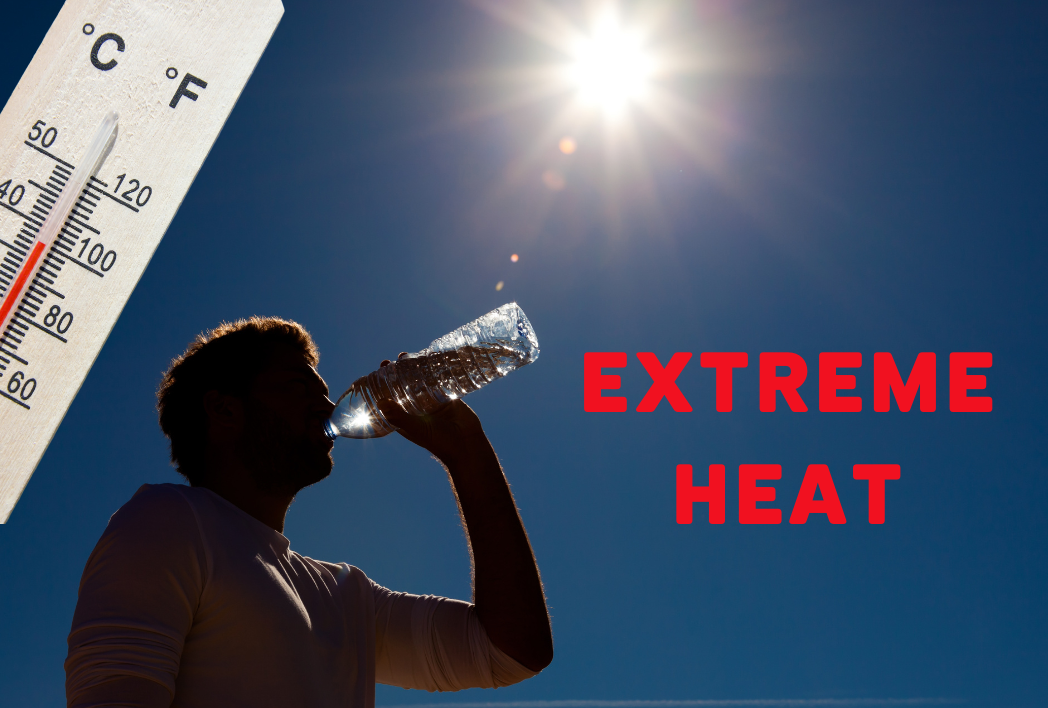
The forecast shows much of Oregon could see temperatures above 100 degrees this weekend.
Heat waves can seriously harm older people, infants and children, those who live or work outdoors, are pregnant, or who have low incomes or a chronic medical condition.
It’s particularly important to know the difference between heat exhaustion, which is treatable by finding a cooler location and drinking water, and heat stroke, which requires emergency medical attention.
Heat exhaustion is the body’s response to an extreme loss of water and salt, usually through excessive sweating. It most often affects older people, people with high blood pressure and those working in hot environments. Symptoms can include headache, nausea, dizziness, irritability, decreased urine output and more.
Heat stroke is potentially fatal and occurs when the body is unable to regulate its own temperature. The person can’t sweat, and the body is unable to cool down. Body temperature can rise quickly—to 103°F or higher within 10-15 minutes. Symptoms can include confusion, altered mental status, slurred speech, increased pulse, loss of consciousness, seizures and more. Call 911 immediately if someone is experiencing signs of heat stroke and move them to a cooler location. Do NOT give the person anything to drink.
Tips to prevent these and other heat-related illnesses:
- Drink plenty of fluids even if you are not thirsty, regardless of your activity level, especially when working outside. Avoid alcohol or liquids containing a lot of sugar, because they can make your body lose water.
- If you don’t have an air conditioner, visiting friends with an air conditioner or going to free cooling centers in your community can help you stay cool. Fans alone will not provide enough protection from extreme heat.
- Wear loose-fitting, lightweight and light-colored clothing.
- If you are an employer or work in extreme heat, check out the heat illness prevention information from the state’s Occupational Safety and Health Administration (OSHA).
- Avoid eating hot foods and heavy meals.
- Never leave infants, pets or children in parked cars.
- Try to limit your outdoor activity to the morning and evening hours when it’s cooler.
More extreme heat resources can be found at 211.org. For heat advisories and more tips visit our Extreme Heat webpage.
|
|

Oregon’s summer heat waves have been getting worse in recent years—a trend that is expected to continue, and one that can seriously harm people’s health.
Air conditioners are a great way to cool your home and stay healthy, but they can be expensive. OHA offers a few ways people may receive free air-conditioners.
Oregon Health Plan (OHP) members:
People enrolled in Oregon Health Plan (OHP/Medicaid) may be eligible to receive air conditioners in one of two ways.
- OHP members enrolled in a coordinated care organization (CCO) can contact their CCO and ask about “flexible services,” also known as “health related services.” Not all CCOs offer flexible services, but the ones that do may offer air conditioners or other supports that are not regular OHP benefits but can help eligible people stay healthy or become healthier. Native American OHP members without a CCO can request flexible services by calling 503-416-4100.
- OHP members can contact their CCO and ask about Health-Related Social Needs (HRSN) benefits (such as air conditioners) that help members stay healthy during times of greater need such as being released from incarceration, being homeless or at-risk of becoming homeless, transitioning from Medicaid-only to “dual eligibility” (having both Medicaid and Medicare), etc. OHP members not enrolled in a CCO, also known as “Open Card” or “fee-for-service,” can call 888-834-4304 or email ORHRSN@acentra.com.
Non-OHP members, including Medicare recipients:
OHA’s Air Conditioner and Air Filter Deployment Program partners with local community organizations to distribute devices to qualified people at risk from extreme heat and/or wildfire smoke. We are finalizing this year’s list of participating partners, but a significant change this year is people will be able to fill out an online form requesting an eligibility screening. If a person is determined to be eligible, devices will be shipped via FedEx to their home and, if needed, set up for them.
Learn more, including eligibility details, here. (The webpage will be updated soon to include the online request form mentioned above.)
People can also contact their county to learn about local programs providing climate supports this summer.
|
|
|

Adults who earn too much money to qualify for Oregon Health Plan (OHP/Medicaid) but can’t afford to purchase their own health insurance may now be eligible for free coverage through a new program called OHP Bridge. An estimated 100,000 Oregonians are expected to qualify for the program, which launched July 1.
Through OHP Bridge, people in Oregon can get free medical, dental and behavioral health care with no member costs. Members will also have access to additional benefits, such as transportation to medical appointments and other health-related services.
OHP Bridge will cover adults who:
- Are 19 to 64 years old;
- Have an income between 138% and 200% of the federal poverty level;
- Have an eligible citizenship or immigration status; and
- Do not have access to other affordable health insurance.
|
|
|
 |
|
Health notes |
|
|

If you’re going to fire up the BBQ this weekend, here are some safety tips to keep in mind:
Thaw meat or poultry first. Frozen food takes a long time to reach a safe internal temperature, which can give bacteria time to multiply. Frozen foods can be grilled safely, but be aware they will take longer and may cook unevenly.
Marinate in the refrigerator. Always marinate in the refrigerator and not on the counter at room temperature. If basting meat and poultry during grilling or smoking, and you want to use some of the marinade as a sauce, you should set aside a portion of the marinade that has not been in contact with the raw meat or poultry and use that for basting.
Keep raw meat and poultry separate. Use different cutting boards and utensils for raw meats and poultry and food that is fully cooked or ready to eat to avoid cross-contamination with bacteria.
Keep the smoker and grill at a safe temperature. If you are using a smoker or grill you need two types of thermometers for optimum safety: one for the food to determine safe internal temperature and a second oven-safe thermometer to ensure the air temperature in the smoker or grill stays between 225 and 300 F throughout the cooking process.
Cook meats to a safe internal temperature, measured with a food thermometer.
- Cook all raw beef, pork, lamb and veal steaks, chops, and roasts to a minimum internal temperature of 145 F. For safety and quality, allow meat to rest for at least three minutes before carving or consuming.
- Cook all raw ground beef, pork, lamb, and veal to an internal temperature of 160 F.
- Cook all poultry to a safe minimum internal temperature of 165 F.
If you have food safety questions, call the USDA Meat and Poultry Hotline at 1-888-MPHotline (1-888-674-6854), email MPHotline@usda.gov or chat live here Monday – Friday, 7 a.m. to 3 p.m. (PST).
|

OHA has an array of health experts, and part of our goal to help keep you safe and healthy includes answering some of your questions on health-related topics in this newsletter.
For example, our Healthy Homes and Neighborhoods program offers resources for keeping your garden soil healthy and free of contaminants, including tips on pesticides, soil quality and watering. Our Tobacco Prevention and Education Program promotes the Oregon Tobacco Quit Line and ensures tobacco retailers comply with federal and state laws regulating the sale of tobacco and vaping products.
Then there’s OHA’s Family Connects Oregon program, which offers home visiting services to all families with newborns up to 6 months old, including foster and adoptive newborns.
Other health topics you might have questions about could include:
- Communicable diseases (COVID-19, flu, mpox, HIV/AIDS, measles, bird flu, etc.)
- Mental health and wellness
- Recreational water quality at beaches, lakes and other water bodies
- Opioid misuse and addiction resources
- Oregon State Hospital
- WIC (women, infants and children)
- Reproductive and sexual health
- Public pools and lodging
- Extreme weather safety
We invite you to visit OHA’s website and explore all the topics we cover. You can always submit questions by clicking on the green “Ask a Question” button at the top of this newsletter.
Please understand we are unable to answer every question, but we try to address questions that may be of interest to a broad audience. We are unable to provide specific medical advice for personal medical conditions.
|
|
|
 |
|
OHA answers your questions |
|
|
Questions are answered by experts at OHA and other state agencies or community partners.
Q: Why are underinsured Medicare recipients with incomes between 138% and 200% of the federal poverty level (FPL) excluded from OHP Bridge, and when might this coverage be extended to include them? – Nicole, Beaverton
A: Thanks for your question, Nicole. Based on federal requirements, only people who are not offered or enrolled in other affordable health coverage are eligible for OHP Bridge. This includes affordable employer-sponsored insurance and Medicare. The rules are rooted in the federal law that makes OHP Bridge possible, the Affordable Care Act, or ACA. OHP Bridge uses the funding the federal government would provide to help those people buy coverage on the health insurance marketplace to offer free coverage instead. There is no plan at this time to change the eligibility rules.
People who are underinsured, however, including those on Medicare who don’t qualify for OHP Bridge, could benefit from the program indirectly. That’s because OHP Bridge will cover many of the uninsured patients who currently seek reduced-cost care at community health centers, or through hospital financial assistance programs. That means these programs will have more capacity to provide no- or low-cost care for other people struggling to afford health care, and they are mandated by law to do so.
Community health centers (also called Federally Qualified Health Centers, or FQHCs) offer "sliding scale" discounts on services based on your income, whether you have insurance or not. Many offer services which can be particularly helpful to underinsured people with Medicare, such as discounted dental care and/or prescriptions. To find one near you in Oregon, check this website. There is also a national search tool here.
If you have questions about health topics in Oregon, submit your question here. Although we are unable to answer every question, we try to address those of interest to a broad audience. Please understand that we are unable to provide specific medical advice for personal medical conditions.
|
|
If you need mental health support for any reason, help is out there.
|
|
|
|
|
|