|
 |
|
In this issue: |
|
|
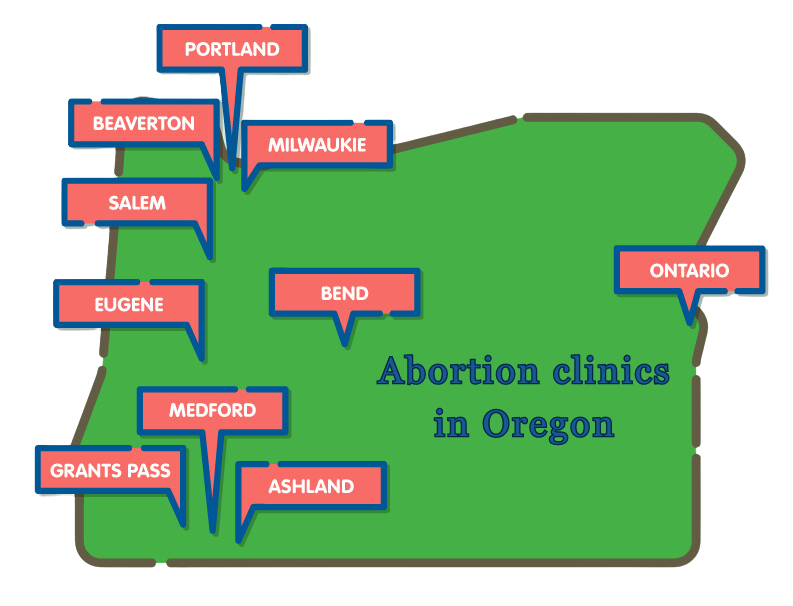
A new website from OHA’s Reproductive Health Program makes it easier for people to seek abortion care information and services.
The Abortion Access in Oregon website provides information about:
- Different types of abortion services.
- Legal and privacy rights to abortion in Oregon.
- A list of abortion providers in Oregon, as well as resources for accessing abortion services outside of Oregon.
- Options to help cover the cost of abortion services.
- OHA’s Abortion Access Plan program, which covers abortion services for people who have health insurance through Providence, or whose religious employers provide insurance that does not cover abortion services.
- Resources for travel and emotional support before, during and after an abortion.
“As challenges to women's reproductive freedom mount across the country, OHA remains staunchly committed to protecting access to the full range of reproductive health care -- including and especially abortion, fertility services, and contraception -- for all those who live in and visit our state,” said OHA Director Dr. Sejal Hathi. “The foundation of access is knowledge: of your rights, of available services, of the nuts and bolts of obtaining care. This website takes us one step closer to sharing that knowledge and enabling greater access to protected care.”
|
|
|
Did you know that colorectal cancer (cancer of the colon or rectum) is one of the most preventable types of cancer?
March is Colorectal Cancer Awareness Month, and although many people don’t want to think about or deal with colorectal cancer screening, it can save your life!
Screening can find growths (called polyps) before they become cancerous, or detect colorectal cancer early when it might be easier to treat. Colorectal cancer doesn't always cause symptoms until it has grown or spread, so it's best to get screened regularly, before you have symptoms.
- If you are 45 or older, talk with your doctor about getting screened. If you are under 45 and think you might be more at risk for colorectal cancer, talk with your doctor about when to start screening.
- If you’ve been screened, share your story. Most people get screened because they were encouraged to do so by someone they know and trust.
- A colonoscopy is not the only option for screening. There are several reliable options, including ones you can do at home.
- Most insurance plans (including OHP/Medicaid) cover all colorectal cancer screening costs with no out-of-pocket expense such as co-pays or deductibles. Even without insurance, screening can cost as little as $25.
Together, we can change the fact that, in Oregon, colorectal cancer is the fourth most common type of cancer, the fourth leading cause of cancer death, and on average, Oregonians are now being diagnosed at younger ages.
Need more encouragement? Watch these brief videos to hear real and compelling stories about colorectal cancer risk factors, screening and treatment.
|
|
 |
|
Health notes |
|
|
|
The last day people can use the Color Health telehealth service in Oregon is Sunday, March 31.
Since November 2022, Color Health has provided online or telephone support to eligible people to receive low- or no-cost COVID-19 antiviral medication, such as Paxlovid.
If you are uninsured or have Medicare or Medicaid (OHP), and you have a prescription for Paxlovid, you can receive Paxlovid at no cost through Pfizer’s patient assistance program, PAXCESS, regardless of income, insurance or immigration status. Enroll online for PAXCESS here. If you’d like overnight home delivery of the medication, your provider must enroll you and make that request on your behalf. Call 877-219-7225 to learn more.

If you have private insurance and become sick, contact your health care provider or go to an in-network urgent care facility to get a prescription. Most private insurance plans cover COVID-19 antiviral medication with possible co-pays. Those with private insurance can also enroll in the PAXCESS co-pay program for help paying for Paxlovid.
Check with your pharmacy to see if they will prescribe Paxlovid directly to you, without a doctor’s prescription. State-licensed pharmacists may prescribe Paxlovid to people under certain conditions.
COVID-19 antiviral medication cannot be prescribed in advance, in case someone gets sick. It must also be taken within five days of symptom onset. Learn more about COVID-19 treatments, including Paxlovid, here. For questions related to COVID-19 treatment options, contact the Oregon Immunization Program Help Desk, Monday through Friday, 9 a.m. to 4 p.m., at 1-800-980-9431 or alertiis@odhsoha.oregon.gov.
|
|
|
 |
|
OHA answers your questions |
|
|
Questions are answered by experts at OHA and other state agencies or community partners.
Q: Having just read the article about Oregon's Death with Dignity Act, I have some questions. How does one apply? How long is the wait from the point of application to the receipt of the medicine? What are the requirements to receive the medication? How much does the medication cost? Why are we offering DWDA to non-residents of Oregon, and is this costing Oregon taxpayers? – JB, Portland
A: Oregon’s Death with Dignity Act (DWDA) is a law that allows doctors in Oregon to prescribe a lethal dose of medication to terminally ill patients in order to hasten death. There is no application or enrollment process. When a patient wants to participate in DWDA, they first ask their health care provider for a DWDA prescription. The provider will determine if the patient qualifies and, if so, can guide them through the rest of the process. To qualify, patients must be age 18+, capable of making and communicating their own health care decisions, and diagnosed (by two doctors) with a terminal illness that will lead to death within six months. For most, the qualifying process takes about a month. If a patient does qualify, their doctor will write the prescription for the lethal medication, which the patient can ingest at a time and location of their choosing – or not at all.
Regarding cost, OHA does not collect data on medication pricing. Individual insurers determine whether the procedure and medication are covered under their policies. Medicare does not cover DWDA participation.
Out-of-state participants do not cost Oregon taxpayers. The Legislature passed the amendment allowing out-of-state residents to participate in Oregon’s DWDA in 2023. (This article explains the change.) Oregon Health Plan (OHP/Medicaid) does cover costs associated with DWDA for its members, but this does not extend to residents of other states. Oregon’s Center for Health Statistics is a non-taxpayer funded entity within OHA that keeps data on DWDA participation, such as the annual report OHA published last week.
You can find answers to common questions about DWDA here, or email dwda.info@oha.oregon.gov.
Q: Can one test negative [for COVID-19] if he/she has long COVID? – John, McMinnville
A: Yes. The presence of long COVID does not affect the result of a COVID-19 test, which detects a recent viral infection. And while SARS-CoV-2 is the virus, long COVID is a condition, one that is loosely defined by a wide array of symptoms that people continue to experience at least four weeks after a past COVID-19 infection. Even if someone has never tested positive for COVID-19 or had symptoms, they may have been exposed to the virus and can still develop long COVID. Additionally, there is no test for long COVID. Only a medical professional can diagnose long COVID, taking into account the patient’s symptoms and medical history. Being up to date on COVID-19 vaccination helps protect against long COVID.
If you have questions about health topics in Oregon, submit your question here. Although we are unable to answer every question, we try to address those of interest to a broad audience. Please understand that we are unable to provide specific medical advice for personal medical conditions.
|
|

If you need mental health support for any reason, help is out there.
|
|
|
|
|
|