|
 |
|
In this issue: |
|
|
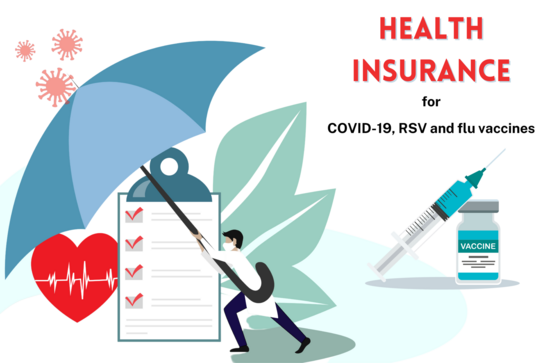
OHA is aware of some people being unexpectedly charged for COVID-19 and respiratory syncytial virus (RSV) vaccines. There are a few reasons why this might happen, and we always recommend checking with your insurer if you have questions. We understand the insurance landscape for vaccines can be confusing and frustrating, especially as we move out of the pandemic.
To help people unravel the confusion, we created a comprehensive rundown of some basic facts about coverage for COVID-19, RSV and flu vaccines. Learn about scenarios for private insurance, Medicare and Medicaid, as well as tips on where to get the vaccines and avoiding unpleasant surprises, and how uninsured people can receive COVID-19 vaccines at no cost.
|
|
|
For many people, the COVID-19 pandemic is largely behind them, nearly four years since the virus emerged. Others continue to struggle with illness, financial hardship and grief. But the history books of tomorrow will likely point to the pandemic and say life on earth, for everyone, changed forever.
As humankind moves slowly into this “new normal,” whether that means a new working environment, new relationships or a new set of priorities, we’re wondering… what inspires you to be as healthy as you can be, both in body and mind?
Maybe it’s something that motivates you to embark on new adventures, seize new opportunities, make new friends or adopt new attitudes.
Are you inspired by nature, kindness, perseverance, challenges, adventure, travel? Are there people in your life whose friendships contribute to your physical and mental well-being?
If you have a moment and would like to share your personal wisdom, please tell us briefly about what inspires you to be healthy. We may use your responses in future newsletters and OHA content.
Thank you! We love hearing from you and appreciate your generous thoughts.
|
|
|
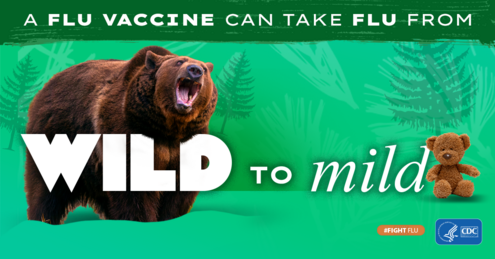
Now is the perfect time for people of all ages to get their annual flu shot. Along with COVID-19 vaccines, the flu shot can help protect you from severe illness throughout the flu season. In Oregon, the flu season generally runs from October through April.
As many as 41 million people in the United States get sick from the flu each season. Being vaccinated will help you not miss out on special events or fun times with family and friends.
“A thousand people were hospitalized with flu in just the Portland area last season,” said Dr. Paul Cieslak, OHA senior health advisor and medical director, Communicable Diseases and Immunizations program. “But even if the flu doesn’t hospitalize you, it can make you miserable for a week, so it’s worth preventing.”
To find a flu vaccine near you, use the Vaccines.gov search tool. To stay informed of flu activity in Oregon, subscribe to OHA’s weekly Flu Bites newsletter, which publishes throughout the flu season.
|
|
 |
|
Health notes |
|
|
|
Federal authorities have authorized the 2023-2024 Novavax COVID-19 vaccine, which uses non-mRNA technology and includes the Omicron spike protein to better protect people against currently circulating virus strains.
The updated Novavax vaccine is for people 12 and older.
- If you’ve been previously vaccinated against COVID-19, you may get one dose of Novavax at least two months after receiving your previous dose. However, if you’ve already received a 2023-2024 mRNA vaccine from Pfizer or Moderna, you are not eligible for the updated Novavax vaccine unless you are immunocompromised.
- I’ve you’ve never received any COVID-19 vaccine, you may get two doses of the Novavax vaccine, received three weeks apart.
- If you have a compromised immune system, you may receive an additional dose of the 2023-2024 Novavax vaccine at least two months after receiving any 2023-2024 COVID-19 vaccine (including Pfizer or Moderna). Additional doses of the Novavax vaccine beyond that may be administered at the discretion of the health care provider.
The 2023-2024 Novavax COVID-19 vaccine will be available to the public “across the U.S. in the coming days,” according to Novavax. To find a COVID-19 vaccine near you, use the Vaccines.gov search tool.

The Oregon Beach Monitoring Program (OBMP) is asking for your thoughts on a list of proposed beaches to monitor for health risks in 2024 and 2025. OHA created the list based on high recreational use, nearby pollution hazards, previously measured high bacteria levels and public input.
The state routinely reevaluates beaches and water sampling locations.
The deadline for commenting on the list is Oct. 13. Email Beach.Health@oha.oregon.gov or call 971-673-0400.
|
OHA and the Oregon Department of Human Services carried out an intensive awareness and testing campaign from March through September 2023 with a goal of ensuring that all residents who depend on domestic wells for their drinking water in the Lower Umatilla Basin had information about the health risks associated with drinking water with high nitrates and how to access free testing. The successful summer canvassing endeavor, a partnership with local public health authorities and several community based organizations, resulted in the testing of one third of the 3,291 identified households that use domestic wells for their drinking water. One third of the well users were inaccessible (for example, had “no trespassing signs” or hostile dogs) and one third either refused a test or, after multiple knock attempts, did not answer the door.
So far, the state has delivered free drinking water to hundreds of homes where well water was found to have unsafe nitrate levels.
Efforts will continue to raise awareness about the risk of drinking water with high levels of nitrate and free well tests, water and treatment. To learn more about the program go to TestMyWell.Oregon.gov.
|
|
 |
|
OHA answers your questions |
|
|
|
Andrew Gibler, OHA’s Clinical Pharmacy Policy & Programs manager, and Dr. Paul Cieslak, OHA senior health advisor and medical director, Communicable Diseases and Immunizations program, answered today’s questions.
Q: I was turned away from getting the RSV vaccine today at a Rite Aid in Josephine County. I was told that people under age 65 must have a prescription from a doctor based on an underlying condition. I'm 61 years old and on the Oregon Health Plan. – Michelle, Rogue River
A: “Michelle, I’m sorry that happened to you. Federal guidelines state that ‘adults 60 years of age and older may receive a single dose of RSV vaccine using shared clinical decision-making (SCDM). This means that health care providers and their patients should have a conversation to determine if RSV vaccination will be beneficial.’
“If you go to a pharmacy for the vaccine, the pharmacist is the ‘health care provider,’ and they must determine that you are eligible for the vaccine, and that it will be beneficial to you. By and large, pharmacists will be far more strict when making this determination, adhering firmly to the CDC’s guidelines which state the RSV vaccine is for those with high-risk factors such as frailty, advanced age, residence in a long-term care facility, lung disease, cardiovascular disease, moderate to severe immune compromise, diabetes, neurologic or neuromuscular conditions, kidney disorders, liver disorders, and hematologic disorders.
“If the pharmacist could not determine that you are at high risk based on any one of these factors, they must refuse to administer it, as outlined by OHA’s Pharmacist RSV Vaccine Protocol. Being under 65 should not factor into the situation.
“Most people will get the RSV vaccine at a pharmacy, since it is covered by Medicare Part D and doctor’s offices do not contract with Medicare Part D. As such, we recommend people either ask their health care provider to send the pharmacy a prescription for the vaccine, or call the pharmacy to ask if they need one. People on Oregon Health Plan (OHP), like you, are freer to go to a doctor’s office that accepts OHP and perhaps have better luck getting the RSV vaccine.”
Q: I am 77 years old. How important is it for me to get a shingles shot? With the ads on TV now, the side effects seem rather serious if I get the shot. – Sandra, Portland
A: “The shingles vaccine (aka Shingrix) is recommended for persons age 50 and older, and some as young as 19 who have weakened immune systems. The risk of getting shingles – a painful rash that lasts for weeks or even months – increases with age. By age 77, it’s pretty high. I’m 63, and I got the vaccine a couple of years ago. I recommend that you get it.
“It’s true that side effects like sore arm and fatigue are more common with this vaccine than with many others – probably because the vaccine has an adjuvant – that is, something to boost the immune response. But the side effects usually last no more than two to three days. A neurologic syndrome called Guillain-Barré syndrome has been reported in about 1 in 300,000 shingles vaccinations – but it has also been reported after getting shingles. The vaccine is quite effective – more than 90% in the first year after getting it, and waning only slightly over the next several years.”
If you have a question related to COVID-19 or other public health topics, submit your question here. While we are unable to answer every question, we try to address questions that may be of interest to a broader audience. Please understand we are unable to provide specific medical advice for personal medical conditions.
|
|
If you need mental health support for any reason, help is out there.
|
|
|
|
|
|