 ODE Sexuality Education Newsletter

October 26, 2026
Dear Colleagues,
October is Domestic Violence Awareness Month, an opportunity to reinforce the role schools play in preventing relationship violence and abuse. As students raise questions about sexual violence on a college campuses– and beyond– educators can facilitate age-appropriate discussions about healthy relationships, boundaries, consent, and upstander action. According to OHA’s 2025 Student Health Survey, nearly twenty percent of 11th graders reported being touched, grabbed, or targeted with unwanted sexual comments about their bodies without their permission. Ten percent reported having been pressured or forced to engage in sexual behavior when they did not want to.
Age-appropriate health & sexuality education instruction can help prevent sexual harassment and violence by helping students understand and practice setting boundaries and listening to those of others, respecting the decisions of others, recognizing coercion or controlling behaviors, and practicing interrupting harmful behavior. As an effort to deepen prevention education, this month’s newsletter spotlights the connection between substance use prevention education and sex ed, including in conversations about consent.
Header photo by Tim Mossholder on Unsplash, Newberg, OR.
Section photo by Scott Webb on Unsplash
|
Spotlight: Substance Use Prevention Month and Consent
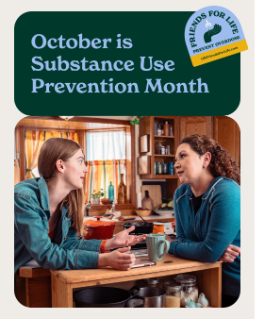
October is also Substance Use Prevention month. Substance use prevention, healthy relationships education, and violence prevention reinforce many of the same protective skills, including communication, decision-making, boundary-setting, recognizing unsafe situations, and seeking help from trusted adults. These connections are especially important in conversations about the impact of substance use on giving or receiving consent, including in sexual activity.
Oregon defines “without consent” as without the knowing, voluntary, and clear agreement of all parties to participate in a specific act, including when a person is incapacitated by drugs or alcohol, unconscious, or pressured through physical force, coercion, or explicit or implied threats. Discussing consent alongside Health Standards in the Substance Use Prevention (SUB) topic area, such as 6.SUB.5 Discuss the relationship between using substances and other health risks, including unintentional injuries, violence, suicide, and sexual risk behaviors, can help students make connections to the concepts, questions, and situations that are coming up in their lives and communities.
This month offers educators an opportunity to take a deep dive into this interconnected prevention work in schools across Oregon. When students learn how substance use can affect safety, relationships, and the ability to make or communicate decisions, they are better prepared to protect their own well-being and support their peers. Together, these prevention efforts promote physical and mental health, reduce absenteeism, and support academic success.
Schools can empower parents, caregivers, and other trusted adults to keep the teens in their lives safe by sharing messages from campaigns such as True Friends and Friends for Life from ODE and the Oregon Health Authority (OHA). When teens feel connected to their family, friends, school, community, and culture, they are less likely to experiment with drugs—including pills that may be mixed with fentanyl.
To learn more about how schools can build on their substance use prevention and intervention efforts, visit the ODE Substance Use Prevention webpage or contact ode.substance-prevention@ode.oregon.gov.
Photo by Anton Chernyavskiy on Unsplash
|
ODE and Partner Updates

Upcoming Webinar: Teaching Literacy in Secondary Health & Sexuality Education
In this interactive virtual webinar, health educators will explore practical strategies for embedding disciplinary literacy into health instruction. Participants will examine classroom examples, discuss supports that make literacy learning accessible to all students, and apply vocabulary, text-analysis, and evidence-based discussion strategies to authentic health education content.
When: Nov. 12 3:30-4:30pm
Where: Virtual on Zoom
|
Announcement: New Instructional Materials Adoption Schedule for Health and Physical Education
In an effort to strengthen Oregon’s High-Quality Instructional Materials Program, the State Board of Education recently revised instructional materials schedule. Physical Education, the Arts, and World Languages are moving from the recurring statewide adoption cycle to locally determined adoption timelines. The new State Board-adopted PE instructional materials list will become a recommended list that districts may use when selecting materials on their own schedules. This change does not remove the expectation that districts adopt instructional materials for PE programs they offer. ODE will continue to maintain standards, develop adoption criteria, provide updated resources and guidance, and support regional collaboration.
Health Education is not changing in the same way and will remain on the statewide schedule, with the next state adoption planned for 2032. For more information about the changes and an upcoming webinar, see the announcement from ODE.

ODE Launches New Substance Use Prevention Advisory Group
ODE is excited to announce a new Substance Use Prevention Advisory Group. The group is made up of educators, prevention experts, and parents and caregivers, and will provide strategic input to ODE to strengthen a comprehensive, equity-centered approach to school-based substance use prevention, early intervention, and recovery support.
Please join us in welcoming the following Advisory Group members:
Stevie Moe, Cati Adkins, Sally Cook, Mary Stevens-Krogh, Katherine Erwin , Florence Protopapas, Sandy Stack, Jennifer Simms, Marc Harnen, Melinda Matthews, Eva Pittman, Alexis Drakatos, Beth Stormshak, and Rhonda Nees.
|
OHA, OHSU and Training Opportunity: Sexuality Education for Students with Disabilities
The PREP (Personal Responsibility Education Program) project in Oregon is a federally funded opportunity to bring inclusive and accessible healthy relationship and sex education to students with intellectual and developmental disabilities (I/DD). Through a partnership with the Oregon Health Authority, the University Center for Excellence in Developmental Disabilities (UCEDD) at OHSU is excited to support the implementation of two curriculum options: Friendships and Dating (FDP) and Sexuality for All Abilities (SFAA).
Participation includes training in selected curriculum, curriculum materials, professional development opportunities, technical assistance with implementation and data collection, and financial assistance for both training and implementation.Expectations for participation include attending the training, implementing the complete curriculum within one academic year of the training, and submitting data required by the project.
The opportunity is available to schools and community organizations. Participation in the project is free for classroom facilitators.
If you are interested in participating or in receiving more information, please contact UCEDD_Prep@ohsu.edu or fill out the application.
Sex Ed News & Resources for Educators
ODE is committed to supporting school districts with implementing Oregon Human Sexuality Education (OAR 581-022-2050). Please see below for related news and resources for K-12 educators.
Research for Educators
Resources for Educators
Resources for Domestic Violence Prevention Month
Upcoming Events, Training & Conference Opportunities for Educators
Unless hosted or facilitated by the Oregon Department of Education (ODE), these training opportunities have not been endorsed by ODE, but are being shared as relevant opportunities for education professionals to consider.
Grant Opportunities
Substance Use Prevention Community Grants
The Opioid Settlement Prevention, Treatment and Recovery Board is directing $13.5 million from Oregon’s share of national opioid settlement funds to community grants. These grants support efforts to prevent substance use, reduce substance use disorders and overdose deaths, and address related disparities and inequities. The Oregon Health Authority (OHA) is requesting proposals for projects that will help Oregon communities respond to the ongoing impacts of the opioid crisis.
This Request for Grant Proposals (RFGP) opened on October 15, 2026, and will close on December 17, 2026. OHA will hold information sessions in English and Spanish, and the first is scheduled for October 19, 1PM PST.
Register here for information sessions in English.
Register here for information sessions in Spanish.
Contact Stephanie Morgan at Stephanie.B.Morgan@odhsoha.oregon.gov with any questions.
Questions? Connections?
Please reach out to us at ode.sexed@ode.oregon.gov.
Did someone forward you this newsletter? Want to stay connected with sexuality education at the Oregon Department of Education? Visit our website or subscribe to the ODE Sexuality Education ListServ today!
|