ODE K-5 Educator Newsletter

August 19, 2026
As the 2026-27 school year begins, schools across Oregon are preparing to welcome students back into schools and classrooms and into learning environments designed to foster belonging, engagement, and academic growth. While summer offered opportunities for rest and renewal, communities have also faced disruptions and uncertainty related to wildfires. Across the state, educators and school staff have spent the past several weeks adapting plans, supporting families, and preparing classrooms so that students can begin the year with stability, care, and a strong foundation for learning.
The start of the school year provides an important opportunity to establish predictable routines, strengthen partnerships with families, and create conditions that support student success and well-being throughout the year. As part of our ongoing efforts to better support educators, the Oregon Department of Education is working to align all content standards with a common template (example of Health Education) and redesign content area websites to make resources easier to navigate and access. These improvements are intended to provide greater consistency, clarity, and usability for educators across the state.
This newsletter includes updates, engagement opportunities, and instructional resources to support implementation across K-5 settings, with a focus on high-quality instructional materials, student well-being, continuous improvement, and the tools educators need to support Oregon's students.
|
Upcoming Engagement Opportunities
Share Your Feedback on Proposed Revisions to Oregon's Instructional Materials Adoption Schedule and Division 22 OARs
ODE is seeking feedback on proposed updates to Oregon's High-Quality Instructional Materials (HQIM) adoption schedule and related administrative rules. The proposed changes would provide more time between adoptions for planning, professional learning, and classroom implementation while clarifying district responsibilities for state-adopted and locally adopted content areas.
You can participate by attending a virtual engagement session and completing a 15-minute survey, or by reviewing a recorded webinar and background materials before taking the survey.
Review the flyer for details and registration information. For questions, contact ode.instructionalmaterials@ode.oregon.gov.
Play-Based Learning (SB 1596) Implementation Listening Session
ODE invites K-5 educators and school staff to participate in a listening session focused on implementing Oregon's SB 1596 on play-based learning. ODE is seeking feedback on rule revisions, implementation considerations, and the supports that would help schools bring a play-based approach to learning. For more information, please review the Play-based Learning Overview & FAQ.
Registration and Session Information:
Synchronous engagement session will be held on Zoom on September 10 at 3:30pm and last approximately 45 minutes.
Integrating Transformative SEL
Over the summer a 7th grade Oregon student visited Ghana, in West Africa, with his family. Upon his return he was asked what was the most memorable part of his trip. He did not mention tourist attractions, shopping excursions, dining or entertainment experiences. Without hesitation he responded, “It was not long after I got there that I felt like I was a part of the community. Quickly I had a community."
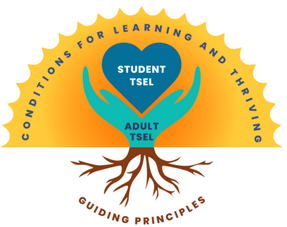
On the first day of school and every day after, all students and adults should experience an Inclusive Welcome and participate in community-building activities. Being part of a community helps students and adults feel safe, included, valued, and respected. It fosters meaningful relationships and creates spaces to explore curiosities and interests without fear, while also supporting individuals in working towards achieving and learning goals in a supportive environment. Oregon’s Transformative Social Emotional Learning Framework and Standards is designed to ensure that each student knows they are an integral member of a trusted community. A Transformative SEL approach provides students with concrete opportunities to be affirmed in their identities and backgrounds, and contribute to the overall well-being of their school and classroom communities.
As you head into the 2026-27 school year, please consider how Transformative SEL helps to foster and sustain community-building among adults and students. The CASEL 3 Signature Practices (Inclusive Welcome, Engagement Strategies, and Intentional Close) provide purposeful activities and opportunities for building community. The following resources on the Oregon Instructional Learning Frameworks have been developed to support educators in establishing relational trust and connection among all members of the school and classroom community.
|
Preschool through 3rd Grade (P-3) Spotlight
Early Learning and Kindergarten Guidelines (ELKG) Workgroup Application NOW OPEN!
The Oregon Department of Early Learning and Care (DELC) and ODE are updating Oregon’s Early Learning and Kindergarten Guidelines (ELKG) to include infant and toddler development, align with recent statewide initiatives and frameworks, and strengthen coherence across early learning and care settings serving children ages birth to five.
The ELKG team is seeking individuals to be members of the ELKG Workgroup which will provide input and feedback throughout the revision process to help ensure the updated guidelines are culturally responsive, inclusive, practical, and relevant across a variety of early learning and care settings. Workgroup members will serve as thought partners by reviewing draft materials, identifying strengths and gaps, providing recommendations, and sharing perspectives from their professional roles and communities. Workgroup participants will not receive remuneration.
Meetings will be held virtually and are tentatively scheduled for September, November, and mid-February to March. Members should plan for 30 to 60 minutes of preparation, as needed, and attend all three 90-minute meetings. A commitment to participate in each meeting is required. If interested, please apply using the link below by 6pm on Friday, August 28, 2026.
|
K-5 Literacy
Starting Strong: Literacy Routines to Set Up in the First Days of School
Every minute spent re-explaining directions or waiting for materials is a minute lost from your literacy block. The first days of school are the best investment you'll make all year: teaching core literacy routines explicitly now and practicing them until they are automatic pays off in instructional minutes for the rest of the school year. Here is a small sampling of ideas you should consider about routines worth establishing — and practicing — before diving into full lessons.
|
Literacy Block & Transitions
|
Materials
|
Independent & Small Group Routines
|
- Teach one clear attention signal and practice it until response is automatic with 100% participation.
- Set and practice a target transition time between activities (e.g. 60 seconds to move from desks to carpet squares) and practice until consistent.
- Build a consistent opening routine (e.g. an activity that gets students thinking about the learning ahead).
|
- Clearly designate, label and teach where students get and return materials, folders or books.
- Set up a clear system for passing out materials, as well as turning in student work.
- Create an explicit plan for how students will use / resupply their pencils and other writing tools.
|
- Teach an explicit routine for “what to do when you’re done” and “what to do if you’re stuck”.
- Build independent work stamina in short stretches, building up over the first weeks and celebrating increases of time on task.
- Teach partner / discussion routines (e.g. turn-and-talk signals, accountable talk sentence stems.
- If your students spend time in small group instruction, explicitly teach what other groups are doing while you are meeting with one group.
|
How to Teach a Routine Effectively
- Explain why the routine matters, in student-friendly terms.
- Model it yourself, step-by-step, including non-examples (what it looks like when it’s done wrong. Make this part fun!).
- Choose individual students to model the routine correctly, then choose small groups of 2-4 students to model the routine correctly.
- Practice as a whole class and insist on 100% participation. Try it again if you don’t have 100% of students meeting expectations. Set a time goal (30 seconds or less) and use a timer to track the attempts on the board throughout a given week.
- Reinforce with specific feedback for the first month (or more) of school. Revisit and reteach as the year goes on.
- Make practice fun! Gamify the learning using a teacher vs. student game. Manufacture success to gain student buy-in and then increase your routine goal until you hit your desired outcome (e.g., begin by asking students to transition in 60 seconds, then 45 seconds, then 30 seconds). Celebrate students’ success with a small, joyful experience (e.g., learning a cheer or playing a game) when they meet the goal.

Science
ODE Science Ignite Sessions
Looking for resources to elevate your science teaching and learning strategies but are limited on time? Join ODE Science Assessment Specialist, Dr. Mariela Salas Bao, for dynamic 30-minute sessions packed with resources, practical insights and innovative approaches to science teaching and learning. The first session will be held on Wednesday, October 7, 2026. All other sessions will take place on the first Wednesday of each month from 4:00 PM to 4:30 PM.
Science Interim Assessments
OSAS Science interim assessments will be available at the end of September 15, 2026. If you're new to interim assessments, start with this practice brief from STEMTeaching Tools which offers guidance on how to effectively integrate interim assessments into your instructional practice.
Did you know? OSAS interim assessments (cluster items only) can also be used to meet your district’s local performance assessment requirements. To support this work, ODE has created a concise two-page ODE Practice Brief provides educators and leaders with a student-centered approach to fulfilling these requirements, highlighting the benefits of performance-based assessments. For more details please visit the ODE Interim Assessment and the Local Performance Assessment Requirement webpages. If you are an educator, please contact your School or District Test Coordinator to request access.
Please contact Dr. Mariela Salas Bao, Science Assessment Specialist, with questions or support needs.
|

Social Science
Social Science and Literacy
Phonics, fluency, vocabulary, and comprehension strategies are core elements of building strong readers. But the Science of Reading also reminds us that what students know matters. Background knowledge gives students something to connect new words, ideas, and information to, making texts more meaningful and easier to understand. Every student brings valuable experiences and background knowledge to the classroom, and most effective instruction builds on those assets while expanding students’ knowledge through a variety of reading, discussion, and learning experiences. The Oregon Early Literacy Framework emphasizes students’ cultural, linguistic, and community funds of knowledge.
Social science instruction acts as a powerful partner in supporting literacy. A student’s ability to comprehend a text depends heavily on the background knowledge they bring to it. The more relevant knowledge a reader has on a topic, the better they can understand, infer, remember, and learn from a text. Reading about a topic builds additional knowledge, which strengthens comprehension the next time a student encounters the topic. Thoughtfully designed social science lessons for elementary students using informational texts can build both content knowledge and literacy skills. One study of kindergarten students found significant gains in knowledge and literacy skills through the use of interactive read-alouds. A recent review of research on K-5 readers also points to a meaningful relationship between background knowledge and comprehension.
Research examining instructional time has found that increasing time devoted to social science is associated with greater reading growth from first to fifth grade. Using classroom time to address the Oregon Social Science Standards can help students become stronger readers by exposing them to useful vocabulary, concepts, and context that improves both comprehension and critical thinking. Check out the Oregon Social Science Framework Webpage for more information and implementation supports.
Constitution Day Activity
Looking for an engaging way to bring civics and social studies to life? Third-grade classrooms nationwide are invited to participate in a live virtual Mock Trial on Constitution Day, September 17, 2026. Students learn about the Constitution, courts, and civic responsibilities, then work together as a jury to consider evidence, deliberate, and cast a verdict. The event is free, interactive, and supported by ready-to-use instructional materials. Registration is open now! Learn more and register for the 2026 Mock Trial
|
Language Arts
One of the most important goals at the start of the new school year is creating a strong sense of community for every student. When children feel welcomed, valued, and connected, they are more confident learners and are better prepared to take academic risks, build friendships, and contribute positively to the classroom community.
Throughout the first weeks of school, students can participate in community-building activities, like the lesson plans featured on Read! Write! Think! Activities like these help students get to know one another, establish classroom routines, and create a shared sense of belonging. By working together, students, families, and staff, can ensure that every child feels safe, supported, and excited to learn.
Adopted 2026 K-12 ELA Standards
The Oregon Department of Education (ODE) is excited to announce the release of the revised K-12 English Language Arts and Literacy Standards. Over the past several months, a statewide panel of educators has been reviewing and revising the standards, which are the foundation of English Language Arts (ELA) education in Oregon public schools. The new standards were adopted at the June 18, 2026 State Board of Education meeting and will be implemented beginning in the 2028-2029 school year.
Revisions to ELA Standards
These updated standards reflect new national research on the importance of extending foundational reading skills into grades 6-8, as well as expectations for rigorous learning in ELA and literacy instruction. The standards have also been restructured to be more user-friendly and accessible for teachers and leaders. The Changes in Oregon’s ELA and Literacy Standards provides a high-level overview of the changes to the standards.
What’s Next
ODE will begin the review and adoption of ELA high-quality instructional materials, beginning with instructional materials evaluation criteria development. Additionally, ODE will be developing a series of resources in the coming months, including webinars and guidance documents to support implementation of the revised ELA standards.
|
Health & Sexuality Education
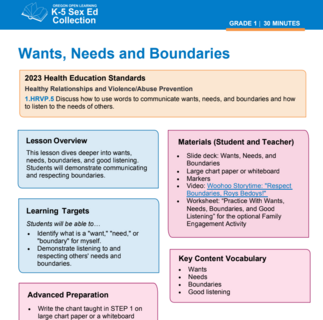
As the school year kicks off, educators have an important opportunity to design for health education in intentional and integrated ways. Elevating instructional materials with engaging and culturally responsive activities, identifying where health lessons can be integrated within the school day, and establishing classroom agreements for inclusive discussions and honest questions help to create the conditions where every student can develop connections to health education content– and to each other.
The Oregon Health Education Standards emphasize knowledge and skills, including communication, decision-making, advocacy for self and others, and healthy relationships. These skills can be reinforced throughout the school day by integrating these concepts into literacy discussions, classroom circles, science investigations, social science, movement breaks, and more.
K-5 Resources
|
Math
-
This summer, The Center on Early Learning Success (CELS) has released a new practice brief, Early math instruction: A state of the field research brief, which translates research on early mathematics learning into actionable guidance for educators and leaders. The brief highlights the importance of building instruction on children's mathematical ideas and experiences, with practical recommendations to support learning across the PK-3 continuum.
To support implementation, CELS will host an Office Hours session as part of the rollout of its State of the Field Practice Brief series, beginning with Centering Children’s Mathematical Thinking. Participants will learn about the key ideas in the brief, explore practical strategies for implementation, and discuss ways to apply the recommendations in classrooms, schools, and educational systems
CELS Office Hours: Centering Children’s Mathematical Thinking
This session may be of interest to district leaders, instructional coaches, early learning educators, and anyone supporting mathematics instruction in the early grades.
Physical Education
The Oregon Department of Education (ODE) is currently reviewing instructional materials for the Physical Education High-Quality Instructional Materials (HQIM) Adoption. This review process is taking place throughout the summer, with a list of adopted materials expected to be announced in fall 2026. These efforts help ensure that schools have access to high-quality resources that support engaging, inclusive, and developmentally appropriate physical education for all students.
|