|
|
Oregon Achieves... Together!
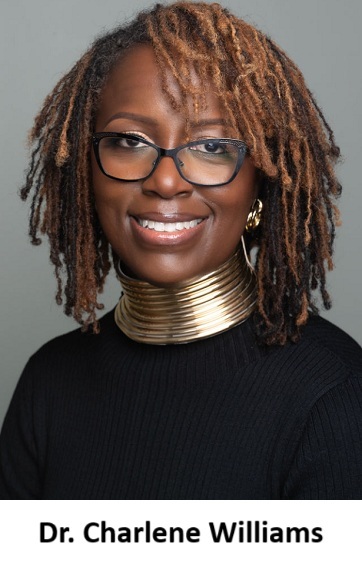
A Message from the Director of the Oregon Department of Education, Dr. Charlene Williams
Dear Education Community,
When you’re climbing a mountain, it’s easy to focus only on the next step and not look up until you reach the top. But it’s just as important to pause along the way, look back, and recognize the progress you’ve already made instead of worrying only about how far you still have to go.
The Accountability Journey
It hasn’t even been a year since the Education Accountability Act was passed and signed into law to create a more coherent and accountable K-12 system, one that delivers a high-quality education to every scholar in every community across our state. That started us on our journey toward becoming a top-performing state for education. Improving outcomes at this scale requires focus, discipline, and sustained effort. It requires us to stay committed to steady, meaningful progress year over year.
Clearly, the journey ahead is a long one, but let’s take a moment to reflect on some progress we’ve already made. In March, we launched Phase I of the Unified Application, marking a major milestone as we work to reduce bureaucracy so educators have more time to focus on teaching and learning. We are designing an agency-wide Regional Support Team (RST) model to support districts in a more coordinated, coherent way (these teams are organized by region and designed to strengthen ODE’s approach to technical assistance, planning, and accountability support - starting with our pilot districts). And, in a move towards increased transparency, we are aligning our internal data standards to produce data visualizations that are both meaningful and accessible.
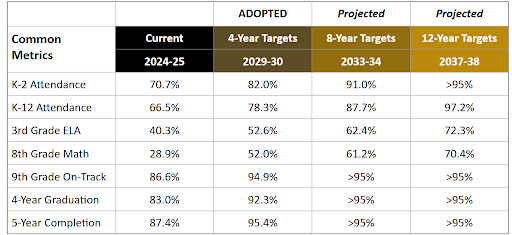
We’ve now reached another milestone: the State Board has officially adopted Statewide Performance Growth Targets, establishing clear, measurable goals for the K-12 system to drive progress for students across Oregon. These targets set high expectations while remaining grounded in what is achievable. They are informed by research, by evidence, and by what we are already seeing in districts across Oregon.
The four-year targets are the first milestone in a longer-term vision for sustained improvement. Together with projected benchmarks at eight and 12 years, they outline a 12-year trajectory of continuous progress, reflecting the full arc of a student’s K-12 experience. This approach is designed to drive steady, year-over-year gains that lead to lasting change in student outcomes.
|
 |
Next up, ODE will be working with districts to co-develop Local Performance Growth Targets, a key part in establishing shared accountability. ODE is responsible for setting direction and statewide goals, while districts set local goals aligned to that direction. This is about accelerating progress in a way that is both realistic and sustainable. Together, we monitor progress, learn from what’s working, and make adjustments to accelerate improvement. The end result is a system where responsibility and success are shared.
It’s also designed to be responsive to local context, ensuring expectations are fair, and that support is targeted where it’s needed most. Equity is not just a goal in this system; it is built into how the system operates. This work is not about identifying where districts fall short, it’s about helping them improve. It’s about providing the coaching, tools, and partnership needed to drive better outcomes for students, and then learning from that progress to strengthen the system as a whole.
Recognizing Valuable Work
May is a big month for celebrations and commemorations. Of course, we have Mother’s Day to honor the important role they play in our lives. We also have Asian/Pacific American Heritage Month, Jewish American Heritage Month, Mental Health Awareness Month and more, which you can read about in the article below. But I want to give particular attention to Public Service Recognition Week in order to thank all public employees, highlight their important work and their connections to the communities they serve.
Of special note are our teachers. This is also National Teacher Recognition Week where we express our deep gratitude for the extraordinary dedication, resilience and heart they display every day in the classroom. They do more than teach, of course. They nurture and inspire, advocate and empower, lift students up and help them understand the world around them. You have a profound impact on the future and a lasting legacy in their lives.
I also have to thank our principals and vice-principals who lead our schools and make them safe, nurturing places for learning and growth. Your invaluable leadership and commitment to student success helps turn policy into action in the classroom. The way you navigate all the decisions that need to be made on a daily basis is amazing! Thank you for making the challenge seem effortless.
And finally, our school nurses get their special day in May as well. They play a vital role in supporting the health and wellness of students, leading to improved outcomes in the classroom. Whether it’s providing direct care, managing chronic conditions, promoting mental health and school attendance, connecting families to community resources or coordinating care to break down barriers to healthcare access, school nurses are integral to the success of our students and schools.
Thank you to all who choose public service and dedicate their lives to helping their communities.
In Love and Justice,
Dr. Charlene Williams
|
|

ODE is proud to announce the launch of the Hòa Nguyễn Impact Awards, established in honor of the extraordinary legacy of State Representative Hòa Nguyễn, who passed away last year. Representative Nguyễn’s life’s work centered on supporting Oregon students and strengthening the conditions that help them attend school regularly, feel connected, and thrive.
Her advocacy continues to guide statewide efforts to ensure every student is seen, supported, and present. “Representative Nguyễn’s legacy reminds us that when we invest in belonging, connection, and opportunity, students show up and succeed,” Governor Tina Kotek said. “These awards honor the educators and communities carrying that vision forward every day.”
More about the Hòa Nguyễn Impact Awards...
|

The Oregon Department of Education’s 2026 Legislative Summary is now available, providing the final list of bills affecting K-12 education or the agency that made it through the legislative process.
ODE’s legislative agenda concentrated on a technical change for the Military Interstate Children’s Compact. Our request, contained in House Bill 4066, allowed Oregon’s statute to fully align with the model language used by other states in the compact. This ensures that we as a state can continue to provide consistent support for military students as they relocate across state lines.
Overall, the short session focused on revenue impacts to the state’s budget and response to federal policy concerns. While the education space was largely held harmless in budgetary decisions made by the Legislature, it is anticipated to be an ongoing topic of conversation in future sessions, given constraints on state resources and financial forecasting.
As always, ODE will continue to serve as a source of information for policymakers, school districts, educators, families and the public – all in service of supporting our Oregon scholars.
|
 April has many celebrations and commemorations that can be brought into the classroom. They include:
The Oregon Department of Education (ODE) and the Department of Early Learning and Care (DELC) report major progress in the fifth year of the Oregon Early Childhood Inclusion (OECI) Initiative, highlighting statewide improvements in access to inclusive early learning environments, strengthened cross‑agency collaboration, and expanded supports for families, educators, and communities.
More about the report...
|

Welcome to May’s Employee Wellness column, brought to you by ODE’s School Wellness, Inclusion Safety & Health Team (SWISH). With Spring Break behind us and summer break on the horizon, it's the home stretch. May is Mental Health Awareness Month, which started as a campaign in 1949 to reduce stigma and raise awareness of mental health conditions. This work is also known as Mental Health Literacy, through which we can align Transformative Social and Emotional Learning (TSEL), health standards, and the needs of colleagues and students by deepening our shared understanding of anxiety, depression, stress and trauma.
Read the rest of the wellness column...
|
|
|
|
|
|
|
|
|
|