|
Oregon Science Educator Update January 2026
|
|
January 2026
We hope the winter break offered you time and space to rest and reflect on the positive impact you make every day in your classrooms and beyond. As we begin this new year, we hope you feel refreshed, inspired, and energized for the important work ahead. We are deeply grateful for your continued dedication to K–12 science education and for the care, curiosity, and commitment you bring to every student you serve. Your efforts truly make a difference!
|
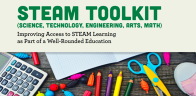
Newly Released STEAM Toolkit
STEAM education empowers students by integrating Science, Technology, Engineering, Arts, and Mathematics (STEAM) into meaningful, authentic learning experiences. Rather than teaching these subjects in isolation, STEAM pedagogy emphasizes inquiry-based problem-solving that mirrors how these disciplines naturally interconnect, preparing students with skills they'll use throughout their lives.
The ODE STEAM Toolkit offers educators, parents, and community leaders across Oregon a collection of high-quality, standards-aligned resources for K-12 students. Explore curriculum ideas, project-based learning resources, and research-based strategies to bring STEAM principles to life in every classroom.
The purpose of this resource collection is to support all schools in providing standards-aligned STEAM-based learning opportunities for students in grades K-12. For additional resources, please visit the STEAM webpage.
|
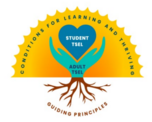
Integrating Oregon’s Transformative SEL and K-12 Science Education
The science classroom offers a powerful setting to nurture students’ Transformative Social and Emotional Learning (TSEL) practices.
The ODE Integrating Oregon’s Transformative SEL and K-12 Science Education document serves as a companion guide to the Science Oregon Teacher’s Guide and Lesson Sparks. It provides educators with resources and examples that continue to create inclusive and affirming learning environments.
The next Science Ignite Session on Wednesday, February 4th from 4:00 PM PT, will focus on the Integrating Oregon’s Transformative SEL and K-12 Science Education resource.
Register here to join ODE's TSEL Education Specialist, Dr. Fynn, along with Science Education Specialists, to explore how these resources continue to support the learning conditions for students.
|
OSAS Science Assessments
OSAS Science Statewide Summative Test
- The statewide test window for administration of the OSAS in-person and remote Science test (Grade 11 only) opens on February 3, 2026. As a reminder, prior to beginning a test or survey session, verify that appropriate student accommodations and supports have been accurately set in TIDE. See the Oregon Accessibility Manual for more information about accommodations and supports.
-
OSAS Sample tests for Science are now available for the 2025-2026 administration year. These sample tests provide an opportunity for Oregon teachers and students to familiarize themselves with the navigation and functionality of the online tests, as well as with the embedded accessibility supports described in the Oregon Accessibility Manual. Sample tests are not a comprehensive preview of all items or difficulty levels present in the summative test.
Science Interim Assessments
- The Oregon Statewide Assessment System (OSAS) science interim assessments are available and ready for classrooms.
- If you're new to interim assessments, start with this practice brief from STEMTeaching Tools which offers guidance on how to effectively integrate interim assessments into your instructional practice.
- To further support educators, ODE in collaboration with Southern Oregon ESD has developed a new on-demand course: Implementing the OSAS Interim Assessments - On-Demand Online Course, the course will equip participants with the tools to determine which specific interim assessments are best aligned to instructional opportunities for collecting evidence of learning and then modifying or scaffolding additional instruction.
- Did you know? OSAS interim assessments (cluster items only) can also be used to meet your district’s local performance assessment requirements. To support this work, ODE has created a concise two-page ODE Practice Brief provides educators and leaders with a student-centered approach to fulfilling these requirements, highlighting the benefits of performance-based assessments. For more details please visit the ODE Interim Assessment and the Local Performance Assessment Requirement webpages.
Please contact Dr. Mariela Salas Bao, Science Assessment Specialist, with questions or support needs.
|
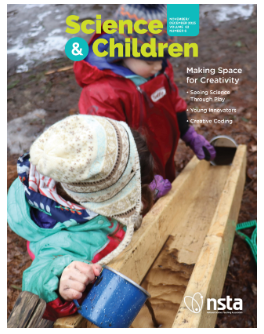
K-5 NSTA Science and Children
The National Science Teaching Association (NSTA) publishes a variety of open-access articles through its monthly science journals to support K-12 science education. These articles provide research-based strategies, classroom activities, and practical teaching guidance.
Below are several selected open-access articles from NSTA’s K–5 journal, Science & Children, which is specifically designed to support elementary science instruction.
|
Tools for Tomorrow: To Understand Future Environmental Issues
As we look toward the future, understanding and addressing environmental issues becomes increasingly critical. This high school science unit explores how two innovative technologies - AgriMet and OpenET - are transforming the way we monitor, manage, and sustain our natural resources.
Together, these tools offer invaluable insights into sustainable farming practices and water conservation strategies, empowering partnerships to make data-driven decisions that balance agricultural productivity with environmental stewardship. By harnessing the power of technology and data, AgriMet and OpenET are shaping a future where we can better anticipate and mitigate environmental challenges, ensuring a more resilient and sustainable world.
Here is a brief video introducing AgriMet Stations. These lessons are housed on the Oregon Open Learning Hub and were developed by Oregon Water Resources Department and Siskiyou Field Institute.
|
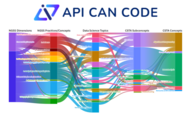
Visualizing Connections between Data Science + NGSS + CSTA Standards
This dynamic visualization allows you to explore how data science topics align with key educational standards, including the Next Generation Science Standards (NGSS) and the Computer Science Teachers Association (CSTA) Standards. API Can Code is a project to help educators and curriculum developers bridge these frameworks with data science topics to create integrated, meaningful learning experiences for students.
|
Participate in New National Study of K-12 STEM Education
Horizon Research, Inc. is conducting the 2027 National Survey of Science, Mathematics, Computer Science, and Engineering Education. Previous iterations of the survey have provided critical data about the STEM education system for the past 50 years. School recruitment is essential to the success of the study but has become very challenging, in part because a growing number of districts now require an internal sponsor or advocate before approving a research study. If you would be willing to be the sponsor/advocate in the event your district is sampled, please complete the form.
If you have any questions, contact Clara Lunden at nssme27@horizon-research.com
|
Become a Pacific Noyce Teaching Fellow
The Pacific Noyce Teaching Fellowship Program supports highly qualified and motivated science teaching candidates with scholarships covering full tuition plus a living expense stipend for becoming a science teacher in Pacific’s One-Year MAT General Education program, earning an Oregon teaching license with endorsements in physics, chemistry, biology, or integrated science.
The Pacific Noyce Teaching Fellowship program provides aspiring science teachers $93,000-$125,000 of financial support over five years, including teacher preparation through the one-year Pacific MAT degree, followed by a four-year early career leadership program, including individual coaching and a paid summer research experience alongside a science professional.
Click here to apply to the Pacific Noyce Teaching Fellowship (starts June 2026).
|

Oregon Climate Education - HB3365 Update
In accordance with House Bill 3365 (2025), revisions to instructional standards in science, health, and social science will include:
- the causes and effects of climate change,
- strategies for mitigation,
- strategies for adaptation, and
- strategies for strengthening community resilience.
In alignment with the bill and the current adoption schedule, the Oregon State Board of Education is expected to adopt revised science standards in spring 2029, health standards in spring 2030, and social science standards in spring 2031.
If you are interested in learning more about the current adopted climate change and sustainability standards within these areas, please click here.
For additional science resources, please visit the ODE K-12 Climate Education Resource page or for questions regarding the ODE Climate Education program, contact ode.climate@ode.oregon.gov.
|
|
|

If you have any questions or concerns, please do not hesitate to reach out to:
|
The materials contained in the Department of Education’s Oregon Science Educator Update are drawn from both internal and external sources and inclusion of external materials does not necessarily indicate Oregon Department of Education endorsement.
|
|
|
|
|