|
Oregon Science Educator Update October 2, 2025
|
|
National Hispanic Heritage Month
September 15 - October 15, 2025, is National Hispanic Heritage Month. Below are some resources to better understand what Hispanic Heritage Month is, why it is so important, and how to celebrate and honor the cultures and contributions from Hispanic and Latino communities this month and beyond.
|
Indigenous Peoples' Day
Oregon has many different Indigenous communities including nine federally recognized tribes: Burns Paiute of Harney County; Confederated Tribes of Coos, Lower Umpqua and Siuslaw Indians; Confederated Tribes of Grand Ronde; Confederated Tribes of Siletz; Confederated Tribes of Umatilla Reservation; Confederated Tribes of Warm Springs; Cow Creek Band of Umpqua Indians; Coquille Indian Tribe; and Klamath Tribes.
This year, Indigenous Peoples' Day is celebrated on Monday, October 13th. Below are some additional resources as you celebrate Indigenous People’s Day and continue to engage diverse voices, contributions, and perspectives in science education.
|

ODE Science Ignite Sessions
Looking for resources to elevate your science teaching and learning strategies but are limited on time?
Join ODE Science Education Specialist, Jamie Rumage, and Science Assessment Specialist, Dr. Mariela Salas Bao, for dynamic 30-minute sessions packed with resources, practical insights and innovative approaches to science teaching and learning.
The next Ignite Session will be on Wednesday, October 15th from 4:00 PM to 4:30 PM PT. All other sessions will take place on the first Wednesday of each month from 4:00 PM to 4:30 PM PT.
Register here and don’t miss this opportunity to ask questions, learn about helpful resources, connect with fellow educators, and enhance your science classroom experience! Here's a preview of the topics covered.
|
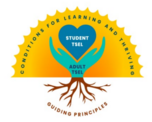
Integrating Oregon’s Transformative SEL and K-12 Science Education
The science classroom offers a powerful setting to nurture students’ Transformative Social and Emotional Learning (TSEL) practices. The newly released Integrating Oregon’s Transformative SEL and K-12 Science Education document serves as a companion guide to the Science Oregon Teacher’s Guide and Lesson Sparks, providing educators with resources and examples that continue to create inclusive and affirming learning environments.
By integrating the TSEL, educators create inclusive environments where students feel a sense of belonging, reflect on their learning, and actively contribute to the classroom community. The conditions empower students to feel free to freely envision and explore the role of science in shaping the communities and society they want to live in.
|

OSAS Science Interim Assessments
Science Interim Assessments. The Oregon Statewide Assessment System (OSAS) science interim assessments are available and ready for classrooms.
If you're new to interim assessments, start with this practice brief from STEMTeaching Tools which offers guidance on how to effectively integrate interim assessments into your instructional practice.
To further support educators, ODE in collaboration with Southern Oregon ESD has developed a new on-demand course: Implementing the OSAS Interim Assessments - On-Demand Online Course, the course will equip participants with the tools to determine which specific interim assessments are best aligned to instructional opportunities for collecting evidence of learning and then modifying or scaffolding additional instruction.
Did you know? OSAS interim assessments (cluster items only) can also be used to meet your district’s local performance assessment requirements. To support this work, ODE has created a concise two-page ODE Practice Brief provides educators and leaders with a student-centered approach to fulfilling these requirements, highlighting the benefits of performance-based assessments. For more details please visit the ODE Interim Assessment and the Local Performance Assessment Requirement webpages.
Please contact Dr. Mariela Salas Bao, Science Assessment Specialist, with questions or support needs.
|

The Foundation of K-12 Science Education
A Framework for K–12 Science Education set out to change the way science is taught and learned across the country. Today, nearly every state, including Oregon, has used it to develop K-12 science standards — creating consistency across grades, strengthening curricula and assessments, and opening the door to more collaboration across state lines.
What makes the Framework different? It focuses on depth rather than breadth, keeps learning coherent from grade to grade, and weaves together three dimensions of science learning: scientific and engineering practices, crosscutting concepts, and disciplinary core ideas. The result is a vision that prepares students to think and engage like scientists and engineers; able to explore, question, and make sense of the world around them.
The National Academies and its Board on Science Education continue to carry this vision forward through workshops, practitioner guides, and consensus study reports. These resources give educators, leaders, and researchers practical ways to put evidence-based practices into action, spanning everything from early science education to teacher professional learning to assessments that reflect how students actually learn.
|
Climate Mental Health Resources
The Climate Mental Health Network is an organization dedicated to fostering mental well-being by reshaping the dialogue on the emotional impacts of climate change. It serves as a resource hub, providing tools, programs, and guidance to support educators and communities to understand how climate-related emotions affect both individual and collective health.
Here are some of their released resources that may be useful as you continue to explore and support the K12 Oregon Science Standards addressing climate change and sustainability.
|
OSTA 63rd ANNUAL CONFERENCE
Oregon Science Teachers Association is hosting its2025 Conference: Tides of Discovery: Bridges to the Future. The conference will be held at Newport Middle School, in Newport Oregon on Saturday, October 11, 2025.
This year’s theme emphasizes sustainability, interconnectedness, and the transformative power of knowledge, innovation, and collaboration. Whether you're an educator, community leader, scientist, or advocate, this conference offers opportunities to connect, learn, and lead.
OSTA welcomes keynote speaker Dr. Mark Windschitl, professor of Science Teaching and Learning at the University of Washington and author of Teaching Climate Change: Fostering Understanding, Resilience, and a Commitment to Justice (2024, Harvard Ed Press).
|
Oregon Science Leaders - Join Today!
Oregon Science Leaders is a free, regional network for K-16 science educators and science leaders. This organization is co-led by multiple Oregon ESDs and school districts. Join the next conversation on the key topic or review the OSL's Action Guide.
To join this group, click this link and "ask to join".
|
Oregon K-12 Geography Education Survey
The Gray Family Foundation is conducting a 10–15 minute survey to learn how geography is taught in Oregon’s classrooms and how educators can be better supported. Results will guide efforts to strengthen and fund geography education statewide.
Open to all K-12 teachers who teach geographic concepts across any subject. Participants will be entered to win a $100 Powell’s Books gift card or an Oregon State Parks annual pass.
Survey closes Friday, Oct. 24, 2025.
If you have additional questions or are interested in learning more about the Gray Family Foundation, please visit: grayff.org.
|
|
|

if you have any questions or concerns, please do not hesitate to reach out to:
|
The materials contained in the Department of Education’s Oregon Science Educator Update are drawn from both internal and external sources and inclusion of external materials does not necessarily indicate Oregon Department of Education endorsement.
|
|
|
|
|