|
Oregon Math Educator Update – September 2025
|
|

As the school year begins, a warm welcome goes out to all K–12 math teachers. Your dedication, preparation, and passion for nurturing mathematical thinking are deeply appreciated. Thank you for the energy and care you’ve already invested in creating a strong start.
September presents a valuable opportunity to build classroom communities that promote belonging, relevance, and meaningful problem solving. Establishing strong math routines at the beginning of the year—such as number talks, estimation challenges, and collaborative tasks—can help students feel seen, heard, and valued throughout the school year.
As teachers build classroom routines and foster mathematical thinking this fall, high quality instructional strategies offer meaningful ways to connect math to students’ lives, promote curiosity, and deepen engagement. Below are three examples to explore and learn more about as teachers establish routines and norms with students this year.
Notice and Wonder Routines: Encouraging students to observe and question mathematical patterns helps them become active participants in their learning. This routine builds curiosity and supports sense-making.
Connecting Math to Everyday Contexts: Linking math to authentic situations helps students see its relevance beyond the classroom. This approach supports engagement and cross-disciplinary thinking.
-
Research Highlight (Arthur et al., 2018): This study found that a teacher’s ability to connect mathematics to real-world problems significantly predicts students’ interest in the subject.
-
Edutopia – Math in the Real World: This article shares 11 teacher strategies for making math meaningful, including budgeting trips, cooking with measurement conversions, and analyzing sports statistics.
Reading and Writing in Mathematics: Integrating literacy into math instruction helps students articulate their thinking, reflect on learning, and connect math to personal experiences.
-
Oregon Literacy Frameworks: Explore the Oregon Early Literacy and Adolescent Literacy frameworks to support math through literacy. Additional resources can be found within the recently updated Oregon Instructional Framework website. Coming soon, look for updates later this year for math specific materials aligned to the adolescent framework.
-
Research Highlight (Benson-O'Connor et al., 2019): Math journaling can help students reflect on how math shows up in daily life. Writing about authentic math experiences builds literacy and personal connection to the subject.
|
2025-26 Oregon Math Leaders Network
The Oregon Math Leaders Network is a community of math practitioners who work together to implement and support math teaching and learning in Oregon. Participants include teacher leaders, TOSAs, program administrators, college faculty, and math community partners. If you identify as a math leader, you are invited! The 2025-26 virtual meetings will continue to take place on the third Thursday of each month at 8:30 AM on Zoom.
|
Transformative SEL in Practice for Math Classrooms
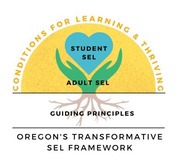
As we continue to build inclusive and engaging math learning environments, the newly released Transformative SEL in Practice resource offers timely support for integrating social and emotional learning into daily instruction. This resource is designed to help educators embed the Oregon Transformative Social and Emotional Learning (TSEL) standards into classroom experiences, student interactions, and schoolwide systems. It includes content-specific teacher guides that align SEL principles with instructional practices, including mathematics.
-
Foster belonging and identity through math tasks
-
Encourage collaborative problem-solving and curiosity
-
Support responsible decision-making and self-awareness
Educators can also explore the Lesson Spark Tool, a planning workbook that helps connect TSEL guiding principles with content standards and lesson design.
|
New Toolkit Helps Schools Create Focused, Inclusive Learning Environments
|
|
 |

Upcoming OCTM Session: Building Joy and Justice in Mathematics
Join OCTM on Monday, September 22 at 4:00 PM for a powerful professional learning session titled “Building Joy and Justice in Mathematics,” presented by Leah Plack.
This session will explore how Oregon educators can foster joyful, inclusive, and equitable math experiences for all students. Drawing on four years of work from the Portland Metro STEM Partnership’s Building Joy and Justice in Mathematics Through Inclusive Practices initiative, Leah will share strategies that center student identity, belonging, and relevance—with a focus on Black, Indigenous, and Latino/a/e learners.
Participants will hear insights from a growing cohort of teachers committed to inclusive math education and leave with inspiration and ideas to apply in their own classrooms.
|
Math Coaching and Leadership Network (MCLN)
The Math Coaching and Leadership Network (MCLN) is a free, regional network that supports K–16 mathematics educators and leaders across Oregon. MCLN centers its work on advancing equitable mathematics education while fostering collaboration and innovation throughout the region.
2025–26 MCLN Monthly Meetings
Second Thursdays, 8:30–9:30 AM PT on Zoom (Note: October’s meeting will be held on the first Thursday)
-
October–January: Book Study Focus
-
February–May: Presentations, requested topics, and continued peer-to-peer collaboration
-
Participation is recommended for math specialists, TOSAs, math-focused administrators, and special education colleagues who attend with an MCLN member.
From October through January, MCLN will host a book study on Rethinking Disability and Mathematics. Author Rachel Lambert will join the January session for a live discussion. View the Book Study Choice Board for additional information. Special education colleagues of MCLN members are welcome to participate in the book study. To receive meeting links, they must register through PDNetworks.
|
Building Thinking Classrooms Virtual Meetings
Clackamas and Multnomah ESDs are launching a series of monthly virtual meetings to support the continued growth and innovation of Building Thinking Classrooms (BTC) practices across Oregon. These sessions, held October through May, are open to educators and instructional leaders interested in deepening their BTC implementation. Sessions will be held virtually once a month on Mondays from 4:00 to 4:45 PM, beginning in October.
Each meeting includes breakout groups tailored to specific roles and instructional focuses:
-
Coaching BTC Teachers – For coaches and TOSAs supporting K–12 BTC implementation
-
BTC with Multilingual Learners – For 6–12 teachers integrating language supports in math instruction
-
Routines for Advanced Practices – For 6–12 teachers exploring note-taking, consolidation, and other advanced BTC strategies
-
BTC in the Elementary Classroom – For K–5 teachers adapting BTC practices for younger learners
|

NASA TechRise Student Challenge Is Open
Students in grades 6–12 can now submit experiment ideas for a chance to launch them on a NASA-sponsored suborbital flight or high-altitude balloon! Winning teams receive $1,500, a flight box, and expert support to build and test their projects. No experience needed—just creativity and teamwork! Key dates for this year’s challenge include:
-
Virtual Field Trip: September 25, 2025
-
Proposal Deadline: November 3, 2025
-
Winners Announced: January 20, 2026
|
Computer Science Feedback Survey
Calling ALL Oregon elementary school teachers, principals, and district superintendents! Your feedback is crucial. Help shape the future of Computer Science Education in the Age of AI in our state by participating in an American Institute of Research survey. The survey will take about 15-minutes and you’ll win a free Hour of Code by BootUp PD and have a chance to win a $30 Amazon gift card!
Take the survey now and make a difference:
|

Digital Learning Cadre Kicks Off This Fall
The Oregon Digital Learning Cadre (‘DL Cadre’) builds on the legacy of the former Ed Tech Cadre, bringing fresh focus to the next chapter of statewide collaboration. The DL Cadre will reimagine the statewide network for today’s digital learning landscape in Oregon —one shaped by AI, Personal Electonic Devices (PED) restrictions in schools, the digital divide, and new opportunities for equity-driven innovation.
Meeting virtually once a month the DL Cadre will bring together teachers, instructional coaches, and school leaders to share practical strategies, highlight local bright spots, and engage in dialogue that works to turn challenges into actionable solutions for our classrooms and schools. Each session will feature thought leaders and hands-on activities designed to spark reflection and collective growth.
If you are interested, please fill out this brief survey to ensure ODE can best meet the needs of participants' schedules. We will share our tentative schedule in the near future.
|
If you have an opportunity or announcement to share statewide, please contact the ODE Math Team.
The materials contained in the Department of Education’s Oregon Math Educator Update are drawn from both internal and external sources and inclusion of external materials does not necessarily indicate Oregon Department of Education endorsement.
|
|
|
|
|
|
|