March 2025 Social Science Update
|
|
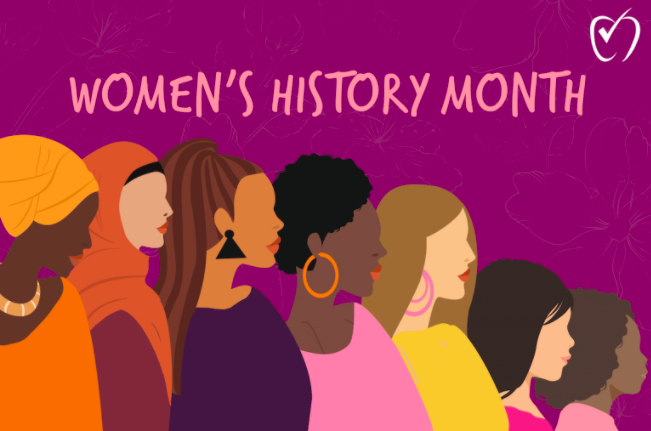
Celebrating Women's History Month
As recently as the 1970s, women's history was virtually absent from K-12 classrooms. As we celebrate Women's History Month this March, we're part of a grassroots educational movement that began in 1978 with a single week in Sonoma County, California. What started with classroom presentations by over one hundred community women, student essay contests, and a downtown parade in Santa Rosa is now a national celebration.
The 2025 theme, "Moving Forward Together," spotlights "women educating and inspiring generations"- reflecting on how this celebration was born in classrooms and spread through the dedication of teachers and education advocates. When Molly Murphy MacGregor shared Sonoma County's success at the Women's History Institute at Sarah Lawrence College, fellow educators and women's organizations carried the idea home. This eventually secured presidential recognition from Jimmy Carter in 1980 and congressional support through a bipartisan resolution co-sponsored by Representative Barbara Mikulski and Senator Orrin Hatch.
What began as a week expanded to a month in 1987 after state departments of education across the country recognized its power in achieving equity goals within their classrooms. As we mark International Women's Day on March 8th with its theme "For ALL women and girls: Rights. Equality. Empowerment," let's remember that educators were the original champions of women's history and continue to be its most important storytellers.
In addition to the links below for Women's History resources, this newsletter include opportunities for student scholarships, teacher professional learning opportunities, and classroom resources for Oregon's Civics Week.
Contact Amit Kobrowski with questions and comments and enjoy Spring Break.
Classroom Resources Women's History Month:
Professional Learning Opportunities
ODE WestEd Social Science Online PD
Registration for the Oregon Social Science Virtual Professional Learning Series is now open! Join educators from across the state in this comprehensive professional learning opportunity designed to support the implementation of Oregon's updated 2024 Social Science Standards. Each session explores practical strategies, allows you to engage with fellow educators, and offers tools to bring the new standards to life in your classroom.
More information and for registration
|
Session 1- A Closer Look: Oregon’s
2024 Social Science Standards
Wednesday, March 19, 3–5 PM
Thursday, March 20, 5–7 PM
Register For Session 1
|
Session 2-Developing Culturally Responsive Social Science Lessons
Wednesday, April 2, 3–5:30 PM
Thursday, April 3, 5–7:30 PM
Register For Session 2
|
|
Session 3 - Differentiating Instruction & Primary Source Analysis
Wednesday, April 9, 3–5:30 PM
Thursday, April 10, 5–7:30 PM
Register For Session 3
|
Session 4-Facilitating Meaningful Historical Conversations
Wednesday, April 16, 3–5:30 PM
Thursday, April 17, 5–7:30 PM
Register For Session 4
|

USHMM 2025 Belfer National Conference for Holocaust Education
Participate Virtually in Real Time: June 23–25
At this free virtual conference, discover the latest practices in accurate, meaningful teaching about the Holocaust with leading historians and educators. Bring the Museum's collection into your classroom with instructional strategies and resources. These materials highlight survivor testimonies, artifacts, diaries, and historical documents to support instruction across subject areas and inspire all students to think critically about how and why the Holocaust happened.
Registration for Belfer Conference
|
The National Council for Geographic Education
The NCGE 2025 annual conference will be in Omaha, Nebraska, next October 17th- 19th. The conference is an excellent opportunity to connect with national and international experts in geographic education. The conference offers curriculum presentations, workshops, field trips, and the latest innovations in geography education. Registration and more information.
|
|
|
Japanese American Museum of Oregon
JAMO is accepting applications from Oregon and Washington educators to participate in a 5-day teacher workshop entitled “Teaching Japanese American History: A Place-Based Educator Workshop,” which will take place July 9-13, 2025. A group of 8 educators (K-12) will be selected to participate.
Application Deadline: Friday, April 11, 2025.
|

Quick Resources
Specialization, Trade, and Interdependence is a key concept in K-12 Economics in the 2024 Social Science Standards. As trade policies make headlines, many students might have questions about tariffs and their economic impacts. Here are some resources to help you explain this complex topic in your classroom, providing balanced perspectives on how tariffs work and their effects on consumers, businesses, and global trade relationships.
|
Now Available: Oregon's Adolescent Literacy Framework for Social Sciences
Oregon's Adolescent Literacy Framework is now available as a classroom resource. There is a section pertaining to discipline-specific reading and writing skills, with a specific focus on developing discipline-specific literacy skills in social science contexts(138-148).
Key Components:
- Overview of social science disciplinary literacy practices, including critical reading, source analysis, and evidence-based argumentation
- Practical tables outlining text complexity factors and teaching strategies to address them
- Guidance for teaching students to read, write, and communicate like social scientists
- Connections between classroom skills and their applications in various career pathways
The framework is designed to support teachers in helping students analyze primary sources, evaluate evidence, synthesize information from multiple perspectives, and construct well-reasoned arguments—skills central to social science and the Essential Disciplinary Practices identified in the 2024 Social Science Standards.
Each section includes concrete teaching approaches for integration into existing lessons, with special attention to developing the critical thinking habits that characterize the work of historians, economists, political scientists, and other social scientists.
The Early Literacy Framework is also available on ODE’s website. We welcome your feedback as you explore and implement these resources in your classroom.
|
Civic Week March 10-14th Resources
Civic Learning Week Proclaimed for March 10-14, 2025
Governor Tina Kotek has officially declared March 10-14, 2025, as Civic Learning Week in Oregon. In her formal proclamation, the Governor emphasized that "our nation's longstanding and ongoing audacious experiment in self-governance requires a populace with an understanding of the nation's laws and government" and that "the practice of democracy must be taught and learned anew by each generation."
This proclamation recognizes the vital role that we as educators play in building civic strength and preparing students for informed, engaged citizenship. As social science teachers, this official recognition provides an excellent opportunity to highlight civic education in your classrooms.
|
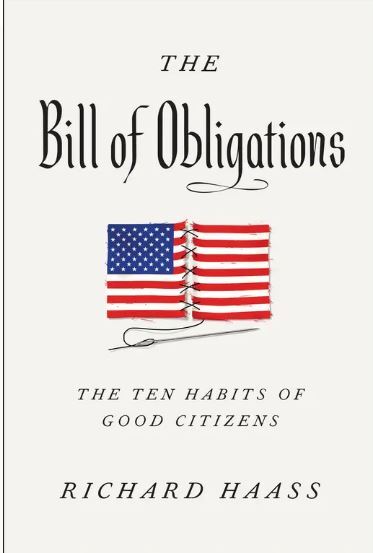
Book Review: "The Bill of Obligations": A Timely Resource for Oregon Civic Learning Week
In light of Governor Kotek's declaration of Civic Learning Week and Oregon's new civic course requirement, Richard Haass' concise book, "The Bill of Obligations: The Ten Habits of Good Citizens," is relevant for civic educators.
Unlike the more theoretical "American Covenant" by Yuval Levin (reviewed previously), Haass delivers a classroom-ready exploration of what citizens owe each other and our democratic experiment. At just over 150 pages, this accessible text reframes the traditional "rights and responsibilities" conversation—one of the four central civic concepts in Oregon's 2024 Social Science Standards—into something perhaps more profound: obligations.
Haass argues that without citizens committed to specific obligations, maintaining a democratic republic becomes nearly impossible. His ten obligations for restoring trust in American democracy include familiar concepts (be informed, get involved) alongside more challenging imperatives (stay open to compromise, remain civil). While Haass is encouraged by states like Oregon, adding requirements for civic education, his suggestions go well beyond a semester course and include more intentional instruction on digital citizenship.
The book’s structure lends itself to numerous classroom applications:
- Divide the book's short chapters (8-12 pages each) for jigsaw discussions
- Use the companion PBS 50-minute video, A Citizens Guide to Preserving Democracy, highlighting grassroots democracy efforts
- As a beginning-of-year activity, have students rank Haass' obligations, propose new ones, or debate which might be eliminated
- Connect the book's themes to your classroom agreements and community-building practices
Haass' approach gains additional relevance with connections to Oregon's Transformative Social Emotional Learning Framework. Rather than simply an add-on, TSEL creates the foundation for the civic engagement Haass advocates. When students develop self-awareness, relationship skills, and social awareness through TSEL practices, they're building precisely the capabilities needed to fulfill these civic obligations.
As we implement Oregon's enhanced civics requirements, Haass' straightforward framework offers both the "why" and "how" of preparing students for meaningful democratic participation.
|
The Civics Center
The Civics Center provides free training and resources to help make voter registration part of the fabric of the high school experience in America: an exciting part of growing up, a fun thing to engage in, and readily available twice a year.
Free training to run voter registration drives in school
Democracy in a Box toolkit to help run a drive
District level data to identify areas of need and show results
|
Civic Learning Project
Civic Learning Week (March 10 - 14) - The Civic Learning Project (CLP) is a national initiative to bring together students, educators, policymakers, and leaders in the public and private sector to highlight and energize the movement for civic education. To help educators prepare for the newly proclaimed Oregon Civic Learning Week, CLP created this toolkit with lessons and Oregon-based activities that highlight different civic themes. If you are interested in organizing events for Civic Learning Week, please email Amanda Coven at CLP.
Law Days - CLP's annual Law Days are conference-style events focused on legal, social, and political issues relevant to high school students. Panels, presentations, and workshops are given by experts, offering students an engaging experience. This year, CLP Law Days will be in:
- Bend on May 6 at Central Oregon Community College - Registration
- Ashland on May 12 at Southern Oregon University - Registration
- Eugene on May 16 at University of Oregon - Registration
|

Sphere
Join Sphere Education Initiatives on March 10 (7:30-8:30 p.m.) for a webinar on social media and youth mental health featuring Jennifer Huddleston (Cato Institute) and Clare Morrell (Ethics and Public Policy Center). This timely session, offered during Civic Learning Week (March 10-14), will explore the impact of social media on youth. Free for all K-12 educators via Zoom.
|
Case Method Institute
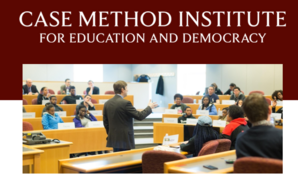
All high school teachers of U.S. history, civics, and government are invited to join a special PD program offered by the Case Method Institute for Education & Democracy and Harvard Professor David Moss. The program includes a live, interactive case discussion with Professor Moss on Zoom.
- Option 1: Friday, March 28, 11am – 5pm ET
- Option 2: Self-paced online program available anytime
Application for Interested high school social science teachers and more details on the opportunity.
Explore more resources:
|
Student Opportunities
Ridgley Scholarship - Applications due April 1, 2025. Current high school seniors who have participated in CLP programs can apply for this $10,000 college scholarship.
Ukrainian Holodomor Genocide Awareness Competition - Grades 9-12 students can win $100-$500 prizes for projects raising awareness about the Holodomor. Deadline: April 11, 2025. Email ukrainecompetition@gmail.com for details.
Oregon Senate Page Program - High school students (12-17) can gain hands-on legislative experience assisting in the Senate Chamber. Email completed applications to Misty McCord. First-come, first-served basis. Questions: (503) 986-1860.
NLP Fact-Checking Quiz - Test your students' ability to identify claims that need verification. NLP’s “Is it legit? Five steps for vetting a news source” infographic is another helpful resource.
Greater Portland History Bee and Bowl - Registration deadline without late fee: Friday at 11:59 pm. Late registration ($15 fee) available until Monday.
Oregon's Kitchen Table - Students can influence Oregon's water management plan by completing a survey or hosting classroom conversations.
Student Voice Act - HB 3012 would allow registered 16-17 year-olds to vote in school board elections. Students can participate through Monthly Lobbying Days, Monthly Advocacy Nights, and Contact Your Lawmakers Form.
|
|
|
|
|