|
Updates from the Oregon Department of Education
1. Guidance for Supporting All Students in Oregon’s K-12 Schools
2. Introducing the Multilingual/English Learner Resource Bank
News and Resources for Multilingual and Migrant Education
1. Celebrate Afro-Latino Heritage This Black History Month
Upcoming Events, Training & Conference Opportunities
1.Webinar - Voices from the Field: What Educators Are Saying About the Implementation of the Science of Reading Policies for Emergent Bilinguals/English Learners, February 24, 2025
2. Al Wright Scholarship for Migratory High School Seniors – Apply by February 28, 2025
1. Guidance for Supporting All Students in Oregon’s K-12 Schools
Back to top

The Oregon Department of Education is excited to share the Multilingual/English Learner Resource Bank, a new online resource designed to support the education of English and Multilingual Learners in Oregon. The English Learner Outcomes Program, established in 2015 through the House bill 3499, addresses disparities experienced by Multilingual and English learners in the K-12 education system. One of the provisions of the Bill is to create an online resource bank for sharing national, state, and local best and promising practices to advance equitable educational approaches and subsequent outcomes for English Learners (ELs). The Multilingual/English Learner Resource Bank (ML/EL Resource Bank), created in fulfillment of this requirement, is a comprehensive, curated online repository containing research-practice briefs, which include information from research and practice articles, guides, reports, analysis, action research, and implementation resources about English Learner programs and services.
Over the course of this work, the program had numerous engagements with practitioners, researchers, and other thought partners. An important result of that engagement was the identification of topics and subtopics to be included in the ML/EL Resource Bank. The 17 briefs completed to date address the following topics:
- Assessment
- Culturally responsive and culturally sustaining pedagogy and practices
- Engagement with families and community
- Social-emotional well-being and mental health literacy
- Supportive learning environment
Future developments will address other topics, including:
- Program design and program models
- Instruction and instructional materials
- Academic excellence
- Exemplary leadership
- Financing ML/EL programs and activities
|
 Afro-Latinos, who number over 6 million in the U.S., have always been a vital part of the Latino community, though their stories are often underrepresented. Educational resources such as the Enshrining Blackness: AfroLatinidad & K-12 Curriculum forum and the documentary Afro-Latinx Revolution: Puerto Rico highlight the rich cultural identities and histories of Afro-Latino communities. As more leaders and younger generations embrace their Afro-Latino heritage, Black History Month presents an ideal opportunity to explore and celebrate the depth of their contributions. For additional resources to celebrate Black History month, explore the Oregon Department of Education’s Social Science Resources and Opportunities newsletter, dated February 5, 2025.
Image by BP Miller on Unsplash.
2. 2025 Oregon Immigration Law Training Resource
In light of concerns surrounding immigration enforcement activities in communities, the 2025 Oregon Immigration Law Basics for State Employees training was created for Oregon state employees. Recognizing the importance of understanding these issues, the Oregon Department of Education is extending this valuable resource to education and community leaders to enhance a broader understanding of Oregon’s immigration laws. This training provides an overview of key legal principles, including guidance on how to document and respond to requests. For additional information and resources on this topic, visit the Oregon Department of Justice Civil Rights Unit (CRU) Sanctuary Promise Community Toolkit webpage.
Disclaimer: The content provided in this training is for informational purposes only and does not constitute legal advice. Community members seeking legal advice should contact an attorney.
Back to top

3. Bilingual Research Journal
The Bilingual Research Journal (Volume 47, Issue 4, 2024) features research and insights on bilingual education, language policy, and multilingual learner support. This special edition commemorates the 50th Anniversary of Lau, and the articles are available for download.
|
4. Supporting Student Well-Being Amid Immigration Concerns
The impact of immigration enforcement on students is an urgent issue that requires thoughtful attention. A recent article by Anna Merod discusses how schools can ease student anxieties and support their well-being through clear communication, emotional support, and mental health resources. How Can Schools Ease Student Concerns About ICE? provides valuable insights for educators and communities facing this challenge, highlighting efforts in Umatilla School District.

1. Webinar - Voices from the Field: What Educators Are Saying About the Implementation of the Science of Reading Policies for Emergent Bilinguals/English Learners, February 24, 2025
Join the National Committee for Effective Literacy and the Center for Applied Linguistics on February 24, 2025, for a webinar on the impact of Science of Reading policies on literacy instruction for Emergent Bilinguals/English Learners. Featuring Dr. Kathy Escamilla and Dr. Kimberly Strong, this session will explore challenges and solutions in bilingual and dual-language programs, offering valuable insights for educators and policymakers. Don't miss this opportunity to strengthen multilingual literacy education. Click here to learn more and register for this event.
|
2. Al Wright Scholarship for Migratory High School Seniors – Apply by February 28, 2025
The Albert Lee Wright Jr. Memorial Scholarship, awarded annually by the National Association of State Directors of Migrant Education (NASDME), supports graduating migratory high school seniors with financial need who have moved for agricultural or fishing work.
Important: Applicants must use the 2025 Albert Lee Wright Jr. Memorial Scholarship application form. Submissions with outdated forms will not be accepted. The scholarship will be awarded at the National Migrant Education Conference in San Francisco in mid-April.
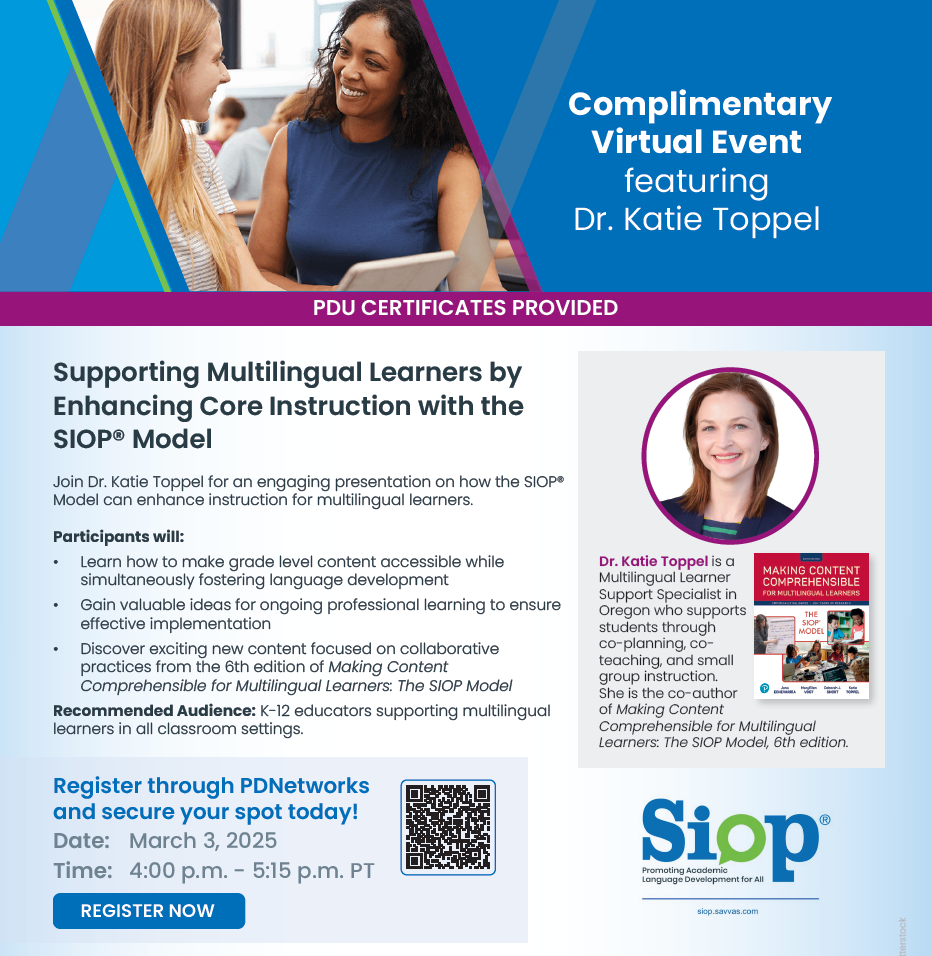
3. Webinar: Supporting Multilingual Learners by Enhancing Core Instruction, March 3, 2025 (Repost)
Join Oregon educator Dr. Katie Toppel on March 3, 4:00 - 5:15 PM for a session focused on how the SIOP Model can enhance instruction for multilingual learners.
In this session, participants will:
- Learn strategies to make grade-level content accessible while fostering language development
- Gain ideas for professional development to support multilingual learners
This session is designed for K-12 educators supporting multilingual learners across all classroom settings. Dr. Toppel is a Multilingual Learner Support Specialist and co-author of Making Content Comprehensible for Multilingual Learners: The SIOP Model, 6th edition. Click here to register for this event.
Contact Penny Plavala for more information.
4. 2025 CAL Multilingual Learners Education Academy, July 14-17, 2025
Educators and administrators supporting multilingual learners won’t want to miss the 2025 CAL Multilingual Learners Education Academy, happening July 14-17, 2025, at the Kellogg Conference Hotel Capitol Hill in Washington, DC. This event features CAL’s most sought-after professional development institutes, including sessions on SIOP, MTSS strategies, and newcomer support. Attendees will gain research-based insights, practical strategies, and a chance to connect with a global network of peers. It’s an opportunity to stay at the forefront of multilingual education and bring impactful practices back to schools and classrooms. Click here to learn more about this event and to register.
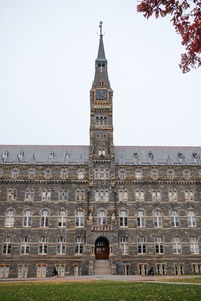
The English for Heritage Language Speakers Program (EHLS) at Georgetown University equips native speakers of critical languages with advanced English proficiency and professional skills, preparing them for careers in the federal government. Graduates of this eight-month program become effective communicators and competitive job candidates.
Full scholarships are available for U.S. citizens who hold a college degree and are native speakers of Chinese Mandarin, Arabic, Russian, Persian Farsi, Korean, Ukrainian, Kazakh, Turkish, or Hausa. To learn more about this opportunity and to apply, visit the EHLS Application page.
|

If you have content or stories you’d like featured in our newsletter, we want to hear from you! Whether it’s an article, event, or an inspiring story, your contributions add depth to our discussions. Please send your submissions and ideas to Estephany Membreno, Administrative Specialist, and you may see your content in an upcoming publication.
Back to top
|

For questions or assistance, the Multilingual and Migrant (MME) team is available to support you. Please contact us via email for further information.
|
You were added to this newsletter if you are part of the Migrant Education Program and/or the Title III English Learner listserv. Migrant Ed and Title III leaders, staff, and interested members of the public may subscribe to this newsletter through ODE's QuickSubscribe portal at any time. We thank you for serving Oregon's multilingual and migrant students.
|