ODE K-5 Educator Newsletter

January 8, 2025
Dear K-5 Educators,
As we enter into the new year, the Standards and Instructional Supports team is excited to share new resources and opportunities to support the work you do with students every day. The start of a new year often sparks reflection, reinvigoration, and a renewed sense of energy. We hope you find this newsletter, alongside the newly launched K-5 Learning Standards website, helpful as you navigate the upcoming months.
Looking ahead to February, we will celebrate Black History Month, a dedicated time to focus attention on the rich history, contributions, and triumphs of Black Americans throughout history and the present moment. This month and every month, we encourage you to elevate these important stories with meaningful activities and lessons that spark curiosity and passion in your K-5 students.
Thank you for your dedication and the impactful work you do every day to create inclusive and engaging learning experiences for students.
Sincerely,
The ODE Team
Photo by Markus Spiske on Unsplash
|

Integrated and Transformative Approaches in K-5
Arts, Care & Connection Arts Integration Lessons
Arts for Learning Northwest is collaborating with Oregon teaching artists on the development of a series of four arts courses designed for K-5 students called Arts, Care & Connection, with integrated social and emotional learning content in the areas of dance, visual arts, theater, and music. Oregon teachers are encouraged to provide feedback on the form included in the lesson resources, to inform the development of this project.
Check out this featured resource for an example of the new Arts, Care & Connection content included in the Oregon Arts Group!
Meaningful Engagement on Martin Luther King Jr. Day
January 20th provides an important opportunity to engage K-5 students in age-appropriate discussions about civil rights, equality, and peaceful change in celebration of Dr. Martin Luther King, Jr. From powerful picture books to hands-on lessons using primary sources, these materials can support meaningful classroom conversations about Dr. King's impact on American history.
Integrating the Transformative SEL Approach
A focus on Transformative SEL enables students and adults to be affirmed in their identities, where they can develop a sense of agency and belonging, engage in collaborative problem-solving, and deepen their curiosity about the kind of society they want to make a reality. Transformative SEL invites students and adults to dream, envision, and consider how their skills and strengths can be used to realize their visions.
In his “I Have A Dream” speech, Martin Luther King Jr. shared a vision of the kind of society that he wanted to make a reality. Whether included as an activity to commemorate MLK Day or integrated during another time, this speech can be used to engage students in conversations and activities that center their identities, curiosities, and ideals. As a child, Martin Luther King had an understanding of systems and structures that were playing out in the world around him. He developed an understanding of his own sense of agency and ability to impact change.
The Transformative SEL approach builds capacity for students to partner with each other and with adults to enact agency and voice (including non-verbal ways to communicate) in ways that challenge and change systems. When adults support students to develop agency, follow their curiosity, and affirm their developing identities, students are empowered.
The following ideas can be used to support students in developing and deepening their own agency for pursuing the kind of society that they want to make a reality:
- Invite students to write their own “I Have A Dream” speech.
- As a class, discuss the conditions within the classroom, school, or community that students need to thrive.
- Acknowledge and affirm the strengths and assets of students.
- Invite students to share how they might use their strengths and assets to impact their classroom or school community.
- Partner with students to co-generate ideas for improving a system (within the school, community, or larger society).
|
Preschool through 3rd Grade (P-3) Spotlight
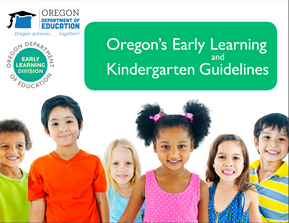
Oregon’s Early Learning and Kindergarten Guidelines
Oregon’s Early Learning and Kindergarten Guidelines is a resource for early educators of children ages 3–6. This document offers a shared view of and common vocabulary for child development and learning from age 3 through the end of kindergarten. It includes a continuum of development and learning in five domains: approaches to learning, social-emotional development, language and communication, literacy, and mathematics.
For more resources and information, be sure to visit the Oregon Departments of Education’s Transitioning into Kindergarten webpage featuring a dedicated P-3 Alignment section.
NEW: Birth through 5 Literacy Plan Report
The Department of Early Learning and Care (DELC) just released the Birth through 5 Literacy Plan report to the legislature. DELC developed the plan as a comprehensive framework aimed at improving early literacy outcomes for children from birth through age five. Grounded in the goals of the Early Literacy Success Initiative (HB3198), the plan emphasizes equity, cultural responsiveness, inclusivity, and addresses disparities in access to quality literacy programs and services.
|
Language Arts
February 7 is World Read Aloud Day. Started by LitWorld in 2010, and sponsored by Scholastic, the purpose of World Read Aloud Day is to bring people together through a shared love of reading.
February is also Black History Month. While celebrating the history and contributions of Black and African American people happens throughout the year, this month is set aside to pay tribute to the achievements, celebrations, and contributions of Black and African Americans and the challenges they endured in their quest to achieve full citizenship in the United States.
One event that helps lift African American voices is the NCTE-sponsored African American Read-in. Established by the Black Caucus of the National Council of Teachers of English in 1990, the goal of the Read-In is to bring communities together around reading and by centering both African American authors and books. Reading Rockets created a list of authors and lessons to celebrate the culture and contributions of African American authors, illustrators, and storytellers.
The National Education Association (NEA) also created several lessons that highlight the culture and contributions of African Americans in various areas–from music, to art, to literature, to science, and social science, and more. And, of course, there are book lists included, too!
Science
Integrating science with other subject areas requires time and effort, but has demonstrated to be an effective way to engage students in science learning and enhancing student learning across all subjects. Washington’s Office of the Superintendent of Public Instruction (OSPI) success story exemplifies how to increase science education at the elementary schools while fostering well-rounded learning for all students.
To support content-integrated learning, Washington state, in collaboration with their educational partners, developed K-5 integrated science lessons licensed under Creative Commons. These example lessons are available in the Oregon Science Group on the Oregon Open Learning Hub within the K-2 and 3-5 grade bands.
Rise and Thrive with Science - Teaching PK-5 Science and Engineering also offers practical classroom examples and K-5 vignettes to help educators implement equitable and effective science instruction. The guide emphasizes developing students’ language and literacy skills by integrating science with other subjects, leveraging local contexts and phenomena to enrich learning experiences.
|

Health Education & Sexuality Education
National Eating Disorders Awareness Week
National Eating Disorders Awareness Week (Feb. 26 - March 3) is an opportunity for educators to reflect on how their school environment supports student mental health, promotes a healthy sense of self, and works to reduce weight stigma. Many of the 2023 Health Education Standards include approaches, skills, and messages that help prevent eating disorders and disordered eating, including how to analyze messages on social media and ways to reduce bullying.
For example, the 5th grade standard, 5.SEM.4, asks that students identify potential impacts of social media on mental health and body image. Many free resources can support K-5 educators meeting these standards, such as books to promote a healthy body image and classroom activities that build body confidence.
The National Eating Disorders Association has information available for educators to learn more about eating disorders and disordered eating and how to help students who may need support.
|
Social Science
Many teachers can recall learning videos from SchoolHouse Rock. The catchy music and quick explanations instantly spark nostalgia for those of a certain age. Now iCivics has released new Emmy award-winning animated music videos with strong connections to the 2024 Oregon civics standards. Well Versed hits all the right notes as it explores civic topics for the youngest generation. Explore the series of 12 videos and classroom resources for elementary students (ages 6-11) and preschoolers (ages 2-5).
iCivics resources are free for teachers with an email login. The videos include resources to engage student learning with discussion questions, activity ideas, and a lyrics sheet in each video's viewing guide.
Math
Deepening Understanding of Mathematics Teaching, Learning, and Leading Series from PSU
Registration is now open for this winter's course designed for preK-12 teachers and teacher leaders in mathematics: CI 518 Mathematics Teacher Leadership: Implementing Effective and Equitable Mathematics Teaching Practices. See this flier for details on this course (i.e., course reference number, description, location, instructors) and other math courses planned for the 2024-25 school year.
This course is part of the Deepening Understanding of Mathematics Teaching, Learning, and Leading Series at Portland State University. Credits earned from participation in the series can be used for the Mathematics Instructional Leader Specialization from TSPC or a certificate of completion from PSU. Click here for information about scholarship opportunities (at the bottom of the page).
Physical Education
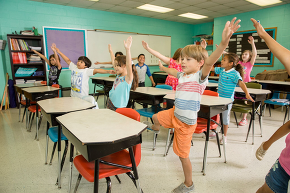
Help your students develop their physical literacy with some fun activities that require minimal or no supplies and can be done in the classroom or during outside recess. SHAPE has created 15 Ways to Get Moving in English and 15 Ways to Get Moving in Spanish that provides creative ways to increase movement and reinforce basic motor skills. SPARK also has free resources for classroom activities. There are integrated elementary resources, including Social Studies and STEM connected activities.
|
|