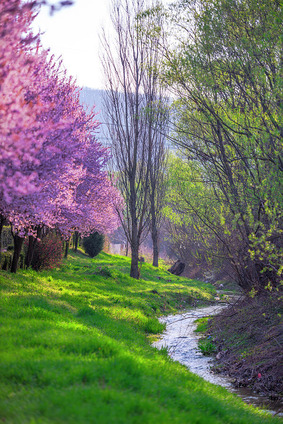
Welcome to spring!
Oregon Open Learning is helping to celebrate global Earth Day on April 22, 2024 by highlighting Oregon science OER for the month of April.
Recognition of the importance of protecting our environment was gaining momentum by the 1960s, including the important work of Rachel Carson and the publishing of her book, Silent Spring, in 1962. It would go on to sell over half a million copies in more than 20 countries. This momentum led to US Senator Gaylord Nelson, assisted by Denis Hayes, launching the first Earth Day on April 22 1970.
This month we want to help celebrate this important history by sharing and highlighting environmental and science OER efforts across Oregon that include resources like complete grade level science OER on Oregon Open Learning and many of the efforts from groups like Oregon Educators for Climate Education.
Another great PNW-specific free resource for Oregon science educators to be aware of is the ClimeTime project, a collaboration between the University of Washington and the Washington Office of Superintendent of Public Instruction (OSPI).
If you want more information or have questions for us, please reach out to our team at:
Contact us at: OregonOpenLearning@ode.oregon.gov
Do you know of other educators who would be interested in receiving Oregon Open Learning’s Monthly newsletter, Chronicles of Oregon Open Learning (COOL)?
If so, send them this link: OOL Monthly Newsletter
|
April 22, 2024 - Earth Day
Featured Open Educational Resources at Oregon Open Learning
Spotlight on Oregon Climate Education Hub
Educator Spotlight: Dustin Dawson from Lane ESD
April Earth Day Related Events

Monday, April 22, 2024, marks the 53rd anniversary of Earth Day! This year's theme is Planet vs Plastics. We hope you can enjoy the outdoors or participate in an upcoming event. The first Earth Day was held on April 22, 1970. Organized by U.S. Senator Gaylord Nelson of Wisconsin, this inaugural event sparked a movement to raise environmental awareness in the United States.
Below are a few climate science and sustainability education resources located within the Oregon Open Learning Hub -Science Group that you can use this month and beyond:
-
Oregon Climate Education Hub is a compilation of resources and lesson plans that integrate climate change across all grade levels and content areas based on the Oregon K-12 State Standards.
-
Climate Learning Resources are a vast collection of justice-centered learning tools to help navigate through the complexities of climate science teaching and learning. There are a variety of resources from practice briefs, webinars, assessment examples, and communication by using science stories.
-
Interdisciplinary Models for Climate Science Integration provides sample standards bundling from multiple content areas that educators could use to center their classroom instruction around climate science.
To learn more about science resources on Oregon Open Learning, contact Jamie Rumage, Science Education Specialist at the Oregon Department of Education at Jamie.rumage@ode.oregon.gov. Please also consider signing up for the ODE Science Newsletter.

We reached out to ODE’s Science Education Specialist, Jamie Rumage, to find out more about her favorite science-related resources on Oregon Open Learning. Here are some of Jamie's favorite examples of grade level / grade band specific resources:

Our Oregon Open Learning team wants to make sure you are aware of the amazing work that SubjectToClimate and Oregon Educators for Climate Education are doing to help provide openly-licensed lessons. From Julia Turner at SubjectToClimate:
The Oregon Climate Education Hub, developed by SubjectToClimate in partnership with Oregon Educators for Climate Education, provides over 2,700 FREE resources to Oregon educators that span all subject areas and grade levels K-12. The goal of the platform is to support Oregon educators to integrate climate change into all subjects and grades by removing the barriers that typically keep teachers from teaching about climate change. Resources have been looked at by a climate scientist and our team has worked to align them with Oregon standards.
Our goal is to provide K-12 educators with resources that allow them to seamlessly integrate climate change into what they are already teaching.
The resources on the site include:
- Teaching resources from trusted content partners.
- Links to general and Oregon-specific professional development opportunities.
- This includes SubjectToClimate’s free Climate Essentials Courses, which provide educators with a foundational knowledge of climate science, general tips for integrating climate change into the classroom, and guide them through the process of creating their own climate change lesson plan.
- Lesson plans written by Oregon teachers that include accompanying teaching materials such as slideshows, student worksheets, and answers keys, and that incorporate suggestions for action to empower students to take climate change into their own hands.
- News articles for students that can be adjusted by grade level.
- ClimateSocrates, a chat tool developed in partnership with MIT to answer basic climate change and pedagogical questions.
- These short-form help articles provide instant assistance to educators looking for scientifically accurate and up-to-date information to help them plan their next climate change lesson.
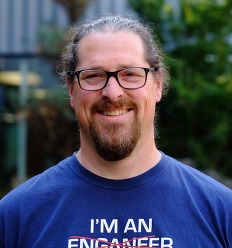
One question our Oregon Open Learning team hears frequently from Oregon educators revolves around how they can go about adopting OER in their buildings. Dustin Dawson from Lane Educational Service District may have some insight for you:
Dustin has been working for Lane ESD for the last five years and prior to that taught middle school math and science for 20 years at Kelly Middle School in Eugene, Oregon. During his time at Kelly, he was one of three science leads on their middle school adoption and implementation team. Dustin’s role within Lane ESD for the last five years has evolved from a STEM Specialist, to the Instructional Technology Specialist during the Pandemic, to now working as the Science Specialist for the ESD. He has been co-leading the Oregon Science Leaders group for the last three years as well.
|
When asked about his passions within education and what he wants teachers to know regarding his work with Open Educational Resources (OER), Dustin said that he wants “all science teachers to engage their students in meaningful, phenomena-driven instruction where the students are engaging in practices that scientists do to understand their world.” He goes on to explain that these phenomena should be interesting and/or relevant to students, helping to shift teaching practices from “learning about” to “figuring out.” Dustin thinks that this change is what our current science standards (NGSS) ask teachers to do. He clarified that “It is a big shift from the lecture-based, ‘drill and kill’, worksheet approach most of us grew up with and is much more than just a hands-on or inquiry approach.” From Dustin’s perspective, phenomena-driven instruction has that, but it’s more. Students should be doing the vast majority of the time. They should be asking questions, designing investigations, and building and drawing models to help explain their thinking. One of Dustin’s favorite quotes comes from Bradford Hill (one of the OER Pattern Physics authors) who said, “Students should be learning science by doing science.”
The Oregon Science Leaders group decided that they would take on a statewide independent adoption effort to make two OER science curricula available to any district in the state. Patterns: High School Science for All is an Oregon-grown curriculum that was designed and maintained by practicing teachers in Oregon (Patterns Physics, Patterns Chemistry and Patterns Biology). These teachers realized that there was no high school science curriculum that met the full intent of the Framework for K12 Science Education (later to be written into standard form: The Next Generation Science Standards, which Oregon adopted in 2014). Later the book Ambitious Science Teaching was published and these Oregon teachers used that framework to build what is now called Patterns: High School Science for All.
Last year, OpenSciEd released its middle school open-source curriculum. This was a national project with substantial financial support from large organizations. They are currently releasing a High School sequence and will be releasing an elementary curriculum next year, all of which is openly licensed for any teacher to use, modify, or adapt to the needs of their students. So far, it has been very highly rated by groups like EdReports.
Dustin has worked with a number of Oregon educators in an independent adoption process using some of these OER. He described a process that involved several TOSAs around the state from Oregon Science Leaders coming together to review the curriculum using the Instructional Materials Evaluation Tool (IMET). Dustin explained that:
We first had to learn how to use the IMET, then standardize our ratings to the rating that happened at the state level, and then we went through and evaluated all the units.
Once the evaluation was completed, we started to offer meetings that districts can come to in order to “be a part” of the independent adoption. They then can take the documents we created and use them in their independent adoption.
If you are interested in learning more about the work Dustin is helping lead, please feel free to contact him at: ddawson@lesd.k12.or.us
If you want to get in touch with the Oregon Open Learning team to find out more about other Oregon educators using OER in their work, please contact our team at: OregonOpenLearning@ode.oregon.gov
The Oregon Department of Education, through funding provided from the Federal Expanding Access to Well-Rounded Courses Demonstration Grant, is currently partnering with the Portland Metro STEM Hub and the Greater Oregon STEM Hub to provide free professional development to educators who are teaching or would like to start teaching Patterns Science. Click here to learn more!

When: Thursday - April 4 11AM - NOON PDT
Where: Online at https://home.edweb.net/webinar/science20240404/
What: Presented by Dr. Jesse Wilcox, Assistant Professor in Biology and Science Education, University of Northern Iowa; and Dr. Sophia Garcia, Instructor of Anatomy and Physiology, Texas Christian University
When: Monday, April 22, Time TBD
Where: Online at https://www.jpl.nasa.gov/edu/events/2024/4/22/celebrate-earth-day-with-nasa/
What: Explore these lessons and activities from NASA/JPL Edu to engage students in Earth Day on April 22. Get notified about upcoming events and the latest news from the education team at NASA's Jet Propulsion Laboratory.
When: Monday - April 22 · 10AM - 1130AM PDT
Where: Online at https://www.eventbrite.com/e/the-technology-earth-day-tickets-851094505577?aff=ebdssbdestsearch
What: Celebrate Earth Day with a tech twist at The Technology Earth Day - join us online for a day of eco-friendly innovations and digital sustainability
When: Monday - April 22 10AM - 11AM PDT
Where: Online at https://www.nationalww2museum.org/events-programs/events/133978-free-student-webinar-celebrating-earth-day
What: Join The National WWII Museum to learn about environmental protection efforts during World War II and today.
OregonClimateEducation.org:
When: Monday - April 22 4PM PDT
Where: Online at https://oregonclimateeducation.org/professional-development/biology-unit-6-matter-energy-climate-change
What: In this webinar, Oregon high school teachers will learn about the key parts of Patterns Biology Unit 6 including the anchoring design problem: Climate change has and will continue to alter Earth’s ecosystems, including the forests of the Pacific Northwest.
OregonClimateEducation.org:
When: Tuesday - April 23 4PM PDT
Where: Online at https://oregonclimateeducation.org/professional-development/integrating-climate-education-and-student-action-into-classrooms
What: Put on by Oregon State University. In this workshop, Oregon teachers of all subject areas will learn about free, standards-based lesson plans that correlate with student leadership projects. Join ONREP, SubjectToClimate, and Our Future Student Leadership Network to discover ways to integrate hands-on climate action into your classroom.
Earth Day Initiative, in partnership with March for Science NYC, has previously featured live virtual broadcasts with a range of conversations on climate action and justice with Bill Nye the Science Guy, actor Robert Downey Jr, and activists and experts like Jerome Foster II, Alexandria Villasenor, Katharine Hayhoe.
Check here for more information: https://www.earthdayinitiative.org/
Please Note: Unless hosted, facilitated, or published by the Oregon Department of Education (ODE), these resources have not been endorsed by ODE, but are being shared as relevant opportunities for education professionals to consider.
Questions, comments, or additions? Please get in touch with the ODE Oregon Open Learning team at OregonOpenLearning@ode.oregon.gov. Did someone forward you this newsletter? Want to stay connected with OER at the Oregon Department of Education? Subscribe to our COOL Newsletter and check out our Oregon Open Newsletter Archive.
|